
 by
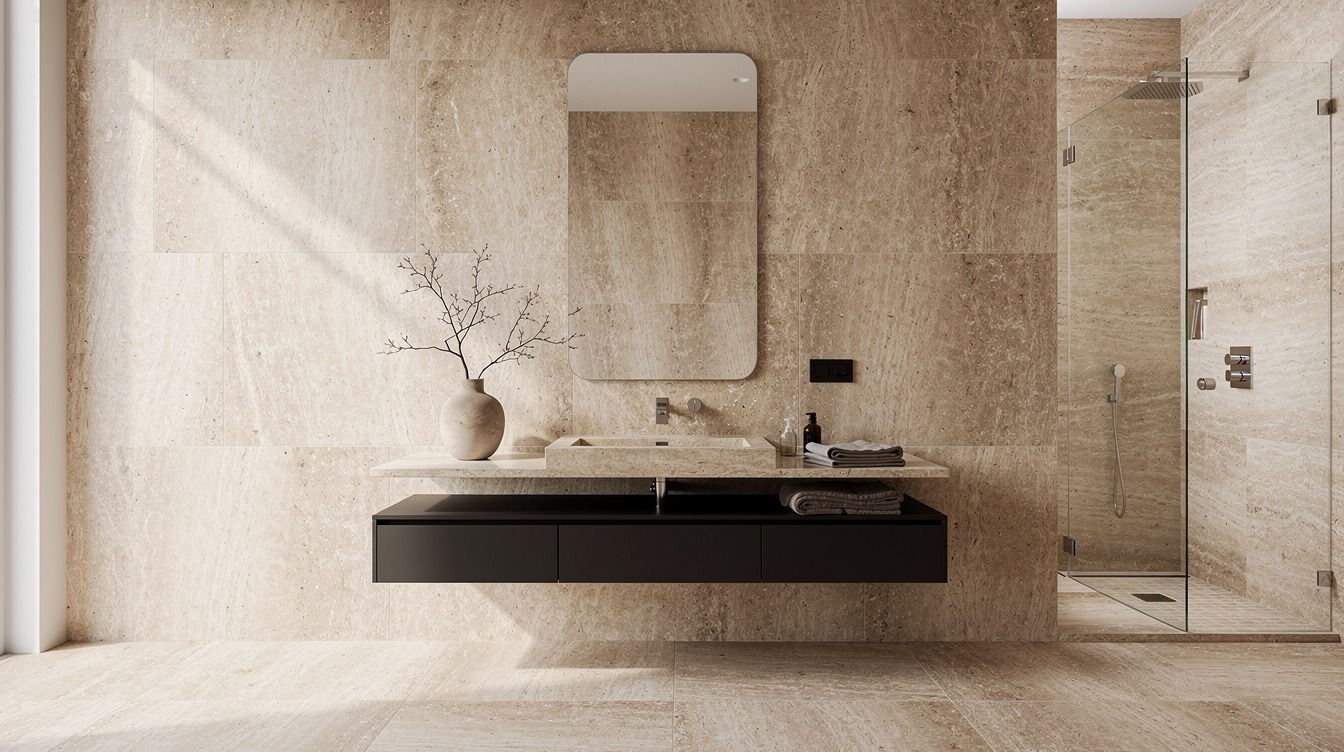
by The short answer: limestone wall ideas make a bathroom feel bigger when the stone runs in one quiet plane, not when every surface competes for attention. I learned that after choosing too many grout lines in my own bathroom. Your eye needs somewhere to rest. These warm, earthy approaches show you where.
- Run limestone from the floor to the ceiling
- Layer limestone behind a floating vanity
- Frame the mirror with limestone returns
- Paint the dry wall in Hague Blue
- Build the Three-Height Light Stack
- Wrap the shower in matching limestone
- Choose large-format cuts over tiny mosaics
- Float a narrow limestone ledge
- Apply the Two-Wood Rule beside the stone
- Use a limestone half wall instead of a full surround
- Pair Sea Salt with pale limestone
- Keep the dry zone simple and spend on the wet zone
- Mix limestone with microcement carefully
- Make the bathtub wall the quiet feature
- Seal the stone before styling the room
- Keep the accessories soft and scarce
1Run limestone from the floor to the ceiling
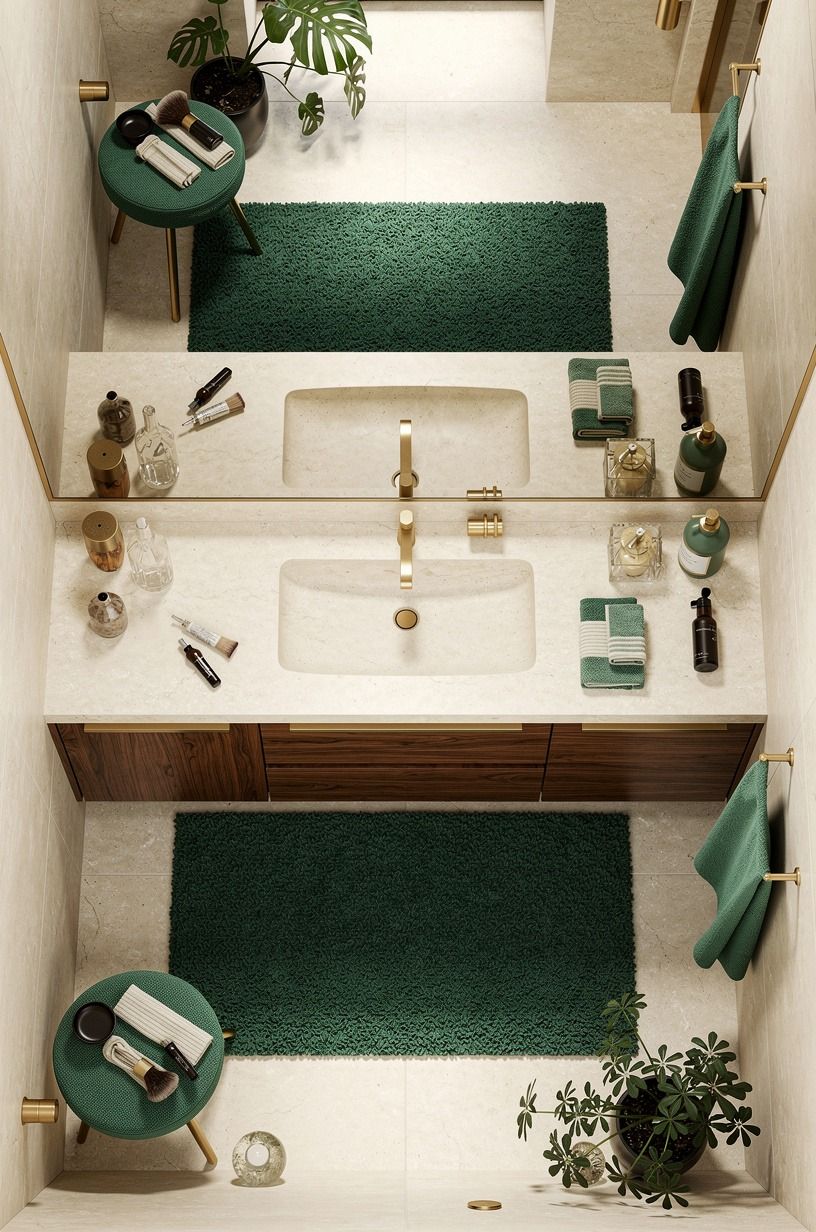
A full-height limestone wall gives your eye one vertical sweep, which makes a compact bathroom feel airy and calm. Use cream limestone with soft fossil marks behind the vanity or beside the shower. Emerald upholstery, gold fittings, and an organic bouclé stool can add texture without creating a busy grid of small tiles.
Choose slabs or large panels with a gentle cream base, then bring in emerald and gold rather than a yellow finish. An organic bouclé stool works especially well with a 32 to 36 inch vanity because the soft material balances the hard stone. If you’re working with a narrow wall, keep the cuts aligned so your sightline stays uninterrupted.
I’d skip a high-gloss seal here. It throws sharp reflections across the room and makes the surface feel commercial. For more earthy reference points, compare these natural stone bathroom ideas anchored in timeless limestone before you choose your slab.
2Layer limestone behind a floating vanity
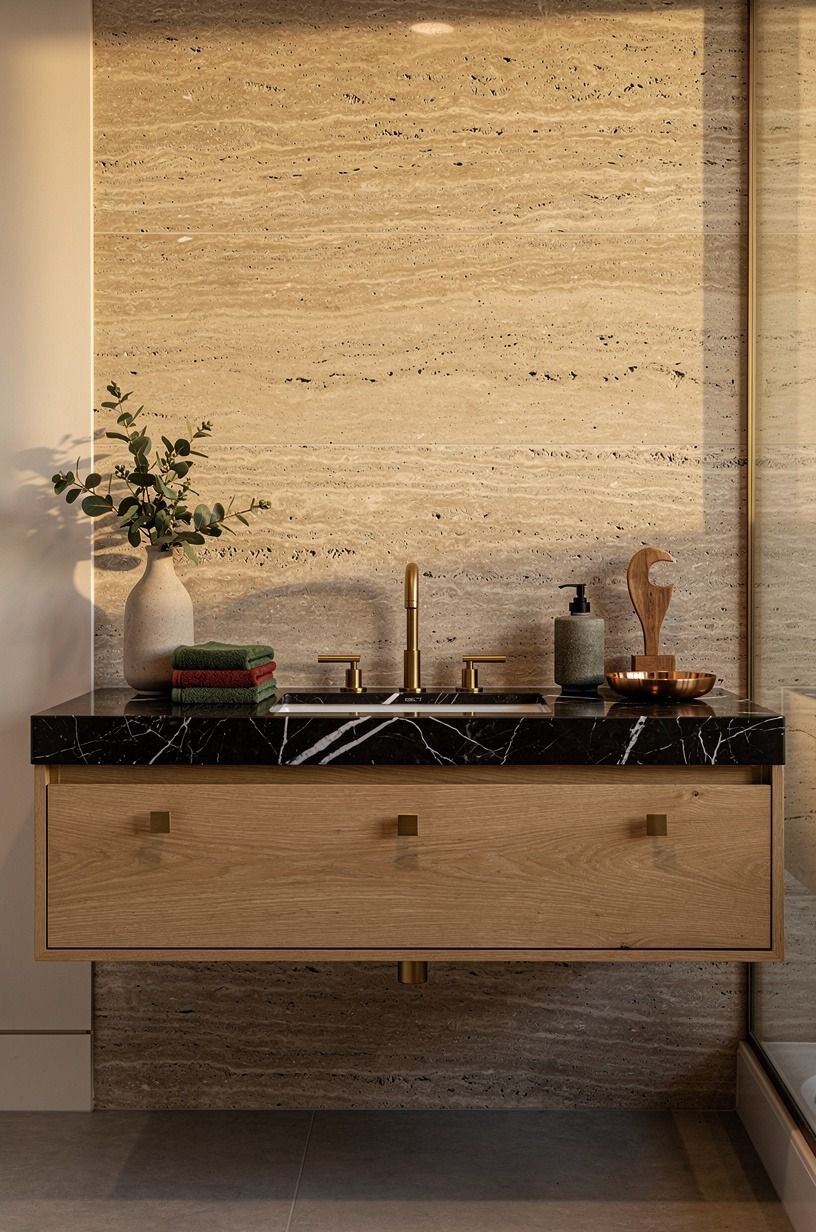
A floating vanity leaves more floor visible, and that extra strip of flooring matters in a small bathroom. Pair it with a limestone backsplash that rises to the ceiling rather than stopping at the faucet. You’ll create a quiet backdrop for your basin, and your cleaning routine will be easier too.
Try IKEA GODMORGON in natural oak with a Nero Marquina black marble panel with white veins above it. The forest green, rust, and oak combination feels modern but still welcoming, especially when the vanity is mounted high enough for the stone to remain visible below.
Keep the counter edge simple. A thick profile would make your wall feel heavier than it needs to.
Your mirror should be slightly narrower than the vanity, not wall-to-wall. And if you’re tempted by open shelving, use one oak shelf only. Two or three shelves will fill the quiet space with bottles, baskets, and visual noise before you notice it.
3Frame the mirror with limestone returns
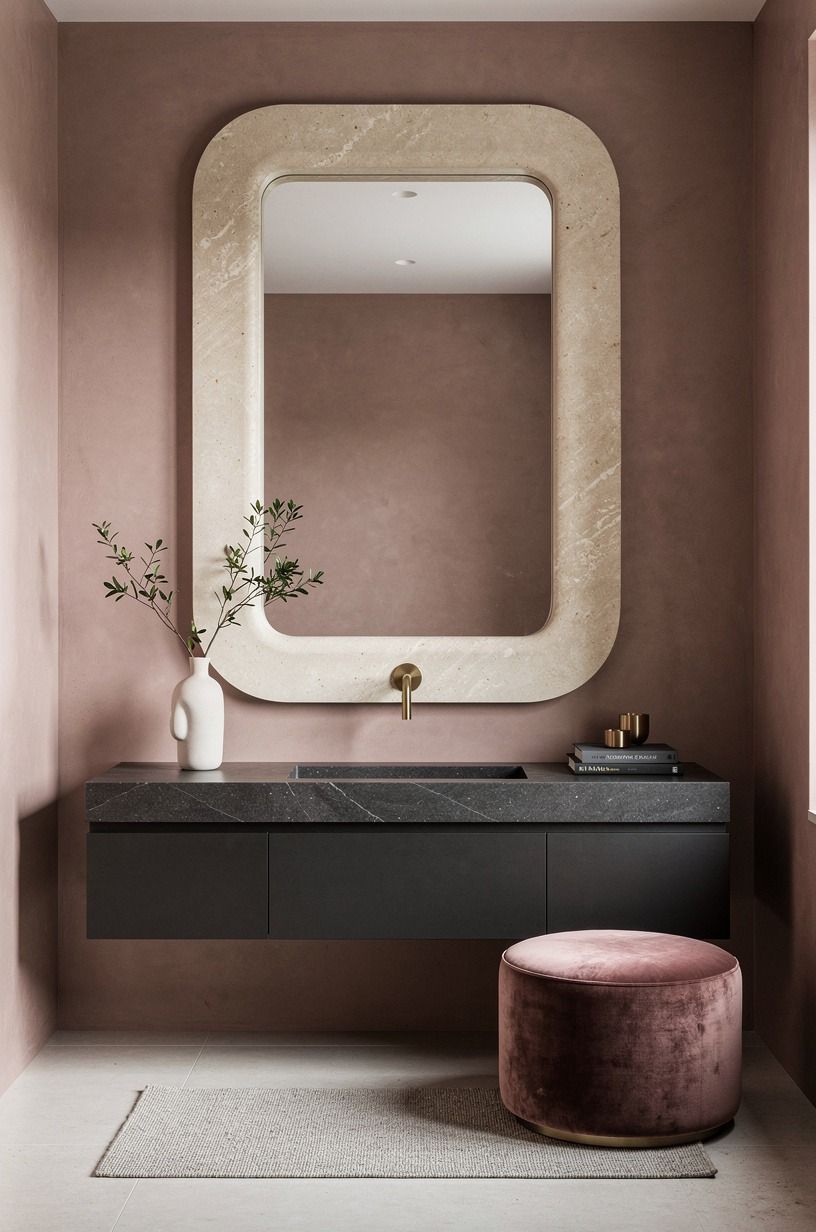
Instead of covering the entire wall, let limestone return a few inches around the mirror. This technique gives you the feeling of a stone-clad room without the cost of wrapping every surface. The edges catch soft light, and your reflection gains a more architectural surround.
Use pale limestone with restrained veining if your fixtures are brass. Bring in dusty rose and charcoal through a deep-pile mohair velvet stool or bench.
The combination is elegant, but you’ll want to keep the grout close to the stone color. A bright white line would draw attention to the construction and interrupt the warm, refined effect.
I made the mistake of choosing a mirror with a thick black frame beside pale stone. It looked bold in the sample room and harsh at home.
You’ll get a gentler result with a thin charcoal frame or frameless glass. For a related direction, see these limestone bathroom ideas for soft warm natural stone.
4Paint the dry wall in Hague Blue
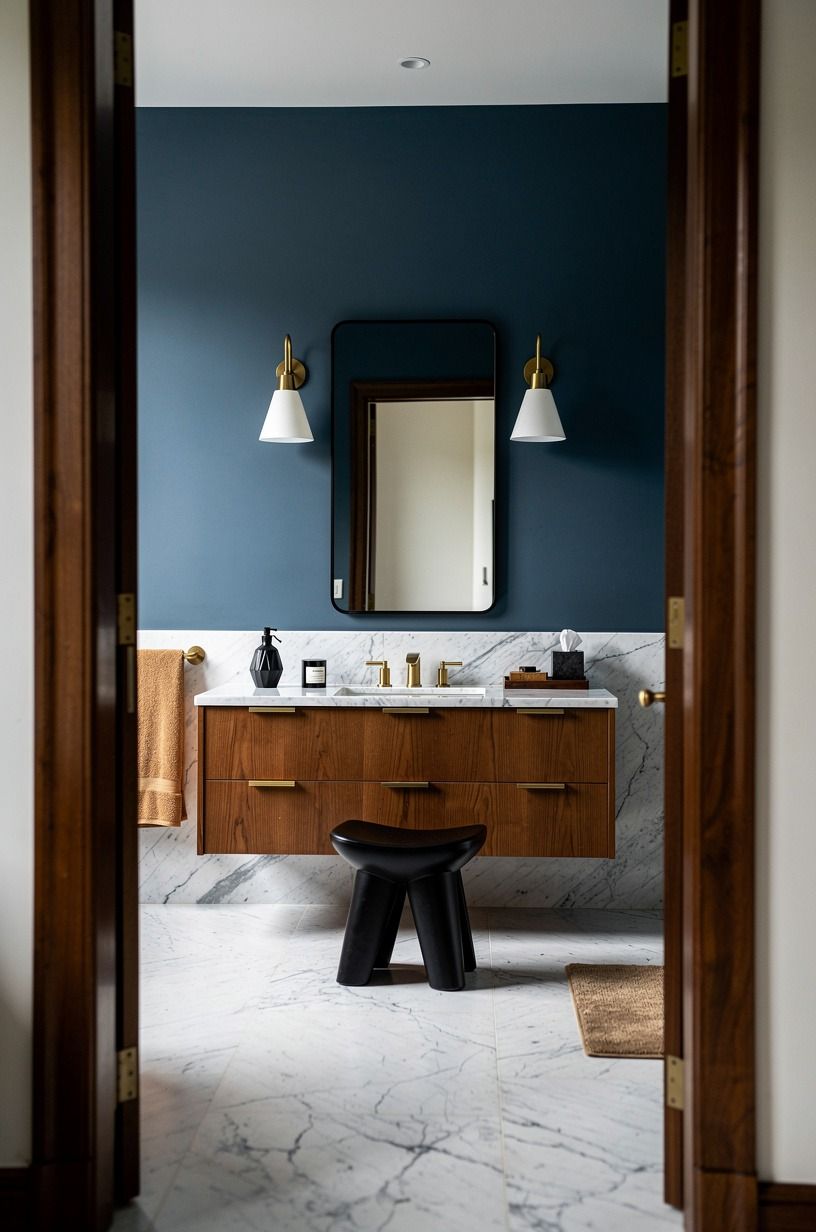
Limestone doesn’t need to cover every wall to feel intentional. On the dry side of the bathroom, use warm white beside Carrara marble with subtle grey veining. Camel textiles and black accents will give the pale palette enough contrast without making the room feel heavy.
This pairing is especially calm in a north-facing room, but you’ll need warm bulbs so the white doesn’t turn cold. Choose 2700K lighting if that’s available to you, and keep the trim close to the wall color. Bright white trim would make the contrast too sharp for a tranquil bathroom.
But don’t paint the shower wall unless your waterproofing system supports it. Keep paint in the dry zone and stone in the wet zone. You’ll get a more durable room, and your bold color will read as a deliberate design decision rather than a rushed shortcut.
5Build the Three-Height Light Stack
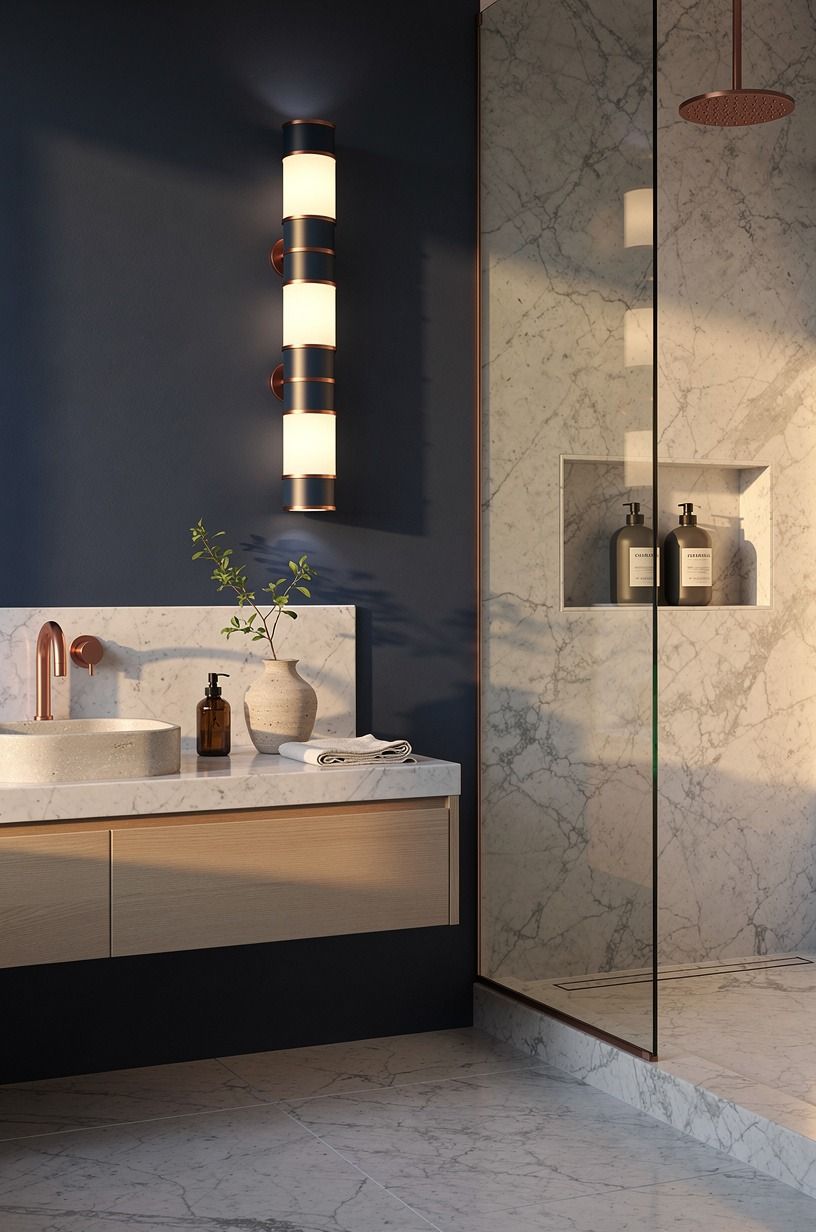
Your Carrara marble wall, with subtle grey veining, will shift beside midnight blue, copper, and ivory accents, so the lighting needs more than one source.
6Wrap the shower in matching limestone
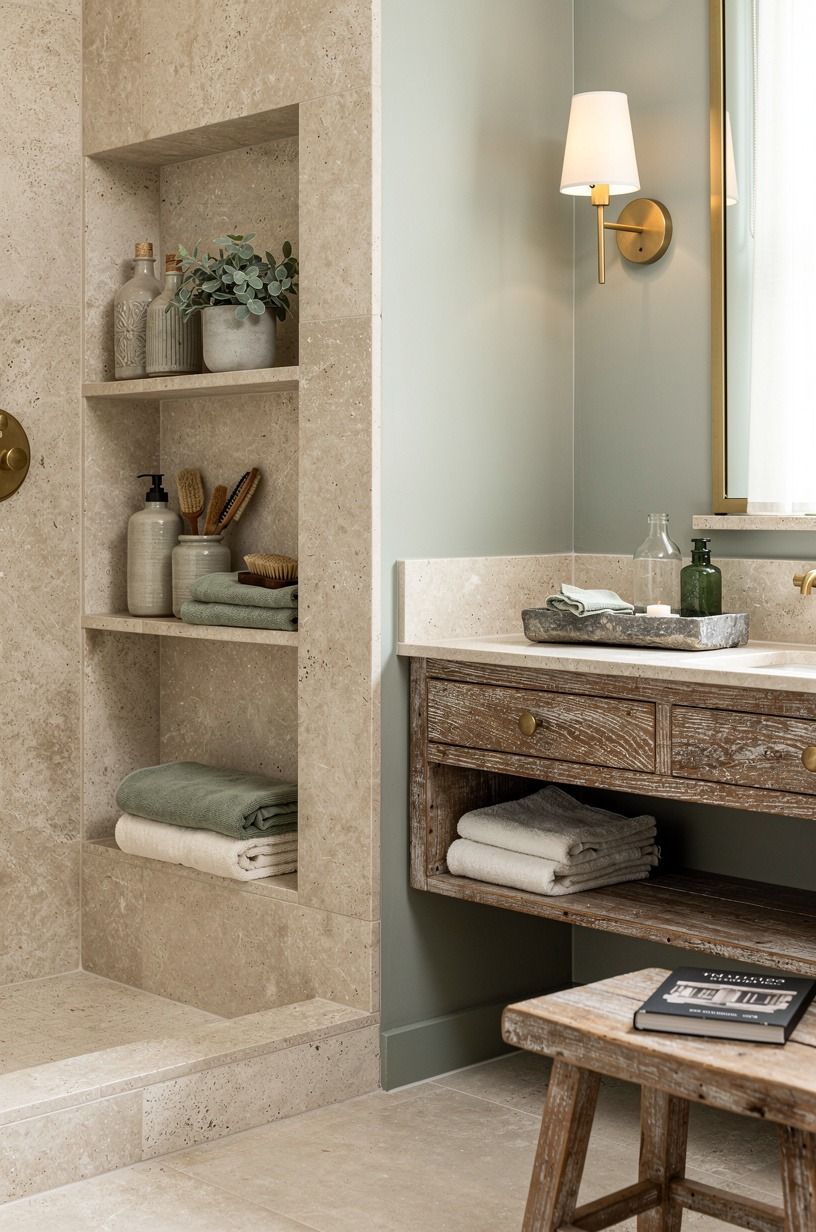
A limestone shower wall can feel peaceful when the same stone continues from the floor line to the ceiling. Use a waterproofed slab or approved stone tile system, then keep the niche trim simple. You’ll see fewer interruptions, and the shower will feel wider than its measurements suggest.
A comfortable shower is 36 by 36 inches minimum, so preserve that clear footprint before adding benches or ledges. Vein-cut limestone tile can stretch the visual length of a smaller shower, especially when the long lines run horizontally on the back wall. Add a reclaimed weathered teak bench for a natural wood note against sage green and warm cream.
You shouldn’t treat every limestone product as interchangeable. Some surfaces need more sealing, and some aren’t suited to constant water exposure.
Ask your installer about the exact product before you order it. Your shower can be warm and inviting, but the waterproofing still has to be boringly correct.
7Choose large-format cuts over tiny mosaics
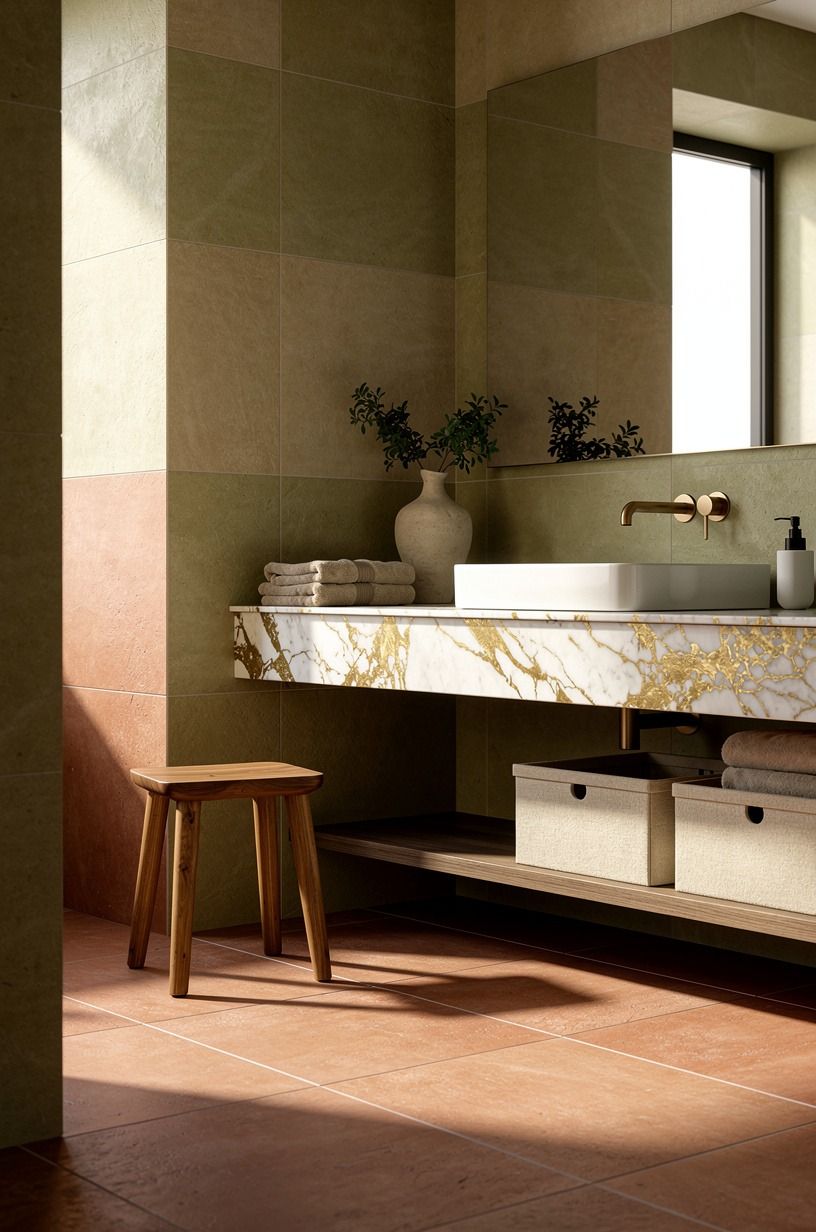
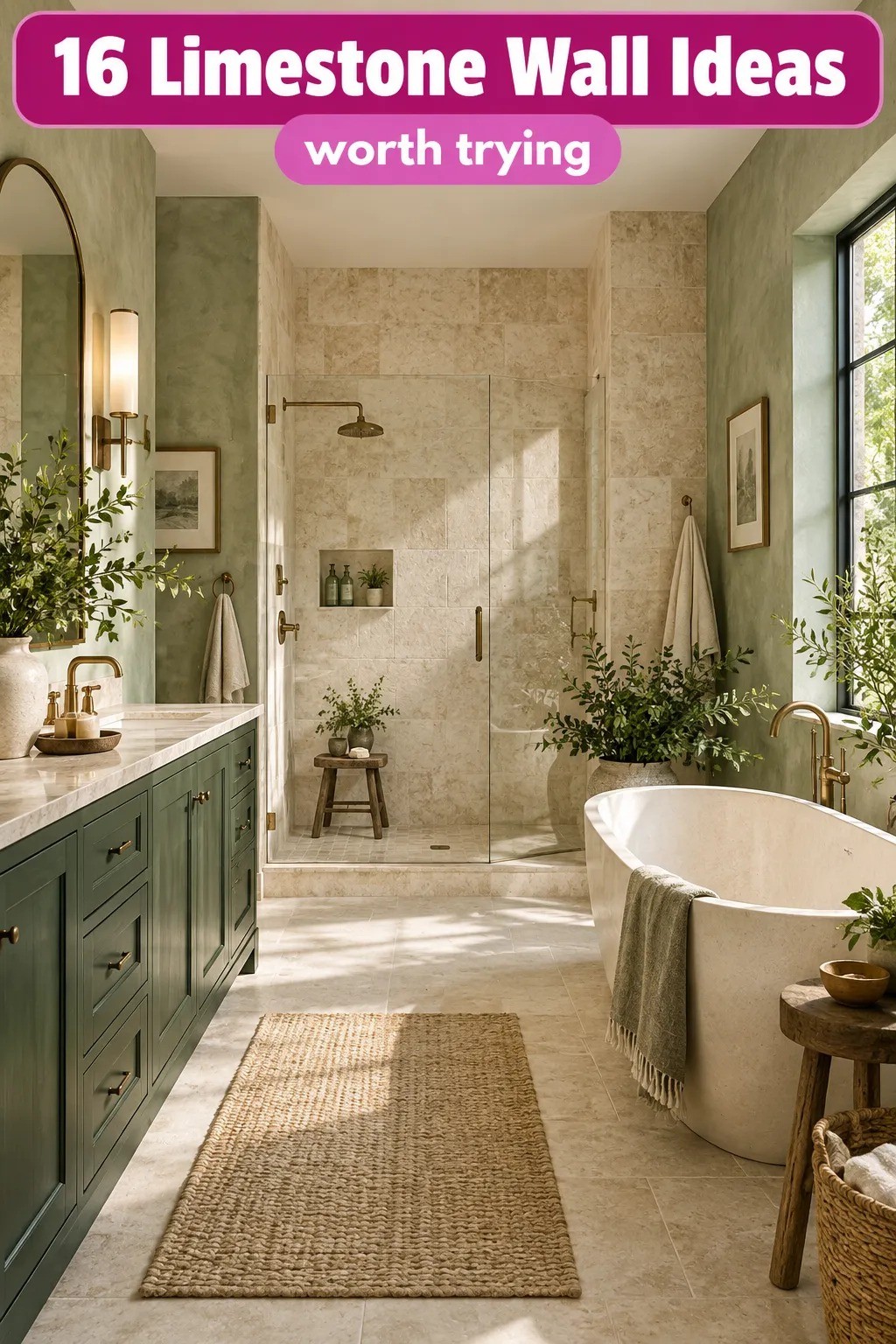
Large-format limestone makes a bathroom stone wall feel quieter because you see fewer joints. A Calacatta marble accent with gold veining can bring in terracotta, stone, and olive notes without recreating the tiny mosaic effect.
8Float a narrow limestone ledge
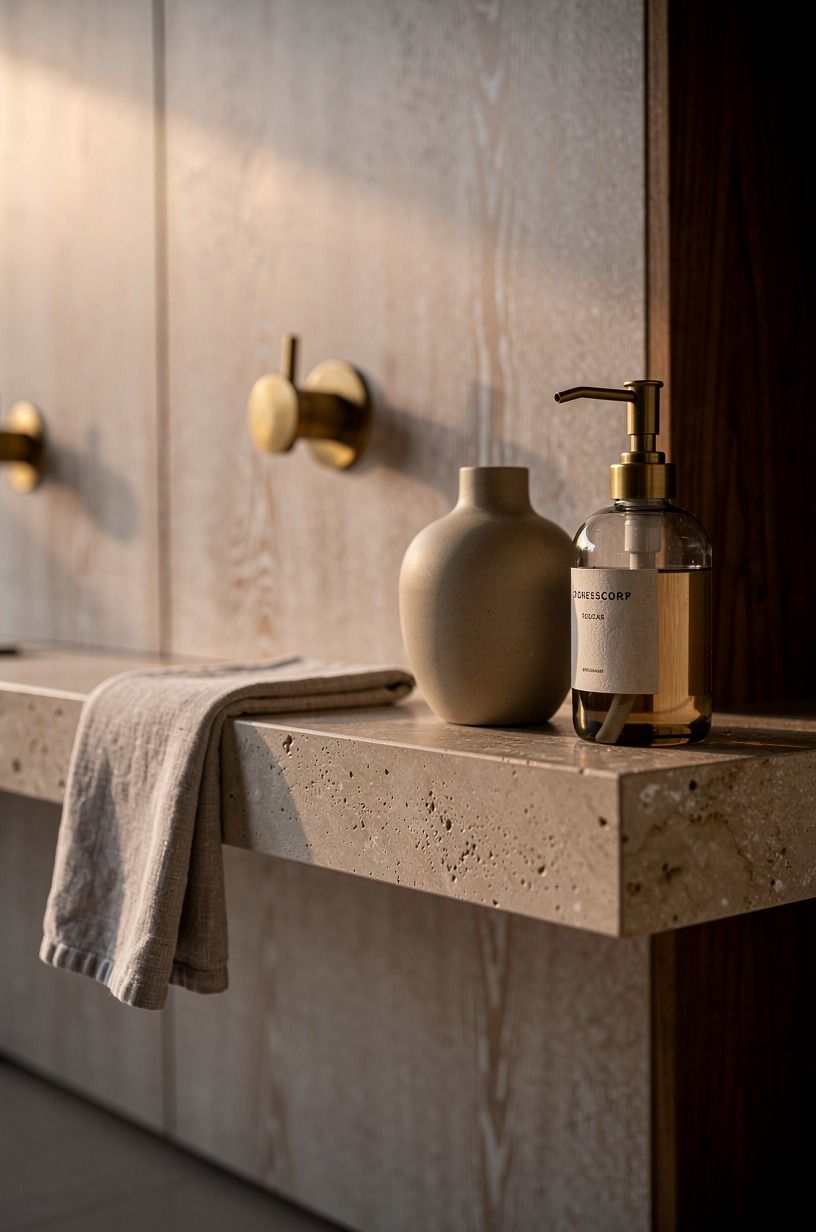
A narrow ledge gives your stone wall a useful place for soap, a small vase, or one folded towel. Keep it shallow, around the depth your installer recommends for the stone system, so it doesn’t become a shelf for every product you own. Your bathroom will feel calmer when the ledge has breathing room.
Use solid limestone with a softened edge rather than a sharp square profile. The rounded edge catches the light gently and feels comfortable near a shoulder or hip. Place the ledge below the mirror or along the back wall, where it won’t interfere with cabinet doors.
And keep the styling restrained. One amber glass bottle, a small branch, and a folded linen towel are enough. Let clay tones and aged brass provide the smaller notes without turning the ledge into a display case.
9Apply the Two-Wood Rule beside the stone
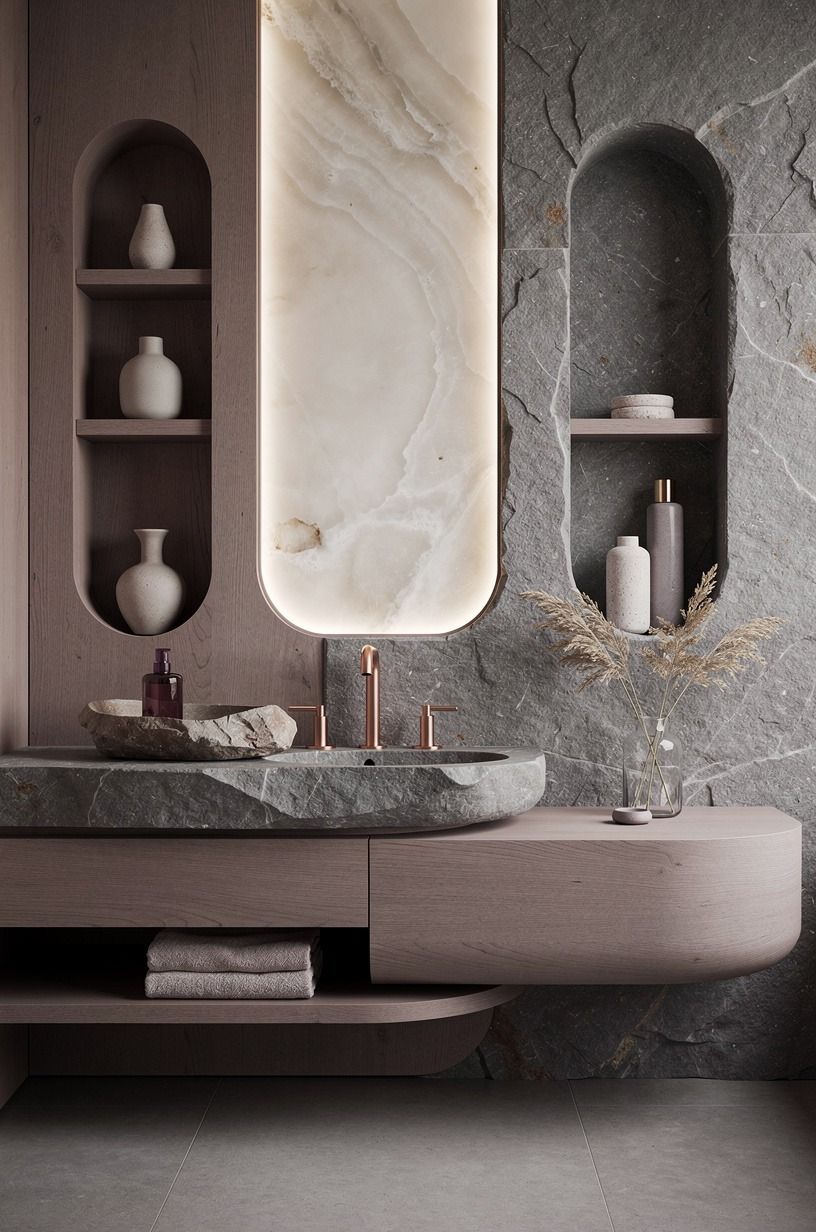
Limestone and wood are a natural pair, but too many wood tones can make the bathroom feel restless. Use one wood finish beside backlit translucent onyx, then keep the accents within a plum, grey, and rose gold palette.
10Use a limestone half wall instead of a full surround
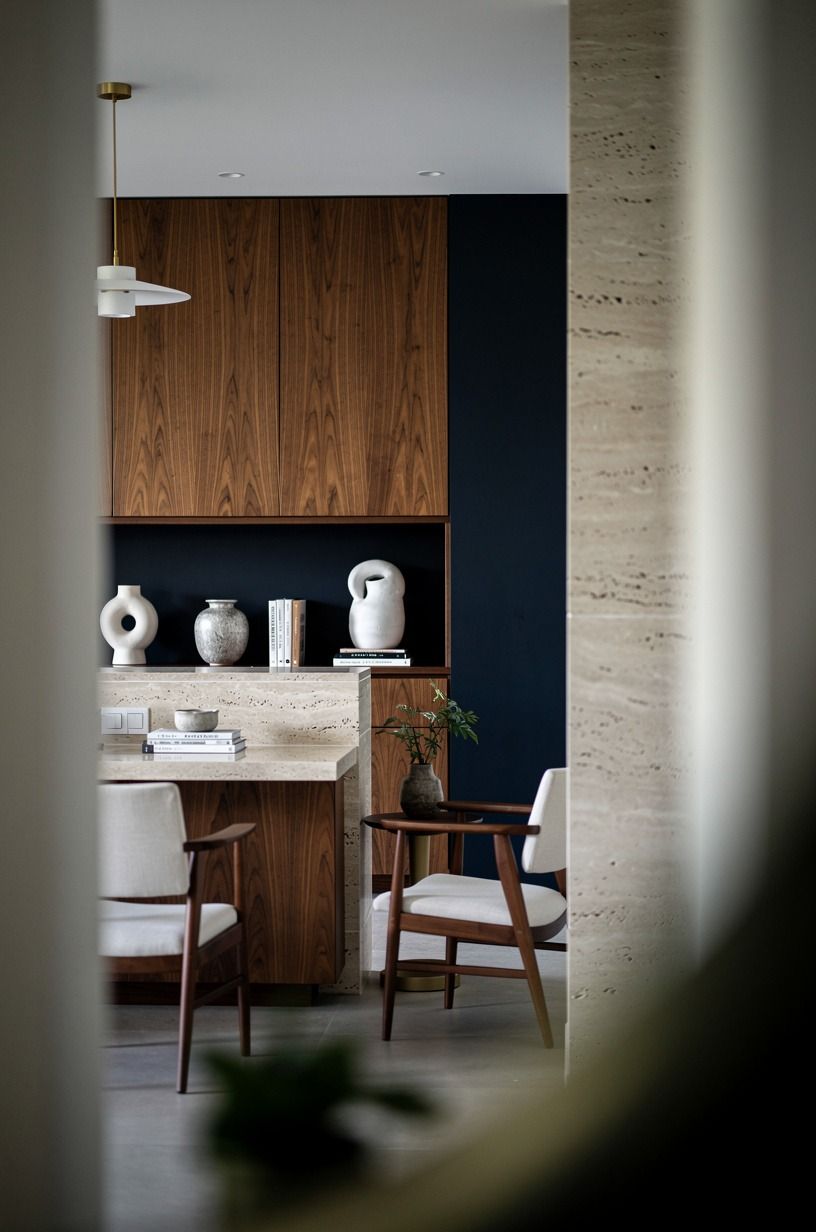
A half wall can divide the vanity from the shower while keeping light moving through the room. Cap it with a smooth limestone slab, then continue the same material on the lower section. You’ll gain privacy without building a dark, enclosed box.
Keep the top close to the height that makes sense for your layout, and protect the clearance around the toilet. You need at least 21 inches in front of the toilet, so your partition shouldn’t crowd the circulation path. Book-matched walnut works well here because its broad grain adds warmth against navy and white without competing with the stone.
Instead of heavy framed doors, use clear glass above the wall. The room will feel bright and spacious, even if the shower occupies a generous footprint. Your eye can still travel from the entry to the stone, which is the small-space advantage this layout needs.
11Pair Sea Salt with pale limestone
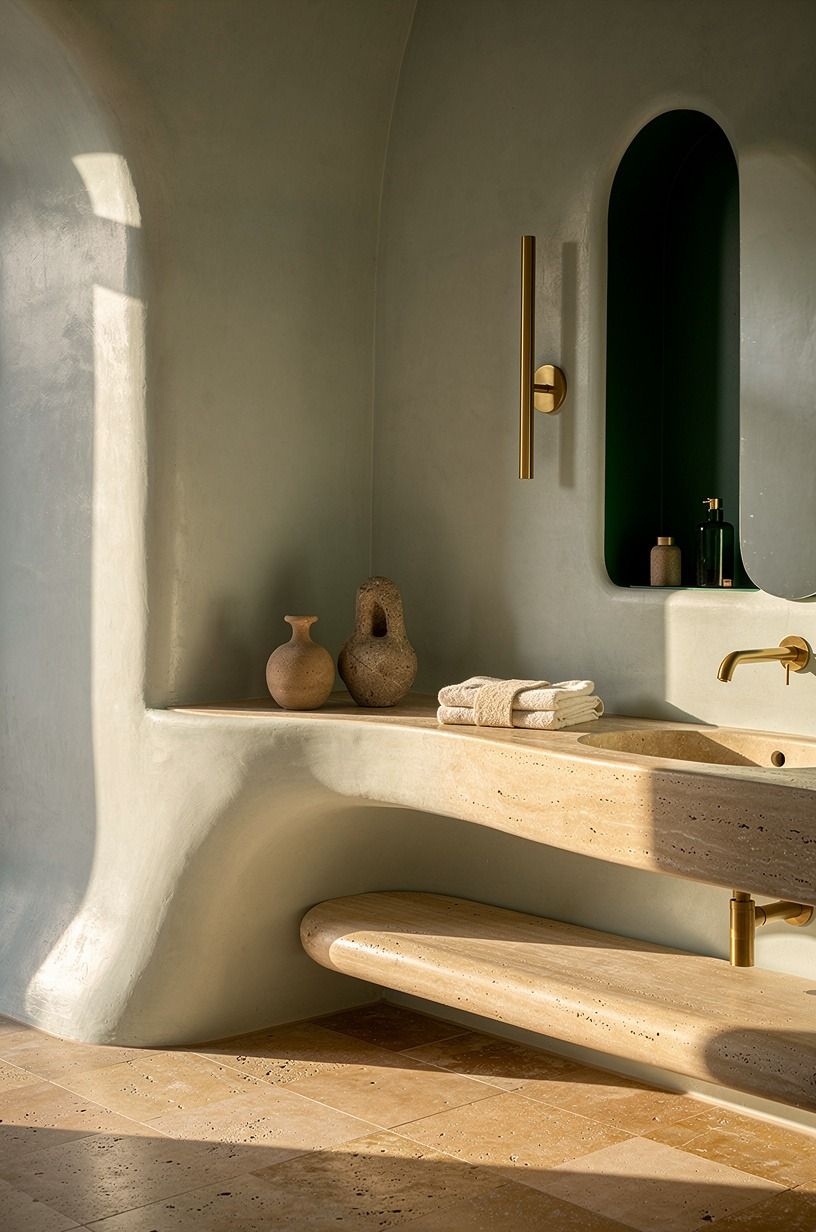
For a softer bathroom, keep the dry walls in Sherwin-Williams Sea Salt SW 6204, then bring in emerald, gold, and cream through the accessories. Use warm travertine in the shower or behind the vanity for a more grounded alternative to pale limestone.
12Keep the dry zone simple and spend on the wet zone
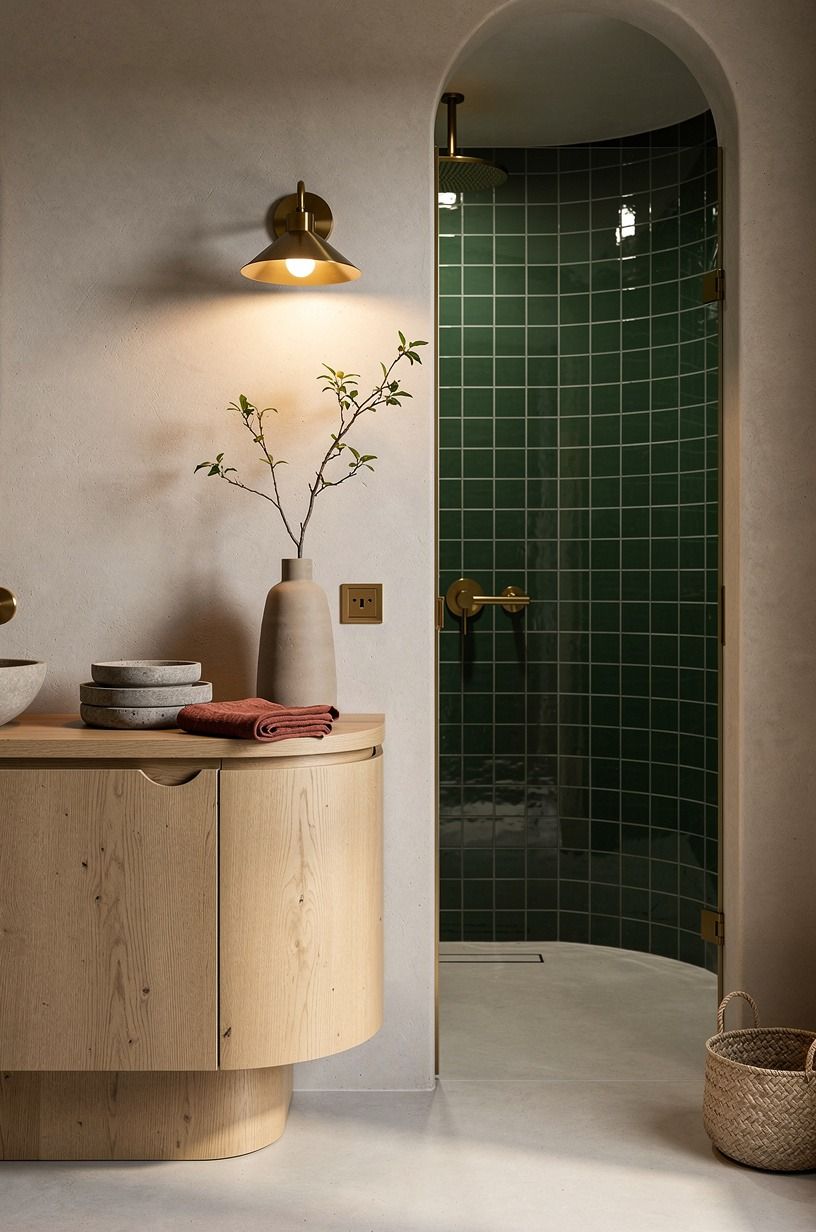
A full bathroom renovation can land across a wide range, so decide where the stone earns its place. If your shower is the feature, use limestone there and choose paint for the remaining walls. Forest green, rust, and natural oak can give the room character without spending your entire budget on surfaces.
Your choice doesn’t have to match the highest tier to feel refined. A 600gsm Turkish cotton towel, a good mirror, and one limestone wall can make a budget bathroom feel inviting.
Unlacquered brass that develops a patina adds warmth, not clutter. You’ll notice those details every day, not just when guests visit.
13Mix limestone with microcement carefully
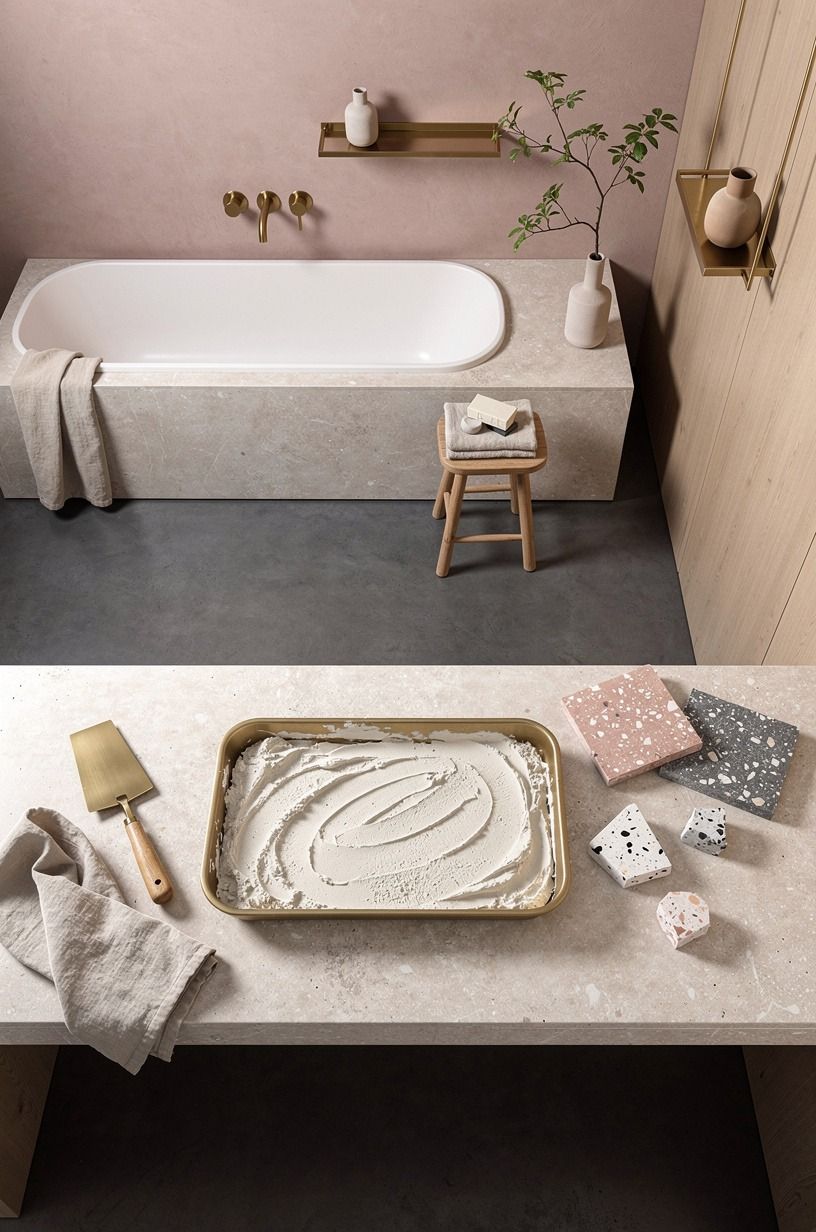
Limestone and microcement both create low-grout surfaces, but they have different personalities. Use limestone where you want tactile movement, then bring in warm white microcement on a secondary wall. An oversized-chip terrazzo detail can add dusty rose, charcoal, and brass notes without making the bathroom feel overly uniform.
Choose warm white microcement with a matte finish, not a blue-white coating. The slight tonal shift will make the limestone look richer, and the room will stay bright without becoming stark. You can use this combination around a freestanding tub or on a dry wall beside the vanity.
I’d skip mixing three pale finishes in the same sightline. Limestone, microcement, and white marble can blur together and leave your room feeling unfinished.
Pick two, then let your tapware and textiles provide the smaller notes. If you like this direction, explore these microcement bathroom ideas for the seamless no-grout look.
14Make the bathtub wall the quiet feature
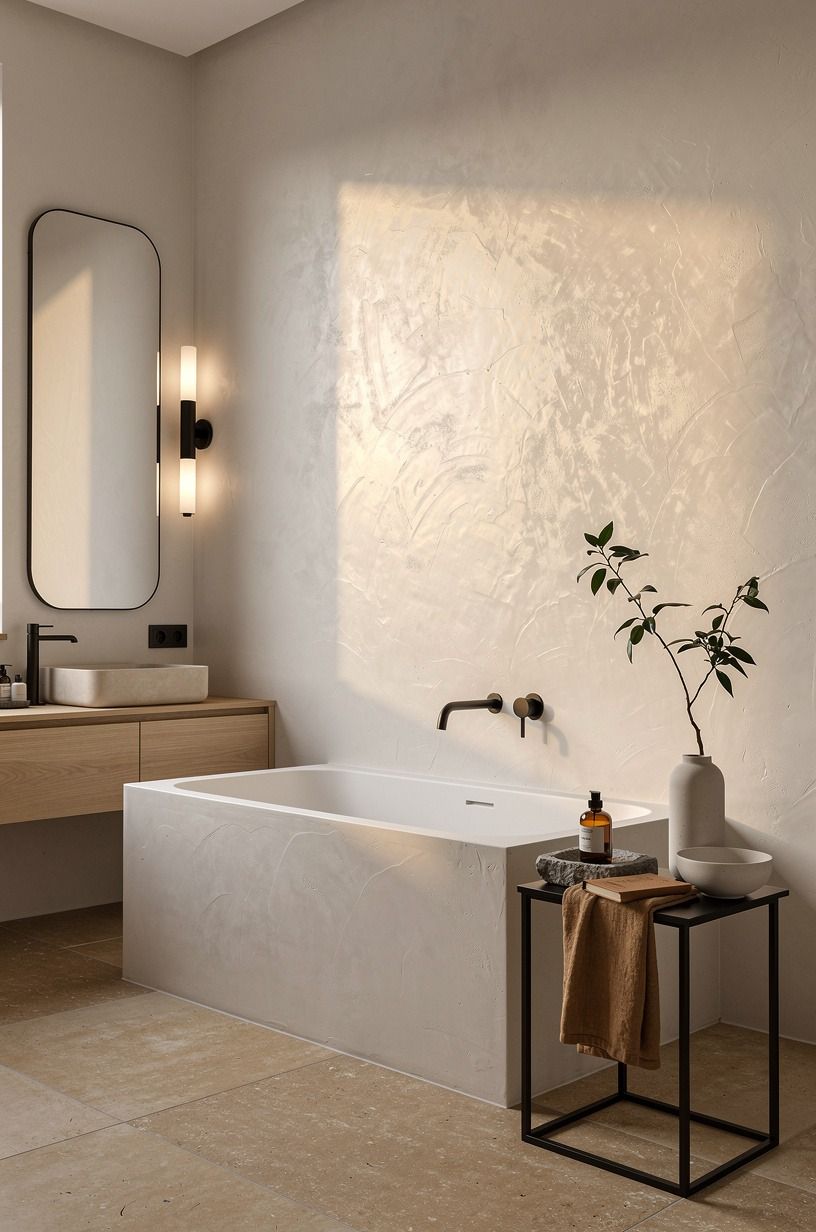
A standard tub measures 60 by 30 inches, so the wall behind it often becomes the room’s largest uninterrupted plane. Warm white, camel, and black accents work beautifully with hand-applied Venetian plaster when you want the wall to feel substantial but quiet.
15Seal the stone before styling the room
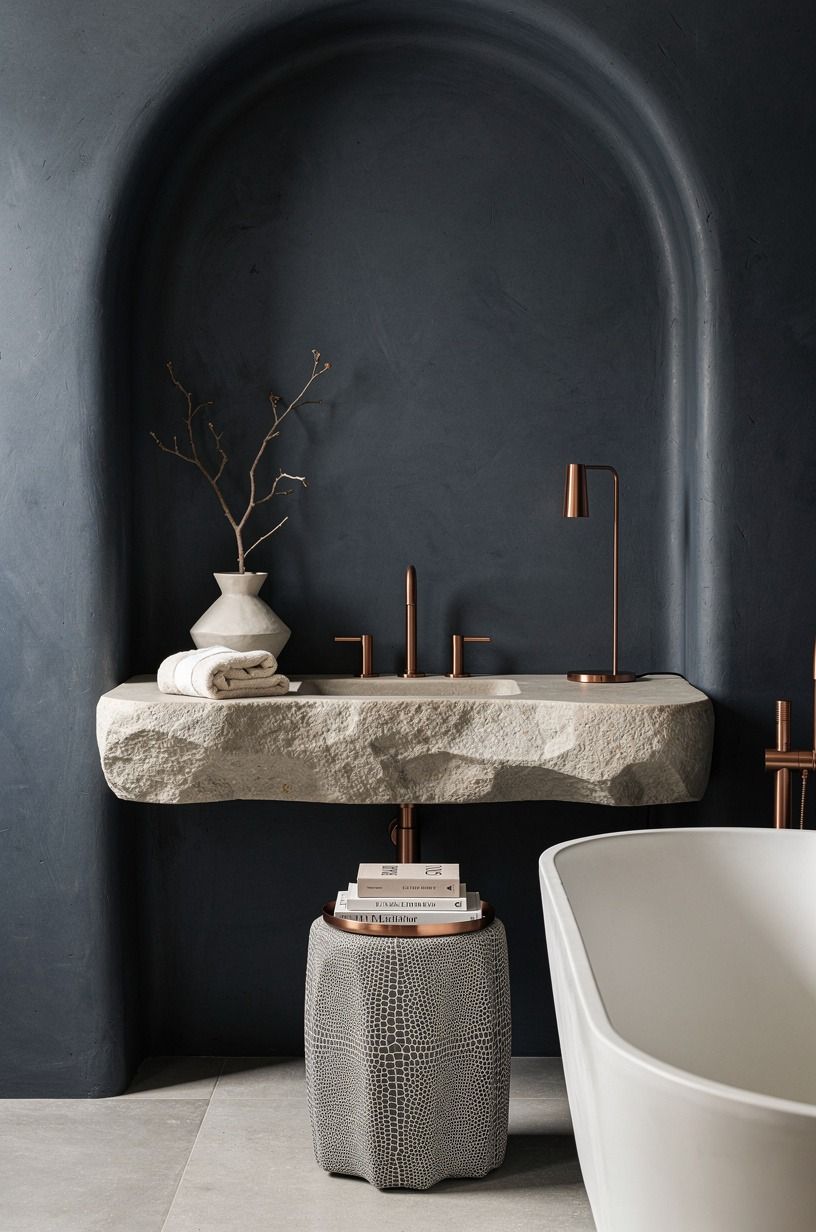
Limestone needs practical care, especially near a sink or shower. Ask for the recommended sealer and maintenance schedule for your exact stone, then test the finish in a hidden spot before the whole wall is treated. You’ll avoid a patchy surface and protect the porous material from daily splashes.
Use matte penetrating sealer when you want the stone to remain soft and natural. A topical coating can change the sheen and make the wall look plastic under bright light. Your installer should also explain which cleaners are safe, because acidic products can damage limestone.
I limewashed before sealing once, and the first splash left a mark that stayed longer than I’d like to admit. Now I plan the care step before the styling step.
For the final palette, use midnight blue, copper, ivory, and restrained shagreen accents. And if your bathroom needs another low-maintenance surface, compare the mood with these moody limewash bathroom ideas for dramatic depth-filled walls.
16Keep the accessories soft and scarce
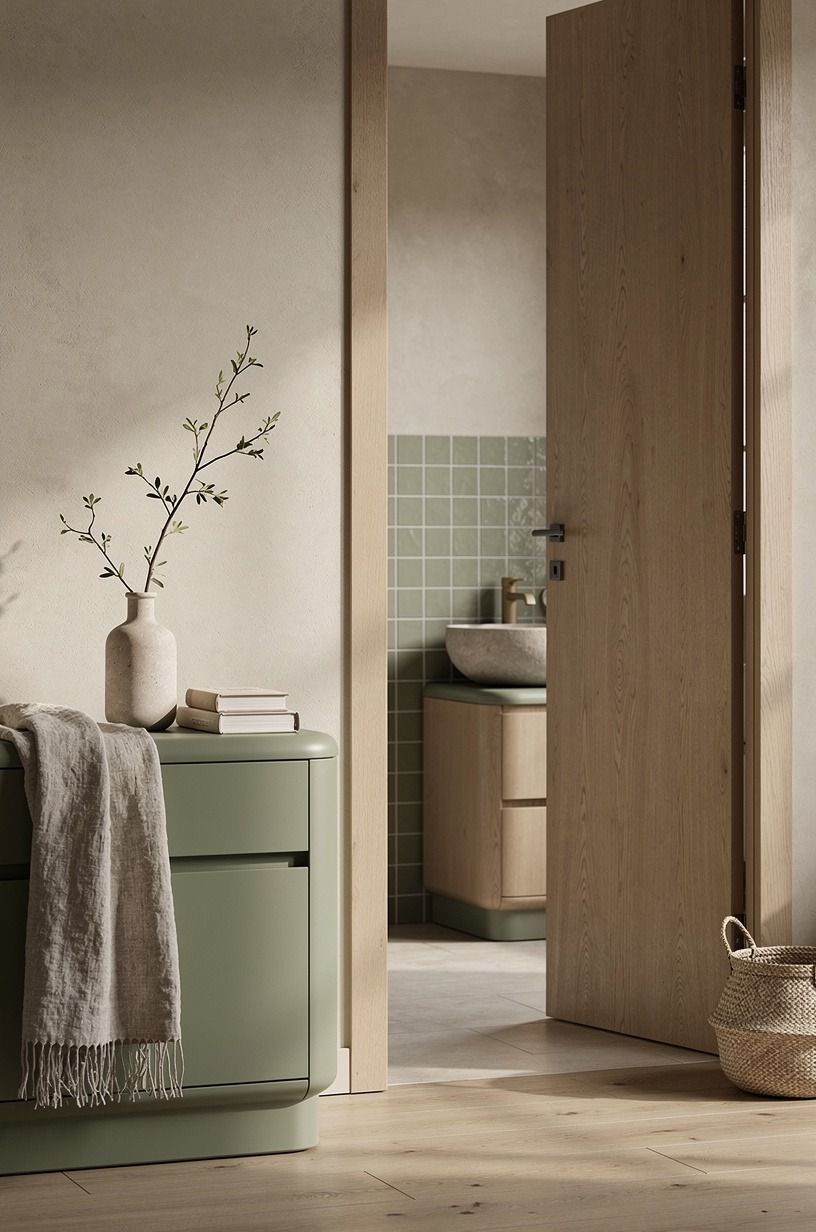
The final limestone wall idea is less about adding another object and more about choosing fewer objects. Washed Belgian linen, warm cream, sage green, and natural wood will soften the room without competing with the stone.
Why I’d Choose Limestone for This Room
I’ve used plenty of bathroom materials, and limestone has a quality that real rooms reveal better than samples. It has a quiet surface, but it isn’t flat.
In morning light, you’ll see tiny fossils, cloudy beige movement, and edges that seem softer than manufactured tile. At night, warm sconces pull out a gentle amber tone.
That shift is why the room feels lived-in instead of showroom-perfect.
My strongest opinion is that limestone works best when you stop trying to make every surface match. I’d pair it with painted drywall, oak, or microcement before I’d wrap the entire room in one identical finish. A bathroom needs a little tension.
Warm white with camel and black feels grounded. Limestone beside Sea Salt feels calming.
Limestone beside cerused oak feels organic. Your eye needs those changes in texture to understand the room.
I’ve also learned that the expensive part isn’t always the stone. Poor layout, weak lighting, and an awkward mirror can waste a good slab. If your budget is limited, put the money into the wet-zone installation and a wall that improves the room’s proportion.
You can paint the dry walls later. You can replace a faucet later.
Rebuilding a poorly planned shower is another matter.
That’s the real reason I keep returning to limestone. It gives you warmth without asking for a busy pattern, and it can make a small bathroom feel substantial without making it feel crowded. Choose the wall that deserves attention, then let everything else support it.
A Few Things Worth Answering
What is the best Limestone Wall Ideas for a Seamless, Stone-Clad Bathroom for a small bathroom?
A full-height limestone wall behind a floating vanity is the best choice for a small bathroom. It gives your eye one vertical plane and leaves more floor visible. Honed pale limestone with an IKEA GODMORGON vanity will keep the room airy without adding visual clutter.
Where can I buy Limestone Wall Ideas for a Seamless, Stone-Clad Bathroom pieces on a budget?
Look at IKEA, Wayfair, and Target for vanities, mirrors, and textiles, then check Facebook Marketplace or local thrift stores for used pieces. You’ll save more by buying a second-hand mirror or cabinet and spending on the stone installation.
How much does a Limestone Wall Ideas for a Seamless, Stone-Clad Bathroom makeover cost?
A small refresh can fall within the $200-$1,200 budget range when you use paint, a mirror, a faucet, and textiles. A mid-range project with a new vanity, partial wall tile, and lighting is typically $3,000-$9,000.
Can I create a Limestone Wall Ideas for a Seamless, Stone-Clad Bathroom on a budget?
Yes, and you don’t need to stone every wall. Paint the dry zone, keep your existing vanity if it’s sound, and use one limestone feature wall. Second-hand mirrors, free layout changes, and better lighting can make the room feel warmer without a full renovation.
Is a Limestone Wall Ideas for a Seamless, Stone-Clad Bathroom worth it in a small space?
Yes, because the material’s gentle variation adds depth without a loud pattern. Use large-format pieces, align the grout, and keep the vanity wall visually quiet. Your small bathroom will feel more expansive when fewer lines interrupt the main view.
Is a Limestone Wall Ideas for a Seamless, Stone-Clad Bathroom a good idea for a rental?
It can be, if you keep the changes removable. Try peel-and-stick limestone-look panels in a dry zone, a tension rod for towels, and a removable mirror. You won’t get the same mineral texture as real stone, but your room can still feel warm and inviting.
Where I’d Start First
If I had to pick one, I’d start with a full-height limestone vanity wall. It gives your eye one quiet plane, so the mirror, tap, and towels don’t chop the room into pieces. Pin that limestone wall idea for later, then compare it with our natural stone bathroom guide.