
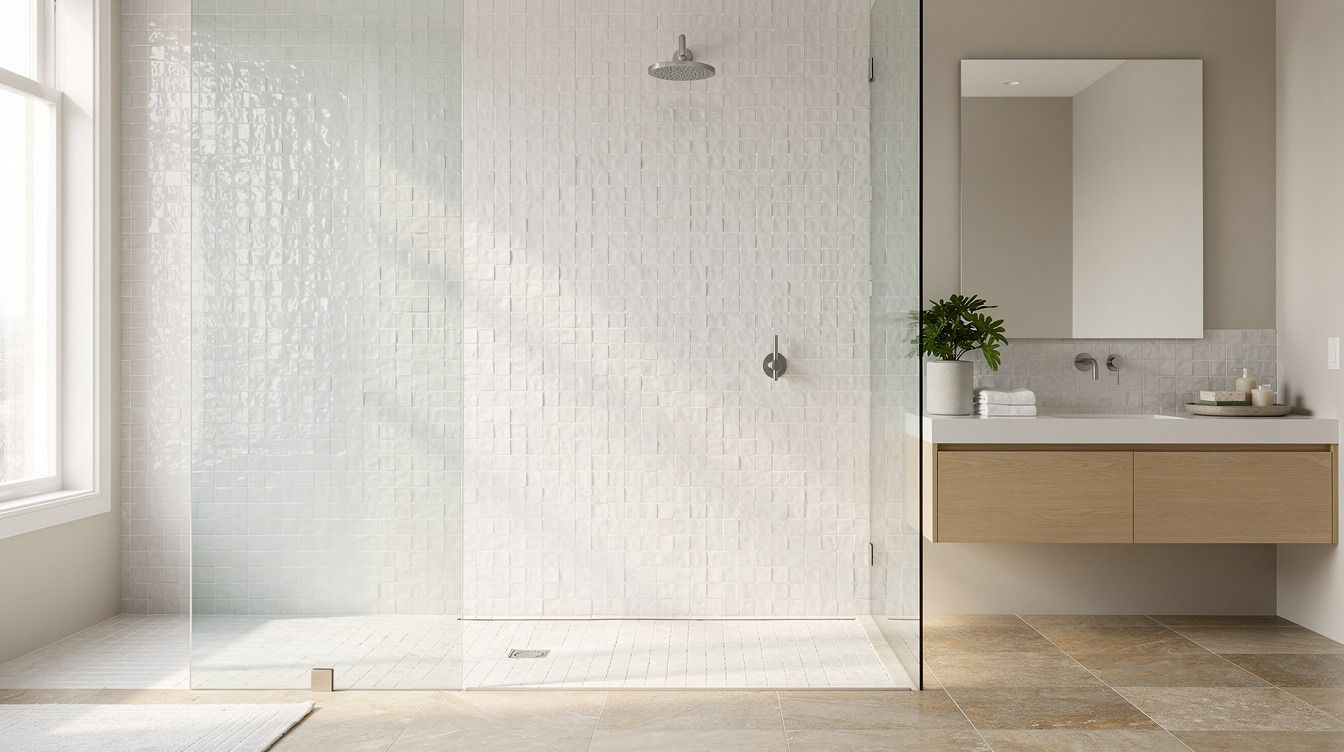
 by
by The short answer: the best master bathroom tile ideas pair one hard-working floor with one shower surface that adds texture, not noise. I learned that after matching everything too closely and ending up with a cold box. Your room needs contrast, a clear grout plan, and materials you’ll still enjoy before coffee.
- Layer White Zellige for Bathroom Tiles Inspo
- Can Charcoal Floor Tile Work With a Soft Shower Wall?
- Float the Three-Height Light Stack
- Travertine vs. Handmade Tile: Let One Surface Lead
- Use a Penny Tile Floor Under a Quiet Stone Shower
- Frame the Shower With a Contrast Border
- Choose the Two-Wood Rule Over a Matching Set
- Swap the Standard Grid for Vertical Subway Tile
- Layer White Zellige for Bathroom Tiles Inspo
- Can Charcoal Floor Tile Work With a Soft Shower Wall?
- Float the Three-Height Light Stack
- Travertine vs. Handmade Tile: Let One Surface Lead
- Use a Penny Tile Floor Under a Quiet Stone Shower
- Frame the Shower With a Contrast Border
- Choose the Two-Wood Rule Over a Matching Set
- Swap the Standard Grid for Vertical Subway Tile
- Onyx, Kept Quiet
- Build a Shower Niche That Repeats the Floor
- Hang a Soft Pattern Above a Plain Floor
- Contrast Marble Ideas Interior Design With Warm Paint
- Paint the Vanity Wall and Keep the Tile Low
- Zellige + Travertine: One Grout, Two Textures
1Layer White Zellige for Bathroom Tiles Inspo
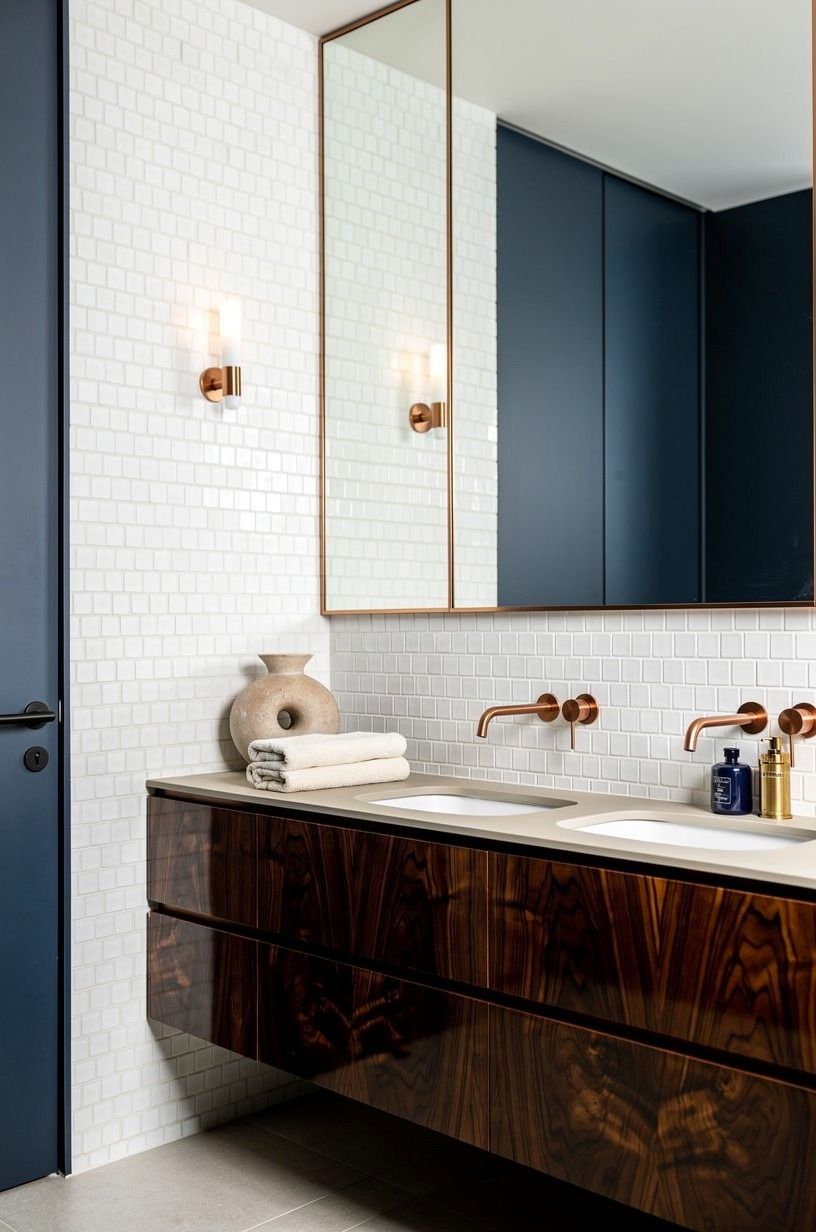
White zellige gives your shower a soft, irregular surface that catches light instead of throwing it back like a glossy showroom wall. Choose ivory zellige tile with gentle variation, then bring in midnight blue on the vanity wall and book-matched walnut at the vanity. Copper hardware adds warmth without making the room feel busy.
I’d skip a bright white mosaic floor here. It can look busy beneath your feet, especially when the wall tile already has rippled edges.
Your better move is a quiet ivory floor with a narrow grout line, so the shower feels calm and the handmade tile gets the attention it deserves. My white zellige bathroom ideas show the same balance in a lighter setting.
Use warm white grout rather than a sharp blue-white. The difference is subtle, but you’ll notice it when morning light hits the wall.
Add copper hardware and a Belgian flax linen stool, and the room will feel welcoming without turning sugary. And if your vanity is 32 to 36 inches high, the tile layout can align neatly with its top edge.
2Can Charcoal Floor Tile Work With a Soft Shower Wall?
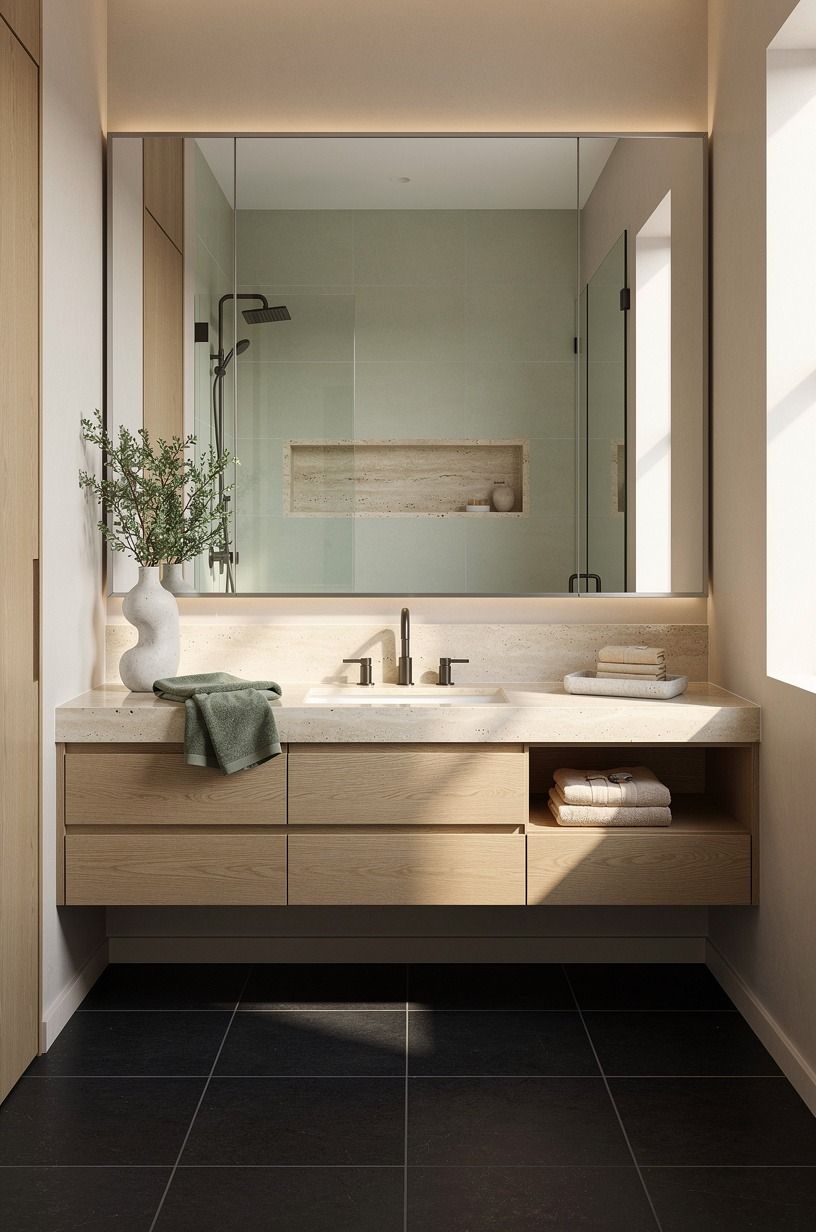
A warm travertine floor can make a large bathroom feel grounded, but it needs a shower wall with some lift.
Pair the stone with a sage green shower surface, warm cream grout, and natural wood at the vanity. The contrast keeps the room gentle rather than heavy, while the travertine adds enough variation to prevent the floor from feeling flat.
3Float the Three-Height Light Stack
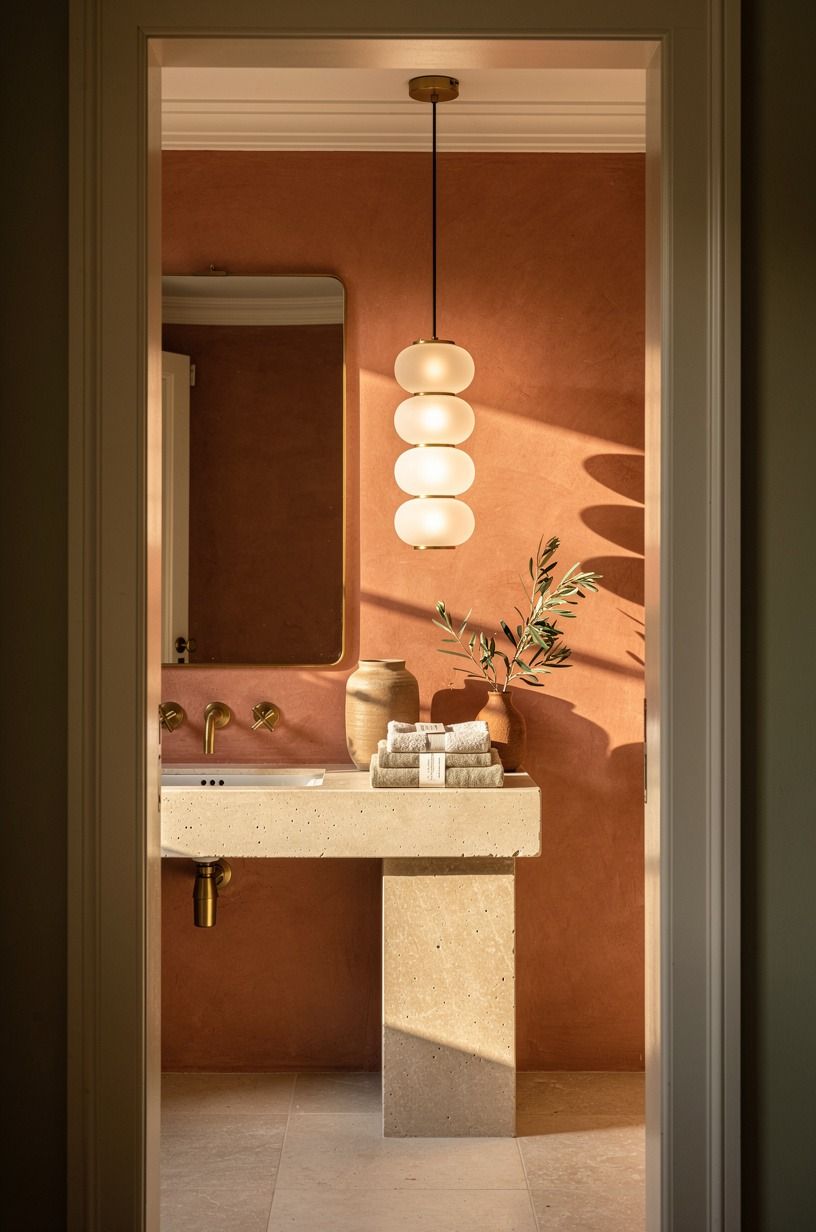
The Three-Height Light Stack uses three levels of visual weight: a terracotta floor, a quiet stone shower wall, and an olive-toned material at eye level. Start with small-format terracotta tile, then use soft stone tile in the shower. Finish with an olive-painted vanity or mirror that gives the middle of the room some warmth.
Why does this work? Your eye moves from the floor to the wall and then to the mirror instead of stopping at one loud pattern.
A comfortable shower is at least 36 by 36 inches, so the wall surface has enough room for a subtle pattern without becoming fussy. I’d use a restrained geometric floor, not a high-contrast starburst.
The floor should feel earthy and quietly charming when you walk in. The shower wall should feel bright.
Your mirror frame can bring in unlacquered brass developing a soft patina, while a stone bath mat adds softness without looking flimsy. And if you’ve got a narrow room, mounting the vanity mirror higher can keep the sightline open. This is one of the few layouts where a small bathroom can feel more sophisticated than a much larger one.
For another soft tile palette, compare the proportions in these white zellige bathroom ideas.
4Travertine vs. Handmade Tile: Let One Surface Lead
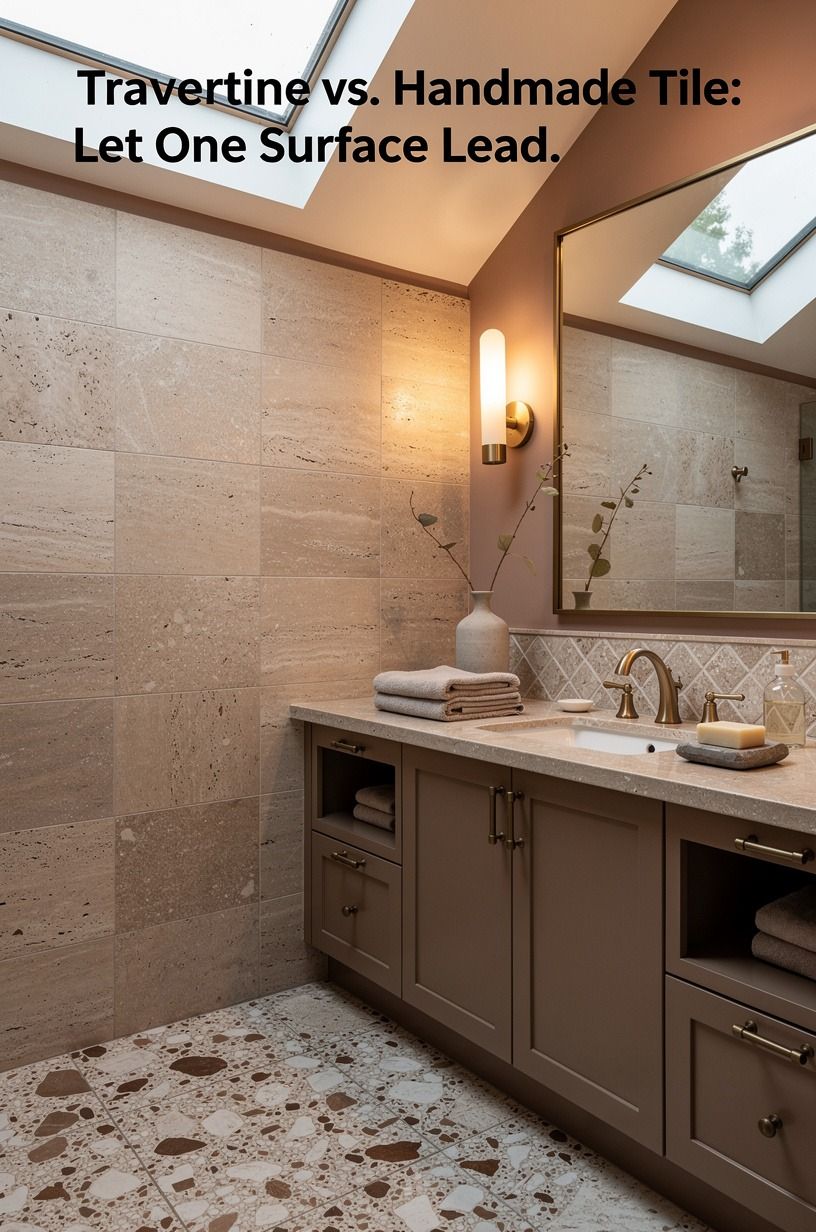
Modern travertine bathroom design works best when the stone has visible pitting and warmth. If you’re weighing it against handmade tile, an oversized-chip terrazzo floor can give the room a similar grounded quality while bringing in a little more graphic movement. Pair it with a smaller handmade tile in a clay tone for the shower walls.
I went back and forth on polished stone for years, but I’d skip it in a busy bathroom. Polished surfaces reflect every bottle and towel, while a honed finish lets your eye settle. Your shower can take a more tactile direction with handmade clay tile, especially if your vanity wall is painted Farrow & Ball Setting Plaster No.231.
Keep the grout close to the tile color. You’ll want the terrazzo to read as one broad plane, not a checkerboard.
A linen curtain and aged brass faucet will warm the room, while a simple vanity keeps it from feeling too formal. If you’re planning a full spa mood, these spa-like master bathroom ideas can help you carry the same palette beyond the shower.
5Use a Penny Tile Floor Under a Quiet Stone Shower
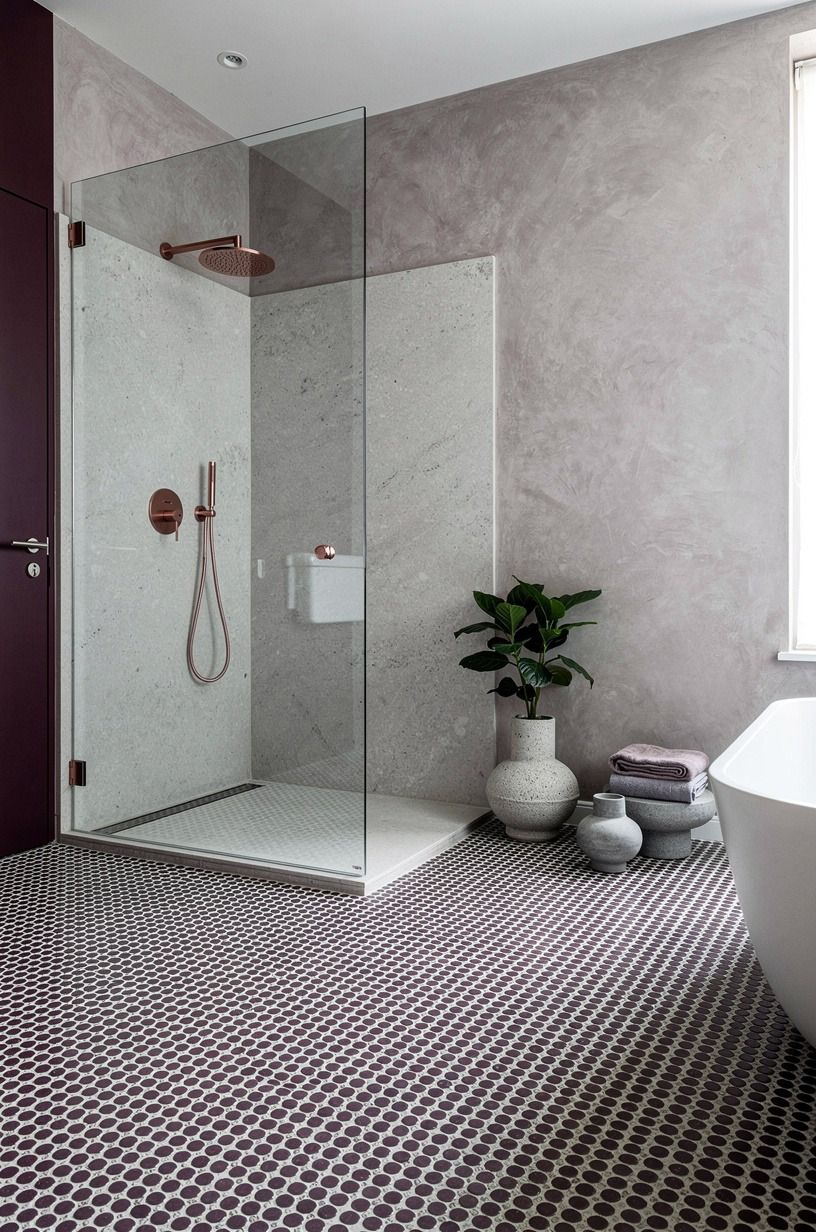
Penny tile gives your feet a little visual texture and makes a plain shower wall feel more intentional. Pair charcoal gray porcelain penny tile with hand-applied Venetian plaster in the shower. The small floor pieces are practical around wet areas, while the softly textured wall keeps your bathroom from looking fragmented.
You’ll want to check the grout tone before committing. Bright white grout looks fresh in a sample and can feel fussy across the entire floor. I’d choose a soft gray grout that echoes the floor and lets the plaster remain the quiet surface.
Add a plum mohair velvet bench cushion outside the splash zone, not in the shower itself, and bring in rose gold only in small doses. A warm metal mirror frame can be elegant, but rose-gold faucets plus metallic lighting usually feels heavy.
And if you’re refreshing rather than rebuilding, paint the dry wall a muted plum shade for a gentle transition. These white zellige bathroom ideas also show how warm texture can keep a pale room from feeling sterile.
6Frame the Shower With a Contrast Border
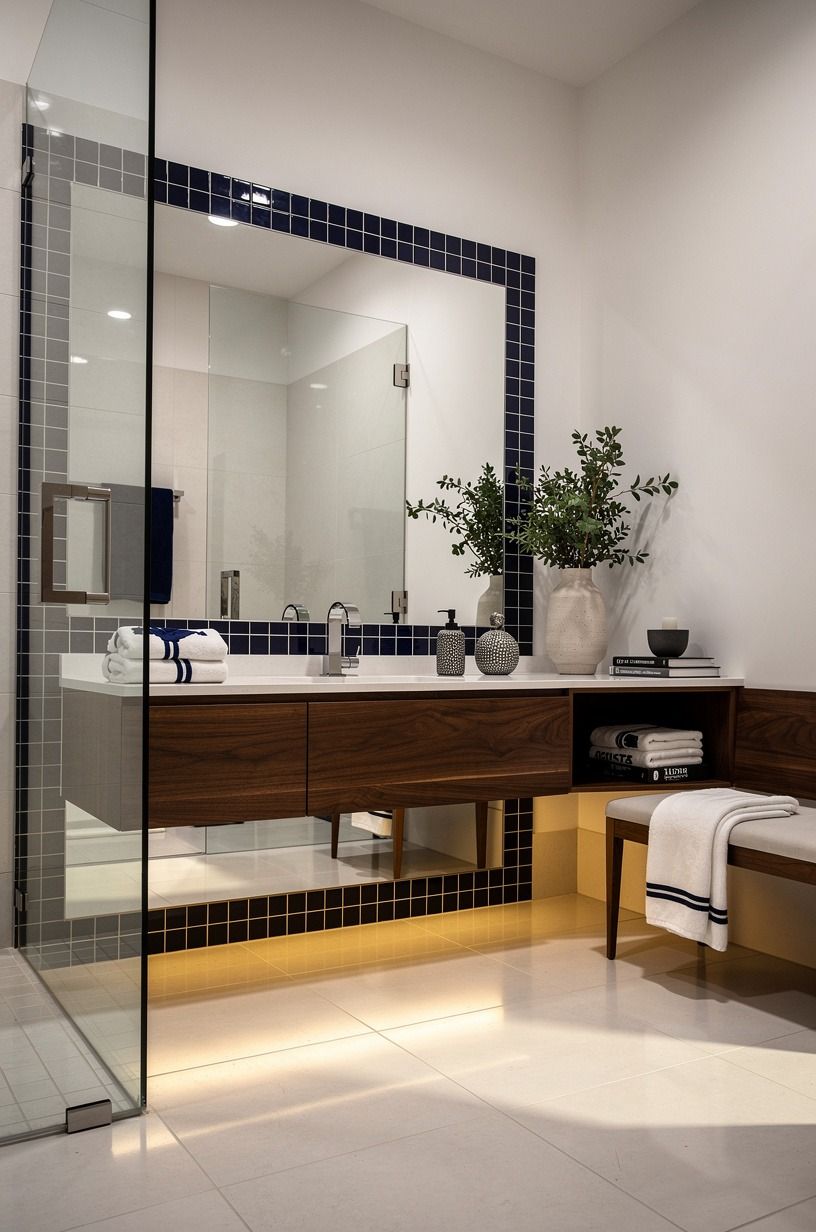
A contrast border can make a basic tile installation look planned, provided you keep the geometry simple. Use warm white rectangular tile across the shower, then frame the niche and vertical corners with navy ceramic tile. Continue a related tone onto the floor with a quiet blue-gray porcelain.
The border should guide your eye toward the shower, not announce itself from across the room. Your dry-area stool or vanity bench can bring in shagreen accents, but I’d avoid repeating the navy border on every surface. Too many strong lines make a bathroom feel chopped up.
You’ll get the best result when the border aligns with the vanity or mirror width. I’d use a 36-inch vanity as the visual anchor if the room allows it, then center the shower niche on that same rhythm.
Small move, big payoff! For another handmade approach, see these pink zellige tile bathroom ideas, even if you choose navy.
The lesson is the same: one confident accent is more inviting than six timid ones.
7Choose the Two-Wood Rule Over a Matching Set
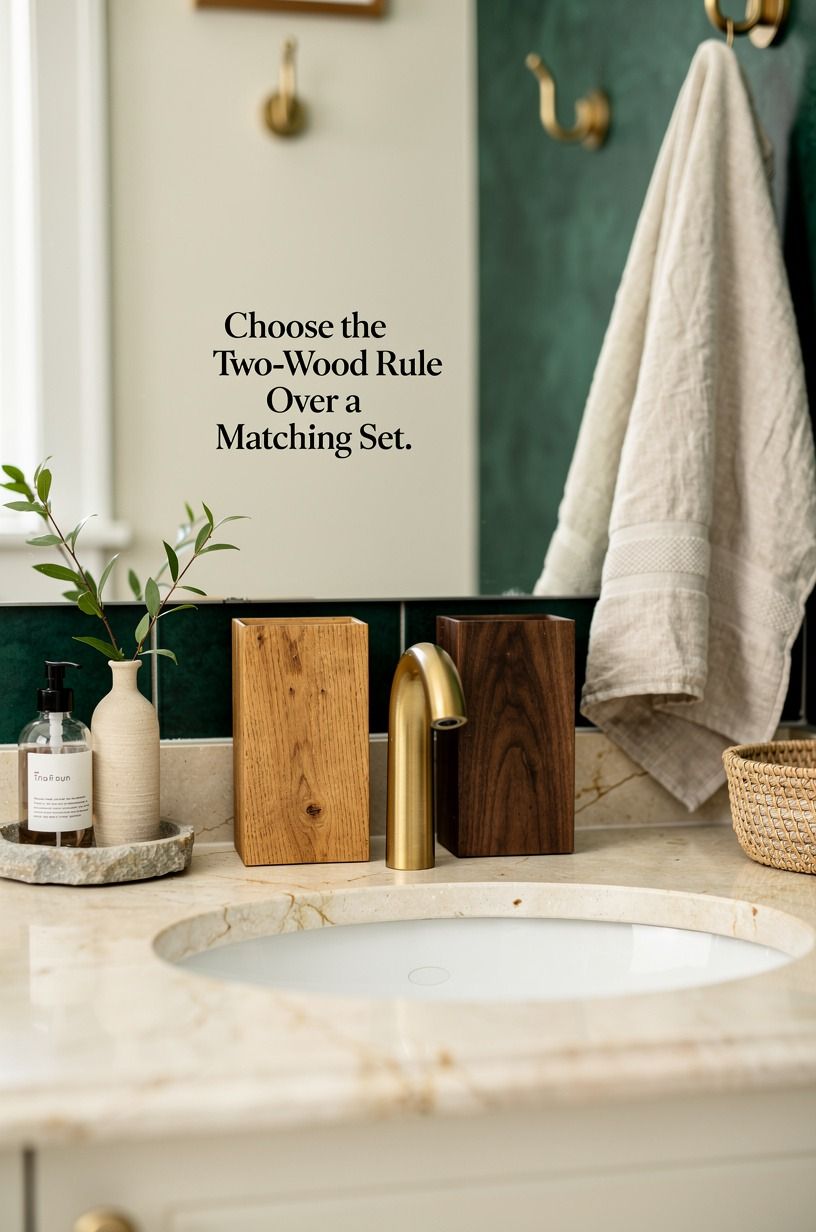
The Two-Wood Rule keeps a tile-heavy bathroom from feeling sterile. Use one wood tone on the vanity and a second, slightly deeper tone on a stool, mirror, or storage cabinet. Pair natural oak with walnut, then soften the contrast with washed Belgian linen.
Your floor can stay simple with cream limestone-look porcelain, while the shower gets an emerald green tile that adds depth. I’d skip faux wood tile here. It often fights the real vanity grain, and you’ll notice the mismatch every time you open the cabinet.
A natural oak vanity can give you the cleaner profile this idea needs, while a simpler cabinet can keep the budget more comfortable. You don’t need matching towel bars and cabinet pulls either.
Choose gold hardware and washed linen textiles. But if your bathroom has little natural light, keep the darker wood below eye level so your room still feels bright and peaceful. For a removable, budget-conscious direction, this peel-and-stick bathroom tile guide is worth saving.
8Swap the Standard Grid for Vertical Subway Tile
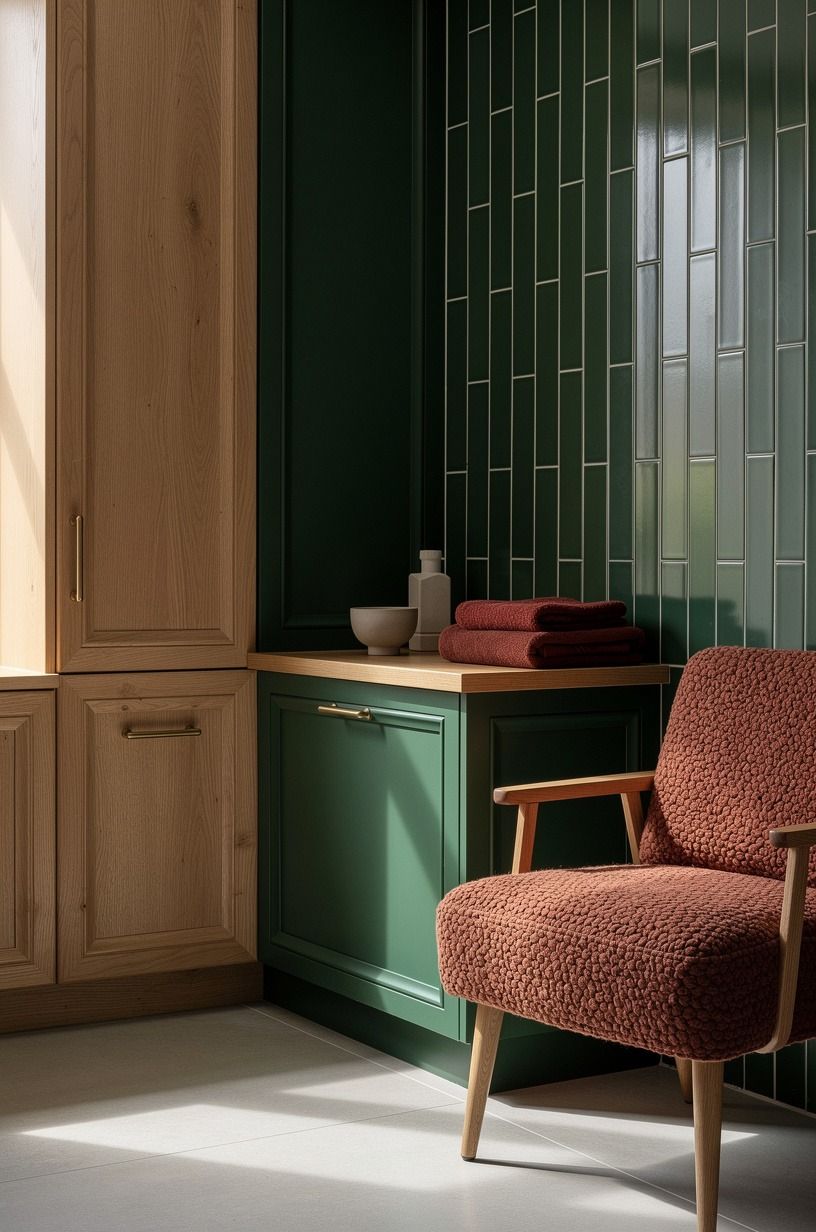
Vertical subway tile changes the proportions of a shower without moving a single wall. Install forest green subway tile vertically, then place rust-colored porcelain on the floor in a related earthy tone. Your shower will feel taller, and the floor will add enough pattern to keep the room from looking flat.
The move is restraint, not a complicated layout. You’ll want the vertical lines to run cleanly around the niche, so plan the cuts before the installer spreads adhesive.
I’d avoid mixing a vertical wall with a busy geometric floor and a patterned curtain. One directional idea is enough.
Use a warm grout to soften the lines, then bring in natural oak at the vanity or stool. An organic bouclé seat can add a gentle tactile note outside the splash zone.
If your shower is smaller than the comfortable 36 by 36 inch minimum, lighter tile and vertical lines can make the enclosure feel less compressed. For a rental version, this peel-and-stick bathroom tile guide offers a removable direction.
9Onyx, Kept Quiet
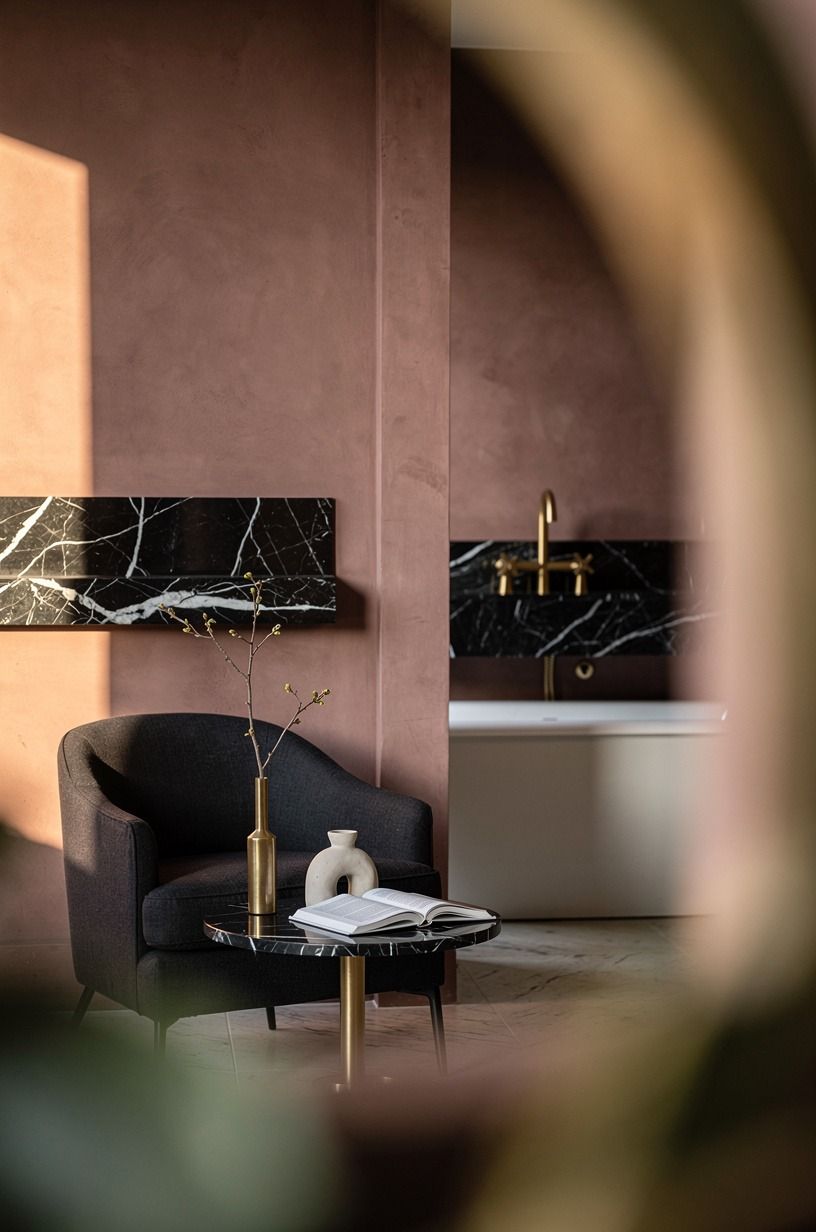
Luxury stone bathroom tiles are dramatic because the veining does the decorating for you. Use Nero Marquina black marble with white veins on one shower wall, then anchor it with a quiet charcoal floor tile. You’ll get warmth and movement without covering every surface in competing stone.
I’d keep the marble to one wall. Its strong veining can become visually loud, especially beside mirrored cabinets. Your vanity should be simple, perhaps painted a dusty rose, with no elaborate legs or carved details.
Light matters more than people expect. A warm sconce placed beside the mirror will bring out the contrast in the marble, while cool overhead light can make the room look flat.
Add brass hardware and a low-profile linen shade. And if you’re drawn to an even stronger stone, order a large sample first.
You’ll need to see it against your floor, paint, and towels before deciding whether the room feels inviting or theatrical. For a more restrained glossy surface, browse these zellige tile ideas for glossy character.
10Build a Shower Niche That Repeats the Floor
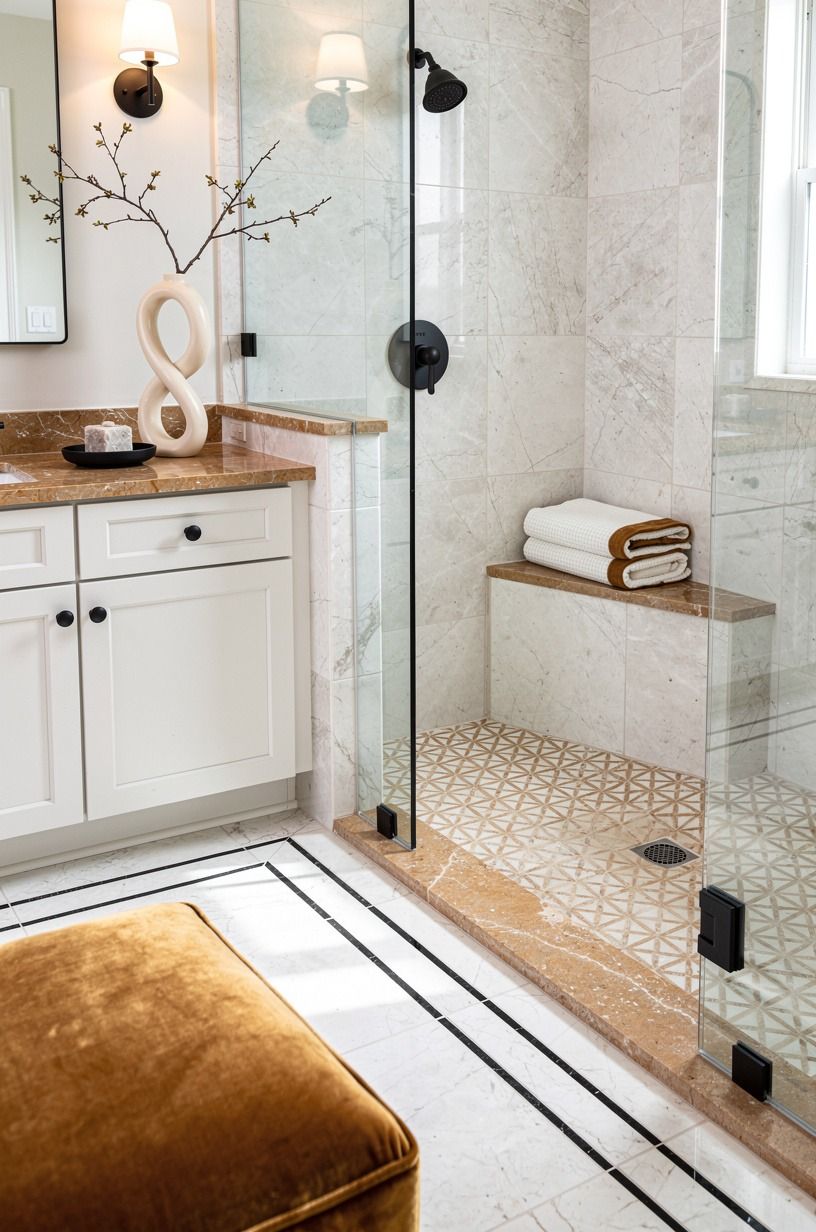
A shower niche feels more deliberate when its interior repeats one detail from the floor. Use small-format warm white tile on the bathroom floor, then carry that same tile into the niche against a camel-toned shower wall. Your room gets a warm visual thread, and the niche looks integrated instead of added at the last minute.
The niche should be planned around the bottles you actually use. You’ll want enough height for your largest pump bottle, but you don’t need a hotel-style wall of shelves.
I’d rather see one generous niche with a simple stone shelf and black accents than three tiny compartments collecting soap residue. It earns its keep!
Keep the shower wall quieter with a soft grout. A simple wood cabinet can bring in a warm note outside the wet area, while a deep-pile mohair velvet cushion adds texture on a nearby bench.
If your toilet sits nearby, remember the standard clearance of 21 inches in front. A pretty niche won’t rescue a layout that makes your knees hit the vanity every morning.
For a small removable project, these peel-and-stick backsplash ideas can help you test the color relationship first.
11Hang a Soft Pattern Above a Plain Floor
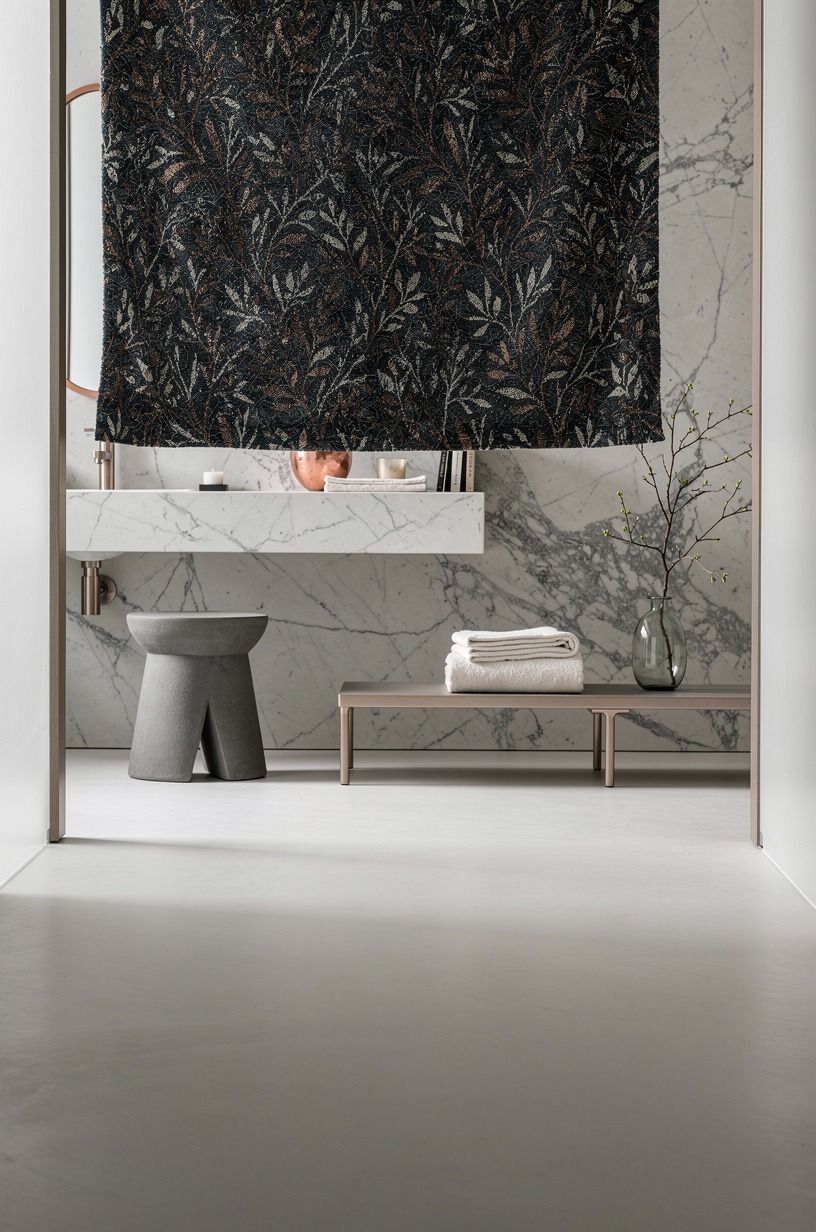
A patterned shower wall doesn’t need a patterned floor. Choose a midnight blue, copper, and ivory ceramic pattern for the shower, then ground it with a plain ivory floor. This combination feels charming and a little old-world, but it won’t turn your bathroom into a themed space.
You’ll need to repeat one color outside the shower. Try Farrow & Ball Hague Blue No.30 on the dry wall or a midnight-blue vanity, then bring in a small Carrara marble shelf with subtle gray veining.
I’d skip nautical accessories. The tile already carries the story, and extra anchors or rope details will make your room feel staged.
A linen shower curtain can soften the pattern if you’re working with a tub. The standard tub is 60 by 30 inches, so a vertical pattern can help the enclosure look taller.
And if you’re styling a rental, a tension rod and removable wall accents can create a similar mood without permanent changes. This shower curtain guide for rental bathrooms has useful placement ideas.
12Contrast Marble Ideas Interior Design With Warm Paint
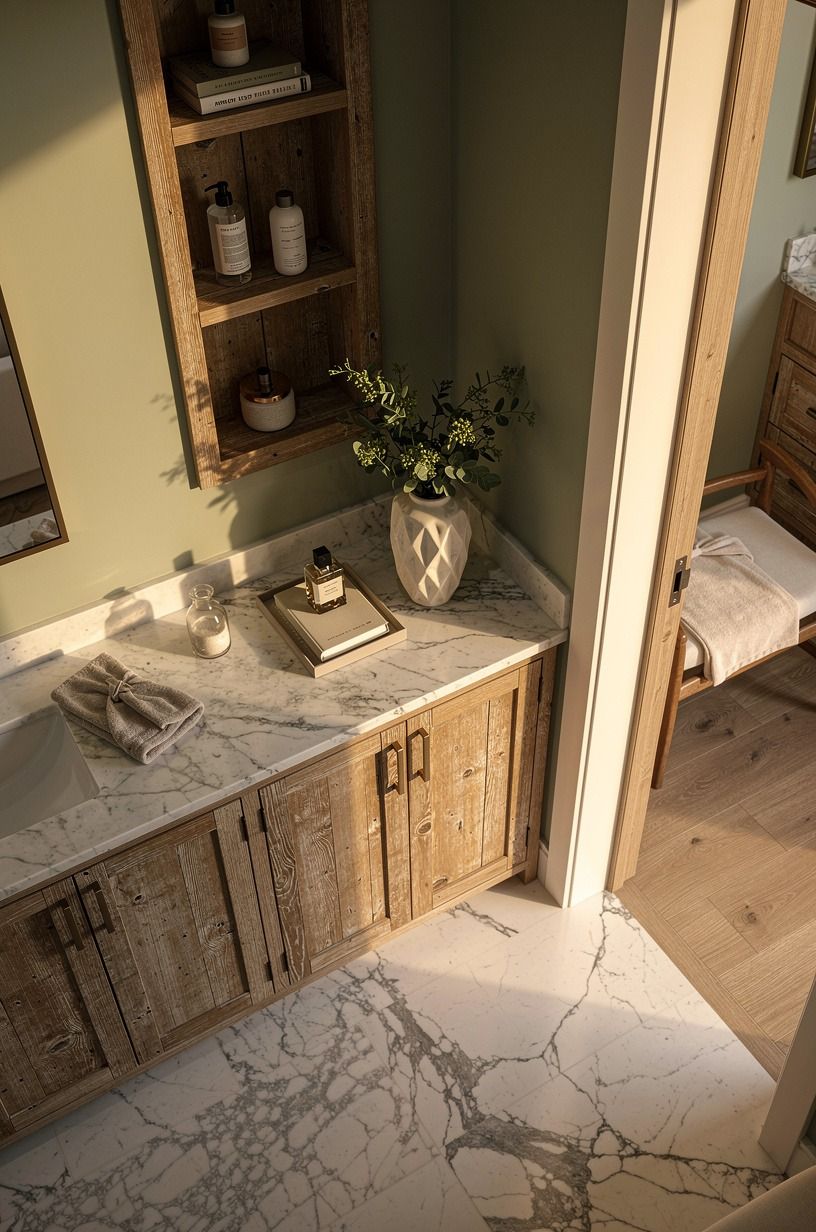
Bathroom marble ideas interior design often lean cool, but your paint can change the entire reading of the stone. Pair a restrained marble-look surface with sage green walls, warm cream accents, and a reclaimed weathered teak vanity. The natural wood pulls the room away from a clinical reading.
Your floor should be simpler than the shower. Choose warm cream porcelain with faint movement, then let the wall carry the drama. I’d avoid high-gloss marble beside a glossy painted wall because the reflections start to feel slippery and cold.
A matte finish gives your eye somewhere to rest.
Use simple bronze lighting and a reclaimed teak stool if the room has space. You’ll still get a refined look, but it won’t feel precious.
If you’re renovating in stages, paint first and live with the samples for a few days. Morning light, evening bulbs, and wet tile can make the same color behave three different ways.
These pink zellige tile bathroom ideas show how a warm wall surface can soften a pale stone palette.
13Paint the Vanity Wall and Keep the Tile Low
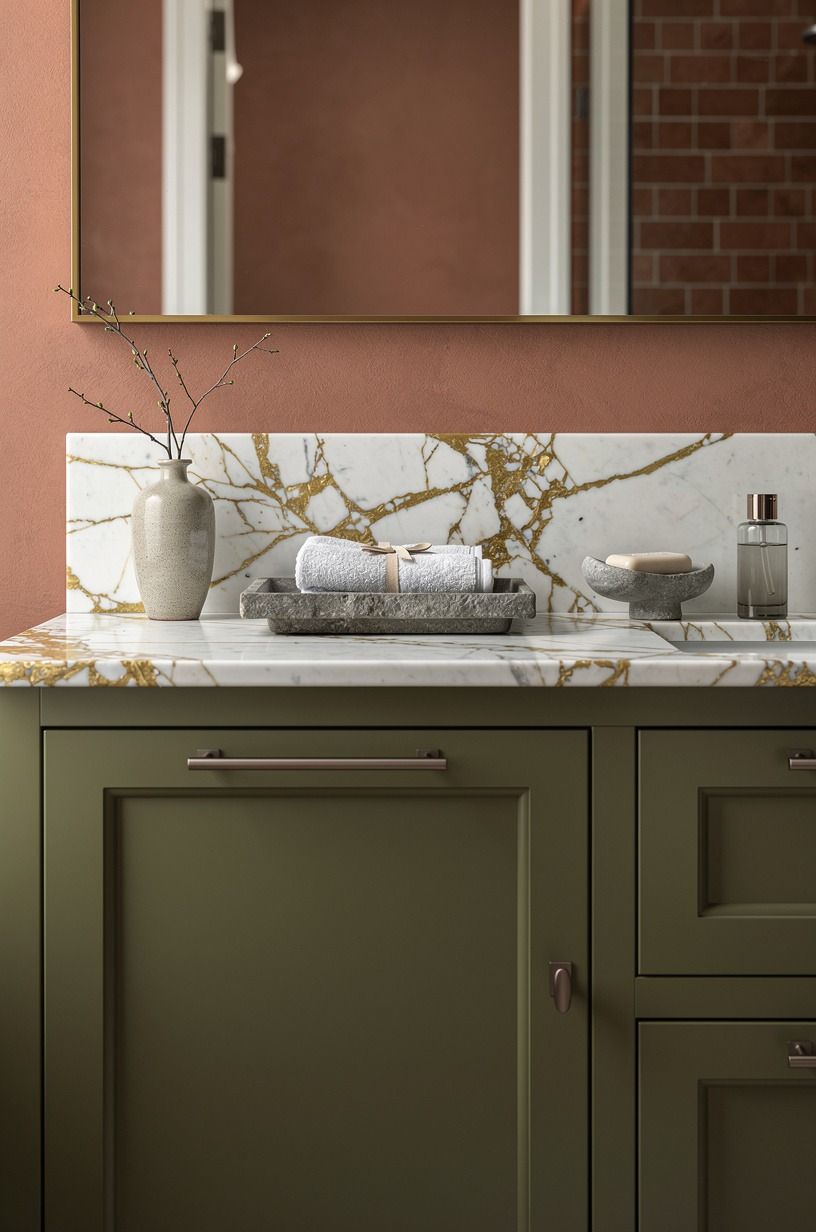
Not every bathroom needs tile from floor to ceiling. Keep the floor in a quiet stone finish, paint the vanity wall olive, and use Calacatta marble with gold veining only where you want a little brightness. The combination feels intentional without making the room feel wrapped in hard surfaces.
14Zellige + Travertine: One Grout, Two Textures
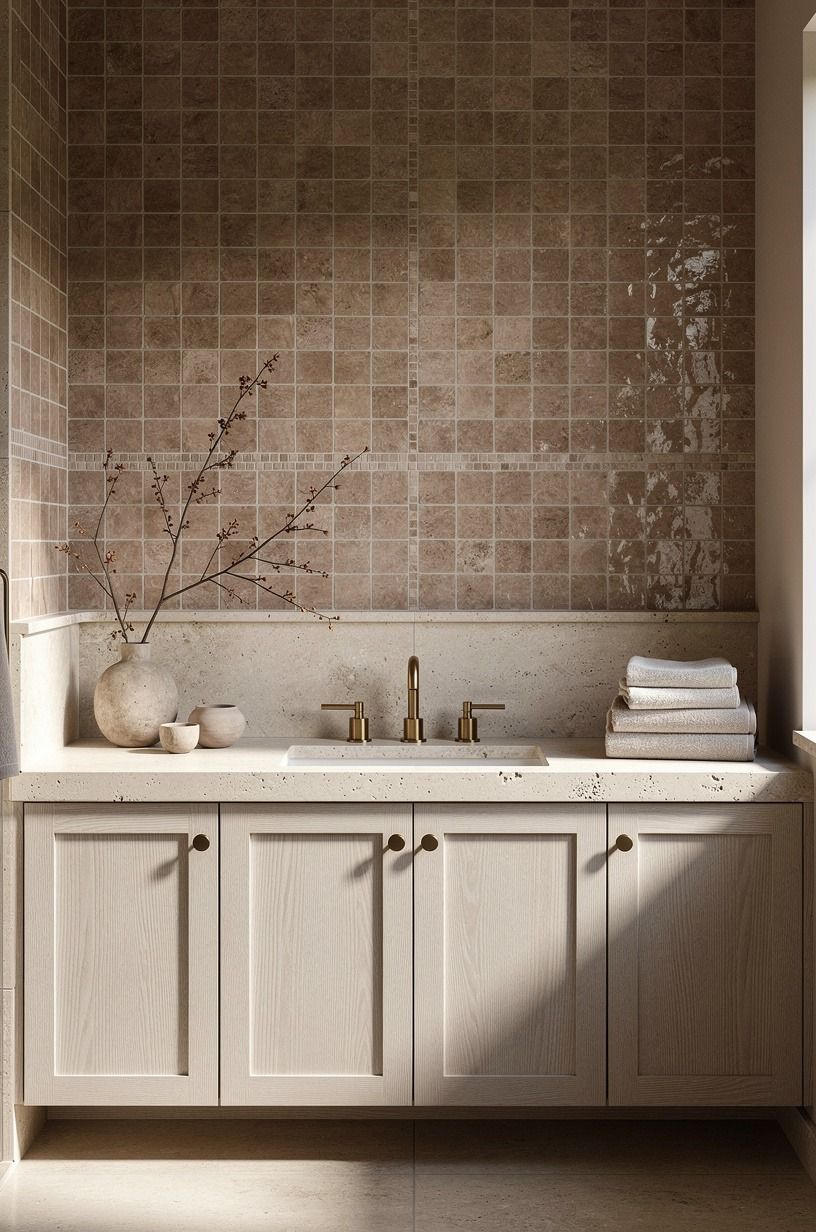
Zellige and travertine can make a master bathroom feel earthy, soft, and collected when the grout keeps them connected. Use clay-toned zellige in the shower with honed travertine on the floor. The wall catches the light, while the floor absorbs it, creating a warm contrast you’ll notice most at dusk.
Your grout should sit between the two materials rather than matching only one. A warm ivory works better than stark white, especially when the palette includes linen and aged brass.
I’d avoid adding a third stone at the vanity. The combination already has enough texture, and another surface would make the room feel restless.
Add a cerused white oak mirror or vanity, washed linen towels, and simple aged brass fixtures. The bathroom will feel sophisticated without becoming formal. If you want more handmade texture, browse these zellige tile ideas for glossy character.
And if you’re choosing between two samples, pick the one that looks better in the shadowed corner, not only under the brightest store lights.
What the Cost Usually Looks Like
Tile is only one part of a bathroom budget, and the surrounding work can change the total quickly. Your floor may be affordable while a shower rebuild, plumbing adjustment, or new vanity pushes the project into a different tier. I’d price the whole room before falling for one expensive slab.
For material planning, subway tile typically runs $2-$10 per square foot, while zellige tile typically runs $15-$35 per square foot. A marble top may run $50-$100 per square foot, and a brushed brass faucet may run $120-$450.
You don’t have to spend at the high tier to make your bathroom feel considered. Paint, lighting, and a better grout choice can carry more visual weight than a premium material used without a plan.
The Tile Choice I’d Make in Your Room
I’ve learned that the right bathroom tile isn’t the loudest surface. It’s the combination that makes your daily routine feel easier, warmer, and less visually cluttered.
I once chose a dramatic patterned floor before deciding on the shower wall, and every later choice became an argument with that floor. The lesson was simple: choose the surface with the most authority first, then make the other materials support it.
For most rooms, I’d begin with the shower wall because it occupies the strongest sightline. If you want an airy bathroom, handmade ivory tile gives you texture without darkness.
If you want drama, a charcoal floor or deep blue wall can work, but your lighting has to be warm enough to keep the room from feeling flat. A bathroom that looks wonderful at noon can feel gray at 7 p.m.!
Your budget matters, too. A $200-$1,200 refresh can change paint, mirrors, faucets, and textiles without touching the tile.
A $3,000-$9,000 mid-range project may let you replace a vanity, add partial wall tile, and improve lighting. The $12,000-$30,000+ tier is where a re-tiled shower, new floor, and plumbing work start to live.
Those are different decisions, not simply different finishes.
And I’d always mock up your combination on a board first. Put the floor sample beside the shower tile, paint card, metal finish, and towel color.
Let it sit in your bathroom for a full day. If you keep reaching for one sample and moving another away, your answer is already there.
Tile should make your room feel grounded when you enter it, not demand a performance from every other object.
A Few Things Worth Answering
What is the best master bathroom tile combination for a small bathroom?
The best combination is a light shower wall with a quieter floor, such as ivory zellige tile and warm cream porcelain. Your room will feel larger because the surfaces don’t break into competing blocks. A floating vanity can keep more floor visible, which helps the space feel airy.
Where can I buy bathroom tile pieces on a budget?
Look at IKEA, Wayfair, and Target for vanities, mirrors, textiles, and basic fixtures. You can also check Facebook Marketplace or a local thrift shop for a solid wood mirror or cabinet. Your cheapest improvement may be free: rearranged storage, cleaned grout, and a better light bulb can change the room quickly.
How much does a master bathroom tile makeover cost?
A cosmetic refresh can fit within the $200-$1,200 budget tier when you change paint, a mirror, a faucet, and textiles. A mid-range project with a new vanity, partial wall tile, and lighting typically runs $3,000-$9,000. Your cost rises to $12,000-$30,000+ when plumbing and a full shower rebuild enter the plan.
Can I create these bathroom tile looks on a budget?
Yes, and you can start without replacing tile. Paint the vanity wall, refresh the grout, change the mirror, and use textiles in one warm color family.
Your free options include editing countertop clutter, moving storage, and cleaning the shower glass. Removable peel-and-stick tile ideas can help renters test a look.
Is a tile makeover worth it in a small bathroom?
Yes, because a small room gives you fewer surfaces to cover and fewer materials to coordinate. Use one main tile, one supporting floor, and a narrow grout palette.
Your best layout may keep the floor plain while placing texture inside the shower. That approach can feel more luxurious than a crowded pattern mix.
Is master bathroom tile a good idea for a rental?
It can be, as long as you choose removable changes. A tension rod, washable shower curtain, removable hooks, peel-and-stick accents, and a freestanding storage cabinet can shift the room without permanent damage. Your landlord may approve a mirror swap, but get permission before changing tile, faucets, or lighting.
Where I’d Start First
If I had to pick one, I’d start with ivory zellige in the shower. Its uneven surface catches low evening light, so your bathroom won’t look flat after sunset. Pin the handmade glossy tile ideas for later and build your floor around that texture.