
 by
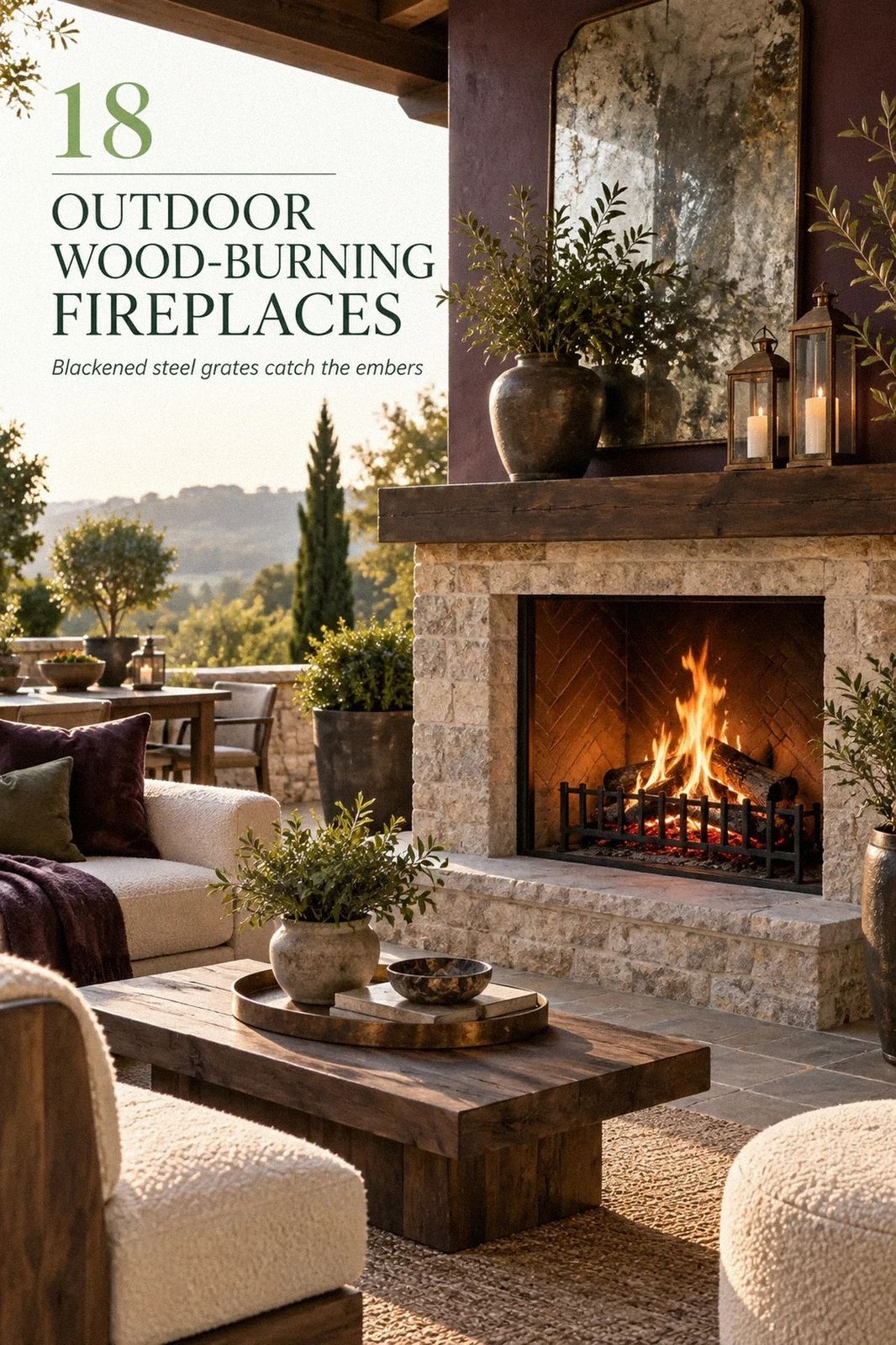
The best outdoor wood-burning fireplace ideas for that real crackle begin with the hearth, not the accessories. I once bought the chairs first and spent a season shifting them away from smoke and wind. Your fire needs a clear center, safe breathing room, and somewhere comfortable to sit. These setups make that order feel natural.
- ✓ Build The Two-Wood Rule Around Your Hearth
- ✓ Frame a Masonry Hearth With Reclaimed Brick
- ✓ Float a Chunky Oak Mantel Above the Flame
- Build The Two-Wood Rule Around Your Hearth
- Frame a Masonry Hearth With Reclaimed Brick
- Float a Chunky Oak Mantel Above the Flame
- Layer The Three-Height Light Stack
- Anchor an Outdoor Wood-Burning Fireplace Patio With Texture
- Paint the Surround, Don’t Replace It
- Stack Covered Firewood Like a Design Element
- Mix a Built-In Bench With Softer Chairs
- Should You Choose Wood Over Gas for the Crackle?
- Hang a Roof Over a Compact Hearth
- Set the Table at the Right Height
- Keep a 36-Inch Path Around the Gathering Zone
- Frame the Fireplace Beside an Outdoor Kitchen
- Paint a Modern Outdoor Wood-Burning Fireplace Deep Green
- Layer Stone, Zellige, and Soft Metal
- Build a Hearth-to-Seat Ratio That Feels Close
- Price the Project Before You Light the First Fire
- Why Does the Real Crackle Matter to Your Layout?
1Build The Two-Wood Rule Around Your Hearth
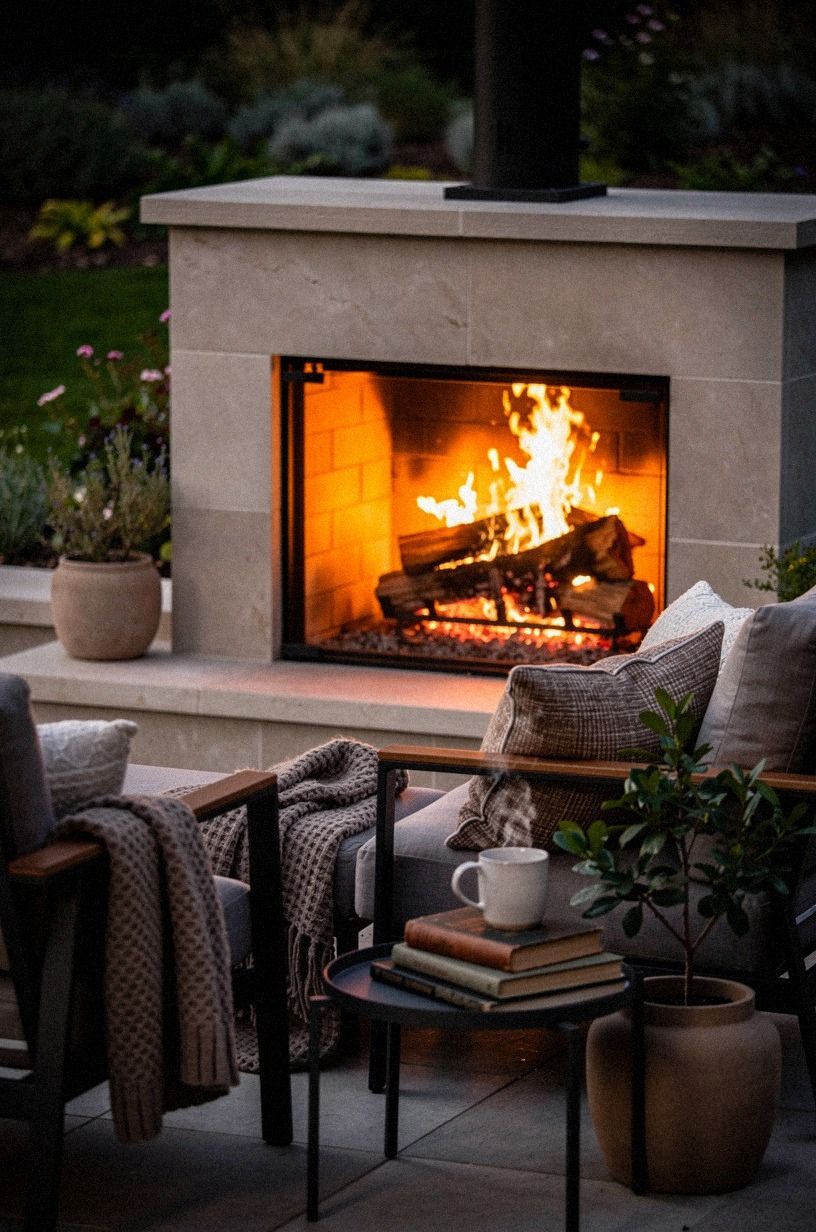
Use two wood tones around your fireplace, one structural and one softer. A charcoal-stained oak mantel against dusty rose upholstery feels warm and collected, while an organic bouclé bench keeps the patio from looking too severe. A little unlacquered brass near the hearth adds warmth without making the palette shiny.
I’d skip matching every surface. Your fireplace will feel more collected if the mantel, seating, and storage don’t come from one showroom.
Try Farrow & Ball Setting Plaster on a nearby privacy screen, then let the wood stay imperfect. That dusty rose is calming after sunset, but charcoal paint would swallow the texture.
And keep your firewood visible, but tidy. A low steel rack beside the hearth gives you warmth, texture, and a practical reason for the stack to be there. For more ideas, browse this guide to an outdoor fireplace with wood storage.
Typical cost by tier (US averages):
2Frame a Masonry Hearth With Reclaimed Brick
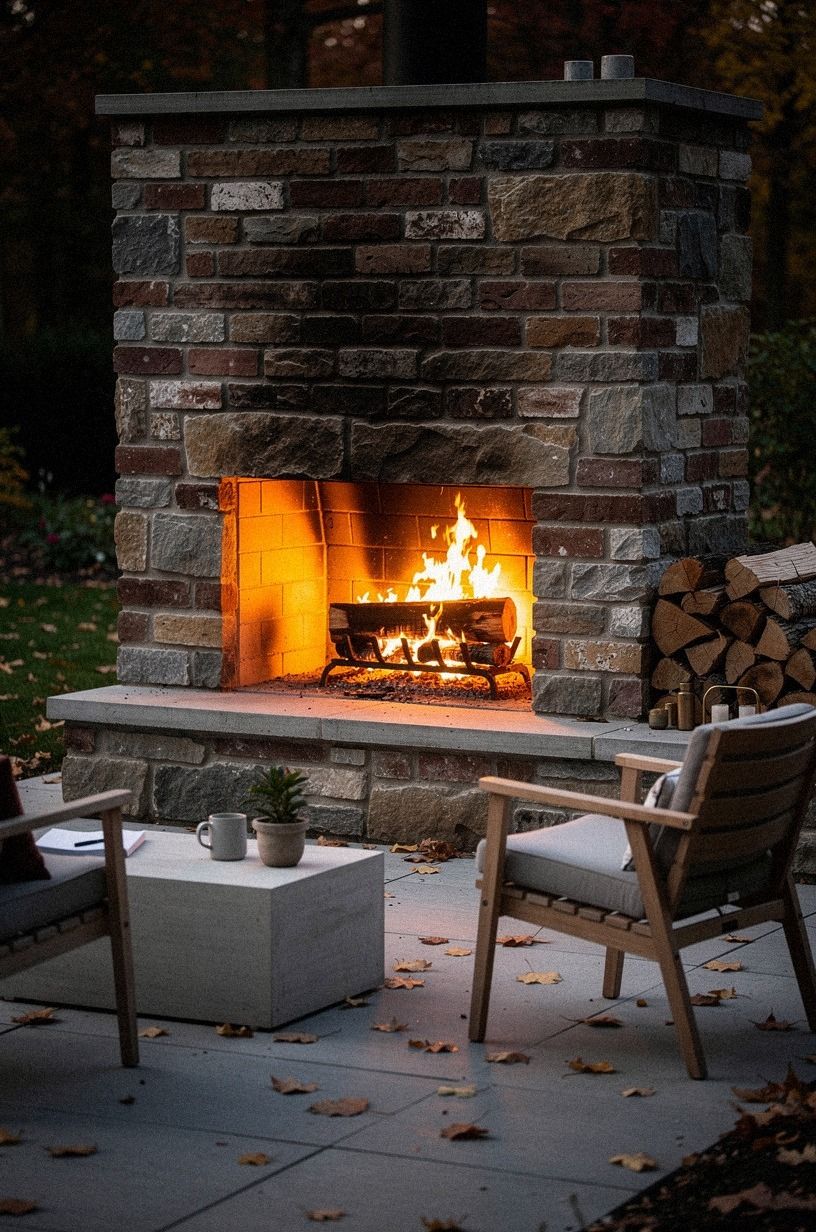
Nero Marquina black marble gives a wood outdoor fireplace the kind of surface that changes during the day. Its white veining can look crisp beside warm white, softer beside camel, and almost charcoal beside the fire. I prefer that natural movement to a smooth manufactured veneer because it doesn’t need styling to feel grounded.
Choose a Nero Marquina black marble surround with white veins, then pair it with a simple 3/4-inch solid white oak shelf. You’ll want the shelf deep enough for a few useful pieces, but not so deep that people bump their shoulders while passing. A shallow ledge keeps your walkway open and gives the flame more visual space.
But don’t crowd the face with lanterns, pottery, and framed art. One black metal lantern is enough. If your whole patio needs a stronger focal point, these outdoor patio fireplace ideas show how a masonry surround can carry the room without extra clutter.
3Float a Chunky Oak Mantel Above the Flame
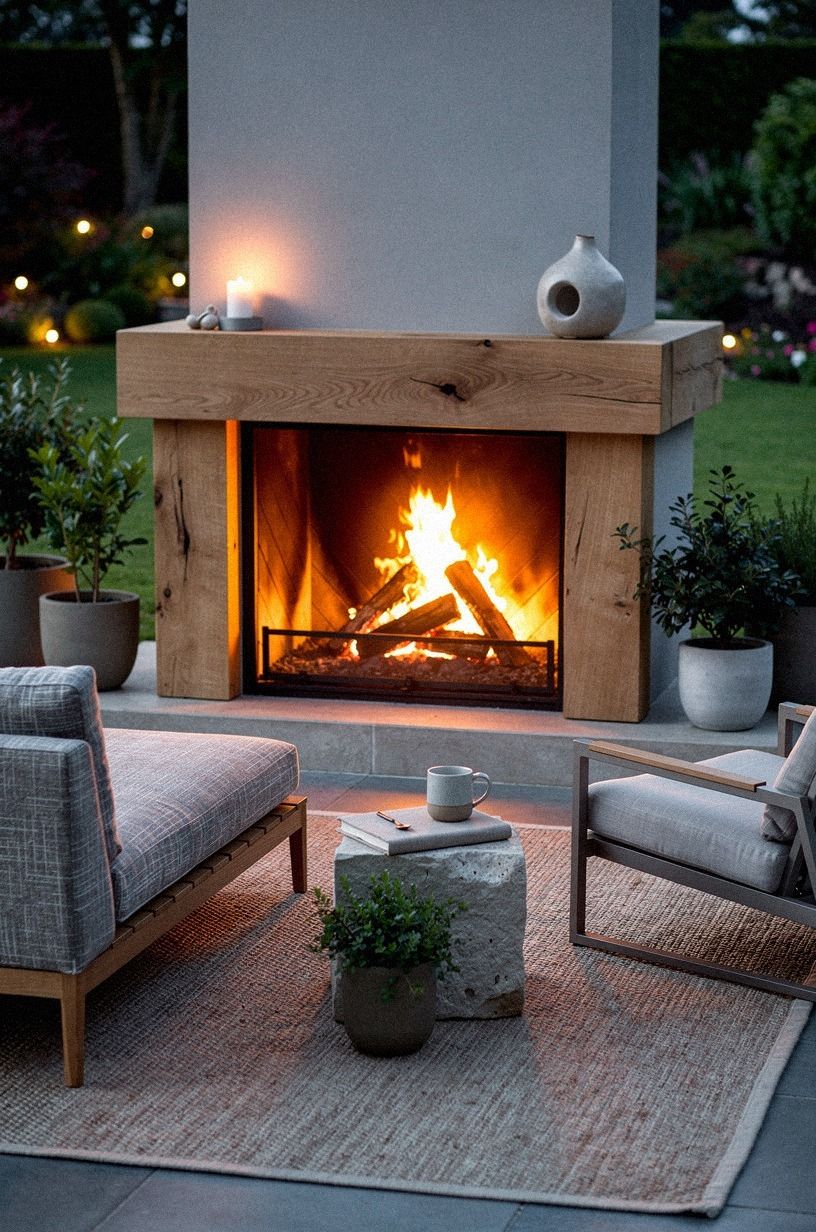
A floating mantel makes even a compact outdoor wood-burning fireplace feel intentional. Use a chunky midnight-blue oak beam with visible knots, then leave a little breathing room between the beam and the firebox. Your eye should read the mantel as a strong horizontal line, not as a shelf stuffed with objects.
I made the mistake of styling a mantel too early. The copper-legged stool looked inviting, but it sat where sparks and ash landed, so I moved it six feet away. You’ll want your seating close enough to feel the heat and far enough that guests aren’t brushing past the hearth.
Add one broad bowl, a stack of weatherproof books, and a deep-pile mohair velvet cushion in ivory on the nearest chair. That combination feels soft without becoming fussy. For a more built-in direction, compare it with an outdoor pavilion with fireplace before you commit to the mantel height.
4Layer The Three-Height Light Stack
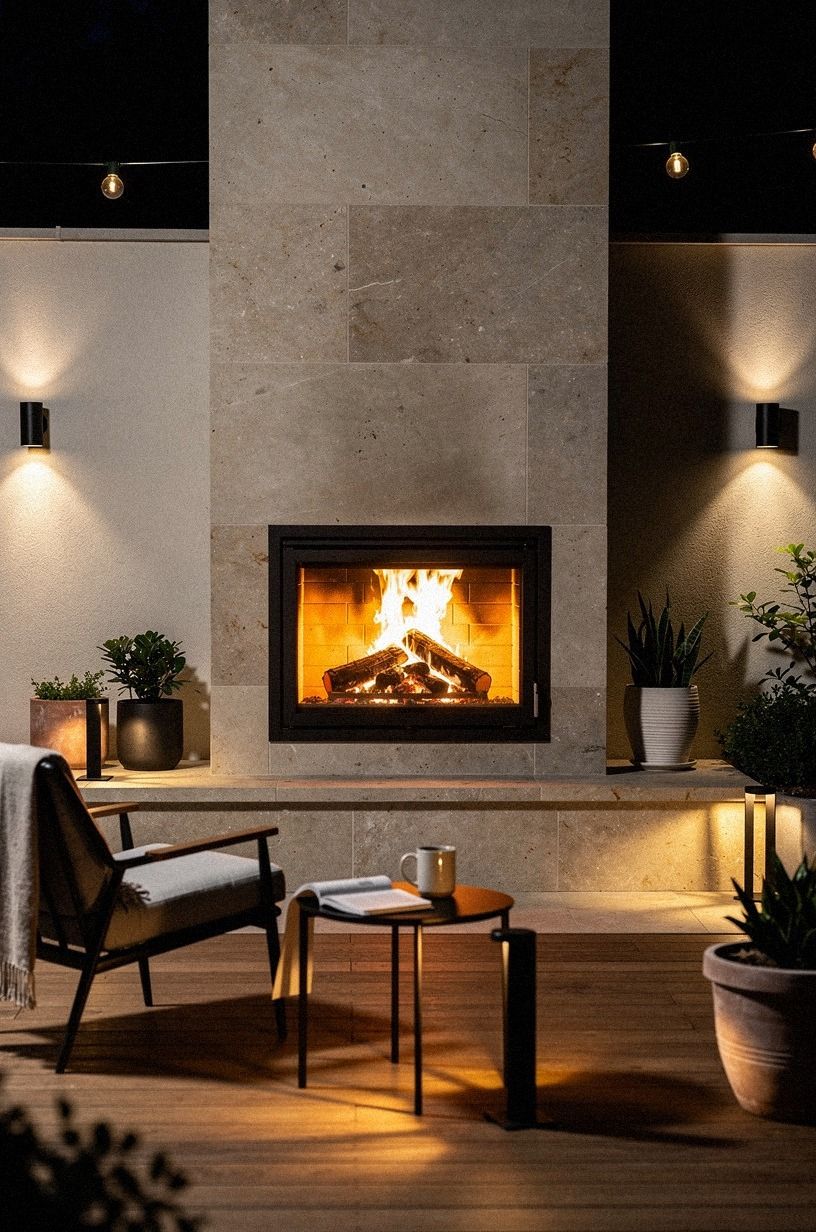
Your fireplace shouldn’t be the only light source outdoors.
5Anchor an Outdoor Wood-Burning Fireplace Patio With Texture
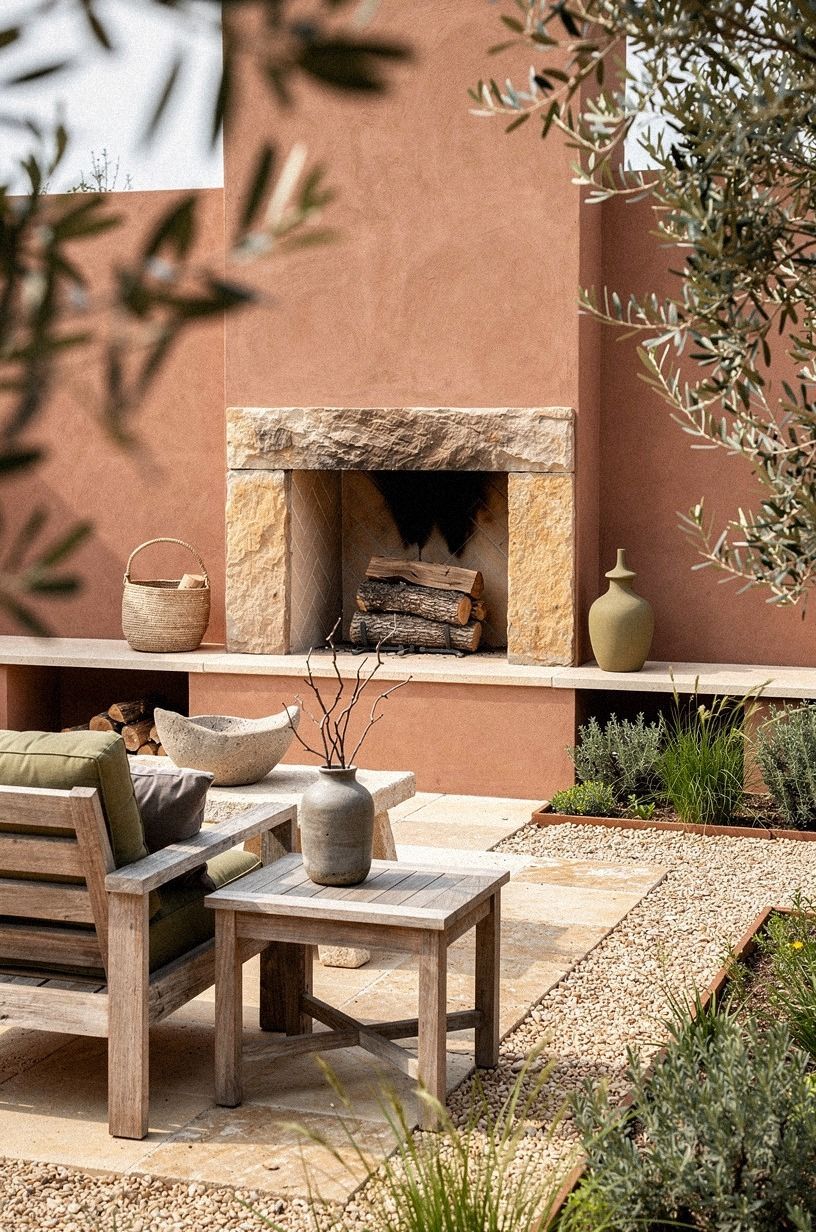
A small outdoor wood-burning fireplace patio needs one visual anchor underfoot. Use an outdoor rug with the front legs of your seating resting on it, then let the hearth sit just beyond the rug’s edge. Your chairs will feel grouped, while the firebox still has a clear zone for sparks and ash.
I’d choose a polypropylene rug with a faded terracotta pattern instead of a pale solid. It hides soot, pollen, and the occasional spilled drink, which means you won’t spend every evening worrying about the floor. A muted pattern can be charming without competing with a brick or stone surround.
Pair it with a reclaimed weathered teak bench and 18 oz outdoor canvas cushions in stone and olive. If you’re working with a narrow patio, keep the rug under the seating only and protect the walkway. Your guests need a comfortable path, and a 36 in clearance keeps that route from feeling pinched.
6Paint the Surround, Don’t Replace It
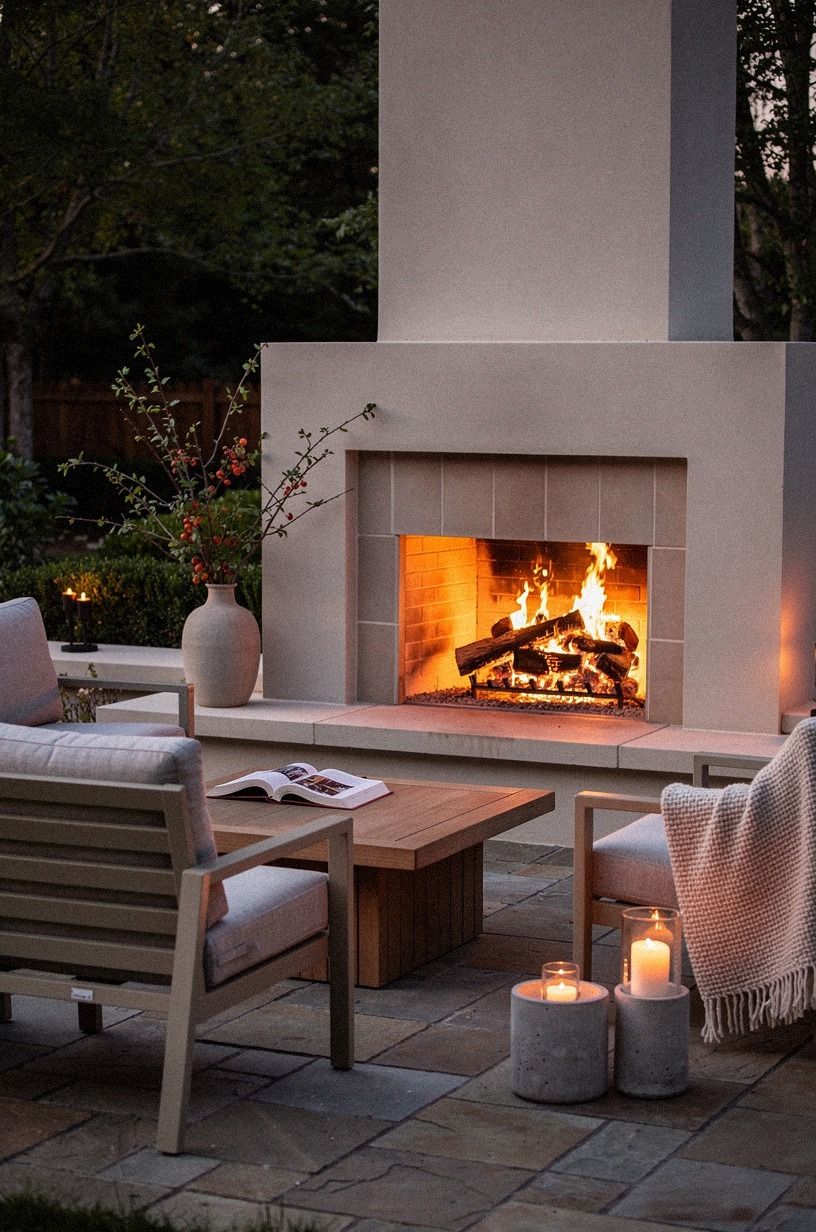
A tired surround may need paint, not demolition.
7Stack Covered Firewood Like a Design Element
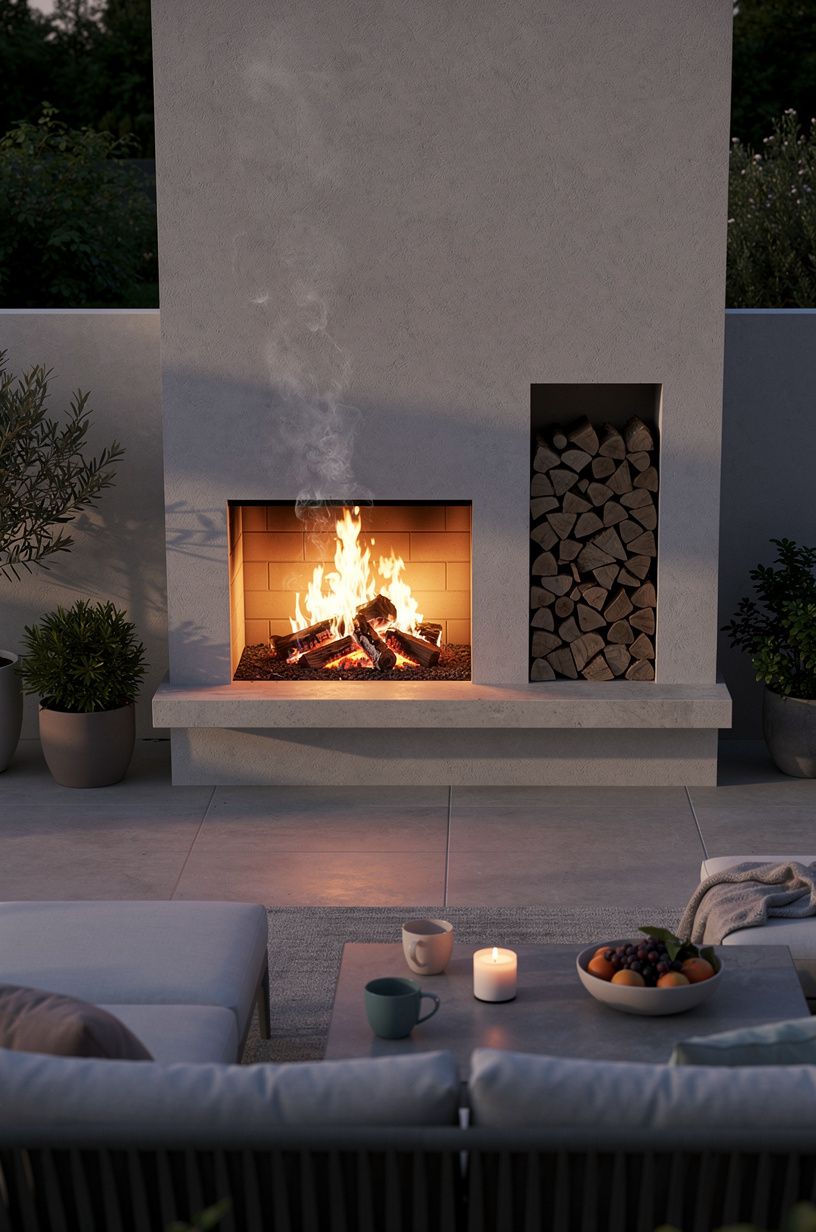
Firewood storage can be practical and picturesque at the same time. Build a covered niche beside the hearth with a cerused white oak log rack, then stack split hardwood so the cut ends face outward. Your wood becomes a quiet pattern, and you won’t have to carry armfuls across the yard every evening.
Keep the stack low enough to load comfortably. I like a broad, stable shape more than a tall tower because it feels calmer and won’t dominate your seating area. Add a grey water-resistant canvas cover over the top, leaving the sides open enough for air to move through the pile.
And give yourself a landing spot for kindling. A shallow rose-gold metal rail basket can hold dry twigs and fire starters away from the main stack. You’ll appreciate that small decision when your hands are full and the first flame refuses to catch.
The storage should support your evening, not become another chore.
8Mix a Built-In Bench With Softer Chairs
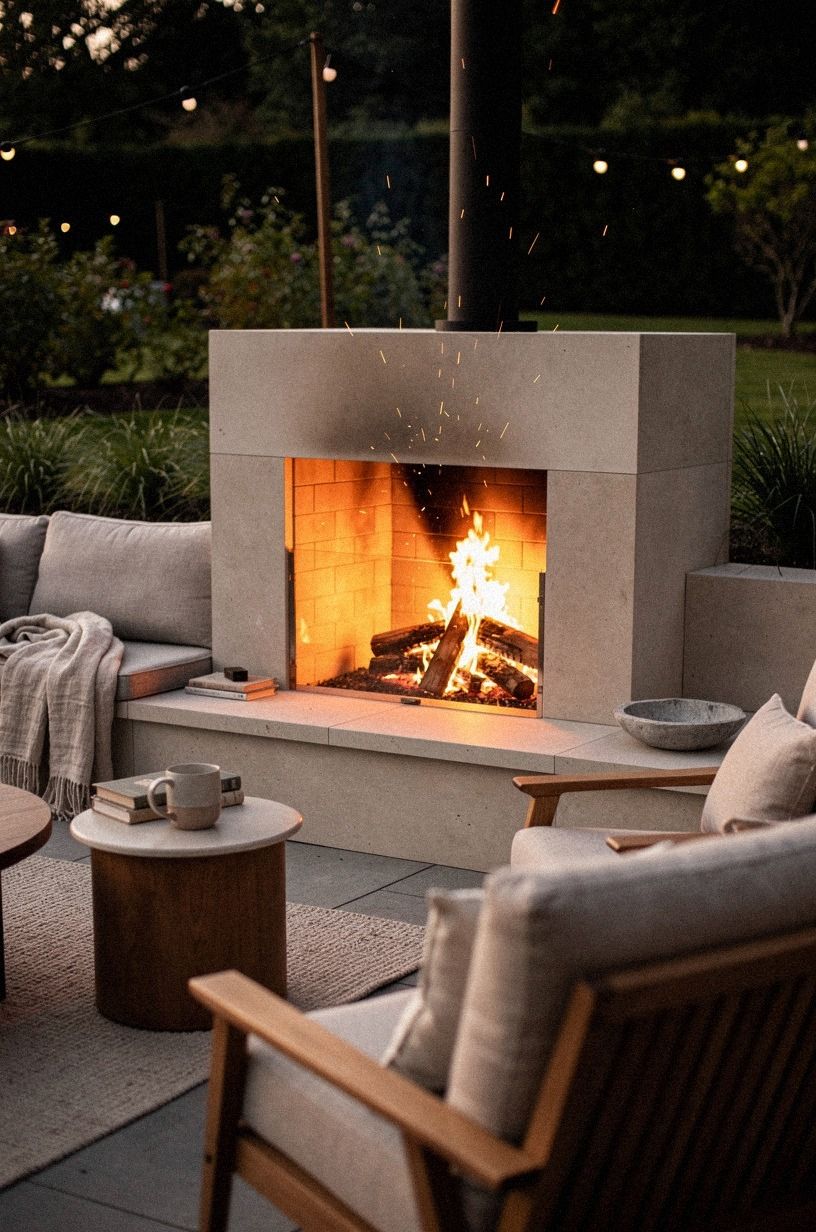
A built-in bench gives your wood-burning fireplace a settled, generous shape.
9Should You Choose Wood Over Gas for the Crackle?
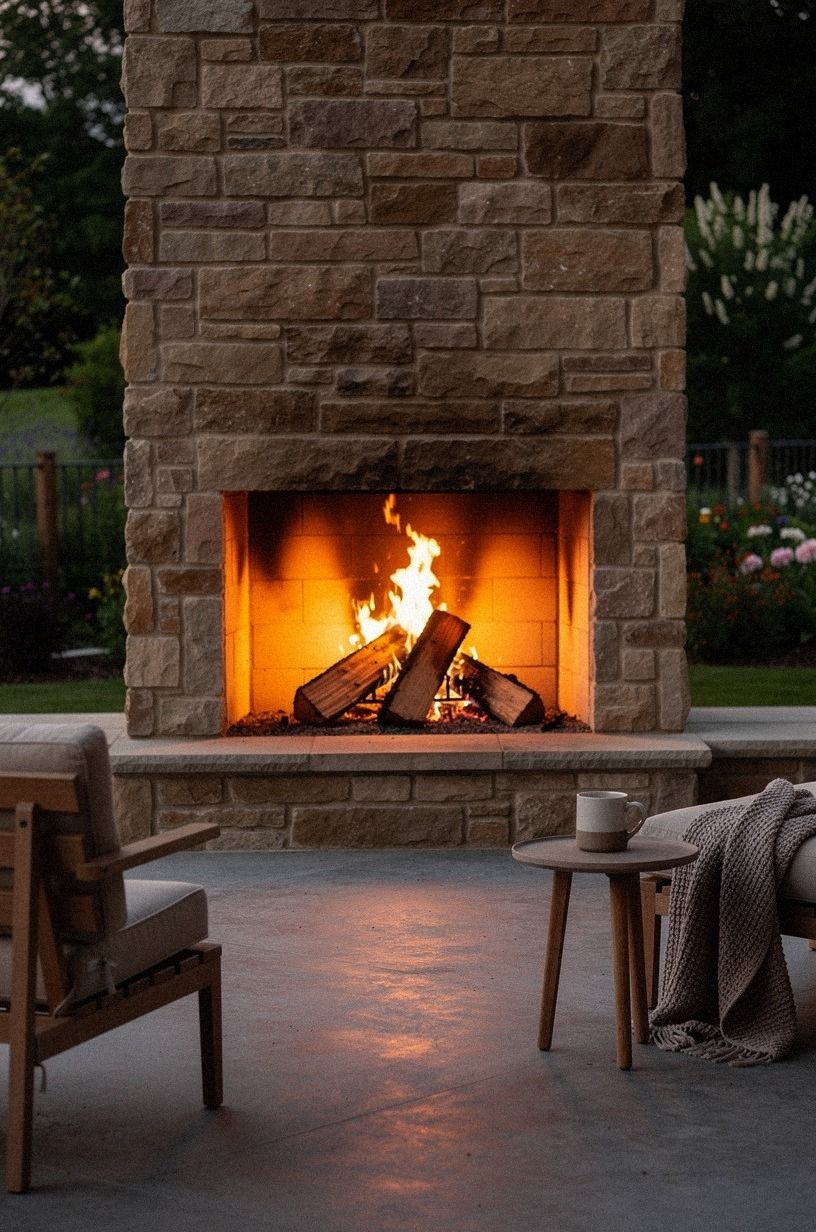
Choose wood over gas if the sound, scent, and changing flame are the reason you want a fireplace. A gas burner is tidy and convenient, but it can feel controlled in a way that misses the point. Your outdoor room should have one element that moves unpredictably.
I’ve used both, and I’d choose a wood-burning firebox for a dedicated gathering patio every time. The crackle draws people closer, while the shifting embers make a quiet evening feel special. You’ll need to accept ash, smoke, and a little cleanup, so this choice works best when you’ll use the hearth often.
But a gas setup may suit a tight balcony or a smoke-sensitive household. If you’re still weighing the tradeoff, read these outdoor gas fireplace ideas. Your best choice is the one that fits how you’ll live outside, not the one that photographs most neatly.
10Hang a Roof Over a Compact Hearth
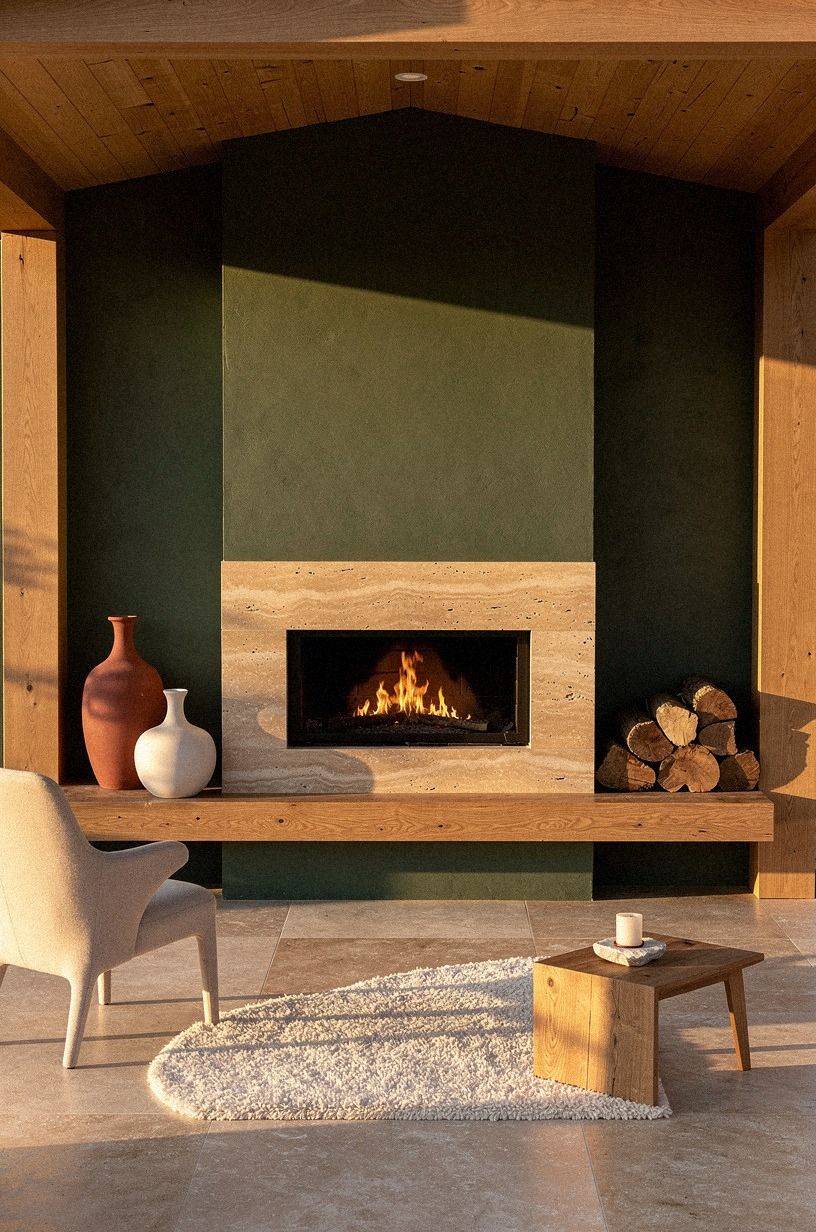
A roof changes how often you’ll use your fireplace. A covered outdoor wood-burning fireplace can feel intimate and serene during a cool evening, while an uncovered pit may sit empty after one damp forecast. Your structure needs proper clearance and ventilation, so treat the roof as part of the fireplace plan.
Use a warm travertine hearth beneath natural oak tongue-and-groove boards overhead for a warm ceiling, then keep the posts simple. I’d skip ornate brackets because they compete with the flame and make a small structure feel heavy. A rust-colored ceiling fan can help move air in warmer months, but your fire still needs an open path above it.
And don’t push the seating to the back wall. Leave room for people to circulate around the hearth, with a clear 36 in walkway wherever guests pass. For a larger entertaining zone, compare this approach with an outdoor kitchen and fireplace layout.
11Set the Table at the Right Height
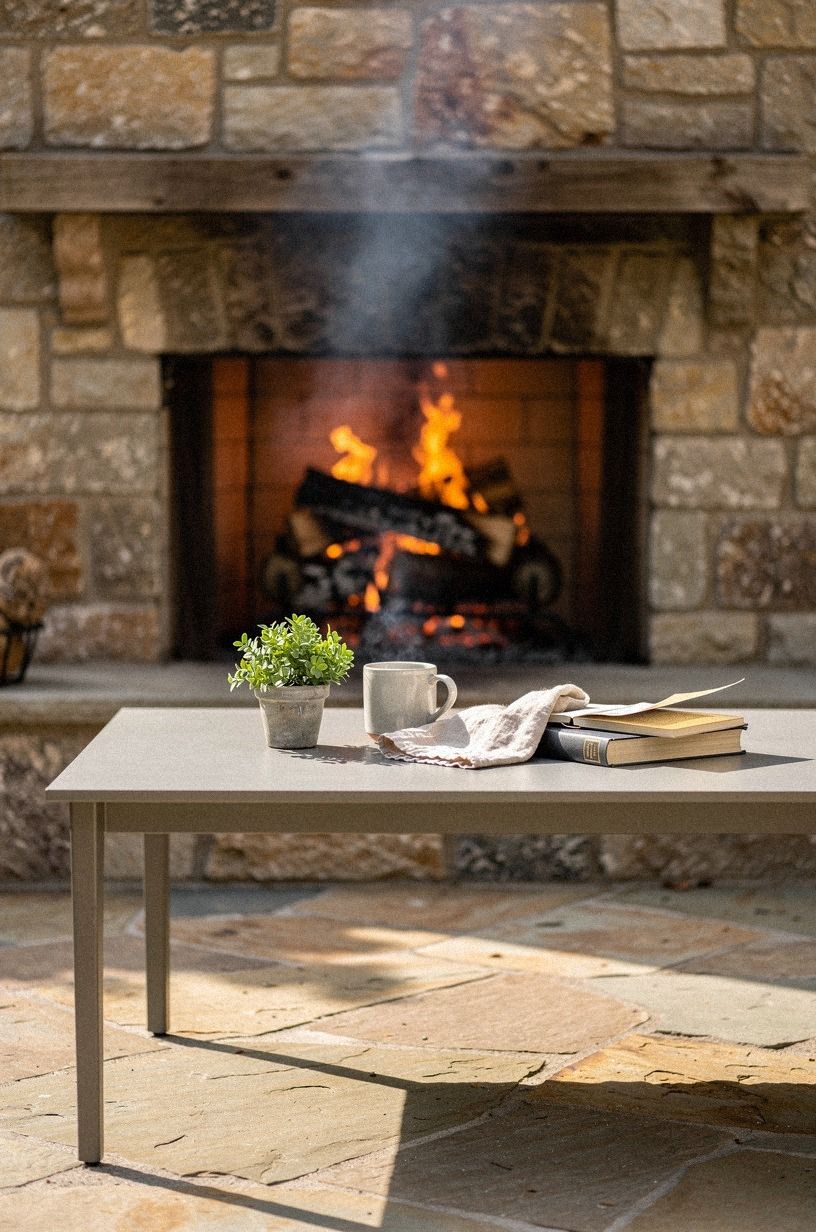
A dining table can sit near the fireplace without turning the patio into a restaurant queue. Standard patio table height is 28-30 in, which keeps your meals comfortable and your sightline toward the flames open. Your guests shouldn’t have to lean around a centerpiece to see the fire.
Choose a charcoal dining table with unlacquered brass details, then pair it with Article Svelti outdoor chairs in a dusty rose woven finish. I’d keep the table styling spare. A shallow ceramic bowl, linen napkins, and one branch are enough.
You’ll want the table outside the main heat path, especially if the wind carries sparks toward one side. Add a low weatherproof runner only when you’re eating, and remove it before lighting the fire. That small habit protects your textiles and keeps the hearth zone feeling relaxed rather than overdecorated.
12Keep a 36-Inch Path Around the Gathering Zone
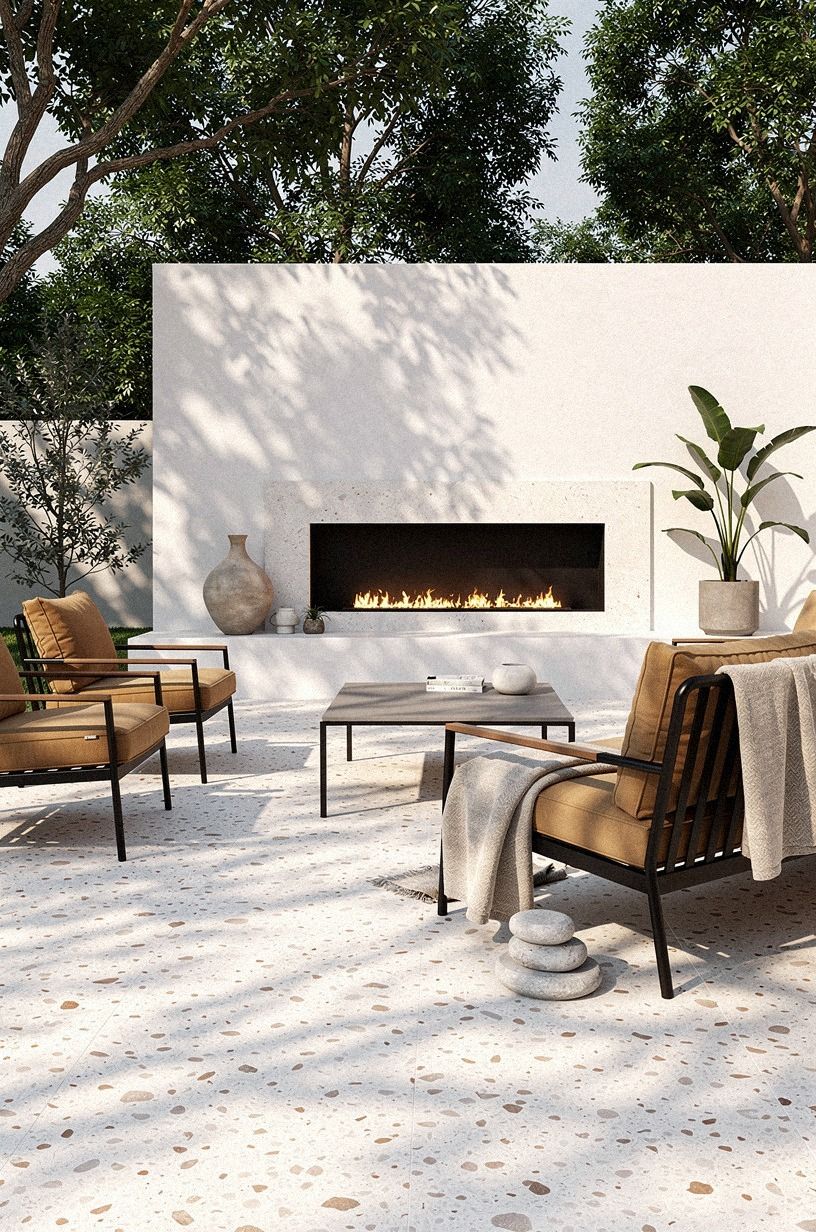
A beautiful fireplace layout fails if everyone has to squeeze around it. Maintain a 36 in minimum walkway clearance between the seating, dining area, and garden path. Your guests will move more naturally, and you won’t spend the evening asking people to shift their chairs.
Use oversized-chip terrazzo pavers in a warm white base with camel and black accents to define the route. They’re easier to sweep than loose gravel, and the subtle surface keeps the patio peaceful underfoot. I’d avoid a busy mosaic around the fire because the flame already supplies enough movement.
But don’t make every edge rigid. Let ornamental grasses soften one side of the path, leaving the other side open for traffic.
The contrast between a crisp paver line and feathery planting feels organic and inviting. Your fire area will look planned, yet it won’t feel like a showroom walkway.
13Frame the Fireplace Beside an Outdoor Kitchen
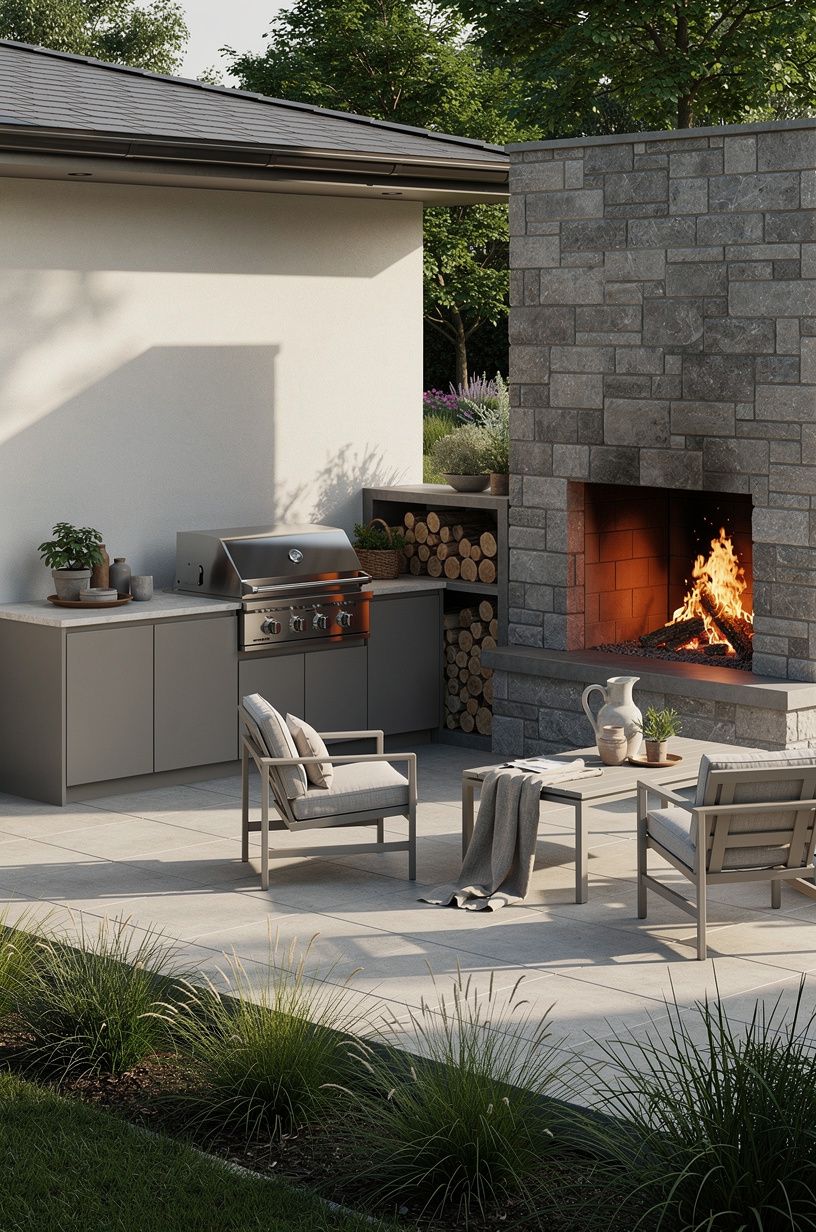
A fireplace beside an outdoor kitchen makes the patio work harder across the seasons. Keep the cooking counter and hearth visually connected with a hand-applied Venetian plaster fireplace surround, then repeat one copper detail on the mantel or serving ledge. Your space will feel harmonious without requiring a matching suite.
I’d place the firebox far enough from the grill that smoke doesn’t collect above the dining table. A West Elm Portside bar cart can bridge the two zones for serving, but it shouldn’t block the walkway. Wheels matter here, because you’ll want to move it when the wind changes.
Use a stack of ivory Turkish cotton towels near the prep area, plus a lidded bin for ash tools away from food. That separation keeps the cooking zone clean and your evening smoother. If your patio is large enough for a full entertaining plan, this outdoor kitchen fireplace guide is a useful companion.
14Paint a Modern Outdoor Wood-Burning Fireplace Deep Green
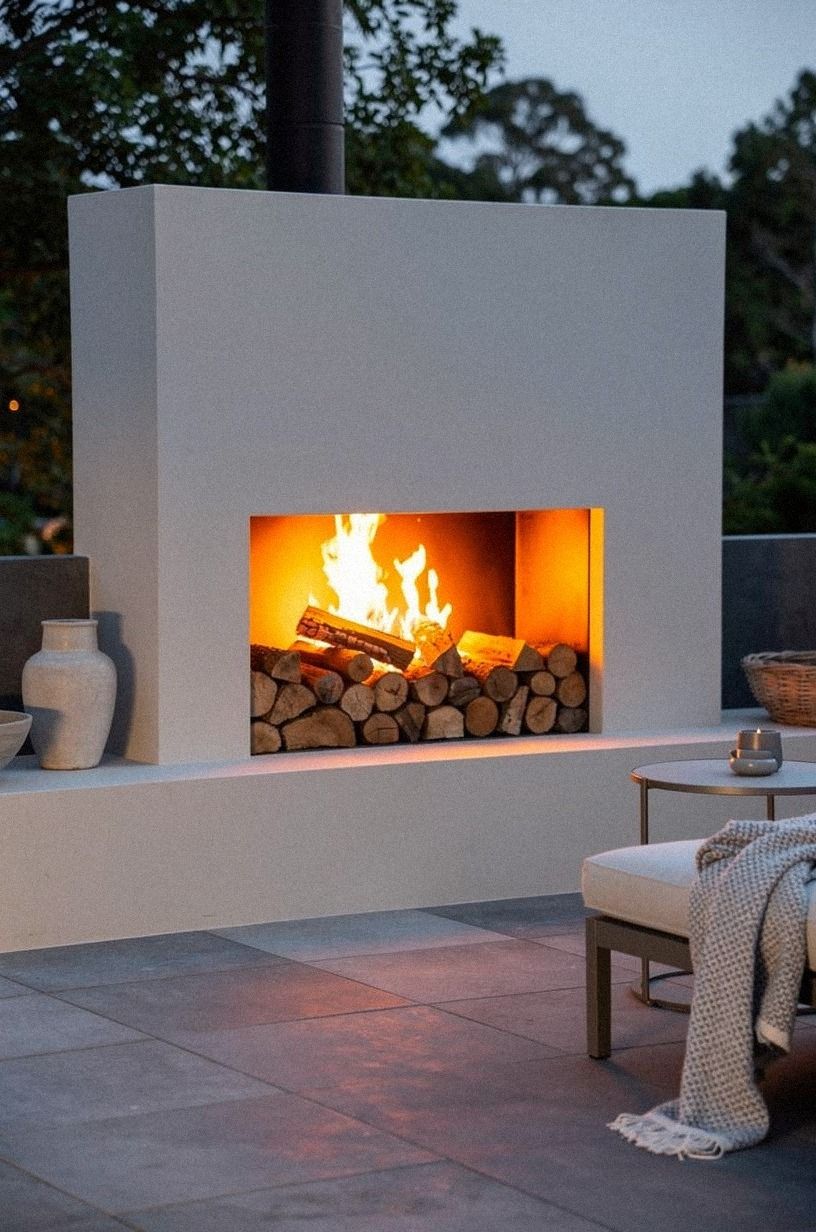
A modern outdoor wood-burning fireplace doesn’t have to be gray, white, or black. Paint the surrounding wall Benjamin Moore Saybrook Sage HC-114 and let the fire provide the warm contrast. The color looks gentle in daylight, then becomes richer once the flames begin.
You’ll want the furniture to stay quieter. Choose a natural wood lounge chair with a simple profile, then add one warm cream shagreen cushion. I’d skip bright blue textiles because they fight the sage and make the flame look more orange than it is.
And keep the planting restrained. One olive tree in a natural oak planter can soften the architecture without turning the fireplace into a garden display. Your eye should land on the fire first, then move outward to the green wall and the foliage.
15Layer Stone, Zellige, and Soft Metal
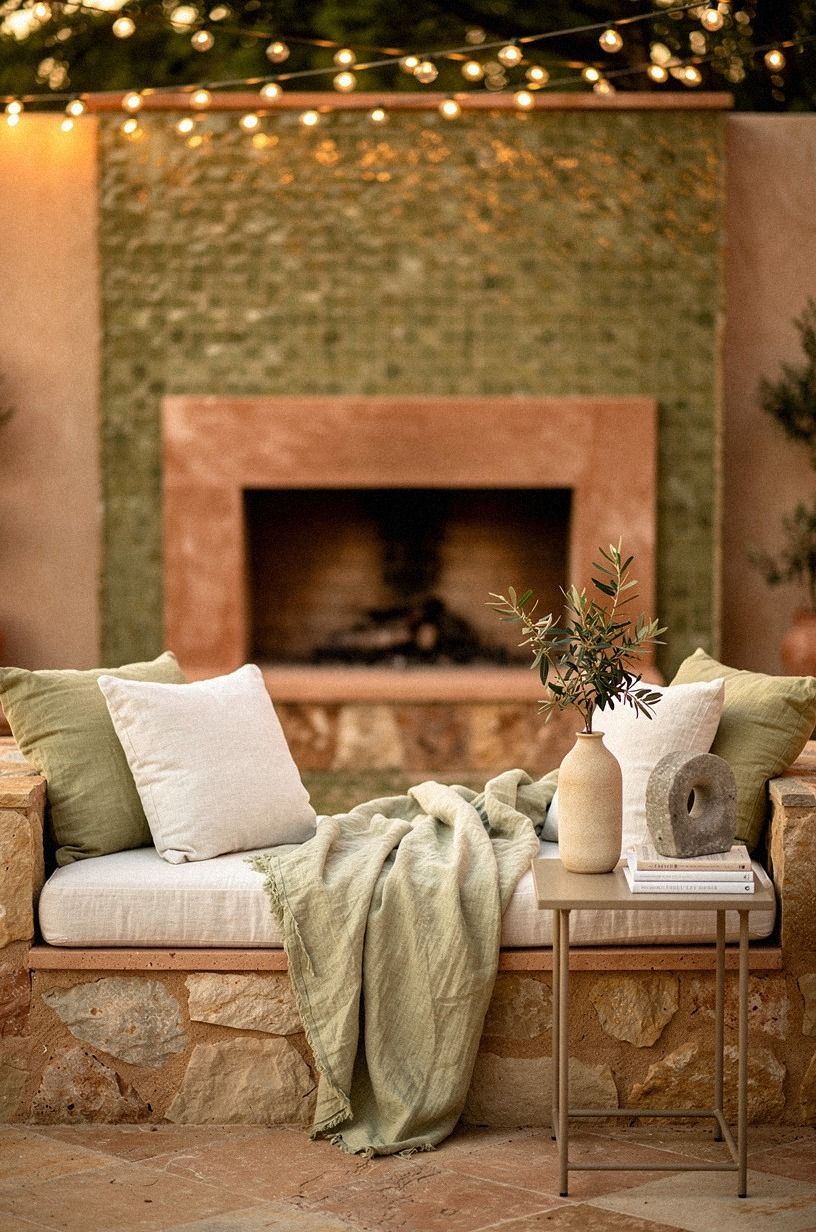
Material contrast gives an outdoor fireplace depth without adding more objects. Start with warm stone on a narrow ledge, then use hand-glazed terracotta zellige on a sheltered side wall. Your fireplace will feel earthy, but the irregular glaze keeps it from becoming formal.
I’d use aged bronze hardware instead of polished brass here. The darker finish repeats the firewood and looks better after a little weathering. A single bronze fire tool set is enough, especially if your surround already has strong color and texture.
You can soften the hard surfaces with one washed Belgian linen throw on the far chair. It won’t sit close to the sparks, and you’ll have something comfortable when the air cools. The mix feels sophisticated because every material behaves differently in the shifting light.
16Build a Hearth-to-Seat Ratio That Feels Close
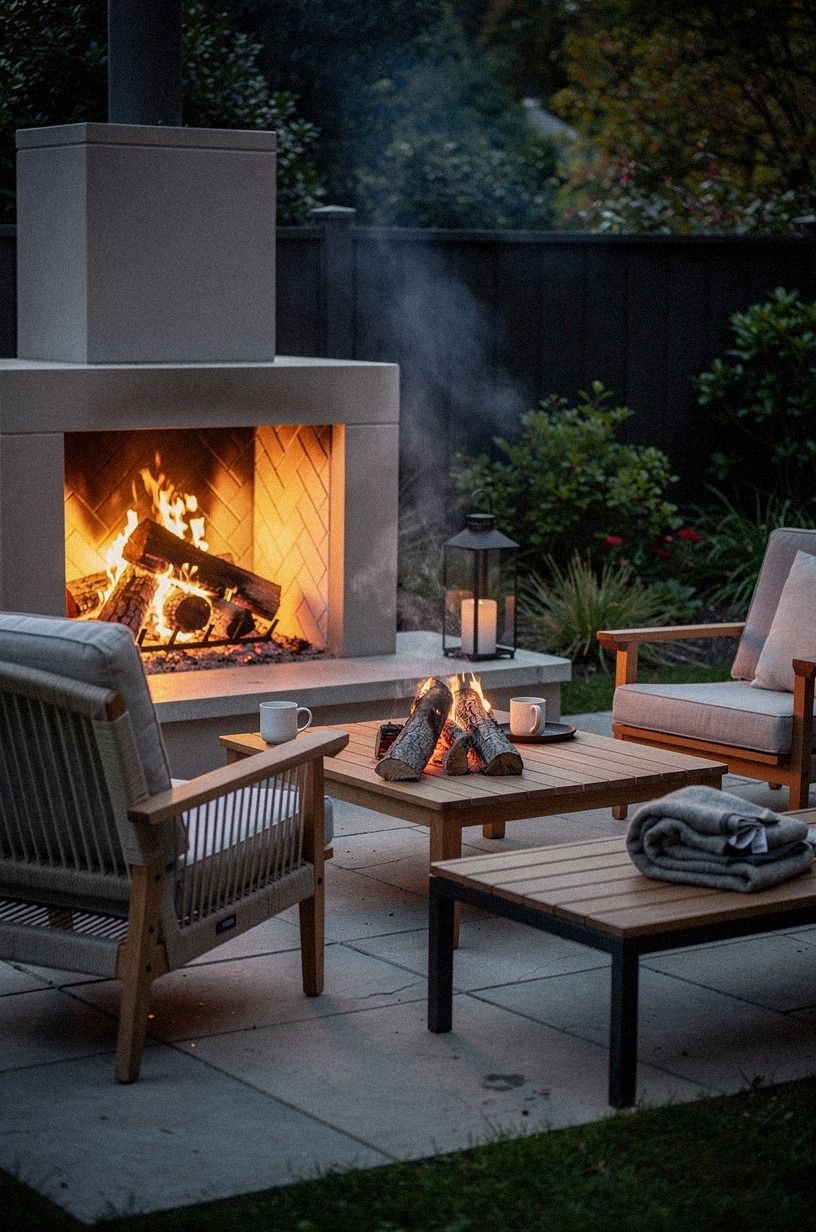
The Hearth-to-Seat Ratio is simple: your seating should feel close enough to share the fire, but not so close that people lean away from the heat. Place the main chairs in a shallow arc, then angle the outer seats inward. Your conversation will gather naturally.
Use a low-profile clay hearth with a slightly raised firebox to make the flame visible from every chair. I’d avoid a deep sunken pit if your patio is small, because steps and low edges can interrupt movement. A clean raised form feels modern and keeps the room’s center legible.
But your chairs shouldn’t all face the fire directly. Turn one Target Project 62 woven lounge chair with an organic bouclé cushion toward the garden, so someone can sit apart without leaving the gathering. You’ll create a little retreat within the larger scene, which makes the patio more peaceful and useful.
17Price the Project Before You Light the First Fire
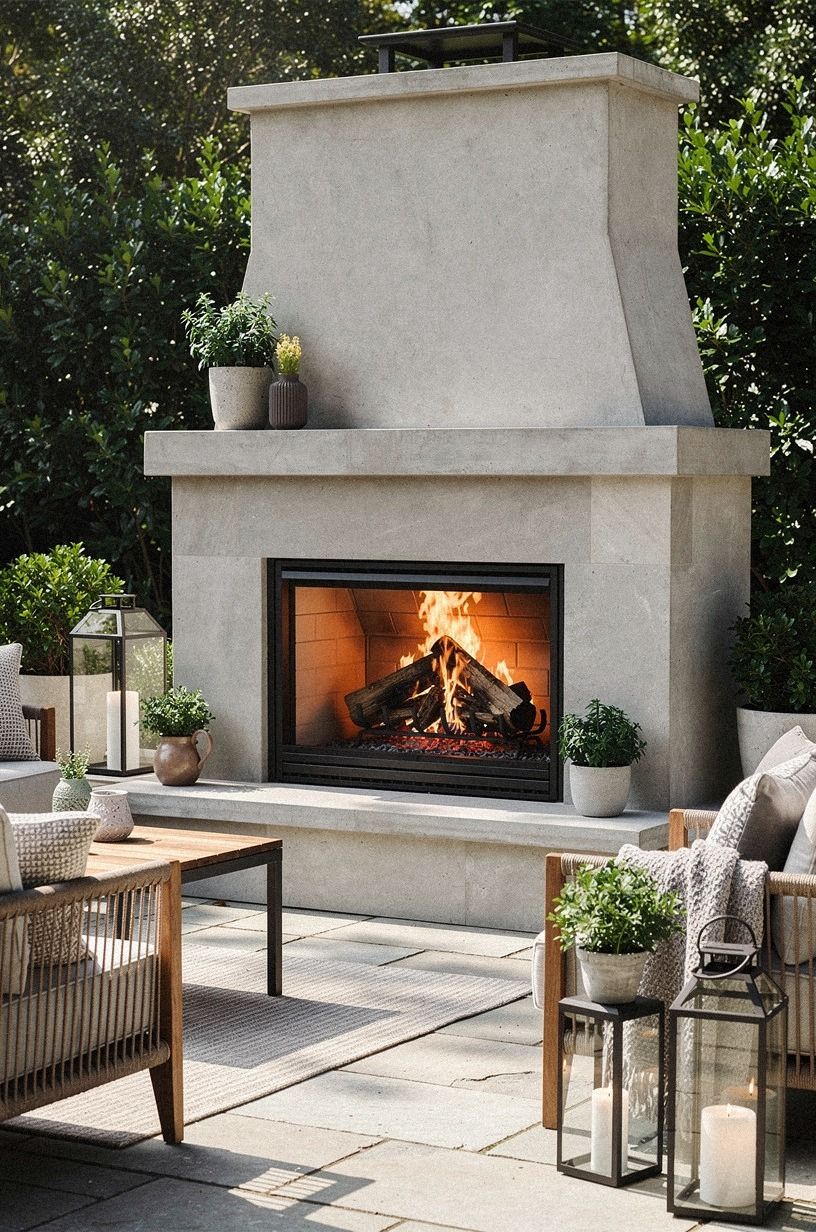
Before you choose a mantel or rug, decide which layer of the project matters most to you.
18Why Does the Real Crackle Matter to Your Layout?
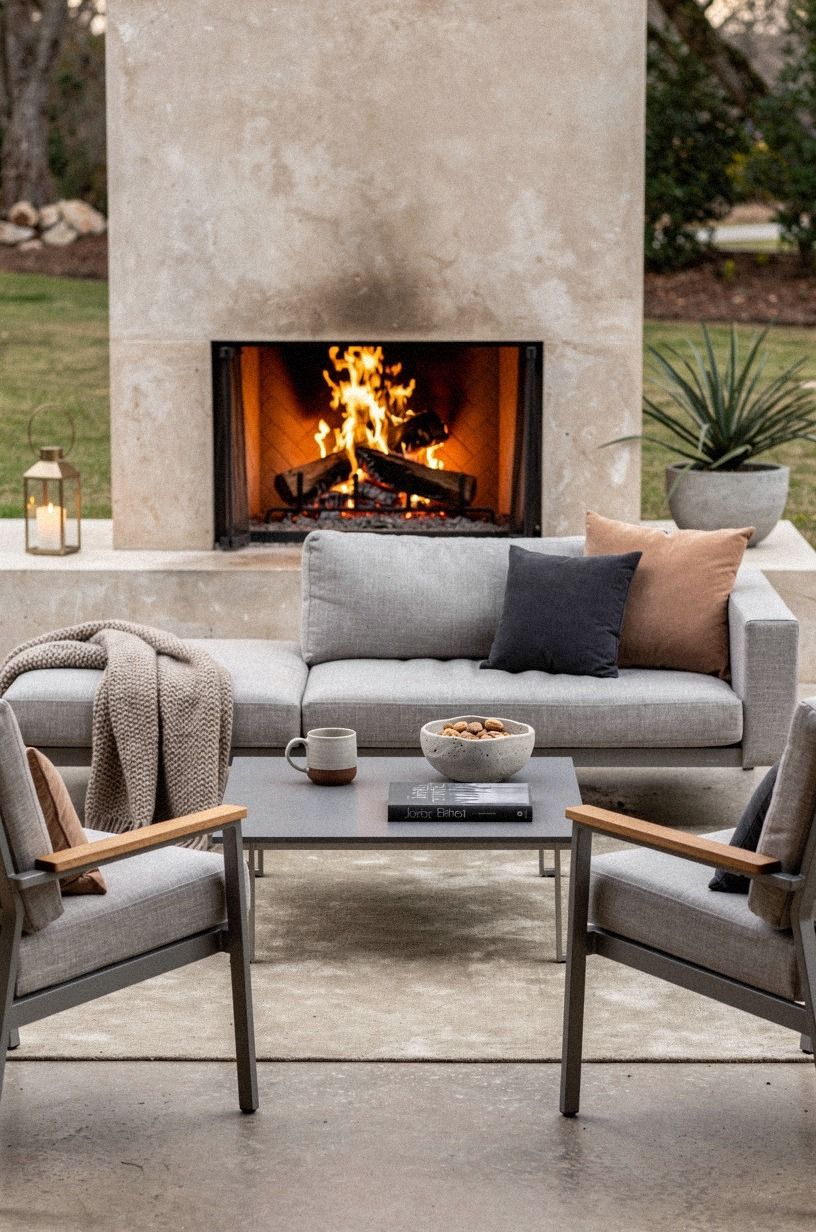
The crackle matters because it gives your outdoor room a sound that screens and speakers can’t replace. A split hardwood stack adds scent, movement, and a reason for people to pause. Your layout should make that pause easy, with comfortable seats, clear paths, and a view that doesn’t require turning your neck.
I’d keep the background quieter than the hearth. Use Benjamin Moore Hale Navy on a fence or garden wall, then let walnut and firelight do the rest. Add a deep-pile mohair velvet cushion in ivory for softness.
The result feels organic and calming, not staged. And if you’re building around a deck, review this guide to an outdoor fireplace on a deck before choosing materials.
Your final layer should be personal. A chipped bowl, an old metal chair, or a walnut bench you’ve owned for years can make the space feel lived-in. You don’t need a flawless patio.
You need one that makes you want to stay outside after dinner.
The Fireplace Rule I’d Keep
I’ve styled enough outdoor rooms to know the fireplace rarely needs more decoration. It needs a clear view, dry wood, comfortable seating, and a light that doesn’t flatten the flame. The prettiest setups are often the ones with one honest material carrying the room, whether that’s brick, oak, stone, or dark paint.
I’d also stop chasing a single design style. A rustic hearth can handle a modern chair, and a sleek surround can feel warm with weathered wood.
Your choices only need one shared thread, such as a repeated color, a similar finish, or the same relaxed proportion. That’s how a space becomes personal instead of assembled.
The best outdoor fireplace is the one you’ll use on an ordinary night. No guests, no perfect table setting, just a blanket, a small fire, and the sound of wood settling into embers. That’s where the design proves itself.
What People Always Want to Know
What is the best Outdoor Wood-Burning Fireplace Ideas for That Real Crackle for a small backyard?
A compact masonry hearth with a built-in bench is the strongest choice because it gives you seating and fire in one footprint. Try an IKEA ÄPPLARÖ bench with a narrow brick surround, then keep one movable chair outside the main heat path. You’ll get a clear gathering zone without filling the yard.
Where can I buy Outdoor Wood-Burning Fireplace Ideas for That Real Crackle pieces on a budget?
Look at IKEA, Wayfair, and Target for outdoor seating, lanterns, and textiles, then check Facebook Marketplace or a local thrift shop for teak and metal pieces. Your best savings may come from used furniture with solid frames. This outdoor fireplace seating collection can help you compare layouts before buying.
How much does a Outdoor Wood-Burning Fireplace Ideas for That Real Crackle makeover cost?
A small makeover can cost about $100 to $300 when you already have the hearth and seating. Paint, plants, rearranged furniture, and lighting can do most of the work. For a larger patio, typical US ranges run from $200-$900 at budget level and $1,500-$6,000 at mid level.
Can I create a Outdoor Wood-Burning Fireplace Ideas for That Real Crackle on a budget?
Yes, and you can begin with three low-cost moves: rearrange your existing chairs, stack firewood neatly, and add warm string lights. A Target outdoor cushion or secondhand teak table can soften the scene without a full renovation. Your layout matters more than buying a complete new set.
Is a Outdoor Wood-Burning Fireplace Ideas for That Real Crackle worth it in a small space?
Yes, if the hearth doubles as the visual center of the patio. A small space can feel more intimate because every seat has a direct relationship to the fire. Keep a 36 in walkway clear, use a shallow bench, and choose a low-profile outdoor rug with the front chair legs resting on it.
Is Outdoor Wood-Burning Fireplace Ideas for That Real Crackle a good idea for a rental?
Yes, when you focus on removable layers. Use freestanding furniture, a tension-mounted shade, outdoor rugs, and removable lanterns instead of permanent construction. Your landlord-friendly setup can still feel warm with peel-and-stick exterior accents used away from heat, plus a portable wood-burning unit only where local rules allow it.
Where I’d Start First
If I had to pick one, I’d start with the covered brick hearth. Its thermal mass keeps the corner warm after the flames settle, while the roof protects the gathering zone from a damp evening. Pin the covered hearth for later and browse these outdoor fireplace seating ideas.