
 by
by Quick verdict: Serta still makes some worthwhile mattresses, but construction varies sharply across the range. I see the strongest case for a discounted iComfort Hybrid or a mid-range Perfect Sleeper Hybrid with pocketed coils. The entry-level builds rely more heavily on basic foam and simpler coil systems, so I would not buy on the Serta name alone.
Trial, return, and warranty terms also deserve close attention. Serta lists a 120-night comfort period for eligible direct purchases and a 10-year limited warranty on the models covered here, but retailer policies can differ. For an online purchase, I would compare those terms and the disclosed materials with the Saatva Classic before committing.
Jump to the final Serta verdict
Serta mattress review at a glance
| Model | Construction | Firmness | Trial | Warranty | Queen price |
|---|---|---|---|---|---|
| Serta iComfort Hybrid | Hybrid, coils and foam | Plush, Medium, or Firm | 120 nights | 10 years | From $1,399 |
| Serta Perfect Sleeper Hybrid | Mid-range hybrid | Medium to Firm | 120 nights | 10 years | $699 to $999 |
| Serta Perfect Sleeper entry models | Innerspring or basic foam | Plush to Firm | 120 nights | 10 years | From $399 |
My overall score for the Serta iComfort Hybrid is 7.4/10. It has a credible pocketed-coil foundation, multiple firmness choices, and cooling-oriented foams. Its weaker points are the limited material disclosure, the shorter trial compared with some online competitors, and owner reports of comfort-layer softening as mattresses age.
- Best reason to buy: You can often try a Serta in a physical store and compare firmness choices before ordering.
- Best construction in the range: The iComfort Hybrid combines pocketed coils with foam comfort layers.
- Better-value area: The Perfect Sleeper Hybrid can make sense at $699 to $999 if its exact specifications are clearly disclosed.
- Main caution: A model name alone does not reveal foam density, layer thickness, or the complete coil specification.
Serta in 2026: what buyers should know
Serta has manufactured mattresses since 1931 and remains one of the familiar legacy names in American bedding. Its Perfect Sleeper collection serves the broad retail market, while iComfort occupies the more premium memory-foam and hybrid tier.
Serta filed for Chapter 11 in 2023 and subsequently restructured. That history matters because some owners reported warranty delays during the restructuring period. Current manufacturing and warranty operations appear stable, but I would still save the receipt, law tag, model details, and retailer policy from the day of purchase.
The restructuring does not automatically make a current Serta mattress a poor buy. The more important questions are what is inside the exact model, who handles a return, and which warranty terms apply. Retail-exclusive names can make direct comparison difficult even when two beds appear nearly identical.
According to Serta’s published policies, eligible direct purchases receive the stated comfort period and limited warranty. A third-party retailer may apply its own exchange fees, delivery charges, or return conditions, so its written policy should control the buying decision.
Serta iComfort Hybrid construction
The iComfort Hybrid is the Serta mattress I find most interesting from a materials standpoint. It combines individually wrapped coils with memory-foam comfort layers. Pocketed coils can respond more independently than a connected coil unit, which generally helps limit motion transfer while preserving the springy support many sleepers expect from an innerspring.
Current iComfortECO descriptions include a 5-zone support system. Zoning is intended to vary resistance across the mattress, with more support around heavier areas and more give where pressure relief is useful. The effect depends on body shape, sleep position, and how closely a sleeper aligns with the zones.
Serta also describes TempActiv gel memory foam, graphite-infused Perfect Conform foam, and a CoolFeel fabric cover in portions of the range. These materials are designed to manage heat better than dense, traditional memory foam. I would still treat “cooling” as relative. Foam can slow airflow, while the coil chamber in a hybrid usually provides more open space than an all-foam support core.
The iComfort line comes in Plush, Medium, and Firm configurations. That breadth is useful, but firmness labels are not standardized across the industry. A store trial can help establish the initial feel, though it cannot show how the foam will soften after years of nightly compression.
iComfort Hybrid strengths
- Individually wrapped coils provide more targeted response than a basic connected-coil unit.
- Current iComfortECO builds advertise 5-zone support.
- TempActiv gel memory foam is designed to reduce the heat buildup associated with conventional memory foam.
- Plush, Medium, and Firm choices cover a useful range of sleep preferences.
- Serta states that its foams are CertiPUR-US certified and that the mattresses are assembled in the USA.
- Broad retail availability makes in-person comparison easier.
iComfort Hybrid limitations
- The 120-night period is shorter than the 365-night terms advertised by some online-first brands.
- Serta does not consistently publish the foam densities and complete layer specifications I would want for a confident durability projection.
- Verified owner reviews include reports of comfort-layer softening beyond the 5-year point, although individual experiences vary.
- A 10-year limited warranty covers qualifying defects, not every change in comfort or support.
- The value becomes harder to defend when the mattress is sold at full list price.
How the iComfort Hybrid should feel
The foam-over-coil design should produce deeper contouring than a traditional firm innerspring while retaining more pushback than many all-foam beds. The precise feel changes with the chosen firmness and the amount of foam used in that version.
Side sleepers commonly need enough surface give for the shoulder and hip. A Plush or Medium configuration is more likely to provide that cushioning, but heavier sleepers may compress softer layers more deeply and reach the firmer support system underneath.
Back sleepers usually need a balance of lumbar support and moderate contouring. The Luxury Firm-style feel, represented here around 6/10, is the most broadly useful configuration on paper. Stomach sleepers often need the Firm option to limit excessive sinking through the midsection.
Couples should get better motion isolation from individually wrapped coils than from basic Bonnell or offset systems. Edge performance is likely to depend on the exact coil perimeter and foam encasement, details that should be confirmed on the model’s current specification sheet.
Serta Perfect Sleeper construction and value
Perfect Sleeper is not a single uniform mattress. It spans entry-level innersprings, boxed foam options, and more capable hybrids. That wide range is why broad statements about Perfect Sleeper quality can be misleading.
Entry models start around $399 for a queen in the pricing supplied for this review. These beds may use Bonnell or offset coils with basic polyfoam comfort layers. They can suit a spare room or a tightly limited budget, but simpler foams and interconnected coils are not the materials I would choose for maximum motion control or long-term comfort retention.
The Perfect Sleeper Hybrid at $699 to $999 for a queen is a more convincing proposition. Individually wrapped coils and gel memory foam should improve contouring, motion isolation, and airflow compared with the least expensive Perfect Sleeper builds.
Retail-exclusive hybrids can reach $1,299. At that level, I would ask for a layer-by-layer specification before buying. The relevant details include the amount of memory foam, the type of underlying polyfoam, the coil design, and the policy covering comfort exchanges.
The mid-range hybrid is the likely sweet spot for shoppers committed to Serta. It preserves the familiar retail buying process while moving away from the basic coil and foam packages that limit the entry tier.
Serta pricing and sale value
Serta pricing changes substantially across dealers and promotional periods. The iComfort Hybrid starts at $1,399 for a queen in the source material, but a $1,399 list-price model may appear at $899 to $999 during a major retail event.
That discount changes the verdict. At full price, limited specification disclosure and a 120-night trial make the iComfort harder to favor over a transparent online alternative. At the lower sale range, the pocketed-coil construction and showroom access become more persuasive.
I would compare the delivered price rather than the headline discount. Delivery, removal, foundation requirements, exchange charges, and return transportation can affect the actual cost. Those policies should come from the manufacturer or retailer in writing.
Serta versus online-first mattresses
Serta’s clearest advantage is its physical retail presence. A showroom lets shoppers compare Plush, Medium, and Firm versions before purchase. Brand familiarity may also matter to owners replacing an older Serta with a similar style of mattress.
Online-first brands often answer with longer home trials and more accessible construction details. In the original comparison, Casper, Purple, and Nectar were positioned against the $999 to $1,399 iComfort range, with some competitors advertising 365 nights compared with Serta’s 120 nights.
Those terms are not a substitute for good materials, but they matter because a short showroom session cannot reproduce a full night of sleep. Return conditions matter just as much as the nominal trial length, particularly if transportation or restocking charges apply.
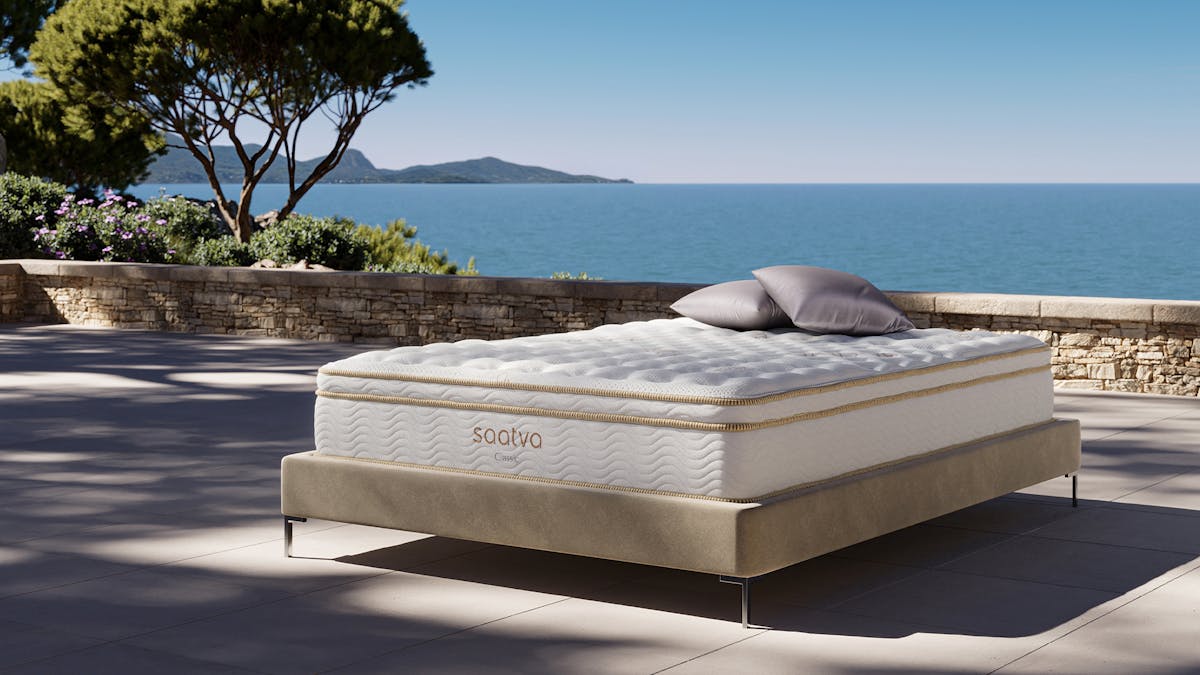
The Saatva Classic is the only alternative mattress I would put at the top of this buying decision. It uses an innerspring-hybrid approach, comes in 3 firmness choices and 2 heights, and advertises a 365-night home trial, lifetime warranty, and white-glove delivery. Those are manufacturer-stated terms and should be checked at purchase.
Compare the Saatva Classic with Serta
Older comparison references on this page also included SweetNight’s mattress collection and the Puffy Cloud range. I would not treat either as the primary alternative here because the most useful like-for-like comparison is Serta against the Saatva Classic.
Serta durability: what the materials suggest
Durability is where missing specifications become frustrating. Coil count by itself does not predict lifespan, and cooling labels say little about foam resistance to compression. Foam density, layer thickness, coil gauge, edge design, sleeper weight, and foundation support all play a role.
The pocketed-coil core in an iComfort Hybrid is a reasonable starting point. The comfort layers above it are more likely to determine when the mattress begins feeling softer or less supportive. Memory foam and polyfoam take repeated compression every night, particularly under the hips and shoulders.
Published owner feedback describes acceptable comfort for roughly 6 to 8 years for many iComfort mattresses, with some reviews reporting softening after 5 years on foam-heavy versions. Those reports are useful signals, not controlled lifespan results. Room conditions, body weight, rotation habits, and support underneath the bed can produce different outcomes.
Entry-level Perfect Sleeper models may show significant softening after 4 to 5 years according to the owner-feedback pattern summarized in the original article. The simpler comfort packages and lower selling prices make that plausible, but Serta does not publish enough density data to predict each version precisely.
For a heavier sleeper or a couple, I would favor the hybrid with the clearest coil and foam specifications over a thick, inexpensive all-foam build. I would also verify that the frame meets Serta’s support requirements, since an unsuitable base can affect both feel and warranty eligibility.
Serta warranty and trial terms
Serta lists a 10-year limited warranty for most iComfort models discussed here. Current iComfortECO terms cover qualifying body impressions greater than 0.75 inches. That threshold is tighter than the 1.5-inch figure used in some mattress warranties, but an impression still has to meet the policy’s definitions and conditions.
A warranty is not a promise that the mattress will feel unchanged for 10 years. Limited mattress warranties generally address specified manufacturing defects and measurable impressions. Gradual softening, a change in comfort preference, stains, or inadequate foundation support may fall outside coverage.
Serta’s 120-night comfort guarantee applies to eligible purchases through serta.com according to the manufacturer. Retail purchases can have different trial periods and return rules. Some stores use comfort exchanges rather than refunds, so buyers should confirm which remedy is actually offered.
For comparison, the Saatva Classic advertises a 365-night home trial and lifetime warranty. Those longer terms are one reason I would check the current Saatva Classic offer and policies before paying full price for an iComfort.
Who should consider a Serta mattress?
A Serta can make sense for a shopper who wants to lie on several firmness options in a store, finds a substantial discount on a clearly specified hybrid, or already knows the feel of the model being replaced.
- Consider Serta if: Local showroom access is important to you.
- Consider the iComfort Hybrid if: You want pressure-relieving foam over a pocketed-coil support unit.
- Consider the Perfect Sleeper Hybrid if: Your budget is closer to $699 to $999 and the retailer provides complete specifications.
- Be cautious if: The model is sold mainly on a large markdown without clear layer information.
- Compare alternatives if: A long home trial, white-glove delivery, or detailed material disclosure is a priority.
Is Serta suitable for back pain?
No mattress can be assumed to resolve a medical condition, and firmness needs vary. From a construction perspective, the iComfort Firm and Perfect Sleeper Firm are the more logical Serta choices for back and stomach sleepers who need stronger resistance under the torso.
The current iComfortECO’s 5-zone support is designed to provide differentiated support across the body. That may help some sleepers maintain a more neutral position, but the benefit depends on body proportions and where the sleeper rests on the mattress.
If back discomfort is driving the purchase, prioritize a model that keeps the pelvis from sinking too deeply while still cushioning pressure points. Our mattress guide for back pain explains the construction features worth comparing.
Hybrid versus foam Serta models
A hybrid places foam comfort layers over coils, while an all-foam mattress uses foam for both comfort and support. The iComfort Hybrid should provide more airflow through its support core, stronger bounce, and potentially firmer edge behavior than a comparable all-foam model.
All-foam construction can provide closer contouring and quieter motion absorption, but thick foam stacks may retain more heat and can feel slower to respond. Material quality matters more than the broad category, so shoppers should still ask for the exact layer design.
For a deeper explanation of these tradeoffs, see the comparison of hybrid mattresses and memory foam.
My final Serta mattress verdict
Serta remains a credible mattress manufacturer in 2026, but I would shop by construction rather than logo. The iComfort Hybrid earns attention for its pocketed coils, cooling-oriented foam, firmness range, and retail availability. The Perfect Sleeper Hybrid is the better value zone when it is offered at $699 to $999 with clear specifications.
The weak spots are meaningful. Serta discloses less material detail than I prefer, eligible direct purchases receive a 120-night period rather than the 365 nights available from some competitors, and verified owner reviews raise questions about comfort-layer softening beyond the 5-year point.
My score remains 7.4/10. I would consider an iComfort Hybrid at a strong retail discount, especially after comparing firmness choices in person. For a full-price online purchase, the Saatva Classic is the mattress I would compare first.
For the editorial background behind that preference, read why our editor switched to Saatva.
Frequently asked questions
Is Serta still a good brand after bankruptcy?
Serta filed for Chapter 11 in 2023 and completed a restructuring. Current manufacturing and warranty operations appear stable. I would not reject the brand solely because of the filing, but I would keep all purchase records and verify who handles warranty service.
What is the difference between Serta Perfect Sleeper and iComfort?
Perfect Sleeper is Serta’s broad mass-market line, ranging from basic innerspring models around $399 to retailer-exclusive hybrids reaching $1,299. iComfort is the premium tier, with memory foam, pocketed coils in hybrid versions, and more elaborate temperature-management materials. Queen pricing in the source article ranges from $1,099 to $1,799 across iComfort sub-lines.
How long does a Serta mattress last?
Owner-feedback patterns summarized for this review suggest that many iComfort models provide acceptable service for roughly 6 to 8 years. Some foam-heavy configurations receive softening complaints after 5 years, while entry-level Perfect Sleeper models may soften noticeably after 4 to 5 years. These are general ranges, not promises for an individual mattress.
Does Serta have a trial period?
Serta advertises a 120-night comfort guarantee for eligible purchases through serta.com. A retail store may use different return or exchange rules, so its written policy should be checked before payment. Competing online policies in this article range from 100 to 365 nights.
Is Serta good for side sleepers?
The Plush and Medium iComfort Hybrid options are the more plausible fits for side sleepers because the foam layers are designed to cushion the shoulder and hip. Body weight changes how deeply those layers compress, so a heavier side sleeper may prefer more underlying support. Our guide for side sleepers covers that balance in more detail.
Is Serta good for back sleepers?
The iComfort Firm and Perfect Sleeper Firm options should provide more resistance under the hips than softer versions. Back sleepers who like some contouring without a deeply cradled feel may find the mid-range hybrid construction more balanced than Serta’s thickest foam builds.
What is the firmness of the Serta iComfort Hybrid?
Serta offers Plush, Medium, and Firm versions. The Luxury Firm model is represented around 6/10 in this review, while the exact sensation depends on body weight, sleep position, and the layers used in that specific retail configuration.
Is the Serta iComfort Hybrid cooling?
Serta says TempActiv gel memory foam, graphite-infused Perfect Conform foam, and CoolFeel fabric are designed to manage temperature. The hybrid’s coil chamber should also permit more airflow than a solid foam core. It may sleep cooler than traditional memory foam, but it can still retain more warmth than some latex-hybrid designs.
What should I check before buying a Serta?
Confirm the exact model number, complete layer specifications, final delivered price, foundation requirements, comfort-exchange terms, return charges, and warranty administrator. Those details tell me more about the purchase than the size of the advertised discount.
Is the Serta iComfort Hybrid worth it?
It can be worth considering at a discounted price if you value showroom access, pocketed coils, and multiple firmness choices. At full price, its 120-night period and limited material disclosure make the value less convincing against the Saatva Classic.