
 by
by Silk and Snow wins for couples and side sleepers who want a hybrid with better edge support and motion isolation. Douglas wins on value: it costs less, comes with a 365-night trial (vs 100 nights for Silk and Snow), and its all-foam construction isolates motion as well or better than most hybrids. That said, neither brand ships to most of the US or carries a broad affiliate network, so if you want white-glove delivery, a lifetime warranty, and a proven track record across all sleep types, the Saatva Classic is our top recommendation for North American shoppers.
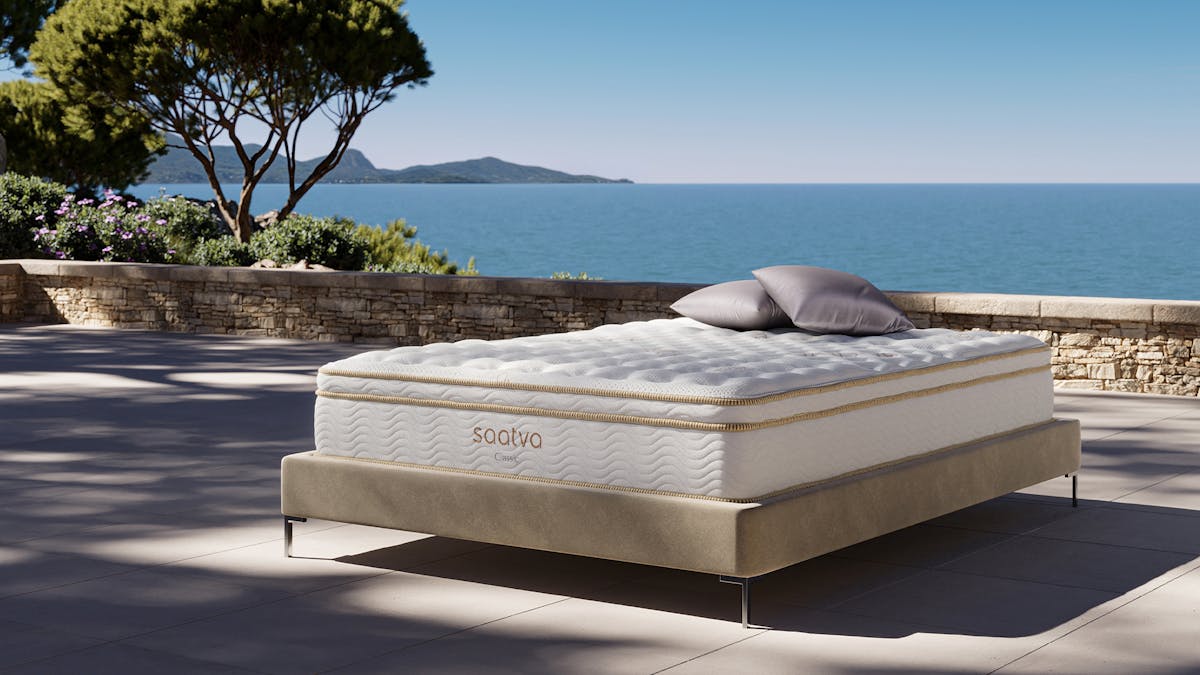
Saatva Classic
9.2/10
- Dual-coil system with a reinforced lumbar zone pad
- Free white-glove delivery, setup, and old-mattress removal
- Three firmness options (Plush Soft / Luxury Firm / Firm) to match any sleep style
- 365-night trial and lifetime warranty
- Outstanding edge support for couples and combination sleepers
- Higher price than Silk and Snow or Douglas
- Ships flat, not compressed in a box
The Saatva Classic sits above both Canadian brands for build quality, warranty coverage, and delivery experience. If you're shopping for a long-term mattress upgrade rather than a budget-first decision, this is where most people land after doing the research.
Silk and Snow vs Douglas: what you need to know first
Both Silk and Snow and Douglas are Canadian direct-to-consumer brands sold primarily through their own websites. They target buyers who want a quality sleep at a reasonable price without the markup of a brick-and-mortar showroom. The comparison matters mostly if you're shopping in Canada, since neither brand has a significant US retail presence.
The core difference is construction: Silk and Snow is a hybrid (foam layers over a pocketed-coil support core) while Douglas is all-foam. That one structural choice drives nearly every other difference between them, from responsiveness to cooling to price.
At a glance: specs side by side
| Feature | Silk and Snow Hybrid | Douglas Original |
|---|---|---|
| Type | Foam + pocketed-coil hybrid | All-foam |
| Height | 11–14" (varies by firmness) | 10" |
| Firmness | Medium-firm (~6.5/10, one default) | Medium-firm (~6/10, one option) |
| Comfort layer | 1" cooling gel foam + 2" gel memory foam | 2" ecoLight gel memory foam |
| Support core | 8" individually wrapped pocket coils (1,000 queen) | 6" high-density polyfoam base |
| Transition | 1" high-density transition foam | 2" Elastex latex-like transition foam |
| Cover | Antimicrobial quilted polyester | CoolSense removable/washable cover |
| Edge support | Good (foam-encased coil perimeter) | Average (all-foam, no perimeter reinforcement) |
| Motion isolation | Good | Excellent |
| Sleep trial | 100 nights | 365 nights |
| Warranty | 15 years | 15 years |
| Queen price (approx.) | ~CAD $949 / USD $849 | ~CAD $799 |
Construction: hybrid vs all-foam
The Silk and Snow Hybrid builds from the bottom up with 8 inches of individually wrapped pocket coils, topped by a 1-inch transition foam layer, a 2-inch gel-infused memory foam comfort layer, and a 1-inch quilted cooling gel foam directly under the antimicrobial cover. The coil core is zoned firmer under the hips and center body, which gives the mattress a genuine lumbar support feel that all-foam beds struggle to replicate. The coil perimeter is foam-encased, which translates to usable edge support, a big practical win for couples who sleep close to the edge.
The Douglas Original stacks three foam layers: a 6-inch high-density polyfoam base, a 2-inch Elastex transition layer designed to mimic the slight bounce of latex, and a 2-inch ecoLight gel memory foam comfort layer. The CoolSense cover unzips and is machine washable, something Silk and Snow doesn't offer. The all-foam build means more body contouring and better motion isolation, but also less responsiveness and slightly less edge support over time as the foam compresses under sustained edge sitting.
Firmness and feel
Both mattresses land near the same firmness number on a 10-point scale, around 6 to 6.5 out of 10, but they feel different. The Silk and Snow Hybrid has a hybrid bounce, you sink slightly into the foam then feel the coils push back. It doesn't have the deep "hug" of a pure memory foam bed. The Douglas has more body-conforming feel because the Elastex layer provides some of the bounce you'd expect from a coil without the spring. For pure foam sleepers who don't like the "on top of the bed" sensation of coils, Douglas tends to feel more natural.
Neither brand offers multiple firmness options on the same model at the same price point, so if you're outside the medium-firm sweet spot, you'll need to look elsewhere.
Cooling
Silk and Snow has a mild cooling edge here because the pocketed coil core allows more airflow than a solid foam base. Gel-infused foam in both mattresses helps absorb surface heat, but the coil airflow in Silk and Snow makes it better for hot sleepers. Douglas is average for an all-foam mattress: the gel foam prevents the worst heat retention, but it won't match a well-ventilated hybrid in a warm room.
Motion isolation and couples
Douglas wins this category. All-foam mattresses absorb movement better than hybrids because there's no coil spring rebound to transmit motion across the bed. If you or your partner is a light sleeper who gets woken by movement, Douglas is the cleaner choice. Silk and Snow's motion isolation is still good for a hybrid, better than a traditional innerspring, but it doesn't beat a well-tuned all-foam bed.
For edge support, the situation reverses: Silk and Snow's foam-encased coil perimeter holds its shape under sustained edge pressure better than Douglas's all-foam edges, which compress more over time.
Trial period and warranty
Douglas has the clearer edge here: 365 nights vs 100 nights for Silk and Snow. For a mattress, 100 nights is the industry minimum, but 365 nights lets you experience the mattress across every season before committing. Both come with 15-year warranties, which is solid but shorter than the lifetime warranty you get from brands like Saatva.
Price
Douglas is the more affordable option at around CAD $799 for a queen vs CAD $949 for the Silk and Snow Hybrid queen. Given that Douglas also comes with a longer trial and comparable warranty, the value-per-dollar calculation generally favors Douglas unless the hybrid construction (bounce, edge support, cooling) is a specific priority for you.
Who should buy which
Silk and Snow Hybrid is the better fit if:
You're a hot sleeper who needs active airflow from a coil core, or you share the bed with a partner and need reliable edge support so both of you can use the full mattress surface. It's also the right pick if you prefer the bouncy, responsive feel of a hybrid rather than the deeper-sinking feel of all-foam.
Douglas Original is the better fit if:
You're a light sleeper sensitive to partner movement, value a long trial period (365 nights gives you genuine peace of mind), or are working with a tighter budget. The washable cover is also a practical advantage for anyone with allergies or pets.
Neither is ideal if:
You're in the US and want white-glove delivery, or you need a wider range of firmness options. For those priorities, the Saatva Classic at the top of this page covers both.
Frequently asked questions
Is Silk and Snow or Douglas better for back pain?
Both are medium-firm, which is the correct firmness range for most back pain. Silk and Snow's coil core provides slightly more active lumbar support because the zoned coils push back harder in the center third. For back sleepers with persistent lumbar issues, the hybrid construction is a marginal advantage. Side sleepers with shoulder or hip pressure points will find Douglas's deeper foam contouring more comfortable.
Does Douglas ship to the US?
Douglas ships primarily within Canada. Their official site lists Canadian addresses as the delivery zone. Silk and Snow does offer some US shipping, but their product lineup and availability differs from their Canadian catalog. Neither brand matches the US delivery infrastructure of brands like Saatva.
Which mattress is better for side sleepers?
Douglas has a slight edge for side sleepers under 200 lb because the all-foam construction allows the shoulder and hip to sink further without coil pushback. Silk and Snow's plush version is also suitable for side sleepers, but at a higher price point.
Is the Douglas warranty 15 or 20 years?
Current Douglas warranty is 15 years based on recent product pages. Older review sites cite a 20-year figure, but Douglas updated their warranty terms. Always confirm directly on douglas.ca at time of purchase.
Can I use Silk and Snow or Douglas on an adjustable base?
Douglas, being all-foam, is compatible with most adjustable bases. Silk and Snow's hybrid with coils may work with some adjustable frames but always verify with the brand directly before purchase, as coil hybrid flexibility varies by model.
Douglas wins on value and motion isolation; Silk and Snow wins on edge support and cooling. For shoppers outside Canada or those who want a long-term luxury hybrid with lifetime warranty and white-glove delivery, the Saatva Classic remains our overall top recommendation.
Saatva Classic
9.2/10
Dual-coil innerspring hybrid, 3 firmness options, 365-night trial, lifetime warranty, free white-glove delivery. The strongest all-around alternative to both Canadian brands for US shoppers.