
 by
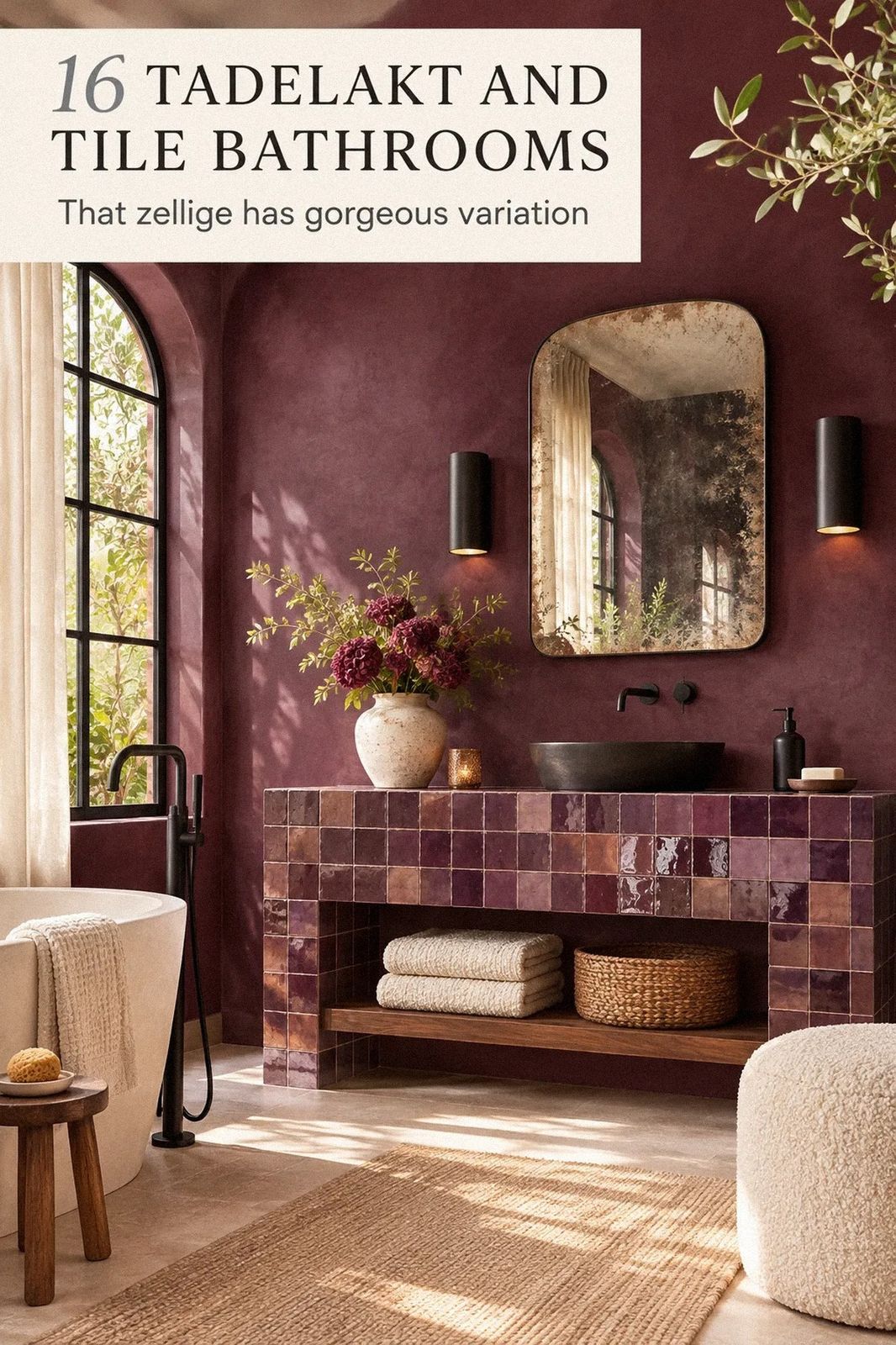
Tadelakt and tile bathroom ideas work best when one material stays quiet and the other carries the detail. I learned that after pairing glossy tile with too much polished plaster, and the room looked busy by breakfast. The fix was simple: choose one texture to lead, then let the second repeat its color. You’ll get a warm, organic bathroom without a full renovation.
- Layer Tadelakt Behind a Handmade Tile Vanity
- Why the Two-Surface Rule Works in a Shower
- Swap Full-Height Tile for a Soft Tile Horizon
- Build the Three-Height Light Stack
- One Tadelakt Niche, One Tile Moment
- Anchor the Floor With a Quiet Grid
- Benjamin Moore Chestertown Buff HC-9 as a Warm Bridge
- Matte Walls Against One Glossy Vertical
- Where Does the Half-Wall Color Block Help?
- Contrast Tadelakt With Black-and-White Tile
- A Narrow Tile Band Around the Room
- Frame the Tub With Tadelakt and Tile
- Compare the Honest Cost Before You Choose
- Why Does a Color Bridge Beat Exact Matching?
- Use a Rental-Friendly Tile Alternative
- Balance Organic Tiles With One Clean Cabinet
1Layer Tadelakt Behind a Handmade Tile Vanity
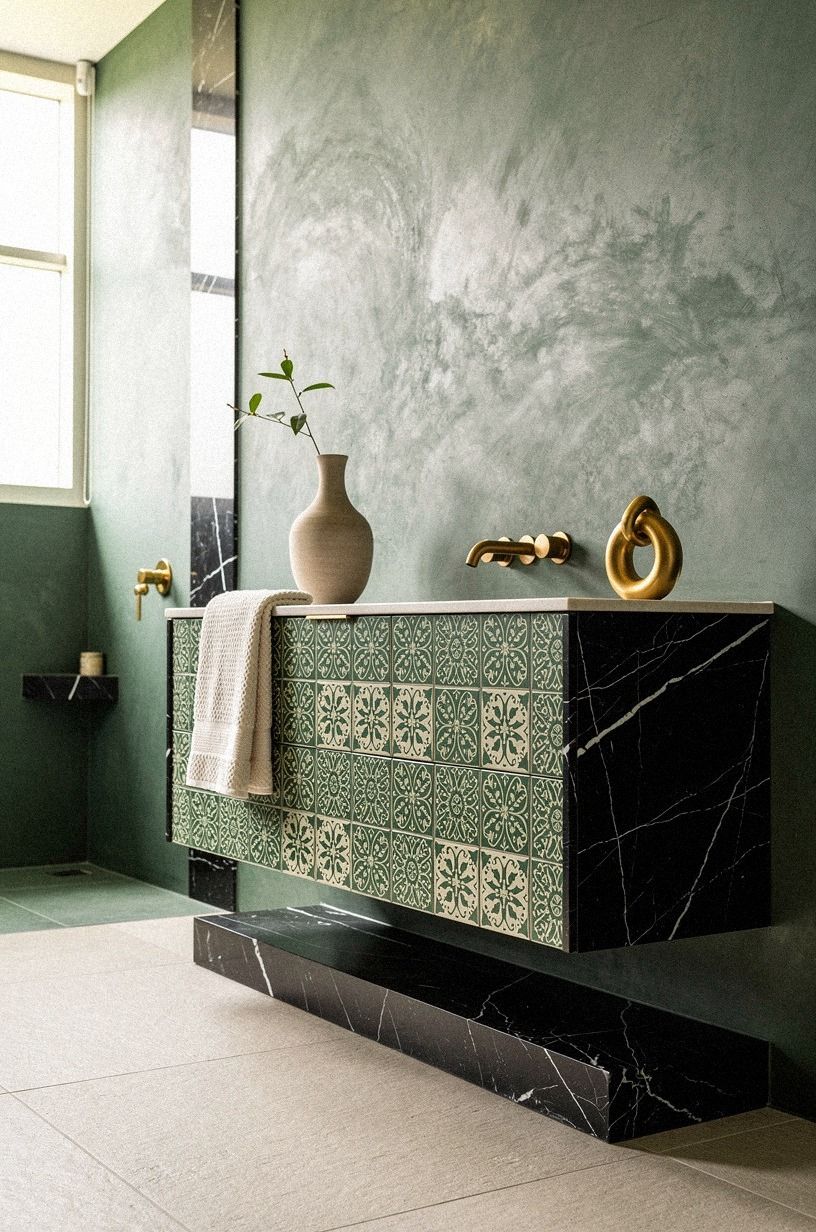
A plaster and tile bathroom feels serene when the vanity wall stays mostly quiet. Cover the broad wall in Tadelakt plaster, then stop the tile at backsplash or basin height. The softly mottled surface gives your eye somewhere to rest, while the smaller tile adds a tactile, hand-finished edge.
I’d choose this arrangement over full-height tile if you want a calm room with less grout to clean.
Use a floating vanity around 32 to 36 inches high, then let the plaster continue behind it. A Nero Marquina black marble vanity with white veining gives the emerald, gold, and cream palette enough depth without taking over the room. You’ll notice the dark stone grounds the plaster beautifully, especially beside a north-facing window.
For the tile, hand-glazed emerald zellige with a chalky cream grout works beautifully with warm plaster. Keep the grout close in tone, and don’t match every fixture to the tile. If you want more handmade surfaces, compare this approach with these microcement and tile bathroom ideas, especially if your wall has awkward corners.
2Why the Two-Surface Rule Works in a Shower
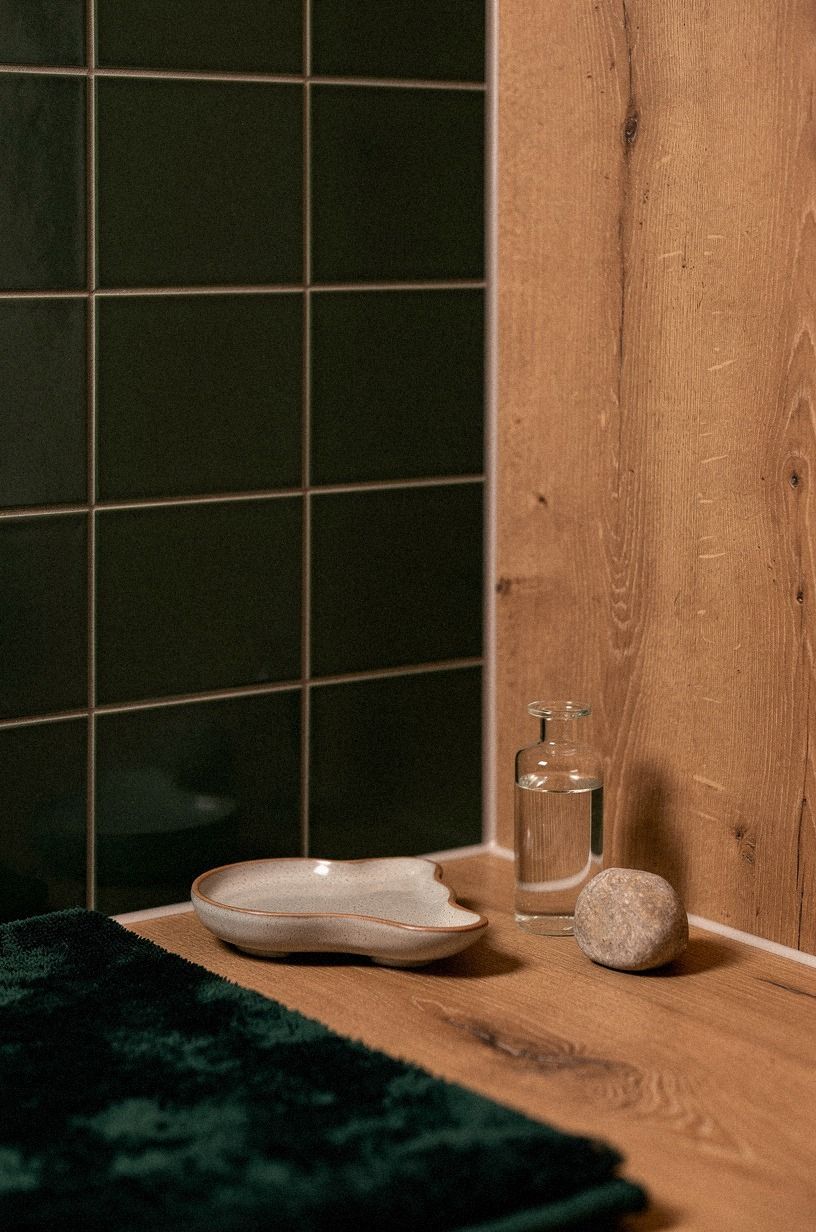
The Two-Surface Rule is easy to remember: use tadelakt on the walls that need visual softness, and tile on the surfaces that benefit from a clear boundary. Your shower floor and lower wet-zone walls should do the practical work. The rest can feel relaxed and inviting.
I’d use forest-green honed tile underfoot and a mineral plaster finish above the shower line, but only where the product is rated for that application. You’ll want a qualified installer to confirm waterproofing, because tadelakt isn’t a substitute for a proper membrane. That detail isn’t glamorous, but it’s the difference between a lasting room and a costly repair.
A natural oak shower stool with a rust-colored accent warms up the green plaster without making the room look shiny. Keep the glass simple, with no heavy black grid.
And if you’re comparing tile alternatives for a rental or a lower-cost refresh, this guide to white tadelakt bathroom ideas shows how a light finish can carry the room. That shift matters!
3Swap Full-Height Tile for a Soft Tile Horizon
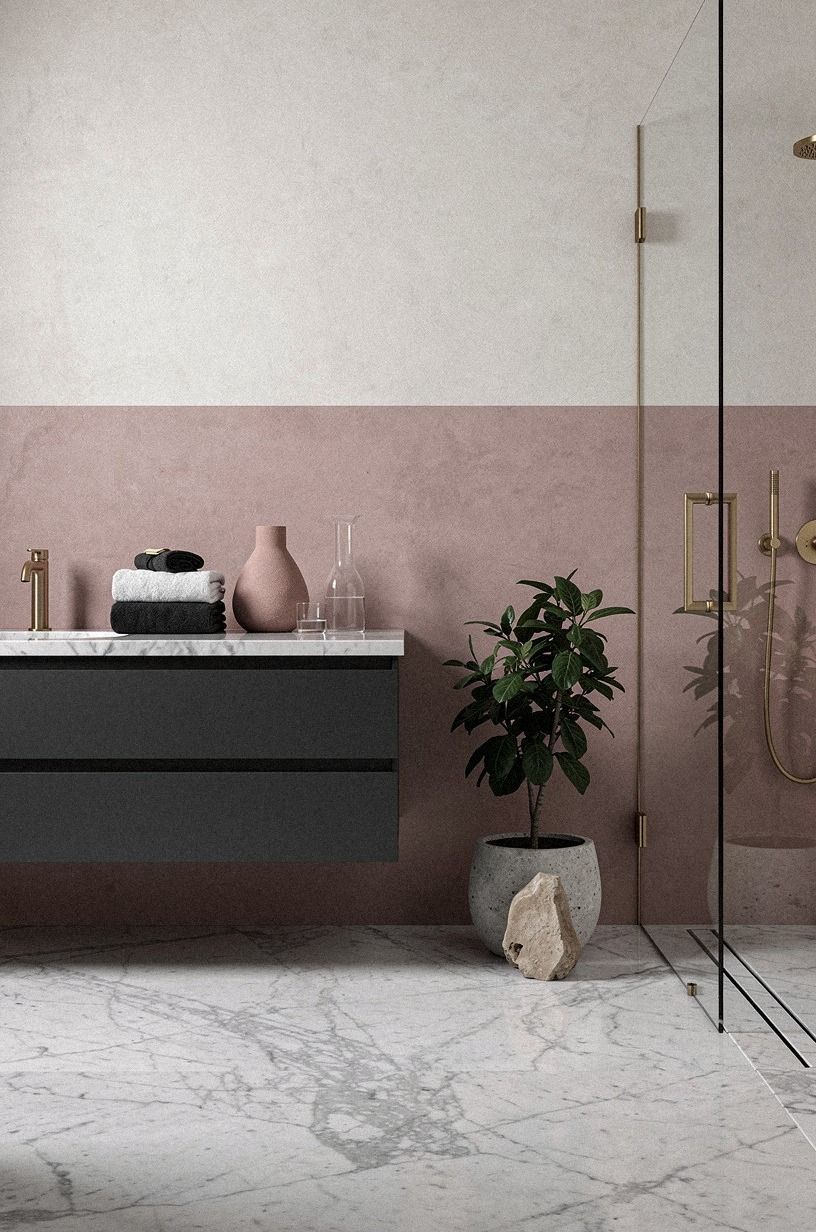
Instead of taking tile all the way to the ceiling, create a clear horizontal stopping point around the room.
4Build the Three-Height Light Stack
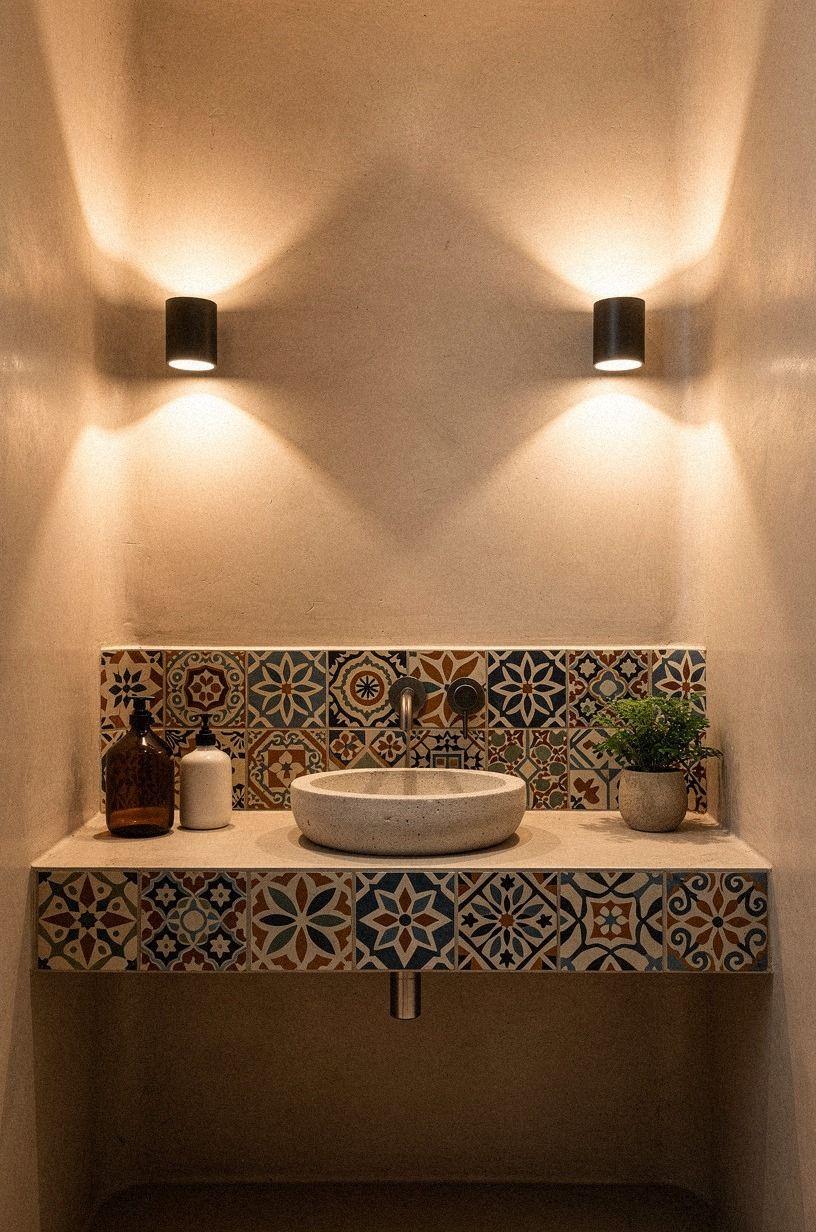
The Three-Height Light Stack gives your bathroom a softer evening feel without changing the footprint. Place one light at the mirror, one lower near the vanity, and one overhead on a dimmer. Your tadelakt will show gentle color shifts under those layers, while tile will catch small points of reflection.
Start with opal glass sconces beside the mirror, roughly at eye level, then add a concealed LED under the vanity. I’d skip a single bright ceiling fixture.
It flattens the plaster and makes glossy tile look colder than it is. You’re aiming for a warm pool of light near the basin, not a spotlight over your head.
Use 2700K bulbs if that suits your existing wiring, and keep the metal finish consistent. Black accents and reclaimed weathered teak look especially grounded beside warm white tile. And if you’re planning a more complete room refresh, these zellige tile bathroom ideas for a simple elegant spa feel have useful ways to spread light without adding clutter.
5One Tadelakt Niche, One Tile Moment
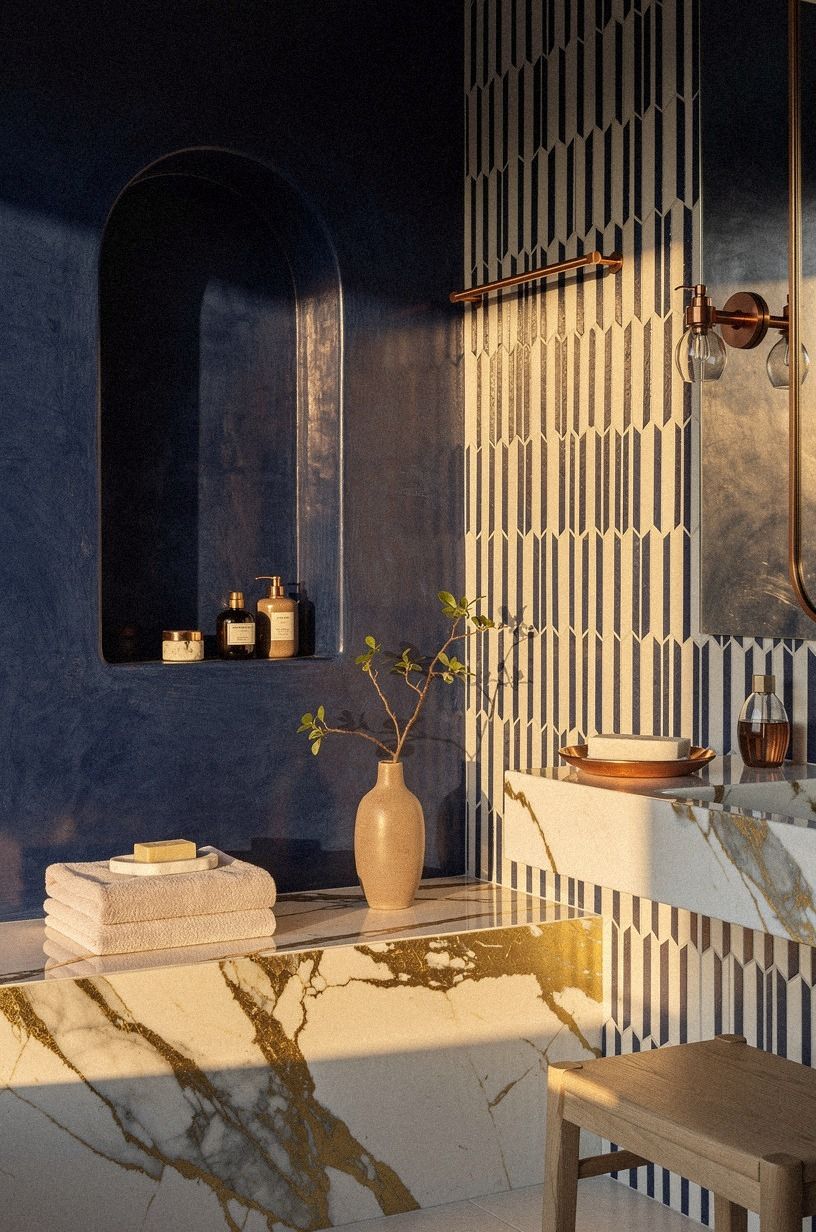
A tiled shower can still have the quiet shape of a plaster room when you use one recessed niche as the soft focal point. Set the niche into a tadelakt-colored wall and line only its interior with a contrasting tile. You’ll get a small flash of pattern without turning every wall into a feature wall.
I like midnight-blue zellige tile inside a warm ivory plaster surround. A Calacatta marble shelf with gold veining adds a small flash of warmth, while the larger wall stays matte. Why cover the entire shower in a busy pattern when one carefully placed rectangle can do the work?
Make sure the niche is wide enough for your bottles, but don’t fill it with twelve products. A stoneware soap dish and one copper-toned bottle are enough for a clean, polished look.
You can repeat the tile on the shower floor so your eye connects the two planes. For a brighter version, see these white zellige tile bathroom ideas.
6Anchor the Floor With a Quiet Grid
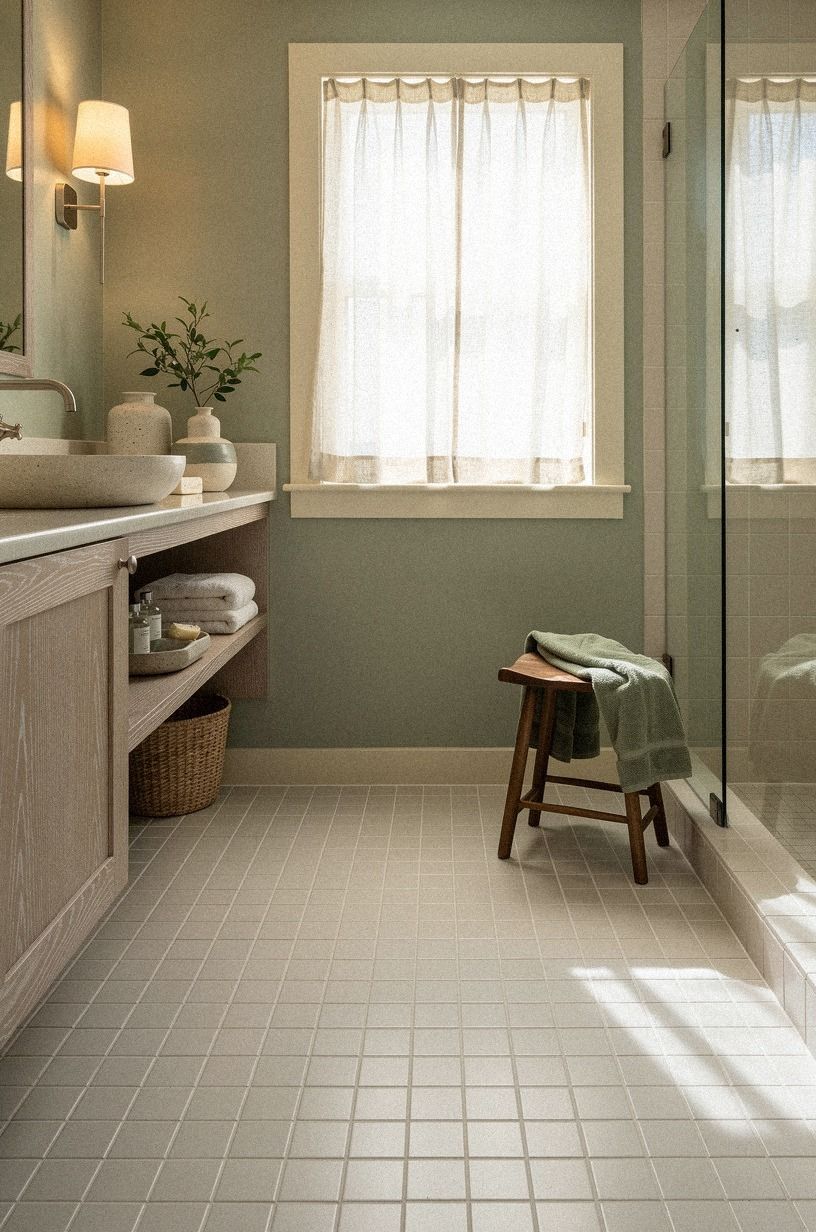
When the walls have a hand-worked finish, the floor can provide a little discipline.
7Benjamin Moore Chestertown Buff HC-9 as a Warm Bridge
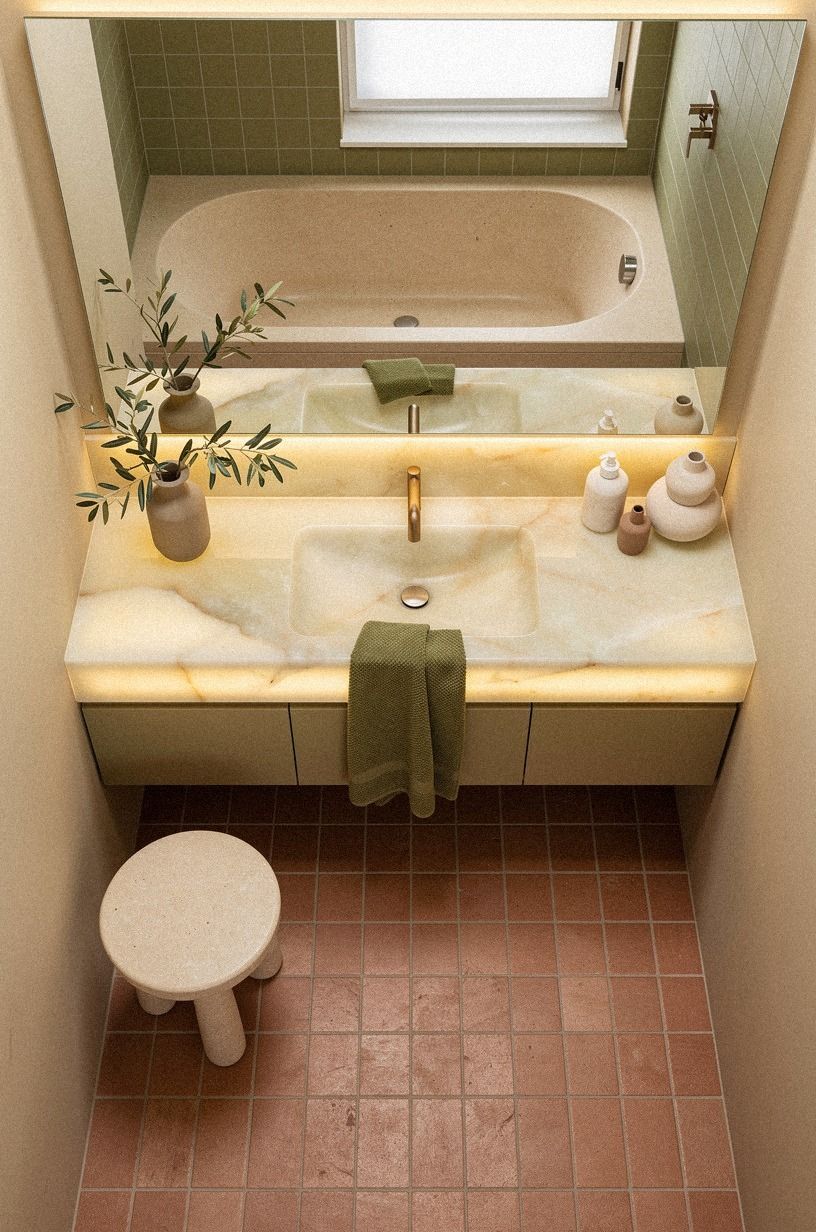
Not every wall needs tadelakt. In the dry zone, a durable paint can echo the plaster and keep the project manageable. Paint the wall behind your towel hooks or linen cabinet, then use tile only around the areas that need splash protection.
Benjamin Moore Chestertown Buff HC-9 is a warm, elegant choice if your tile has terracotta or stone undertones. It’s rich without turning yellow under evening bulbs. You’ll want to test it beside your grout, because paint that looks beige on a card can turn pink against a cream tile.
Add olive linen towels and a simple backlit translucent onyx shelf to keep the palette earthy. I’d skip stark white paint here; it makes warm tile look dingy by comparison. And if you’re styling a rented room, these vinyl or tile bathroom floor ideas include practical ways to keep the dry zone polished without permanent changes.
8Matte Walls Against One Glossy Vertical
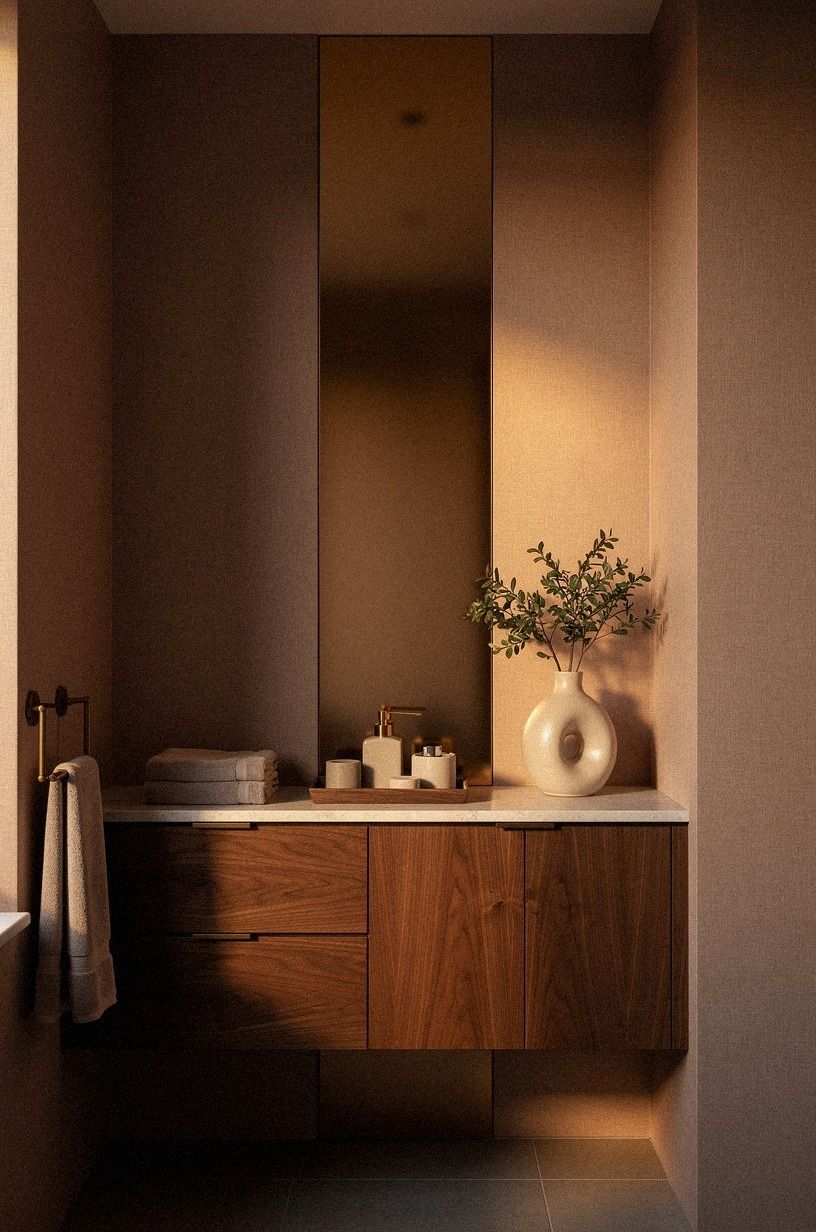
A bathroom can handle contrast if you keep the direction consistent. Let matte tadelakt cover the horizontal or broad surfaces, then use a glossy vertical strip behind the vanity or inside the shower. Your eye will read the shiny tile as an architectural line instead of scattered decoration.
Use vertical finger tile in a soft clay color behind the basin. Its narrow format draws the wall upward, which is useful when your ceiling feels low.
I’d avoid combining vertical tile with a strong patterned floor in the same small room. One directional gesture is enough.
A linen-toned dry wall can work beside the clay tile, while a book-matched walnut vanity adds warmth without introducing another color story. Aged brass will develop a mellow patina beside it, and you won’t need a dozen accessories to make the space feel finished. For another restrained mix, look through these zellige tile backsplash ideas behind the bathroom sink.
9Where Does the Half-Wall Color Block Help?
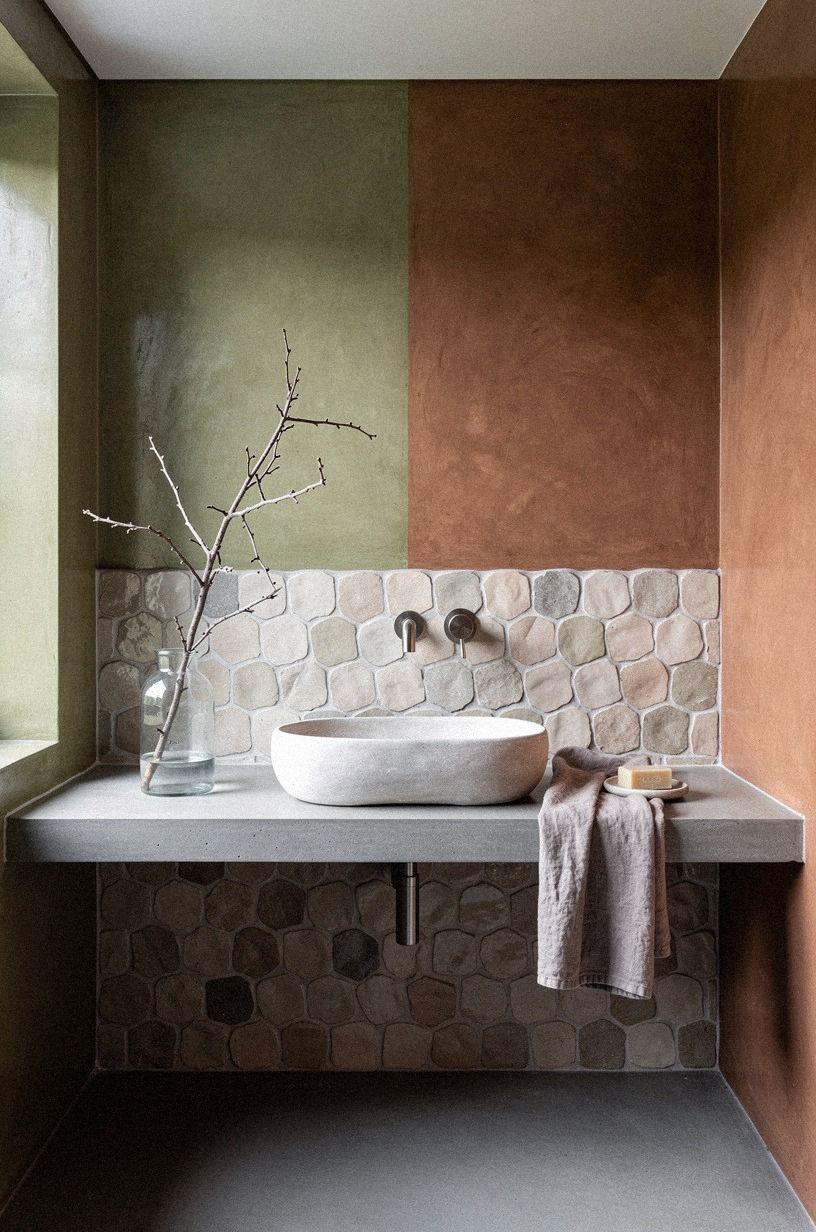
A half-wall color block gives you the look of separate materials without making every transition complicated.
10Contrast Tadelakt With Black-and-White Tile
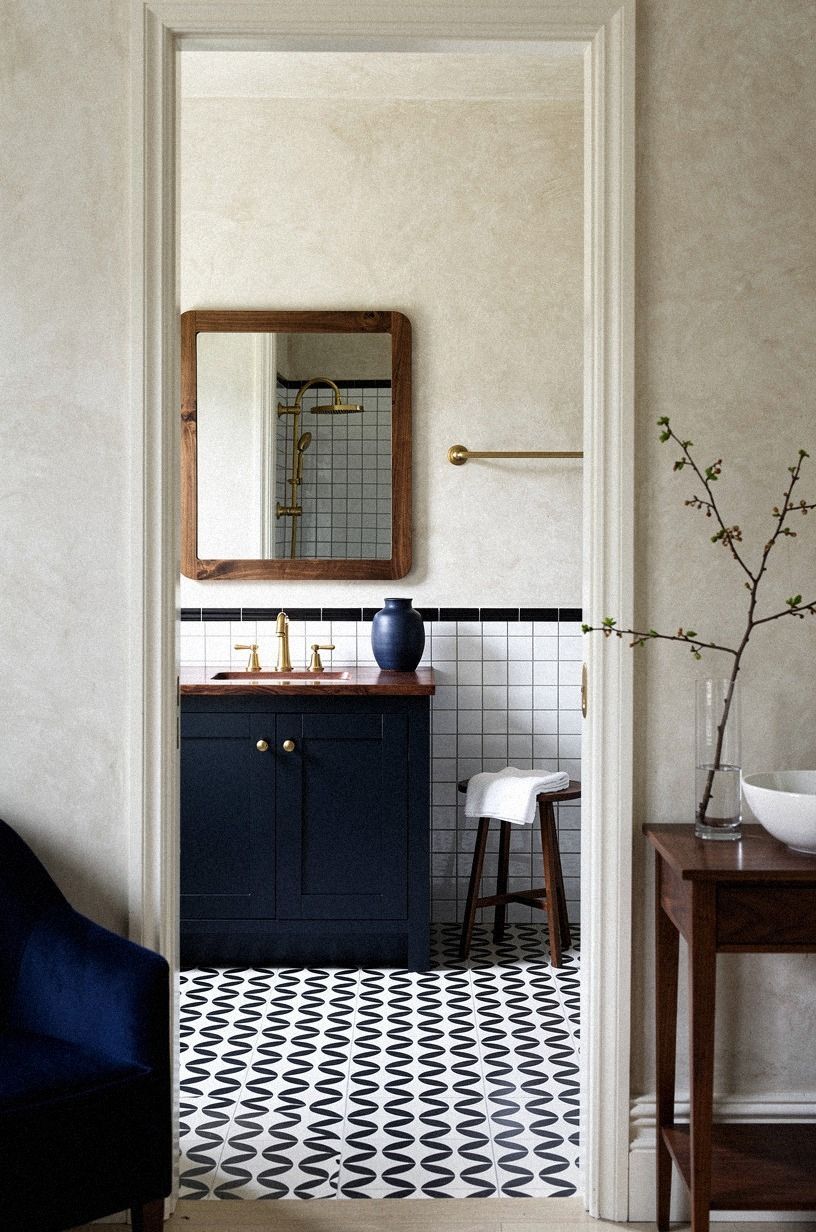
Black-and-white tile can feel severe beside plaster, but a softened pattern keeps the contrast inviting. Use a warm navy rather than blue-black, then repeat the plaster color in the grout or upper wall. Your room gets definition without losing its organic quality.
I’d use navy-and-white encaustic-look tile only on the floor and keep the walls pale. The floor can handle the graphic moment because it sits below eye level. A dark shower wall would be too heavy here unless your bathroom has generous daylight and a ceiling over 8 feet.
Pair it with unlacquered brass plumbing and one warm wood accessory, such as a slim walnut stool. You’ll want to avoid adding brass shelves, brass frames, and brass baskets all at once. And if you’re drawn to a softer version of contrast, this white tadelakt bathroom guide shows how pale plaster can keep dark accents from taking over.
11A Narrow Tile Band Around the Room
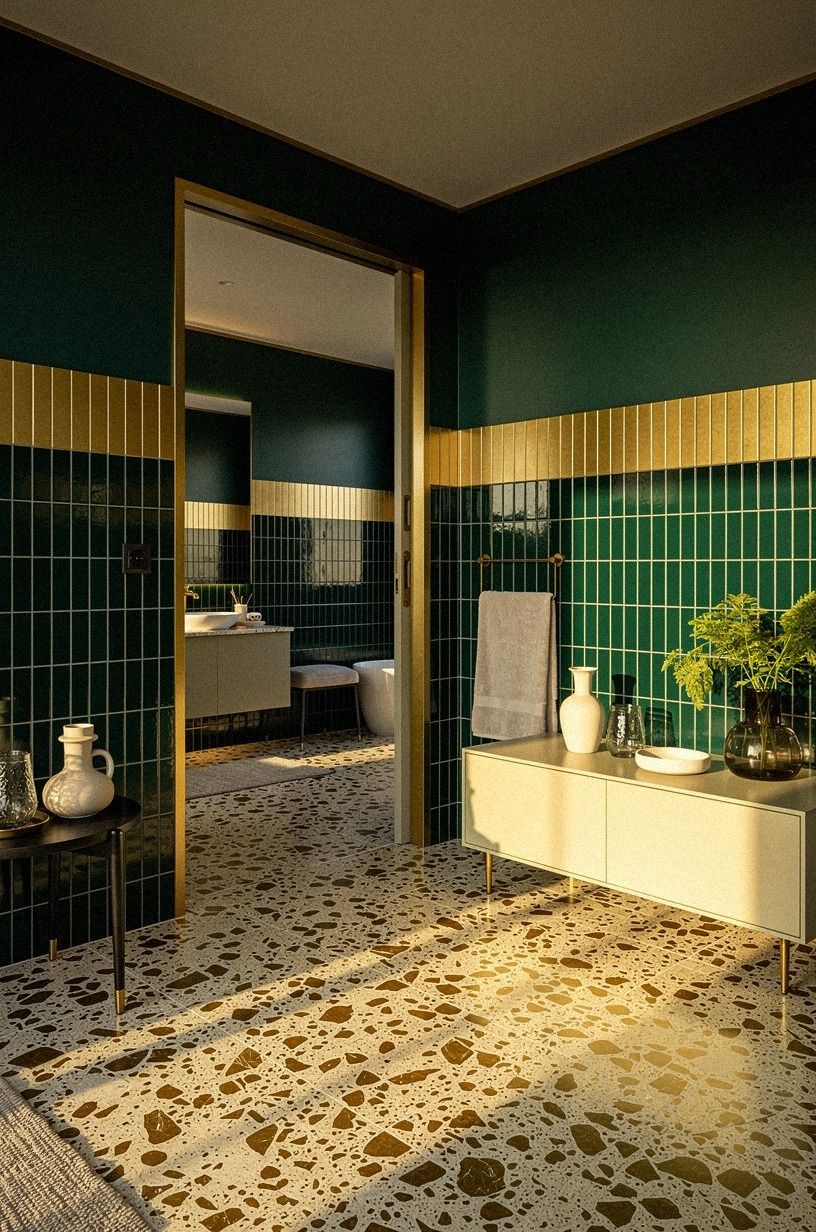
A narrow tile band is one of the easiest ways to connect tadelakt walls with a tiled floor.
12Frame the Tub With Tadelakt and Tile
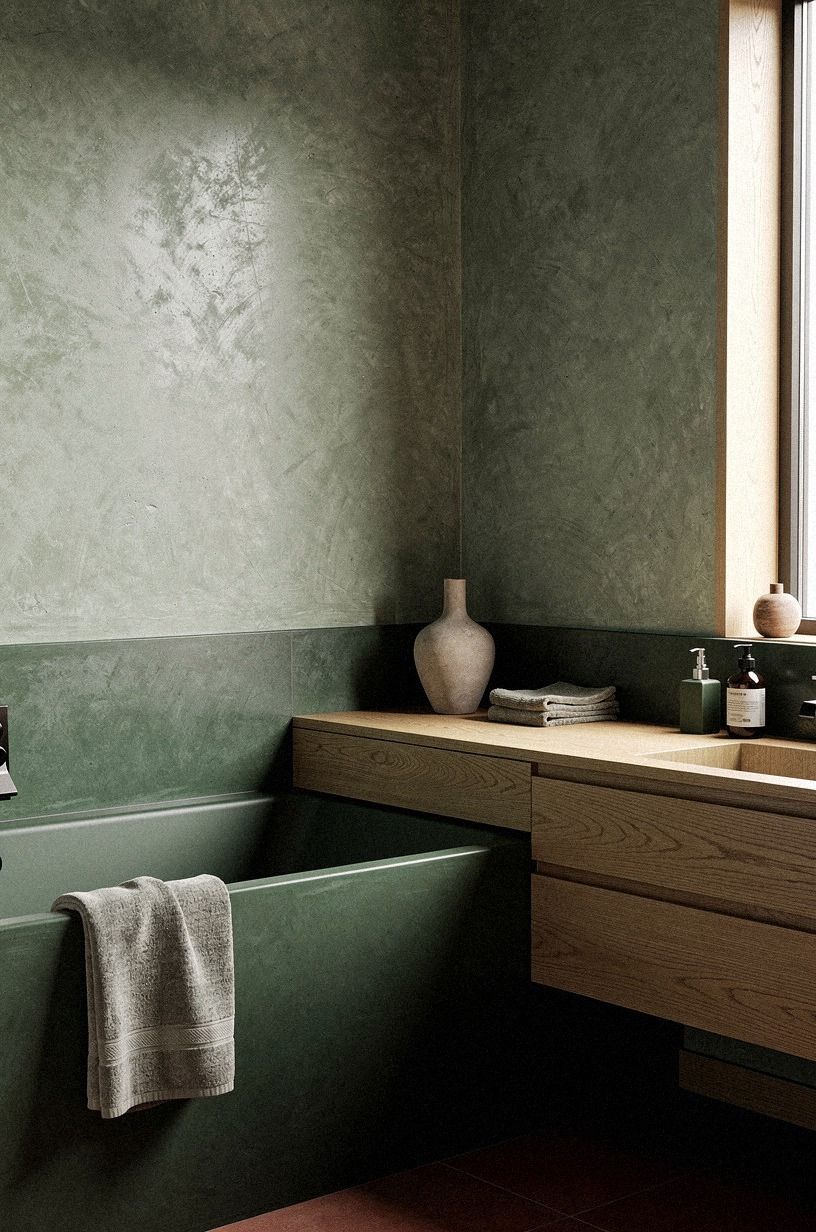
A tub surround gives you a natural place to assign different jobs to each material. Tile the ledge and the areas that receive direct spray, then use hand-applied Venetian plaster on the broader wall above. Your bath zone will feel finished without requiring tile from floor to ceiling.
For a standard tub, plan around the common 60-by-30-inch footprint before you choose a ledge width. Forest-green tile can echo the plaster’s natural variation, while rust-colored accents keep the palette from feeling too cool.
I’d avoid sharply veined marble if the rest of your room is already textured. The stone pattern can pull focus away from the tub.
Add a natural oak stool in the dry zone, never beside the splash line. You’ll get softness without risking a damp textile. If you’re planning a spa-like palette, these white zellige bathroom ideas show how light tile can keep a tub surround airy.
13Compare the Honest Cost Before You Choose
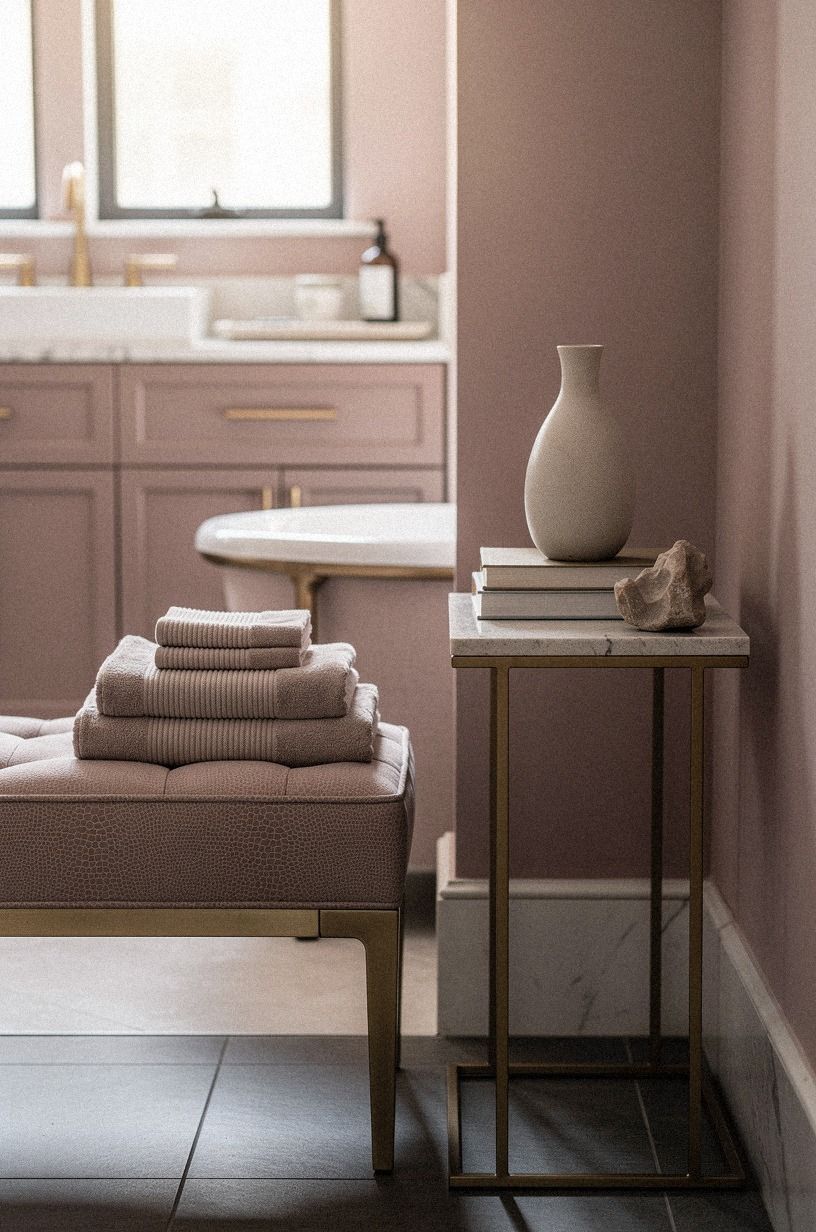
The material blend matters, but your budget decides how much of each surface makes sense. Tadelakt can reduce the amount of tile you need, while tile usually offers more familiar installation paths. Your existing plumbing, waterproofing, and wall condition will influence the final number more than a color choice.
Use these typical US ranges as planning markers, not a quote. Zellige tile often costs more per square foot than basic subway tile because of its handmade variation. If your budget is tight, use dusty rose or charcoal tile in one zone, then keep the rest simple with a small shagreen accent.
A brushed brass faucet can sit in the budget range of $120-$450, while zellige tile may run $15-$35 per square foot. You’ll get more impact by concentrating the expensive finish behind the vanity than by spreading it thinly across every wall. That is where a small splurge feels genuinely rewarding!
14Why Does a Color Bridge Beat Exact Matching?
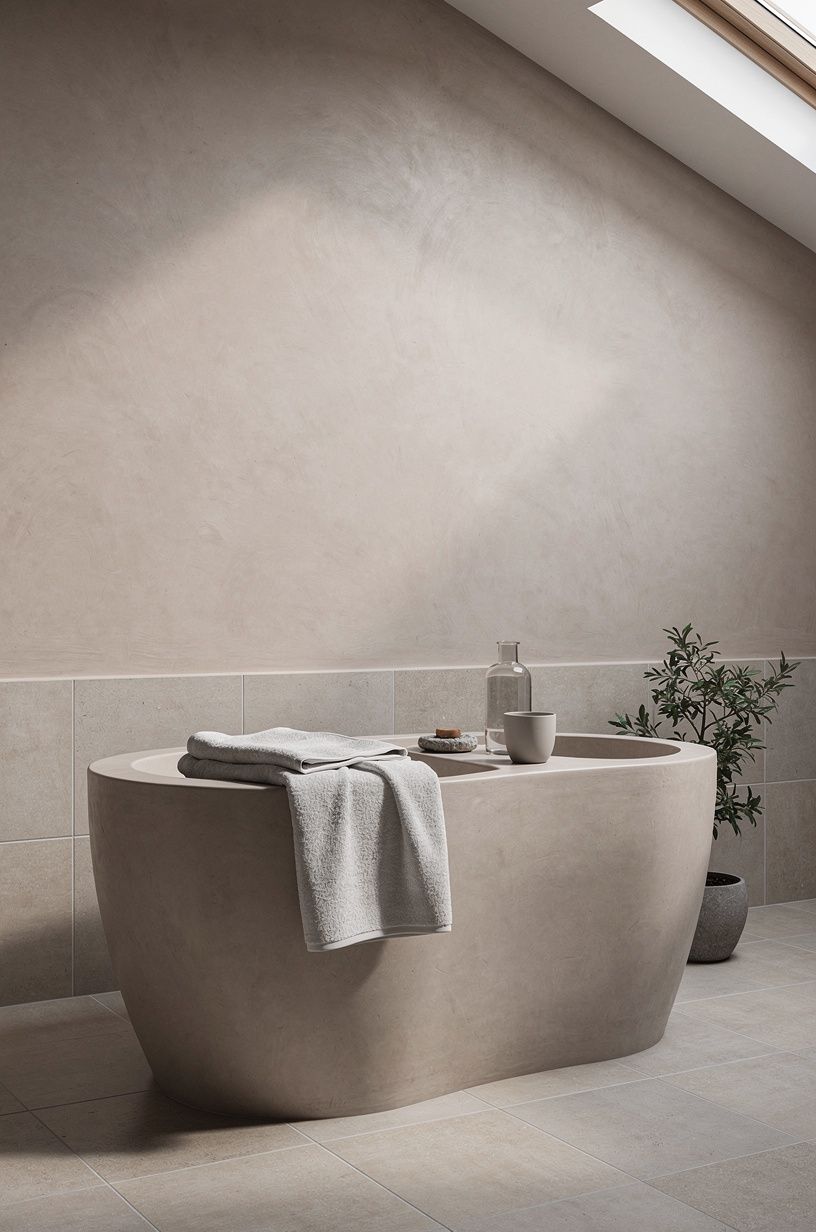
Tadelakt and tile don’t need to match exactly.
15Use a Rental-Friendly Tile Alternative
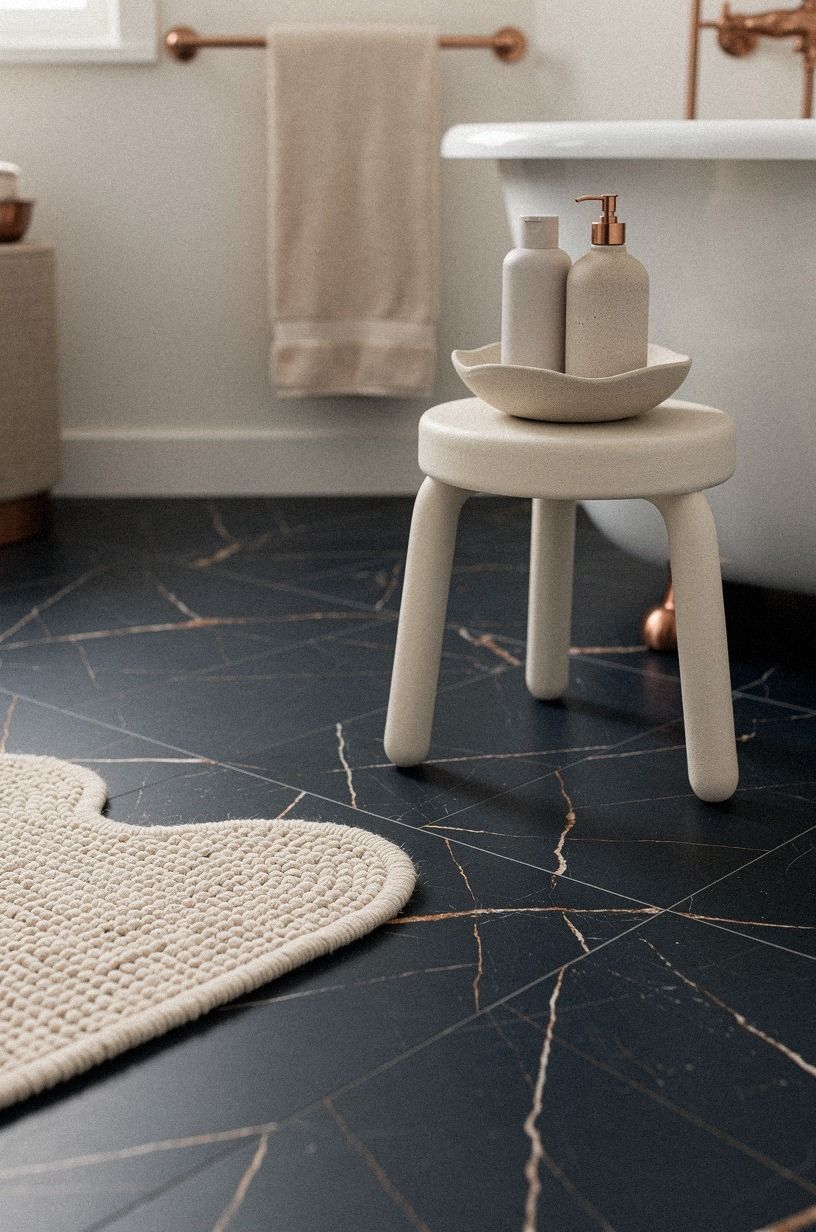
If you rent, you can still borrow the tadelakt-and-tile language without changing the waterproofed surfaces. Use removable finishes in the dry zone, then bring in tile through accessories, a framed panel, or a small freestanding piece. Your goal is the visual relationship, not a permanent renovation.
A peel-and-stick stone-look panel can sit behind a removable mirror if the wall allows it. Add a tension-mounted shelf in a warm wood finish and a midnight-blue shower curtain. I’d avoid adhesive products inside the direct spray area because humidity and water are relentless.
You’ll get more credibility from a few well-chosen materials than from covering every surface. An organic bouclé stool cushion, a copper-framed mirror, and a small framed print can repeat the ivory and blue colors without crowding your floor. If your rental has an ugly floor, compare removable options in this vinyl and tile bathroom guide.
16Balance Organic Tiles With One Clean Cabinet
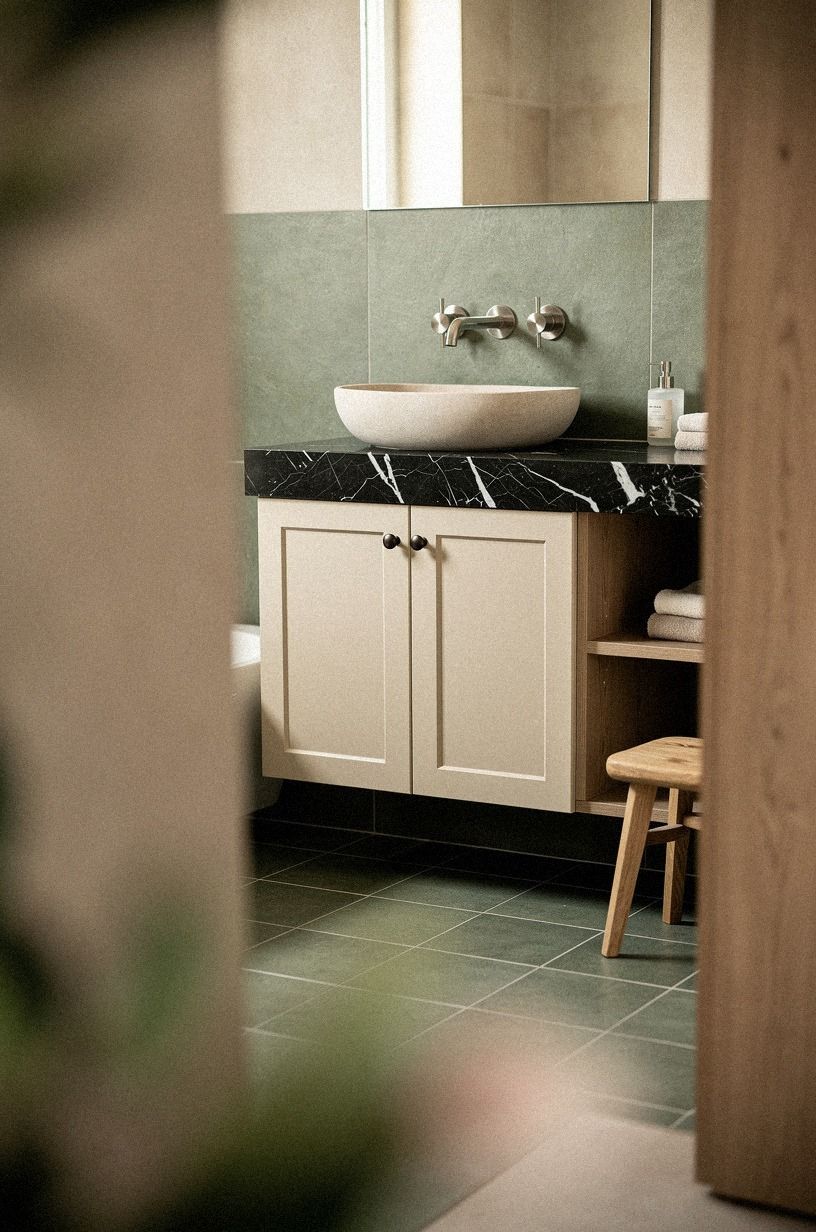
Organic tile bathroom schemes need one crisp element to keep them from feeling overly rustic. A clean-lined vanity or cabinet gives your eye a modern pause. Your plaster and tile can stay irregular because the furniture supplies a clear rectangle.
Choose an IKEA HEMNES cabinet in a warm cream finish, or look for a simple oak piece with flat doors and a Nero Marquina black marble top. I’d skip ornate furniture here. Carved legs and decorative trim compete with the handmade surfaces, especially in a bathroom under 60 square feet.
Use sage green on the surrounding tile and keep the cabinet hardware quiet. You’ll want the cabinet to support the palette rather than introduce a fourth material story. For a more polished reference point, these zellige tile bathroom ideas for a simple spa feel show how clean storage lets textured walls stay expressive.
The Rule I’d Keep After Styling Both Materials
I’ve gone back and forth on whether tadelakt should be the star or the supporting player. My answer has changed depending on the bathroom, but I now think the best rooms give it a broad, quiet surface and let tile handle the moments your hand or eye needs to understand.
The basin backsplash, shower niche, and floor benefit from tile because those areas need a clear working language. Tadelakt works beautifully around them because it removes visual noise.
I made the mistake of choosing a glossy tile first and then trying to force the plaster to match it. The samples looked lovely on a worktable, but the bathroom became a little frantic once the mirror, faucet, and light were in place.
I should have chosen the wall finish first. That one decision would have saved several sample boards and a weekend of second-guessing.
If you’re deciding between a full tiled room and a mixed finish, start with the surfaces that get wet, touched, or cleaned most often. Give those areas a durable, readable material.
Then let your plaster or paint carry the larger fields. You don’t need every wall to perform.
A room feels more composed when some surfaces are allowed to be quiet.
The strongest combination usually has one dry texture, one reflective texture, and one grounded material such as oak, travertine, or aged bronze. That’s enough. You’ll notice the plaster in the low evening light, the tile when water catches its glaze, and the wood when the room needs warmth.
It’s a small vocabulary, but it gives your bathroom a clear point of view.
The Questions Worth Answering First
What is the best Tadelakt and Tile Bathroom Ideas for a small bathroom?
The best approach is pale tadelakt on the broad walls with one glossy tile zone behind the vanity or inside the shower. Light surfaces make the room feel larger, while a warm cream cabinet adds storage without visually filling the floor.
Where can I buy Tadelakt and Tile Bathroom Ideas pieces on a budget?
Look at IKEA, Wayfair, and Target for cabinets, mirrors, and bath textiles, then check Facebook Marketplace or a local thrift store for wood stools. Secondhand furniture saves the most, especially when your tile and plaster already provide the character.
How much does a Tadelakt and Tile Bathroom Ideas makeover cost?
A small cosmetic refresh can fit within $200 to $1,200 for paint, a mirror, a faucet, and textiles. A mid-range project with a new vanity, partial wall tile, and lighting typically runs $3,000 to $9,000.
Can I create a Tadelakt and Tile Bathroom Ideas look on a budget?
Yes, and you can start without changing plumbing. Paint the dry zone, use one tile backsplash, replace the mirror, and shop your home for wood accessories. A focused material change gives more impact than scattering inexpensive decor across every wall.
Is Tadelakt and Tile Bathroom Ideas worth it in a small space?
Yes, because a small room benefits from fewer visual breaks. Keep tadelakt on the largest wall and tile around the sink or shower. The simple boundary makes the room feel calmer, especially when your vanity is between 32 and 36 inches high.
Is Tadelakt and Tile Bathroom Ideas a good idea for a rental?
Yes, if you keep permanent work out of the wet zone. Use a removable mirror, a tension shelf, a midnight-blue shower curtain, and peel-and-stick material only where humidity is limited. No-drill layers create the same warmth without risking your deposit.
Where I’d Start First
If I had to pick one, I’d start with the tadelakt wall behind the vanity. It gives you the biggest quiet surface, so the room won’t feel grout-heavy or busy. Pin that idea for later and compare it with more microcement and tile bathroom ideas before you choose your finish.