
 by
Terracotta and beige limewash bathroom ideas for sun-baked warmth work best when the finish stays matte and the wet zone gets proper protection. I learned that after limewashing a bathroom wall before sealing it, a choice that looked charming until steam turned the color patchy. Now I pair earthy pigment with practical surfaces. You’ll get warmth without making your bathroom feel themed.
- Layer the Sun-Baked Ladder with Three Warm Tones
- Paint Beige Limewash Above a Honed Stone Base
- Float a Chunky Oak Vanity with the Two-Wood Rule
- Frame the Mirror with a Terracotta Color Block
- Build the Three-Sheen Light Stack
- Can Limewash Beige Survive a Steamy Bathroom?
- Swap Glossy Tile for Hand-Glazed Zellige
- Anchor the Floor with a Warm Checkerboard
- Hang Linen Curtains with the Soft-Edge Method
- Mix a Limestone Counter with Brushed Brass
- Choose Terracotta Over Beige for the Vanity Wall
- Repeat One Clay Tone in Three Places
- Keep the Shower Plain and Let the Dry Wall Speak
- Frame the Door with a Narrow Mineral Stripe
- Add a Tadelakt-Inspired Sink Backsplash
- Use the Honest Cost Ladder Before You Buy
- Style the Lived-In Finish with Useful Objects
1Layer the Sun-Baked Ladder with Three Warm Tones
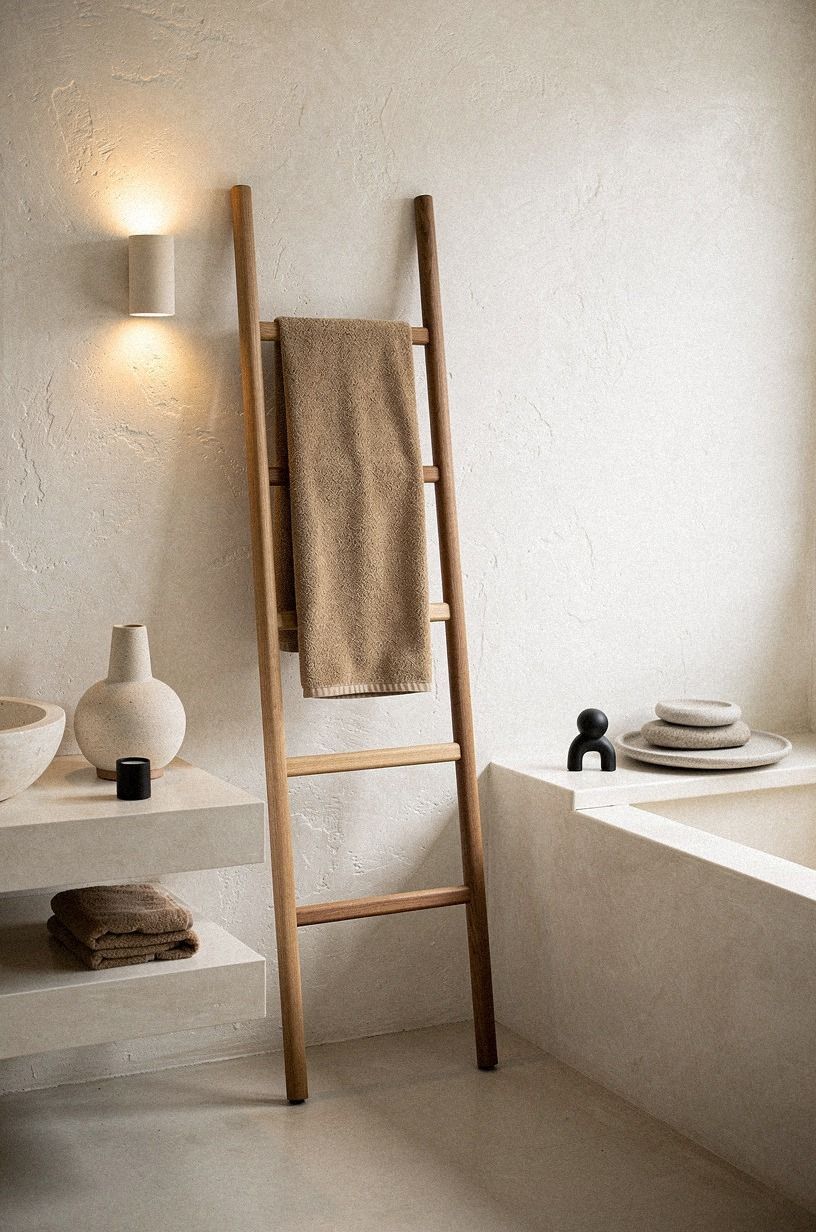
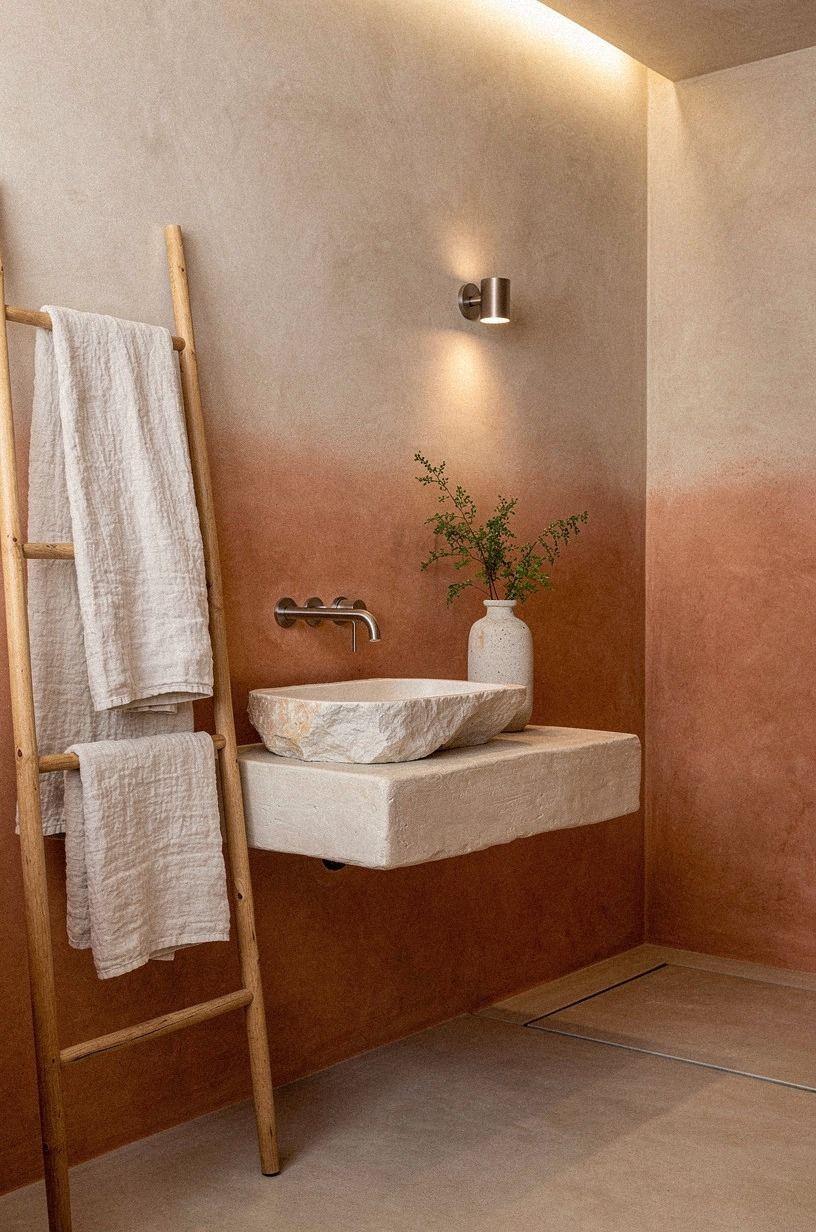
Start with a terracotta limewash bathroom palette that moves from pale sand near the ceiling to deeper clay around the vanity. You don’t need every surface to match.
A soft beige wall, a muted terracotta runner, and one darker earthen accent will give your eye somewhere to rest. I’d skip a red-orange wall in a small room because it can feel loud by the mirror.
Use the Sun-Baked Ladder as your guide. Lightest tone first, middle tone second, darkest tone in the smallest area.
If you’re unsure, compare your samples in morning and evening light, since terracotta can turn pink beside cool white bulbs. The chalky movement of white beige Venetian plaster can help you see how layered neutrals behave.
A low oak stool, a folded Belgian flax linen hand towel, and a clay soap dish complete the ladder. You’ll notice the room feels calmer because the color shifts gradually rather than stopping at one hard block. If your floor already has warm undertones, you can use a paler wall and let the accessories carry the deeper clay.
2Paint Beige Limewash Above a Honed Stone Base
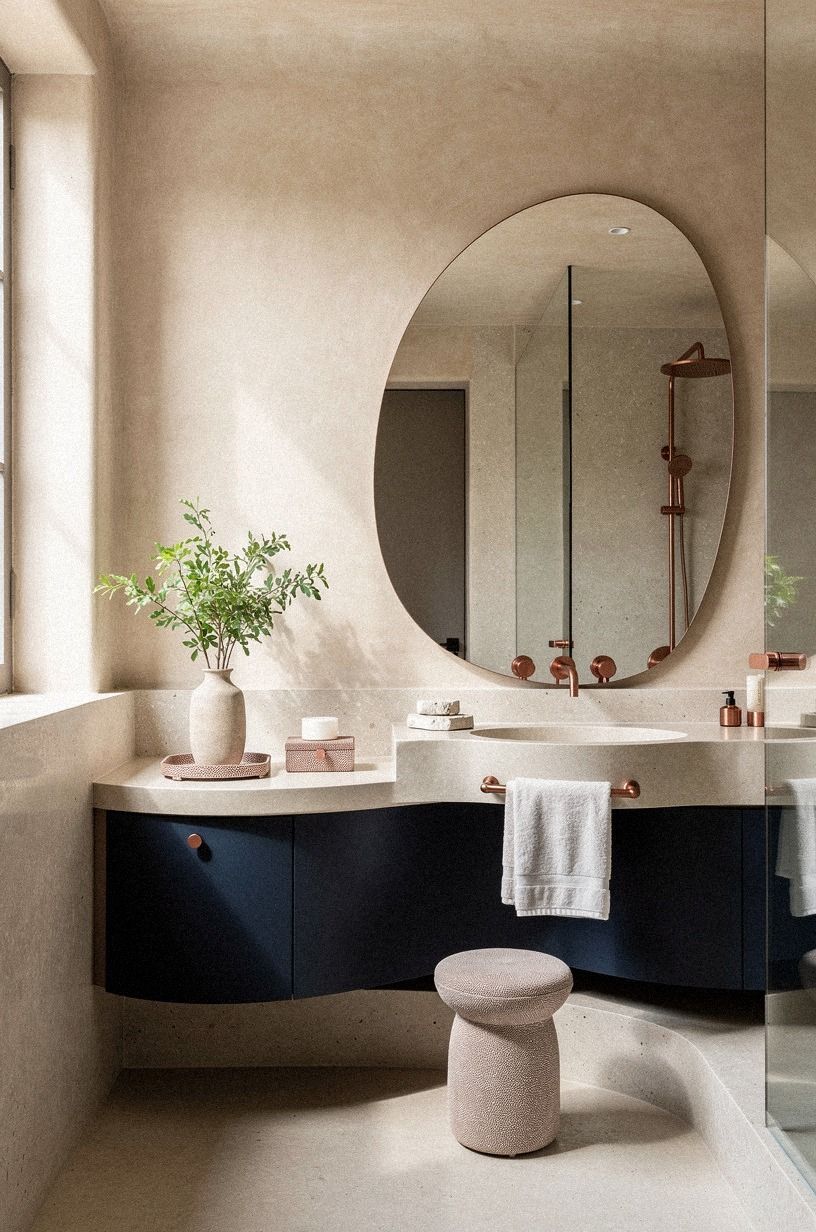
Limewash beige works beautifully when it has a grounded lower edge. Paint the upper wall in a warm mineral beige, then use honed travertine with natural pitting around the sink or as a narrow backsplash.
The stone catches a little shadow, while the limewash keeps the wall soft and airy. I’d choose this over glossy ceramic if you want a relaxed, old-world bathroom.
Benjamin Moore Chestertown Buff HC-9 is a useful reference point for the warmth, though you should test any paint in your own room. If you’re styling a narrow bathroom, stop the stone at vanity height rather than taking it to the ceiling. A 32 to 36 inch vanity gives you enough practical height without making the lower half feel heavy.
Keep your accessories plain. One aged bronze hook, a woven basket, and a cream cotton towel are enough. If you add too many rustic details, the room can drift toward a restaurant bathroom instead of feeling intimate and lived-in.
For a softer starting point, compare the wall movement in these small limewash bathroom ideas before you choose a finish.
3Float a Chunky Oak Vanity with the Two-Wood Rule
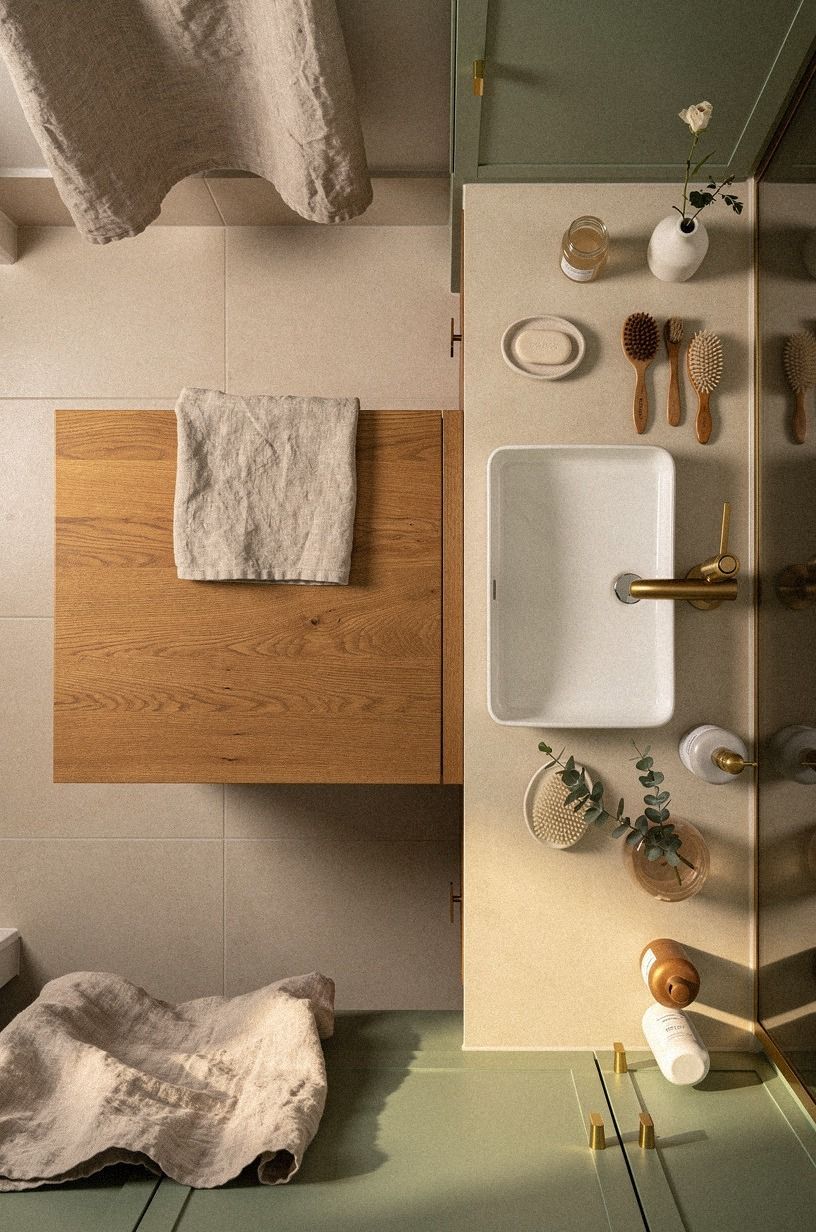
A floating vanity gives an earthy terracotta bathroom more breathing room, especially when the floor is small or visually busy. Choose a 3/4-inch solid white oak cabinet with a cerused finish, then leave the wall below open so the floor can continue underneath. You’ll gain an airy line, and cleaning around the vanity won’t become a weekly negotiation.
The Two-Wood Rule keeps the room from looking like a furniture showroom. Use one warm wood for the vanity and one quieter wood tone for a stool or frame.
I’d avoid pairing orange oak with reddish walnut here, because the terracotta will make both look more intense. A pale birch-effect IKEA KALLAX piece can work as a linen tower if your vanity already has strong grain.
The sink top should stay visually calm. Honed marble, a warm cream composite, or limestone with subtle variation will let the limewash remain the focus.
If you want more texture, browse these small limewash bathroom ideas before choosing your cabinet width. You’ll want the wood, wall, and counter to share warmth without looking as though they came from one matching set.
4Frame the Mirror with a Terracotta Color Block
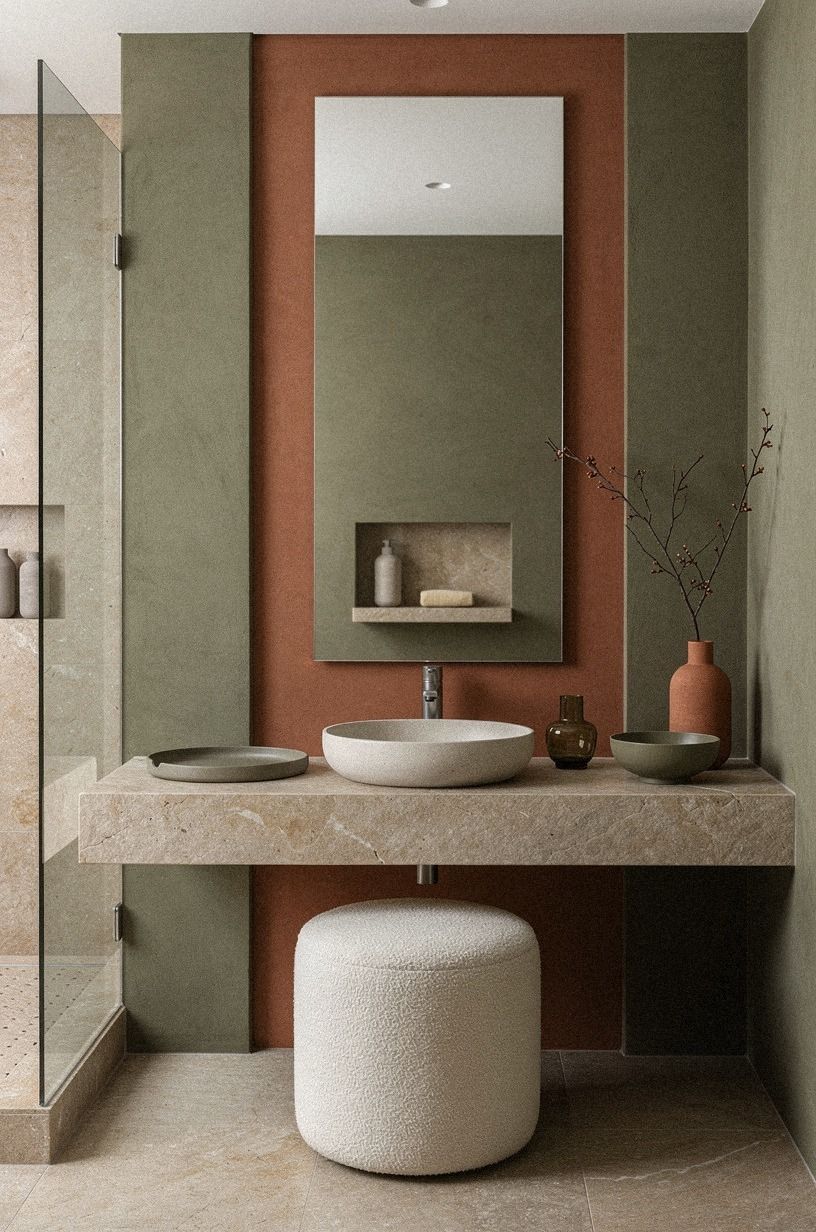
A color block behind the mirror makes a small bathroom feel intentional without requiring a full repaint.
5Build the Three-Sheen Light Stack
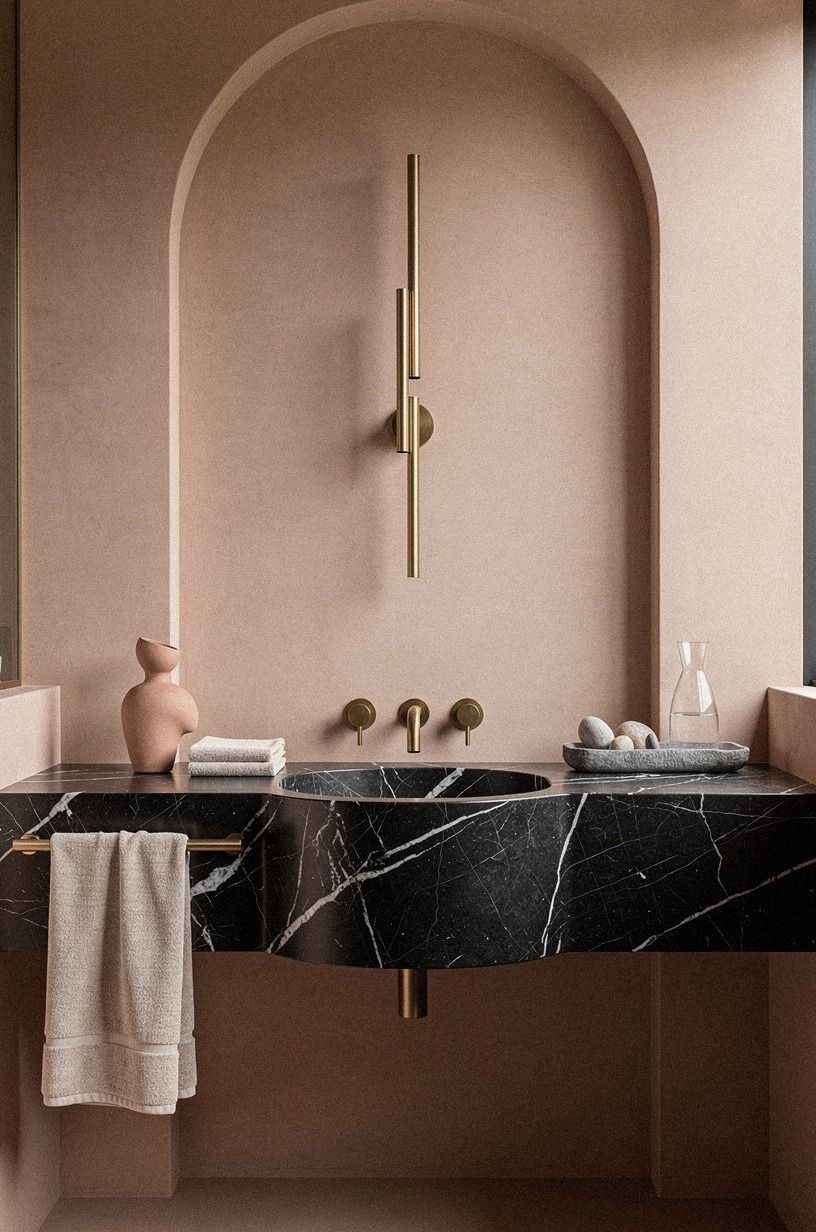
Bathrooms need more than one kind of light, and the Three-Sheen Light Stack makes the terracotta palette easier to live with. Begin with a diffused ceiling fixture, add task light beside the mirror, then bring in one low glow near the floor or vanity. You’ll see the texture change as each light hits the wall at a different angle.
I’d avoid a single bright overhead fixture, even if the room is tiny. It flattens the limewash and makes beige look gray.
A pair of opal glass sconces beside the mirror gives your face softer light, while a warm under-vanity strip creates a gentle pool across the floor. Choose fixtures with finishes that won’t fight the clay tones.
Keep your bulbs warm but usable. If you’re applying a new finish, look at the room after dark before committing.
The rustic limewash bathroom guide shows how low lighting can make textured walls feel rich rather than muddy. You’ll know the stack works when your face is evenly lit and the walls still have depth.
6Can Limewash Beige Survive a Steamy Bathroom?
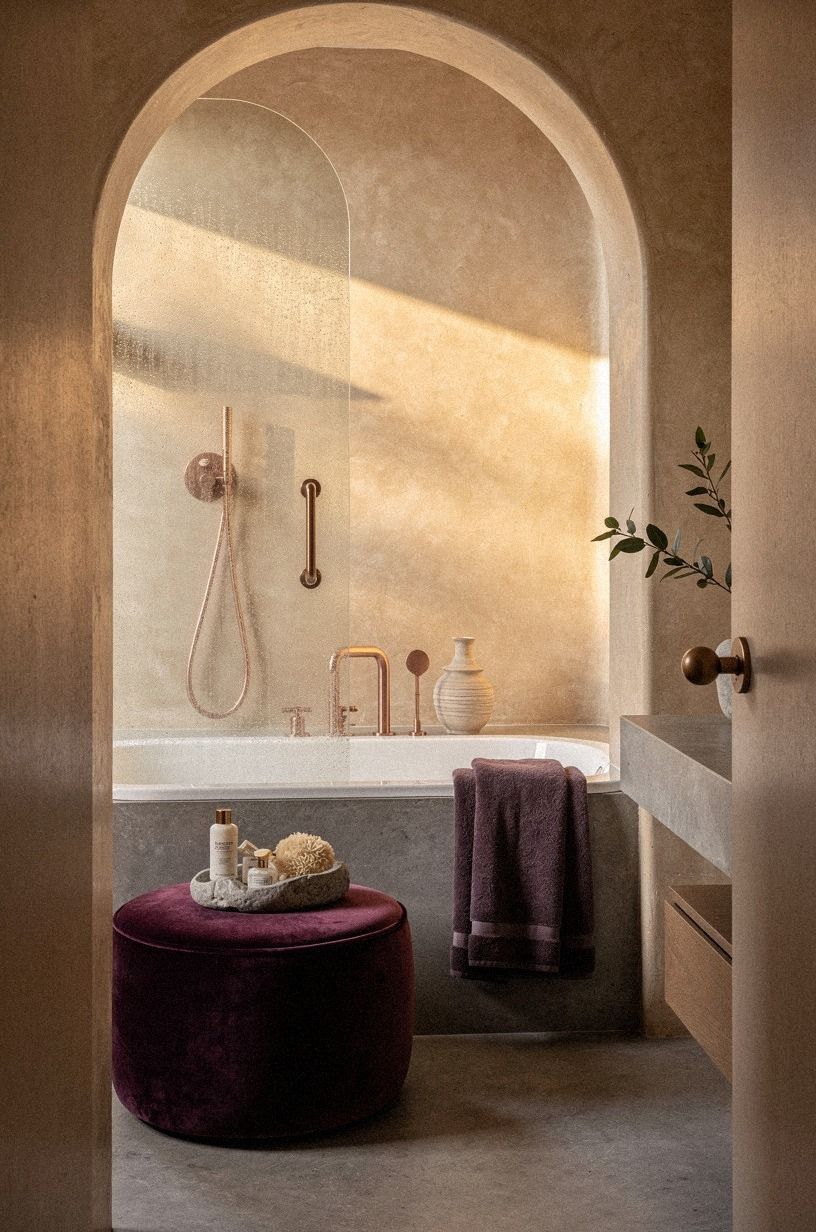
Yes, limewash beige can work in a bathroom, but you shouldn’t treat every wall as a wet-zone surface. Keep limewash away from direct shower spray, use a compatible breathable sealer where the manufacturer allows it, and give the room reliable ventilation. The finish is forgiving beside a vanity, less forgiving inside a constantly soaked shower.
A honed travertine backsplash is a safer partner than raw plaster behind a faucet. If you’re planning a shower, reserve the limewash for the ceiling or the dry wall opposite the spray. A comfortable shower is at least 36 by 36 inches, so you’ll want the finish decision to follow the layout rather than force the layout around a trend.
What happens if you ignore that boundary? The wall may darken unevenly, and you’ll spend your mornings staring at a repair patch.
For a brighter, more durable reference, compare it with these white limewash bathroom ideas before you begin. You’ll save yourself trouble by checking the product instructions before buying the color.
7Swap Glossy Tile for Hand-Glazed Zellige
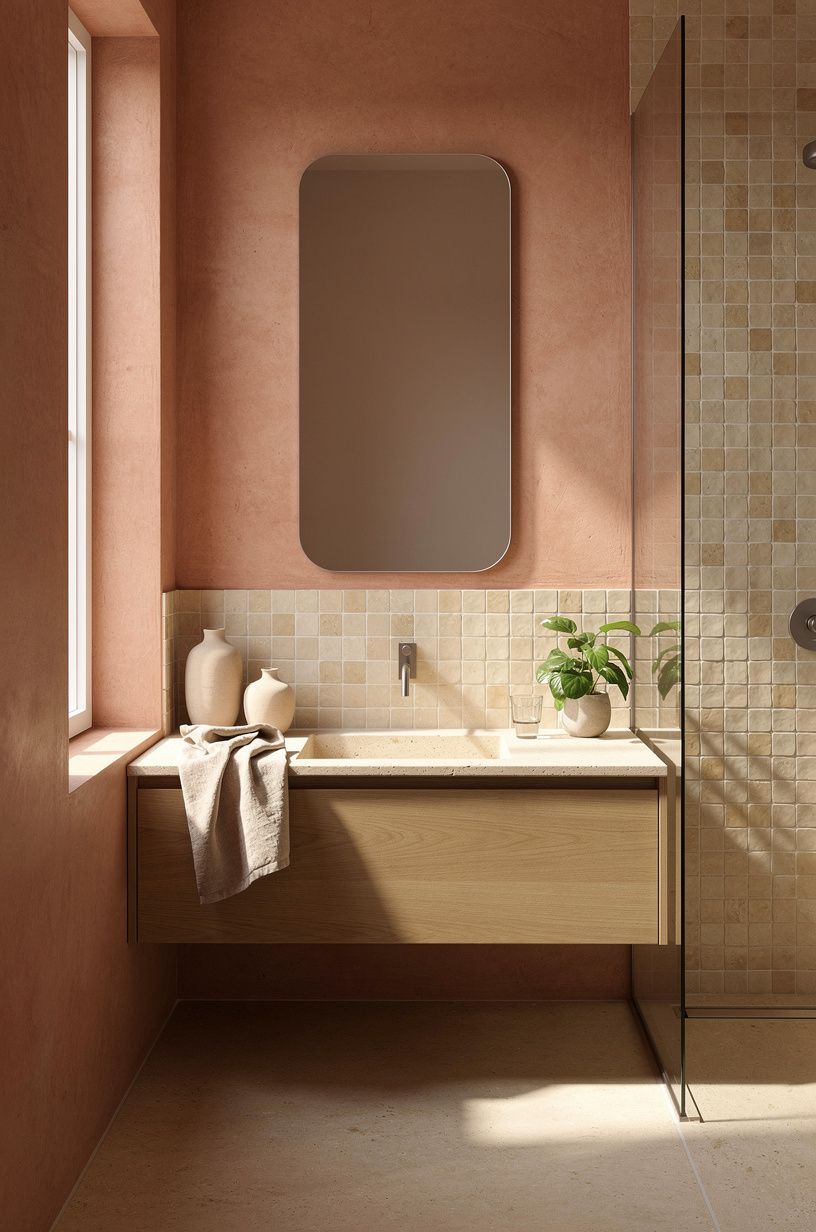
Hand-glazed terracotta or cream zellige brings small flashes of light into a matte room. Each tile has a slightly uneven edge and a watery glaze, so your wall won’t look printed or flat. I’d use it behind the vanity or on one shower wall, rather than across every surface, because the contrast is what makes the material feel special.
The right hand-glazed zellige can sit beside limewash without looking too polished. Choose a sandy cream, muted clay, or soft almond rather than bright white. If you’re mixing grout, keep it close to the tile body so the irregular edges stay visible without becoming a grid.
For a more affordable balance, use zellige on the focal wall and paint the remaining walls. The material table later in this article puts typical zellige at $15 to $35 per square foot, while subway tile sits lower.
You can also study terracotta tadelakt bathroom ideas for a softer plaster-and-tile combination. If you’re working with a small budget, one carefully chosen wall can give you the effect you want.
8Anchor the Floor with a Warm Checkerboard
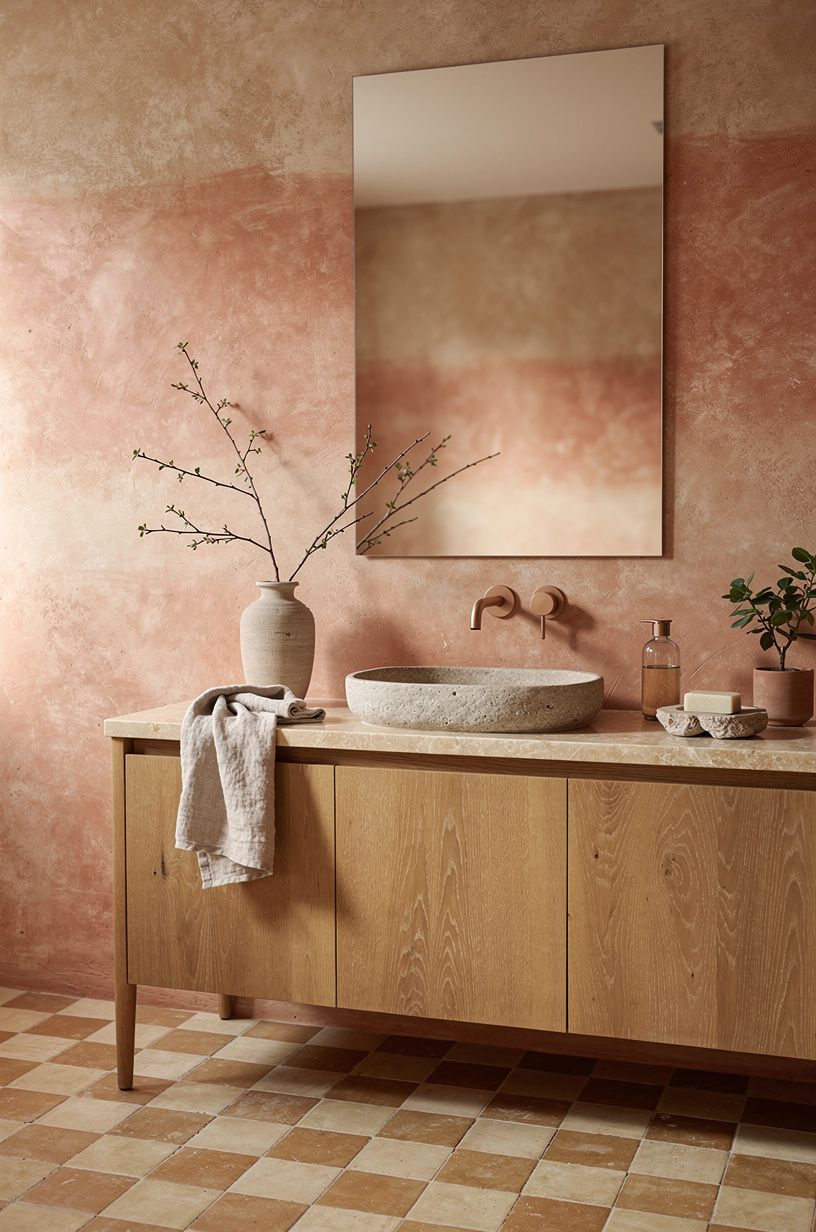
A checkerboard floor can make a beige bathroom feel more graphic, but warm tones keep it from becoming stark. Pair a dusty terracotta square with a creamy limestone-look tile, then let the walls stay quiet. You’ll get a grounded, charming base without adding another busy pattern near the mirror.
I’d choose larger squares if your room is compact, because tiny checks can make the floor look restless. A matte porcelain tile with a softly mottled surface is easier to maintain than polished stone, and it won’t throw sharp reflections toward the ceiling. If you’re using real stone, seal it properly and expect some variation.
The floor should support your limewash, so keep the checkerboard low contrast if your walls already have visible brush movement. A single terracotta bath mat and a woven stool will be enough to connect the two surfaces. If you’re worried about the pattern feeling too strong, the quiet mineral palette in these white beige Venetian plaster ideas offers a useful counterpoint.
9Hang Linen Curtains with the Soft-Edge Method
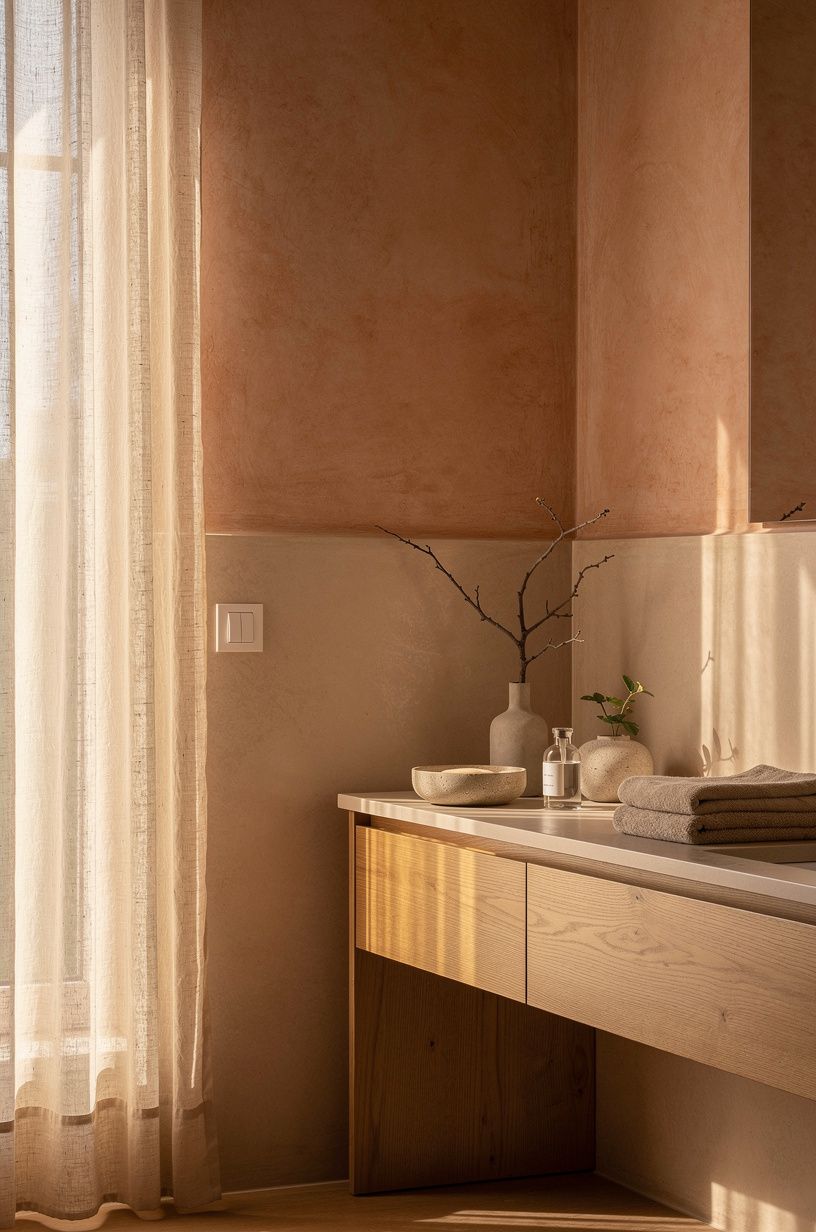
If your bathroom has a window, linen curtains can make the limewash feel more residential and less clinical. Use a simple tension rod for a rental, or mount a narrow aged brass rod just above the trim for a more permanent look. The fabric should filter daylight without turning the room dim.
The Soft-Edge Method means the curtain covers the window without swallowing the wall. Choose Belgian flax linen in oat, natural, or muted clay, and let the hem fall just above the sill or floor depending on the window. I’d skip bright white cotton because it can make terracotta look more orange than you intended.
You’ll need privacy without blocking every sunbeam. A sheer inner layer, a woven shade, or removable film can help. For a more mineral, desert-inspired direction, take a look at this terracotta microcement bathroom for ideas about balancing smooth surfaces with soft textiles.
You’ll find the room feels more settled once the window treatment echoes the wall rather than competing with it.
10Mix a Limestone Counter with Brushed Brass
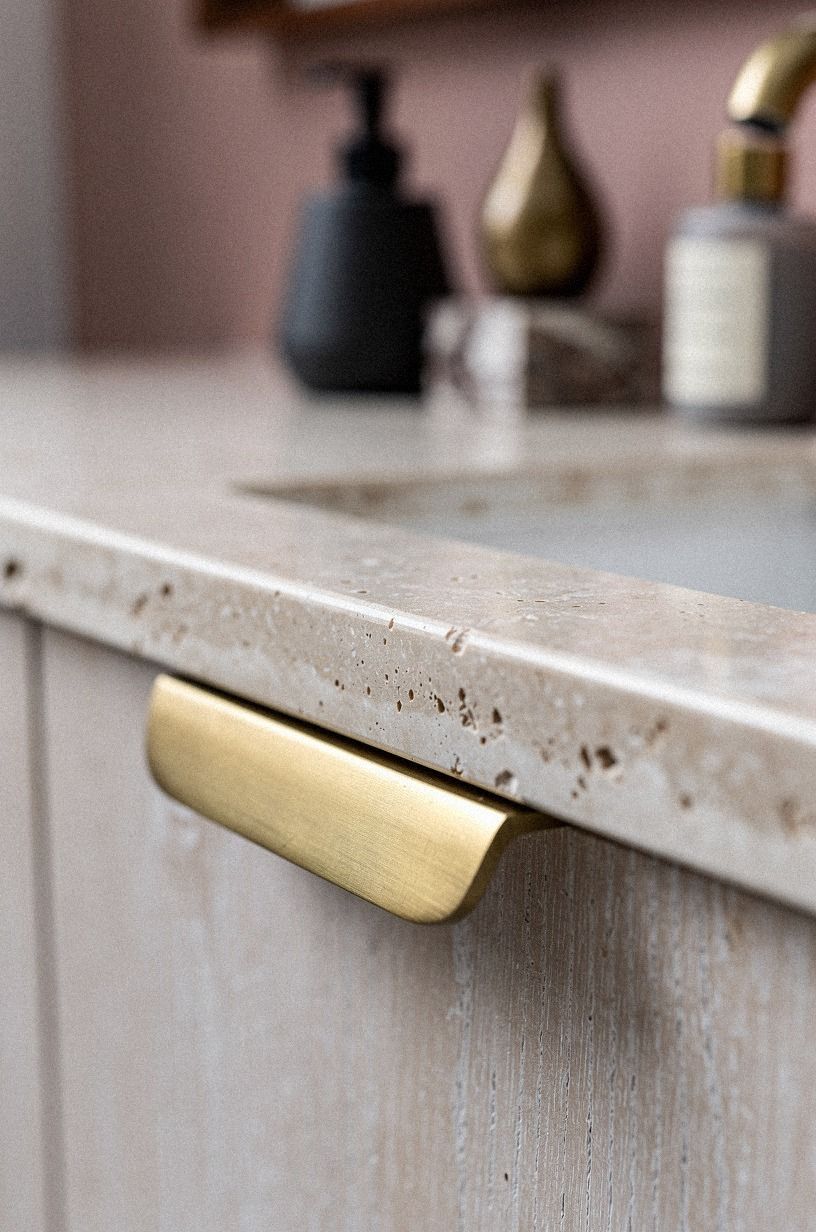
A limestone counter brings quiet movement to a bathroom that already has strong wall color. Look for beige limestone with small fossil marks or a honed limestone slab with warm veining, rather than a heavily patterned marble. You’ll get a tactile surface that feels connected to the earth tones.
Brushed brass hardware adds a small point of glow, but I’d avoid mirror-polished brass here. It can feel too formal beside limewash. A brushed brass faucet typically falls around $120 to $450, according to the material guideposts below, so it’s worth choosing one with a shape you’ll still like after the color trend moves on.
Your counter should have enough depth for hand soap and a small tray, but don’t crowd the basin. If you’re using a vessel sink, check the finished vanity height carefully.
The standard range is 32 to 36 inches, and a tall vessel can make the whole setup uncomfortable. You’ll appreciate that measurement every morning.
11Choose Terracotta Over Beige for the Vanity Wall
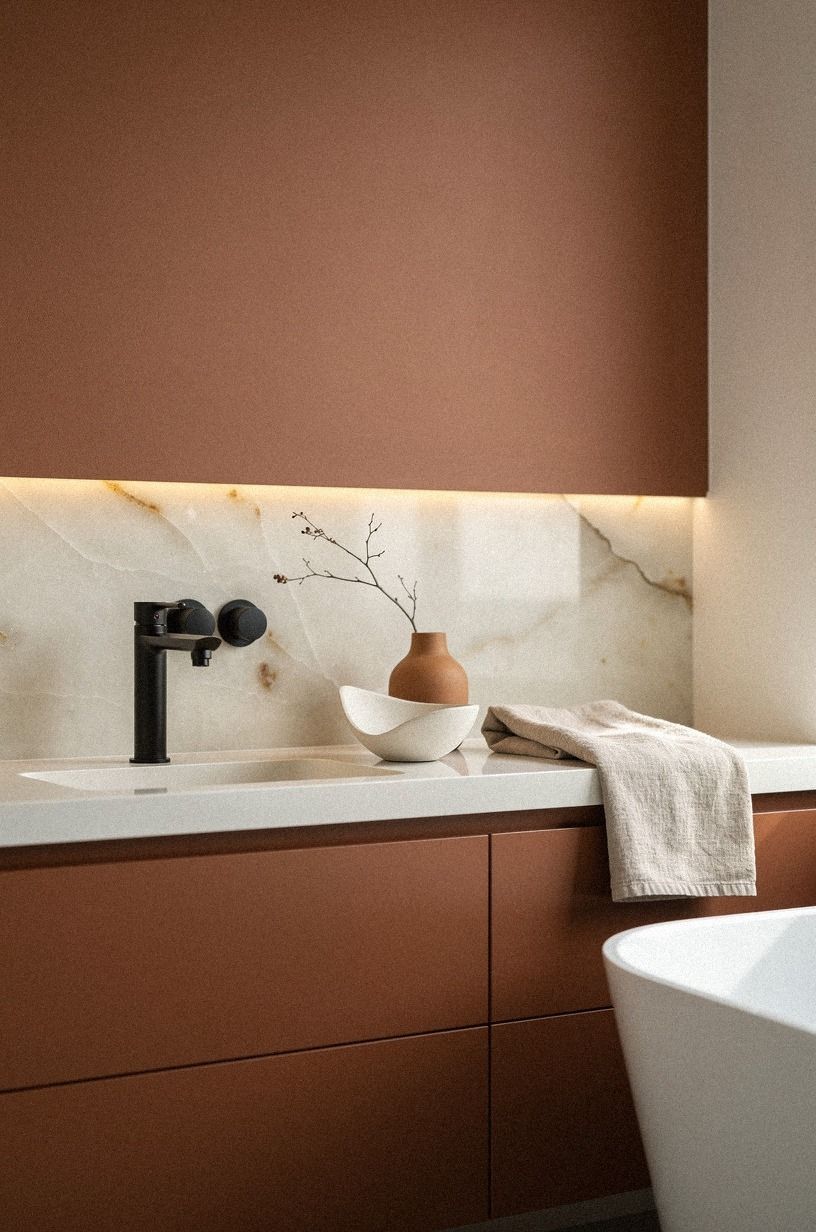
If you’re deciding between a full beige bathroom and one terracotta accent, I’d put the deeper color behind the vanity. The mirror, faucet, and towels will create natural breaks in the pigment, so the wall feels rich rather than overwhelming. This is the strongest move for an earthen bathroom with limited square footage.
Benjamin Moore Chestertown Buff HC-9 can cover the remaining walls, while a deeper clay tone gives the sink area more presence. You don’t need a perfectly matched paint line. In fact, slight variation can make the room feel more collected.
I’d skip terracotta on every wall if your only window faces north, because the color may lose its sunny quality.
A ceramic vessel sink in warm white gives the vanity wall a clean interruption. You’ll still have softness, but your eye gets a bright place to land. This is where a small mirror with a rounded corner can prevent the design from feeling too square.
If you want a related palette, the rustic limewash bathroom guide shows how warm walls can stay relaxed without becoming heavy.
12Repeat One Clay Tone in Three Places
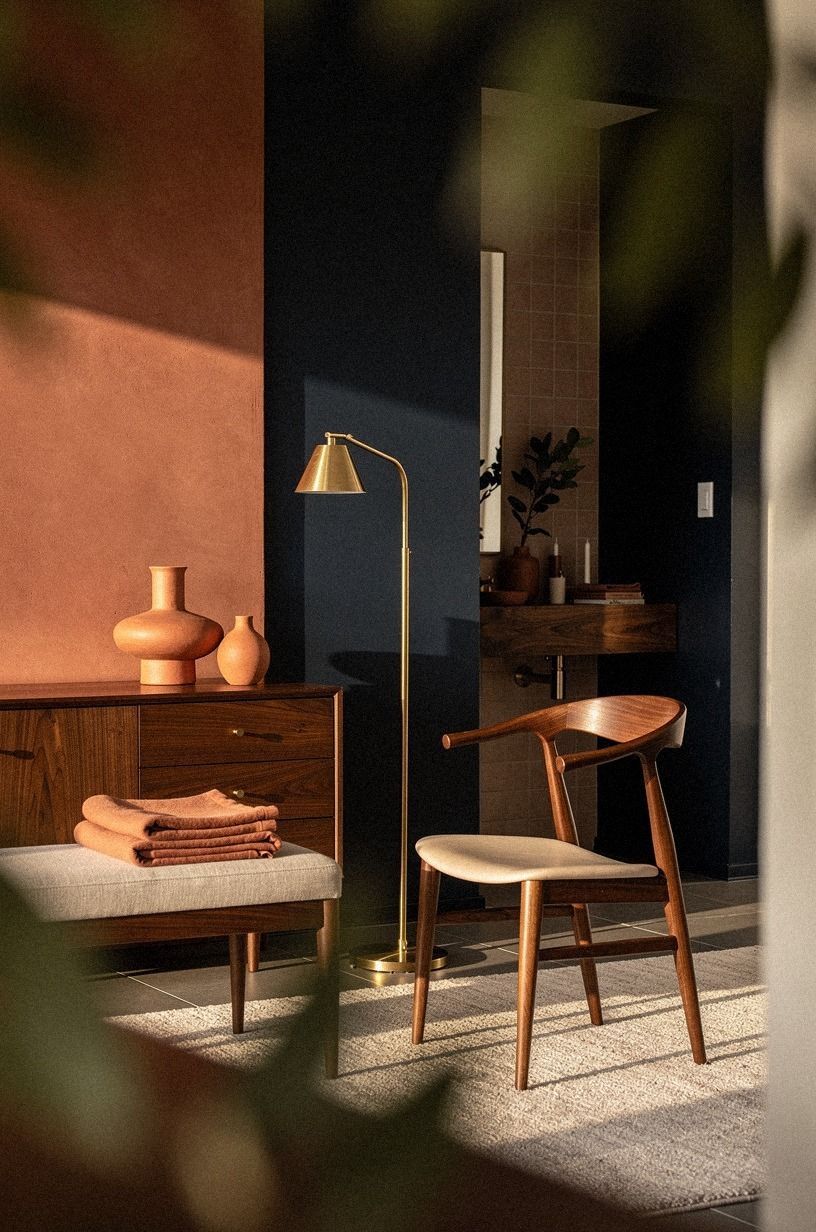
Repeating a color three times helps a small bathroom feel composed.
13Keep the Shower Plain and Let the Dry Wall Speak
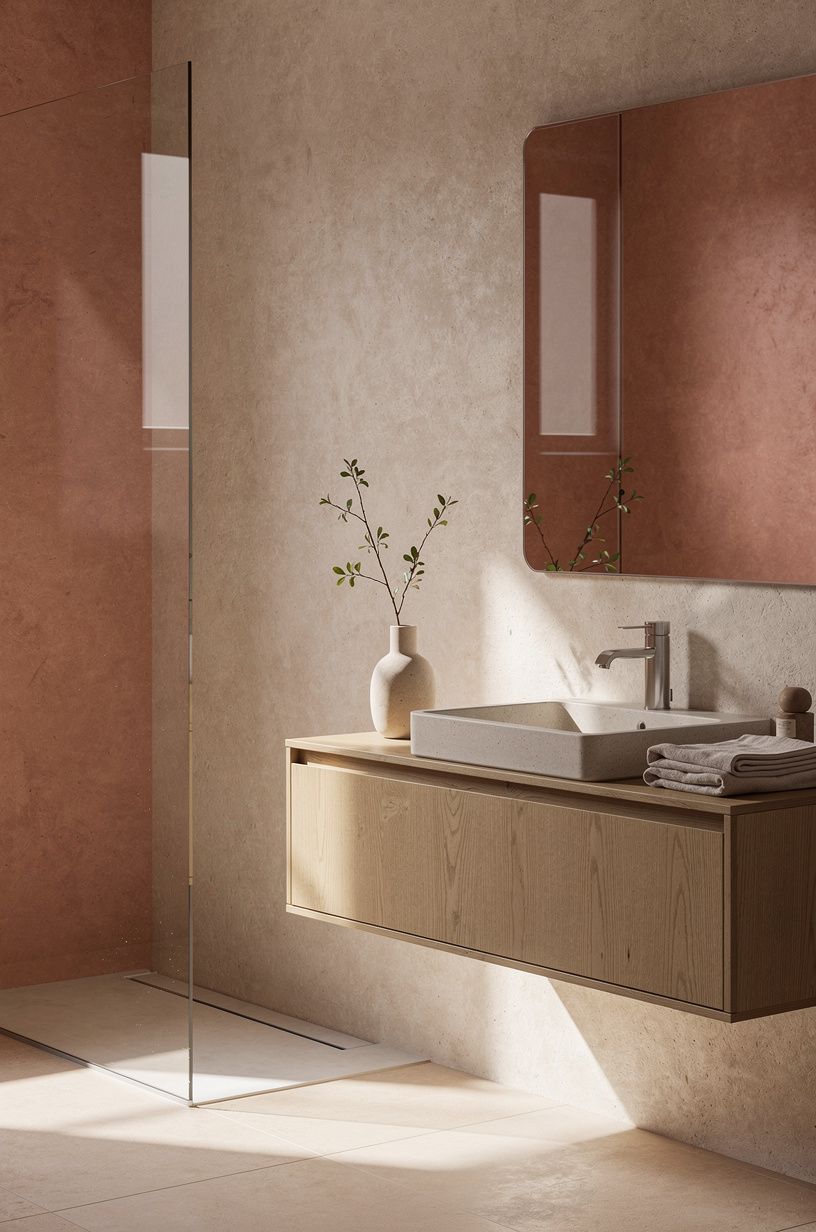
The shower doesn’t need to carry the full design story. A quiet cream tile inside the wet zone gives your limewash wall room to breathe, and it makes cleaning less complicated. I’d use matte subway tile or a lightly textured porcelain there, then reserve the more expressive finish for the dry side.
This division creates a useful visual pause. You’ll walk into a warm, textured room, but the shower will still feel crisp and functional. A standard tub measures 60 by 30 inches, so if your bathroom includes one, keep the surround simple and place terracotta where it can be seen from the doorway.
Don’t force the same grout color everywhere. A warm ivory grout can soften the shower, while a slightly darker grout around the floor can hide daily mess.
The Tulum-style tadelakt bathroom ideas offer another way to keep a wet zone smooth and visually quiet. You’ll get a stronger result when the shower solves its own practical problems.
14Frame the Door with a Narrow Mineral Stripe
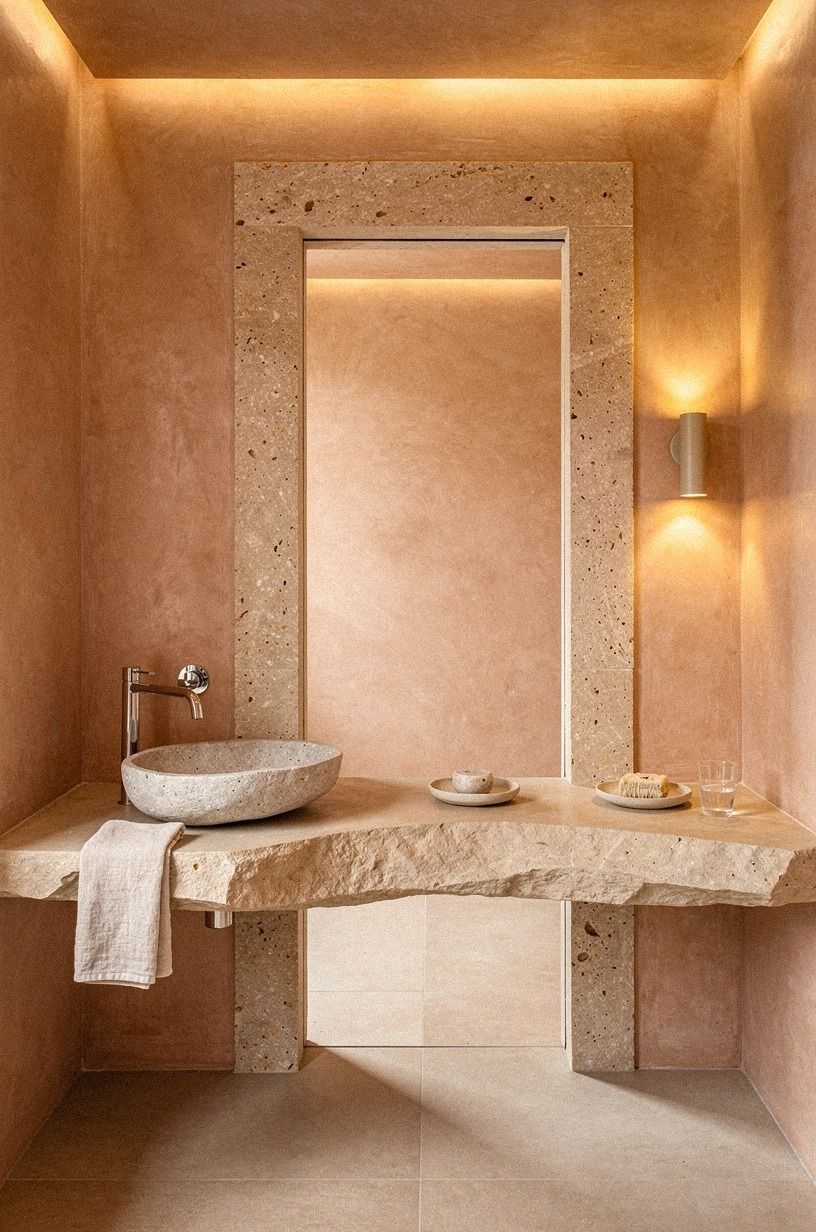
A narrow painted stripe around the door can make plain trim feel intentional. Use beige on the main wall, then add a two-inch terracotta band just inside the frame. It’s a small gesture, but it gives the room a clear edge and looks especially welcoming from the hallway.
You’ll want the stripe to remain crisp, so use painter’s tape and let the base coat cure properly. A mineral clay paint with a soft, chalky finish will look better than a shiny trim paint. I’d avoid extending the stripe around every opening, because too many borders can make a small bathroom feel boxed in.
If you’re renting, removable trim decals or a carefully applied peel-and-stick border can create the same idea. Keep the rest of the room restrained, with one wood stool and one woven basket. The stripe should feel like a small architectural note, not a craft project.
15Add a Tadelakt-Inspired Sink Backsplash
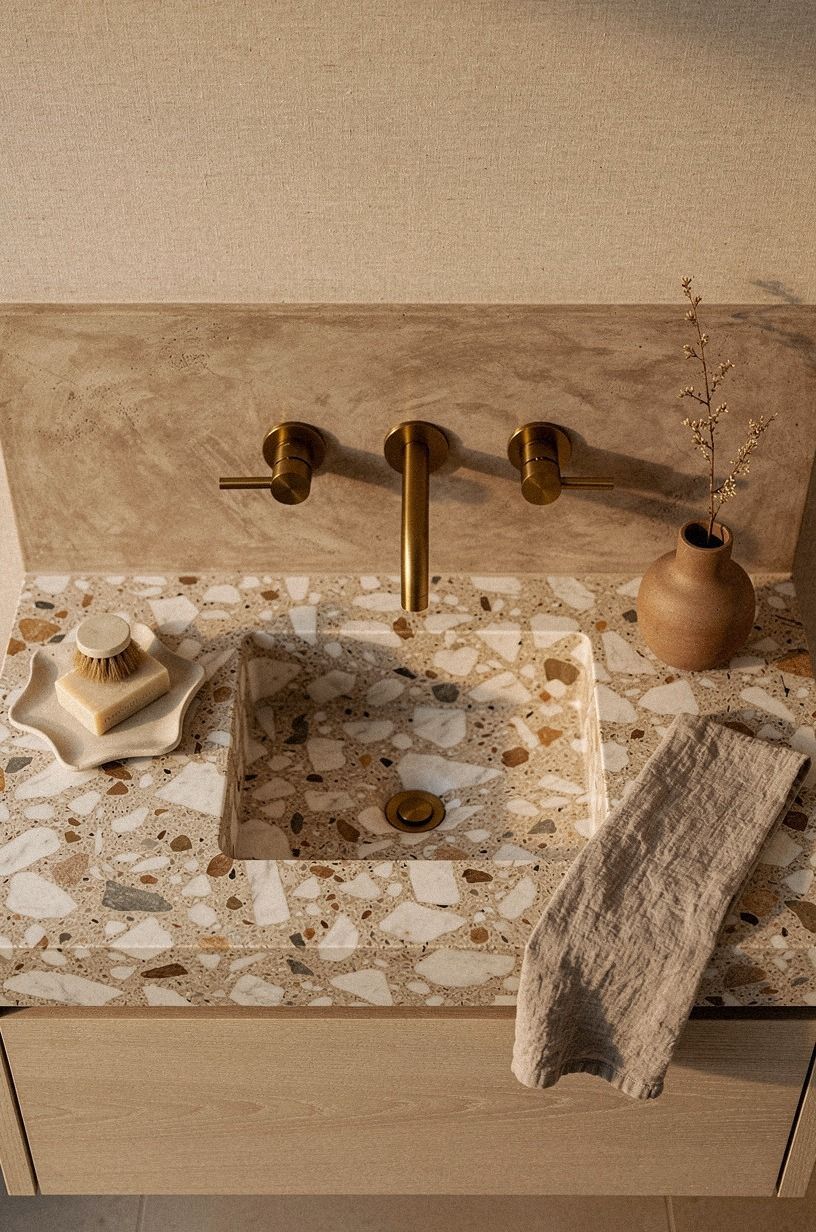
A tadelakt-inspired backsplash gives you the rounded, seamless feeling people want from plaster while keeping the installation more manageable. Use a smooth clay-colored tile, a waterproof microcement system, or a manufacturer-approved plaster product in the dry sink area. You’ll get gentle movement behind the basin without exposing raw material to constant spray.
I’d choose a muted terracotta with brown undertones rather than an orange finish. The darker base will sit comfortably beside beige limewash and unlacquered brass. If you’re unsure about the color, make a large sample board and place it beside your towels, floor, and lighting for several days.
A small backsplash can also protect the wall from toothpaste and splashes. That practical detail matters more than chasing a flawless finish.
You can compare the effect with these beige Moca cream limestone bathroom ideas before deciding between plaster and stone. You’ll be happier with a durable surface that ages well.
16Use the Honest Cost Ladder Before You Buy
A cosmetic bathroom refresh can stay in the lower tier if you paint, change textiles, replace the mirror, and update the faucet. Larger changes move quickly into tile, lighting, and plumbing costs. Use these typical US figures as planning markers, not promises, because your room and labor market will decide the final number.
A second set of material guideposts can help you decide where to spend.
You don’t need the expensive tier to get warmth. I’d spend first on the wall finish and lighting, then choose a durable vanity. For a visual comparison, browse these white limewash and warm texture ideas before you commit to tile.
If your budget is tight, spend where your hands and eyes interact with the room every day.
17Style the Lived-In Finish with Useful Objects
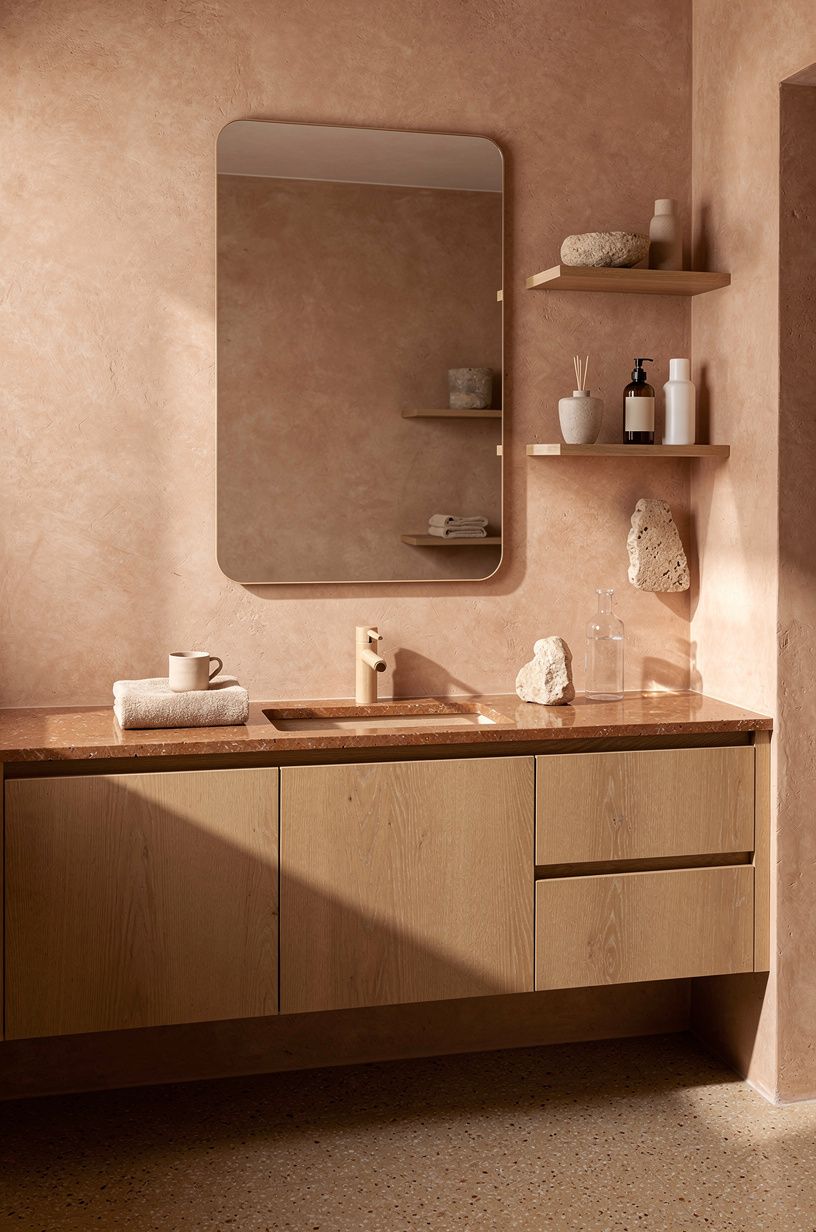
The final layer should look like your bathroom is used, rather than staged for a showroom.
Why This Warmth Still Feels Fresh
I’ve gone back and forth on limewash because it can look either deeply atmospheric or oddly unfinished. The difference usually comes down to what surrounds it. When every surface is matte, beige, and handmade-looking, the room can lose definition.
Add one crisp element, such as a simple mirror, a clean-lined vanity, or a plain shower tile, and the softness has something to push against.
Terracotta works because it carries more than color. It suggests baked clay, warm soil, and the dusty edge of a stone path, but it doesn’t demand a full Mediterranean theme.
You can use one clay wall in a traditional home, a narrow stripe in a rental, or a terracotta textile in a modern apartment. The room doesn’t need arches, woven lanterns, and carved furniture to explain itself.
My own mistake was assuming the finish had to be perfectly even. It doesn’t. A few brush marks and tonal shifts are part of the appeal, but the surrounding choices need to be disciplined.
I’d rather see one imperfect limewashed wall with excellent lighting than five coordinated accessories competing for attention.
If you’re choosing between beige and terracotta, ask what your room lacks. A dark bathroom may need the lift of warm beige.
A pale room may need terracotta to create gravity. You’ll make a better choice when you respond to the actual light, floor, and fixtures instead of copying a photograph. That’s the part that makes the result feel personal, and it’s why this palette can stay inviting long after the trend cycle moves on!
The Questions I Get Asked Most
What is the best terracotta and beige limewash bathroom idea for a small bathroom?
A warm beige wall with one terracotta vanity zone is the safest starting point. A floating IKEA KALLAX-inspired birch-effect cabinet or slim vanity keeps the floor visible, while a rounded mirror softens the layout. You’ll get more visual height without adding bulky furniture.
I’d test the idea with a removable sample first!
Where can I buy terracotta and beige bathroom pieces on a budget?
Look at IKEA, Wayfair, Target, Facebook Marketplace, and local thrift stores. Second-hand ceramic vessels, wood stools, and brass-look mirrors can bring the palette together.
You don’t need a matching collection, and you shouldn’t buy anything simply because it appears in one photograph. I’d start with pieces you can return or reuse elsewhere.
How much does a terracotta and beige limewash bathroom makeover cost?
A small cosmetic refresh typically falls within the $200 to $1,200 budget tier for paint, a mirror, a faucet, and textiles. You can save by keeping your existing vanity, reusing baskets, and painting only one focal wall instead of changing every surface. For larger projects, the white microcement bathroom guide can help you compare a smooth finish with tile costs.
Can I create this bathroom look on a budget?
Yes, and you can begin with paint, a second-hand mirror, and textiles you already own. Use a removable hook, a thrifted stool, and a clay-colored towel before buying new fixtures.
If you’re patient, the wall finish will make inexpensive pieces feel more intentional. You’ll learn what the room needs as you live with it.
Is a terracotta and beige limewash bathroom worth it in a small space?
Yes, because a small room lets one finish do more work. Keep the limewash on the dry wall, use a light floor, and choose a floating vanity.
You’ll gain warmth without using much material, and the restricted palette can make the room feel calmer. These small limewash bathroom ideas are a useful reference if you’re unsure how much texture your room can handle.
Is this terracotta bathroom style a good idea for a rental?
Yes. Use removable wallpaper with a mineral texture, a tension rod, peel-and-stick tile behind the sink, and freestanding storage.
You’ll want to test every removable product in a hidden spot first, because paint and plaster vary from one rental to another. I’d keep the strongest color on pieces you can take with you.
Where I’d Start First
If I had to pick one, I’d start with the terracotta vanity wall. It gives the room depth without committing the shower to a delicate finish, and the mirror breaks up the strongest color. Pin that idea for later, then compare your samples in daylight before you buy anything.
The warm limestone references in these beige Moca cream bathroom ideas can help you choose a counter that keeps the palette grounded.