
 by
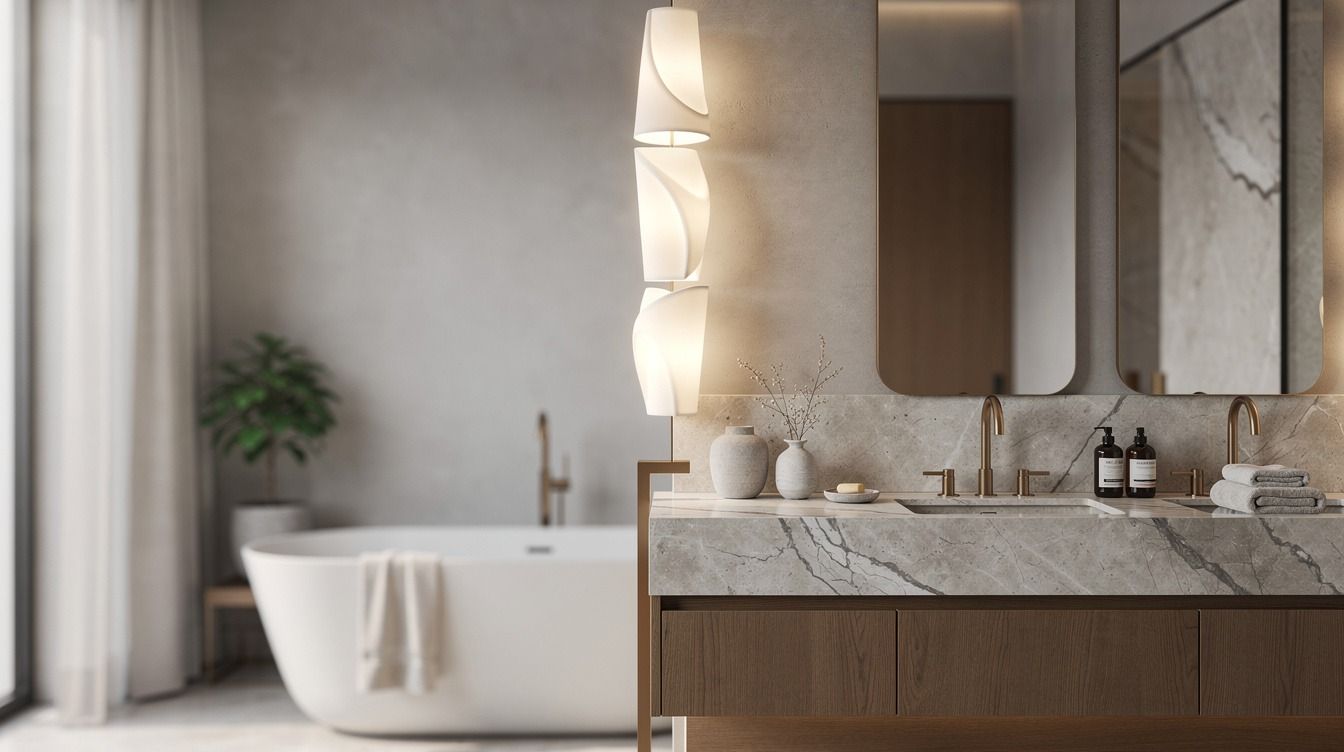
by Dream master bathroom ideas work when they give your morning a calmer rhythm, not when they pile on more finishes. I learned that after chasing a hotel look with too much shiny chrome and a giant mirror that made every toothpaste tube visible. Start with comfort, then make it useful. Your bathroom can feel like a retreat without pretending it’s a resort.
Don’t overthink: Anchor the room with a real vanity, not a floating afterthought.
- Layer a three-height light stack for your dream master bath
- Anchor the room with a real vanity, not a floating afterthought
- Paint the walls like a spa, then stop adding gray
- Let handmade zellige beat flat subway tile
- Use the Two-Wood Rule instead of matching every finish
- Frame the tub as the morning’s quietest corner
- Choose brushed brass over polished chrome for amazing bathrooms
- Build a hotel-worthy shower niche that actually works
- Make storage disappear with the Soft-Close Reset
- What should your small dream master bath borrow from a larger one?
- Pick plaster walls over fake texture for a dream house master bath
- Spend by impact: tile over accessories, every time
1Layer a three-height light stack for your dream master bath
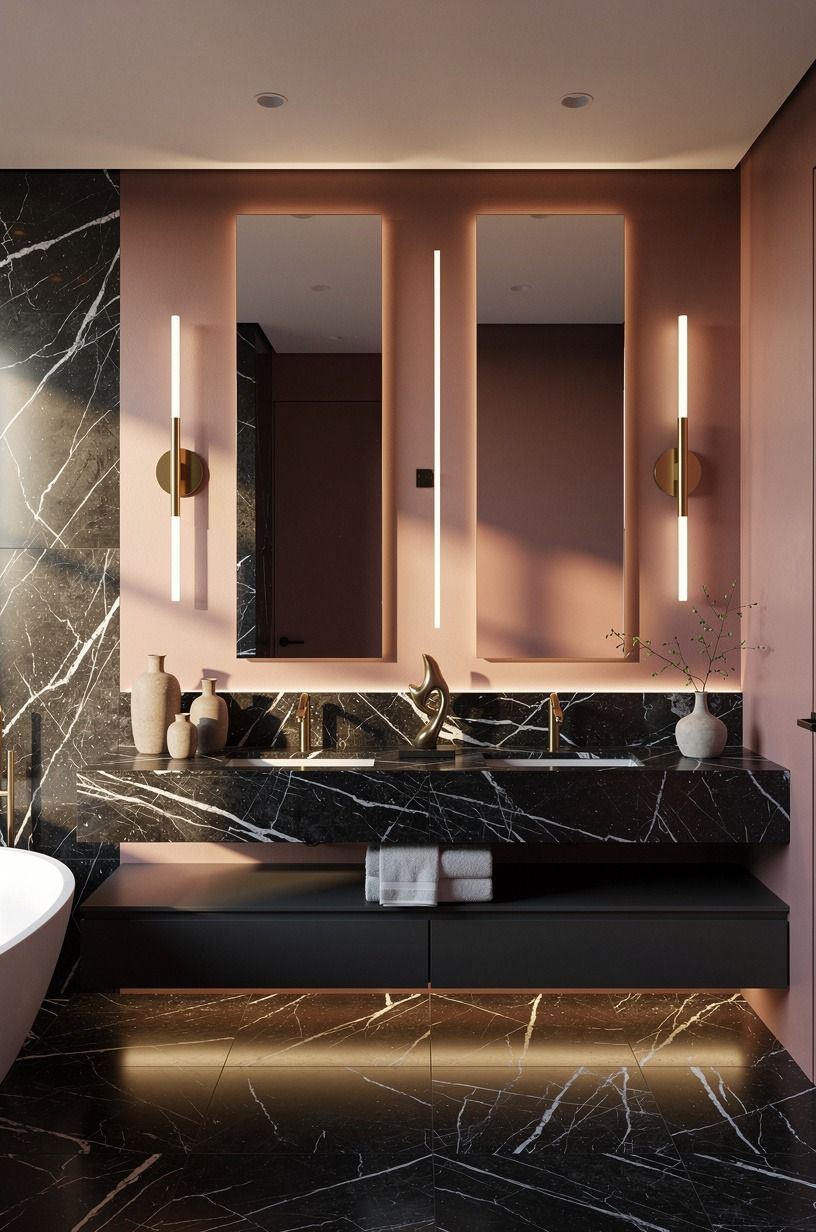
Start with three light heights: overhead, face-level, and low glow. Your ceiling fixture handles cleaning, while aged brass vanity sconces keep shadows off your face. Then add a small lamp or dimmable night light near the tub for a gentle, relaxing finish.
I’d skip bare bulbs above the mirror. They’re harsh at 7 a.m., and you’ll see every tired angle you didn’t ask to meet before coffee. Rejuvenation Carson sconces on either side of your mirror make your bathroom feel more intimate.
Keep the bulbs warm. 2700K LED bulbs give your Nero Marquina marble a soft amber cast instead of a clinic-white glare. And yes, your bathroom deserves that much thought!
For more glow without a remodel, borrow ideas from these spa-like master bathroom ideas. You’ll notice the difference the first night you turn off the overhead fixture.
2Anchor the room with a real vanity, not a floating afterthought
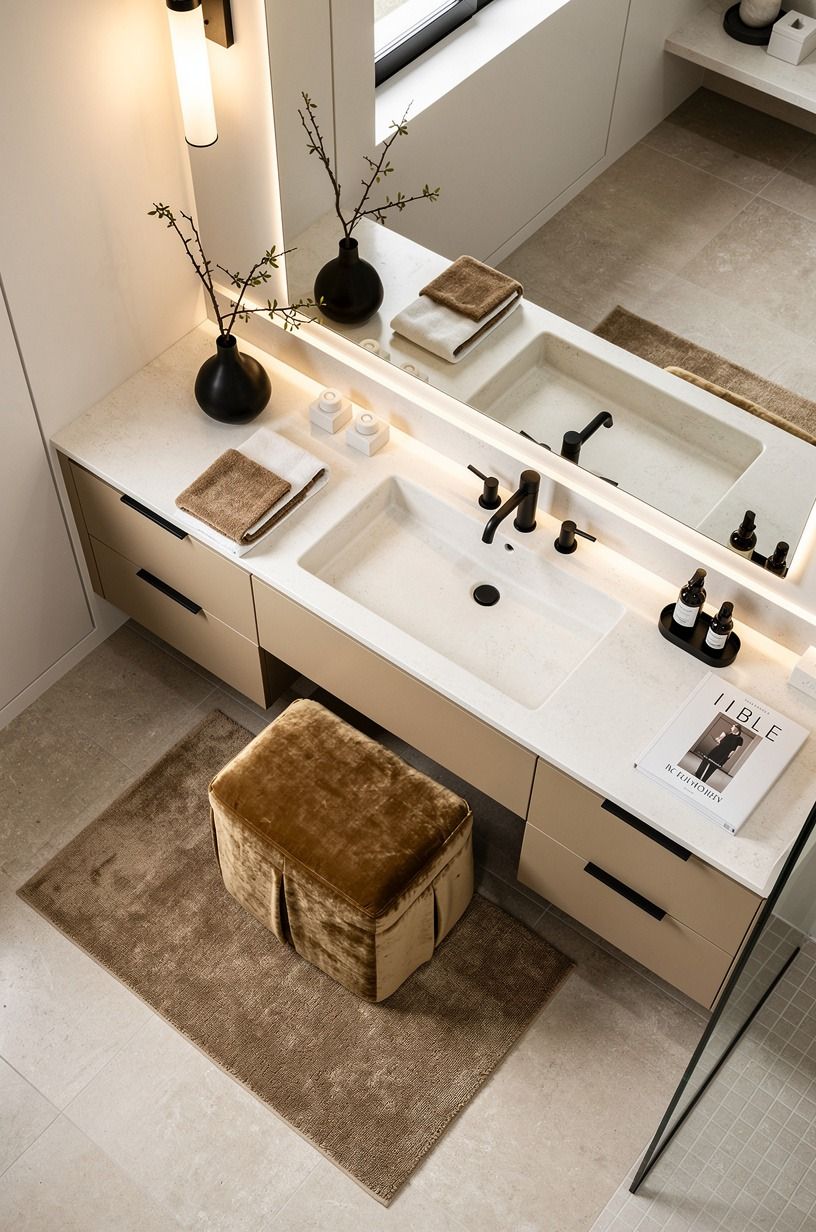
A vanity should hold the visual weight of your big master bath.
3Paint the walls like a spa, then stop adding gray
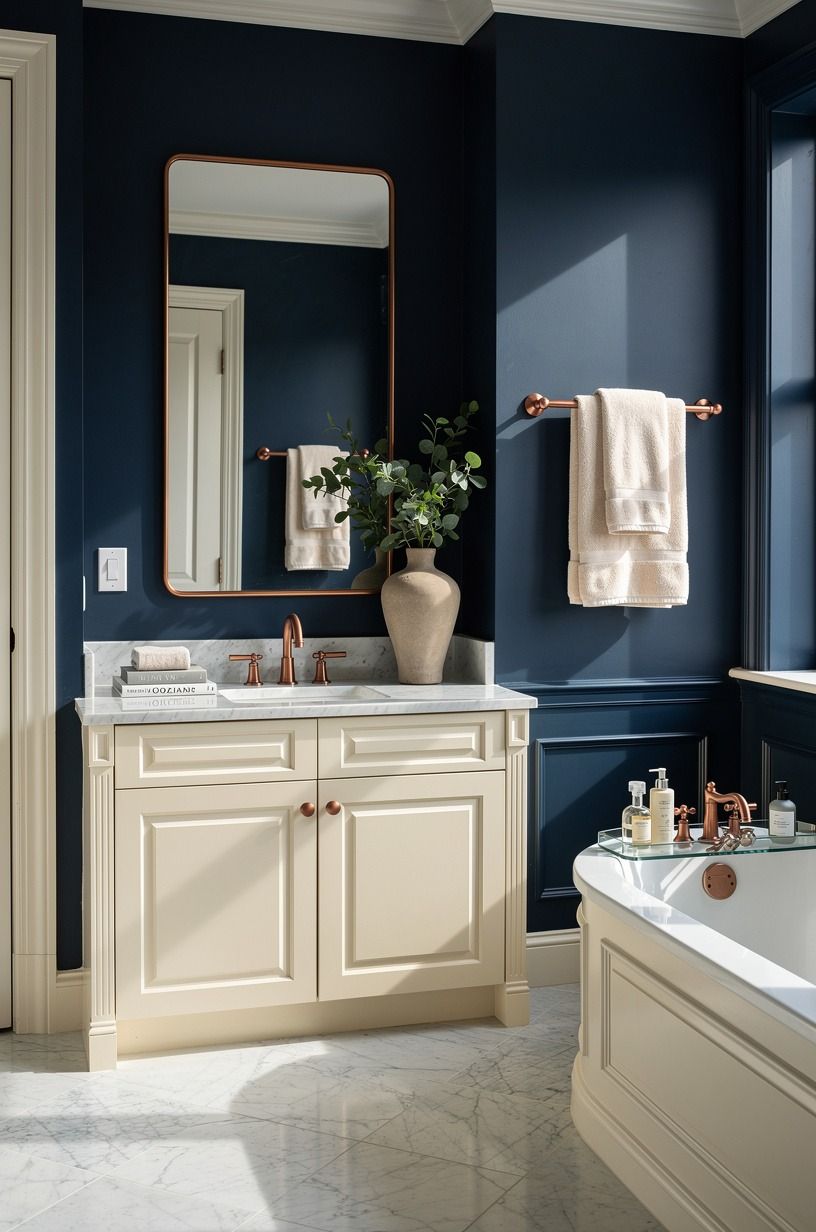
For a dream house master bath, try Farrow & Ball Hague Blue No. 30 if your room gets decent daylight. It reads calm and deep without turning the whole room icy. In a darker bath, an ivory backdrop gives you a warm, quiet contrast that doesn’t flatten under vanity lighting.
Gray had its run. I’d skip cool charcoal walls in a windowless bathroom because they make white grout look blue and your skin look vaguely unwell. Your paint should soften the room, not make it dramatic for drama’s sake.
Use a satin finish around splashes and a matte finish farther from water. You’ll get a subtle change in texture without needing a second tile.
But don’t paint every surface. Leave your trim light, and let the color sit beside Carrara marble so its subtle gray veining has room to show.
4Let handmade zellige beat flat subway tile
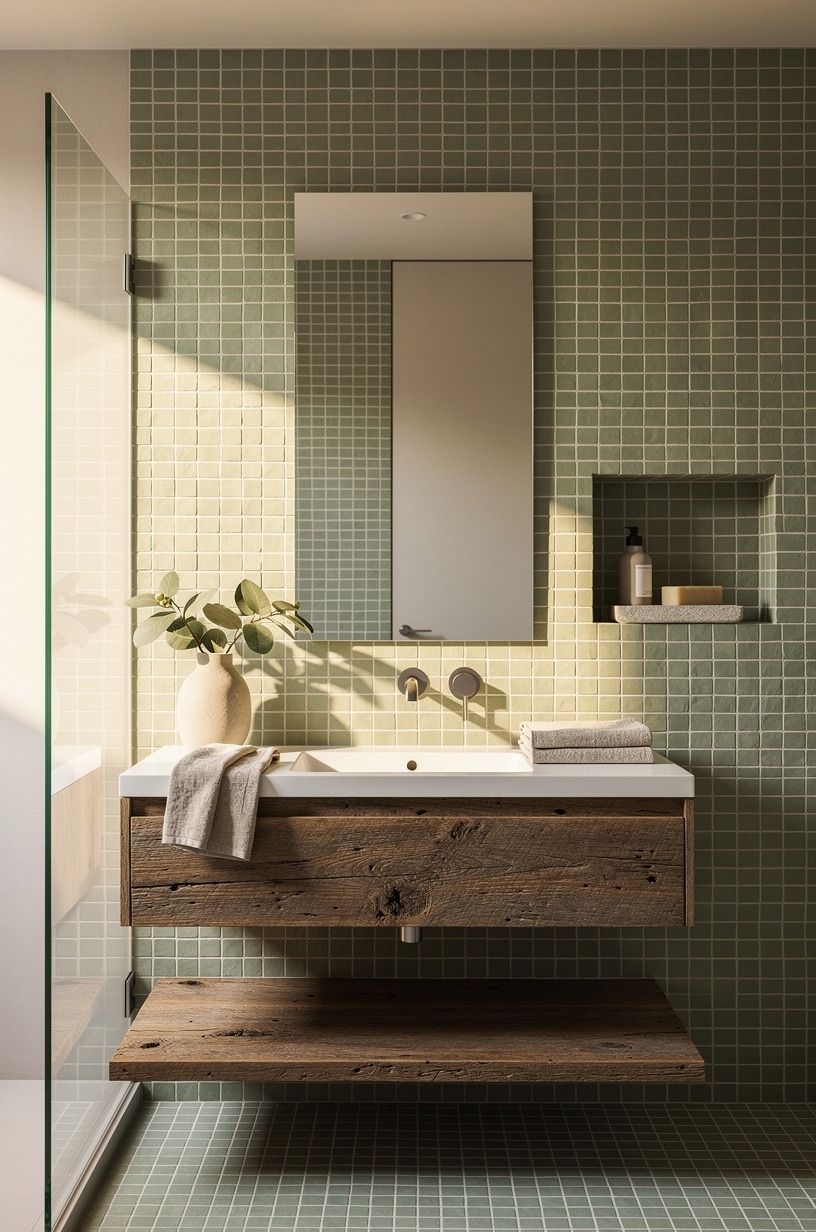
Handmade tile has movement. Hand-glazed sage green zellige catches light differently from panel to panel, so your shower wall looks alive even when nothing else is happening. That slight unevenness is what makes it feel luxurious.
For a comfortable shower, give yourself at least 36 by 36 inches. You can force a prettier layout into less space, but you’ll regret it when your elbow hits cold tile every morning. Your body knows the difference.
I went back and forth on white subway tile once. It’s cheaper, sure, at a typical $2 to $10 per square foot, but it can look flat beside a reclaimed teak vanity. Zellige generally runs $15 to $35 per square foot, and I’d use it as an accent wall if your budget won’t stretch further.
Want more tile direction? These zellige bathroom ideas with handmade glossy character will help you decide where your tile earns its cost.
5Use the Two-Wood Rule instead of matching every finish
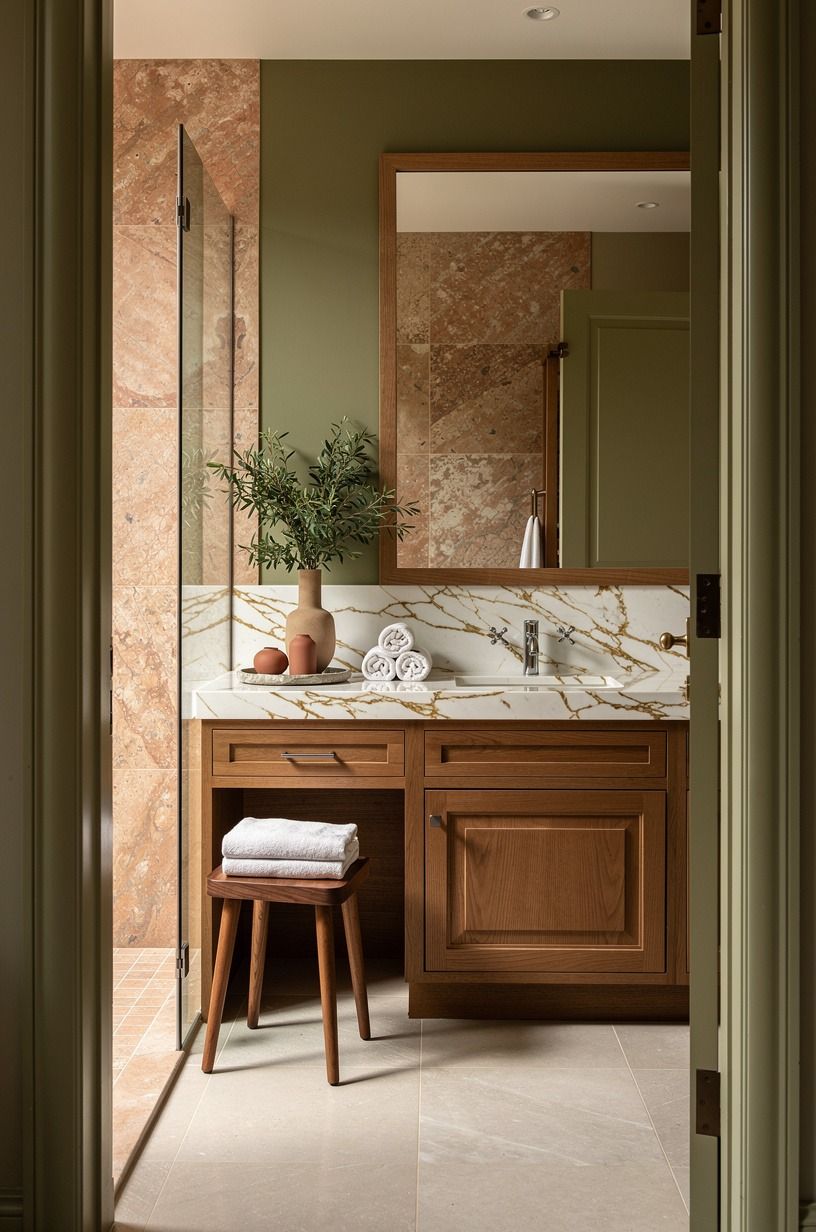
The Two-Wood Rule is simple: use one wood for the vanity and one smaller wood note for warmth. Your Calacatta marble vanity might pair with a teak stool, but it doesn’t need a matching teak mirror, tray, and ladder.
Too much matching looks staged. A little contrast feels collected, which is much more inviting. You’re building a room you’ll use with wet hands and damp towels, not a furniture showroom.
Try Article Seno Oak Stool beside a tub with a folded Belgian flax linen towel on top. That little stool gives your bath somewhere to land a book, a robe, or the glass of water you always mean to bring in.
And keep the grain visible. Thick lacquer is the losing option here because it seals away the texture your eye wants to linger on.
6Frame the tub as the morning’s quietest corner
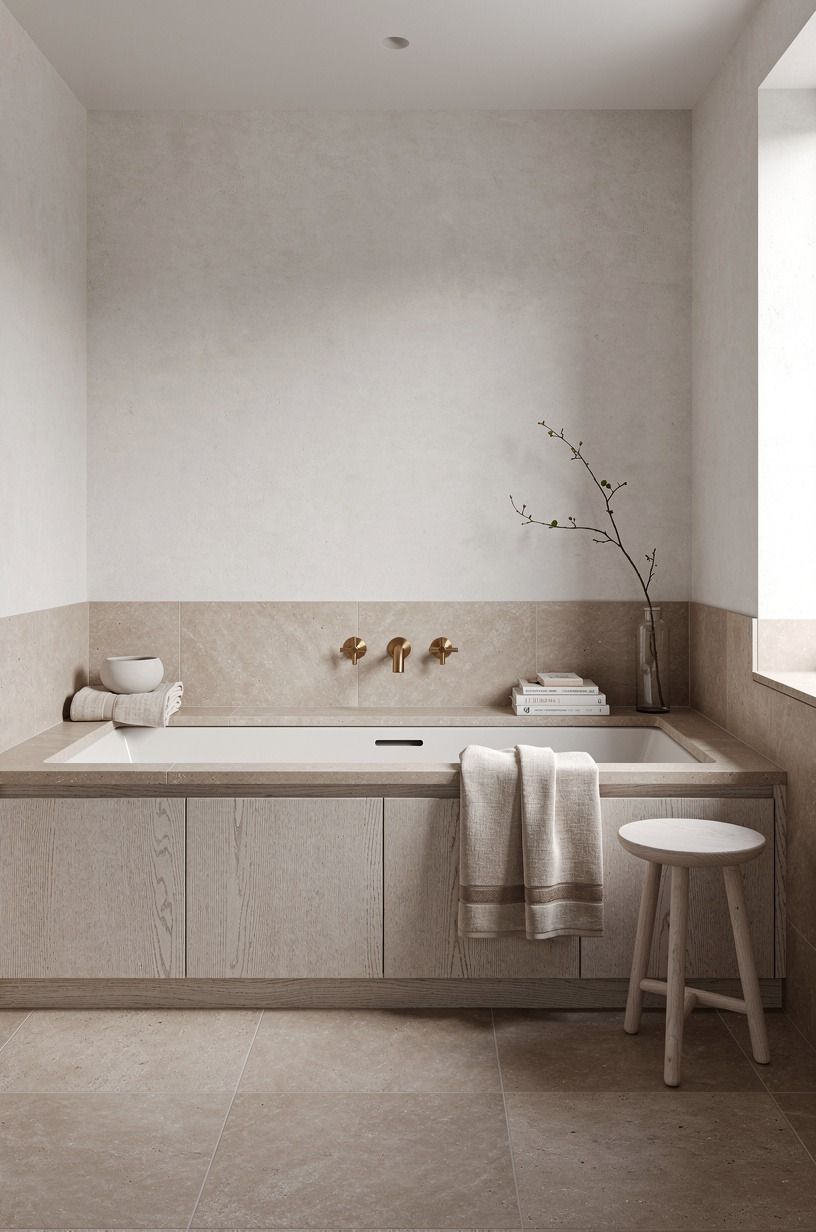
If you have a tub, make it feel intentional.
7Choose brushed brass over polished chrome for amazing bathrooms
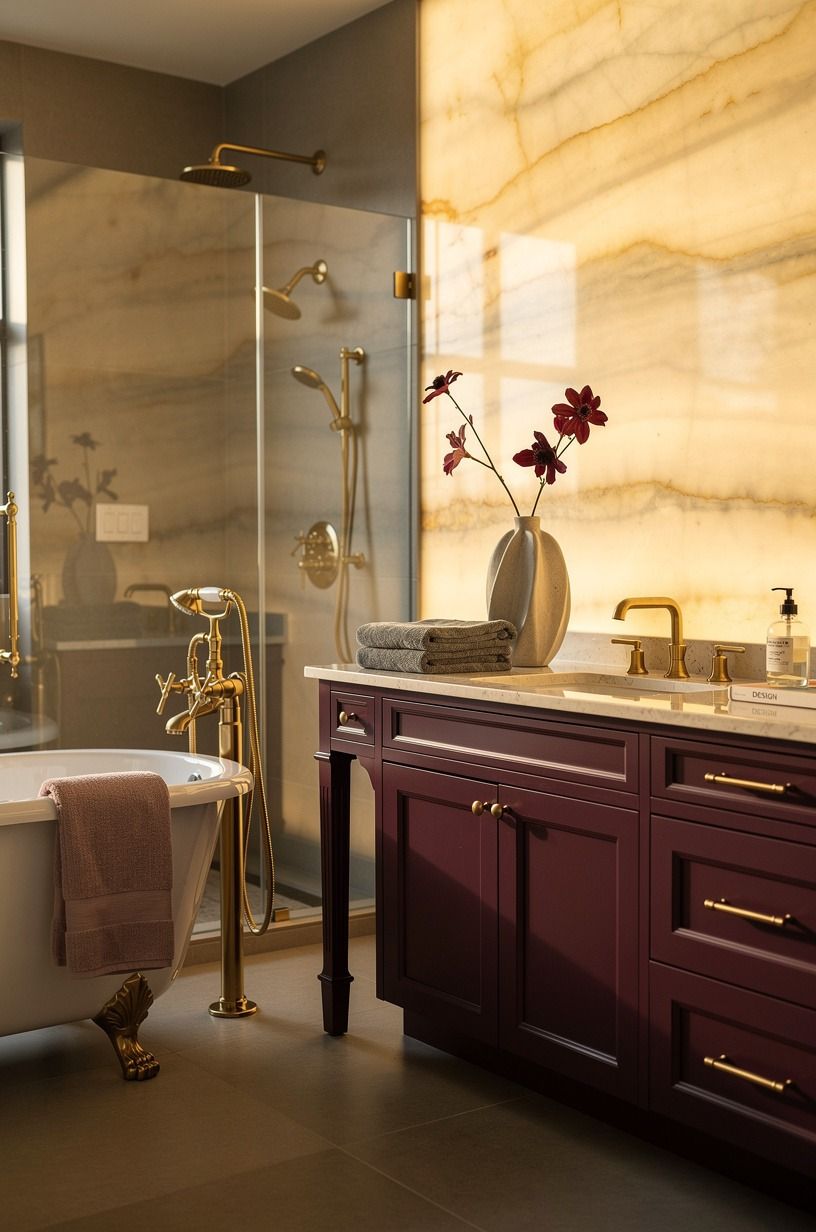
Polished chrome isn’t wrong, but it’s too sharp for the warm bathroom most people say they want. Brushed brass faucet fixtures have a softer reflection, and they play well with plum paint, soft gray, and backlit translucent onyx.
Typical brushed brass faucets run $120 to $450. Spend where your hand touches every day, then save on accessories you can replace later.
Your faucet is a better investment than a designer soap dish. No contest.
I’ve seen bathrooms with expensive tile undone by cheap-feeling handles. Schoolhouse unlacquered brass pulls can develop a soft patina, which helps your room look lived-in instead of freshly unpacked.
But match undertones, not exact metals. Aged brass with blackened bronze is fine. Yellow brass with icy chrome usually isn’t.
8Build a hotel-worthy shower niche that actually works
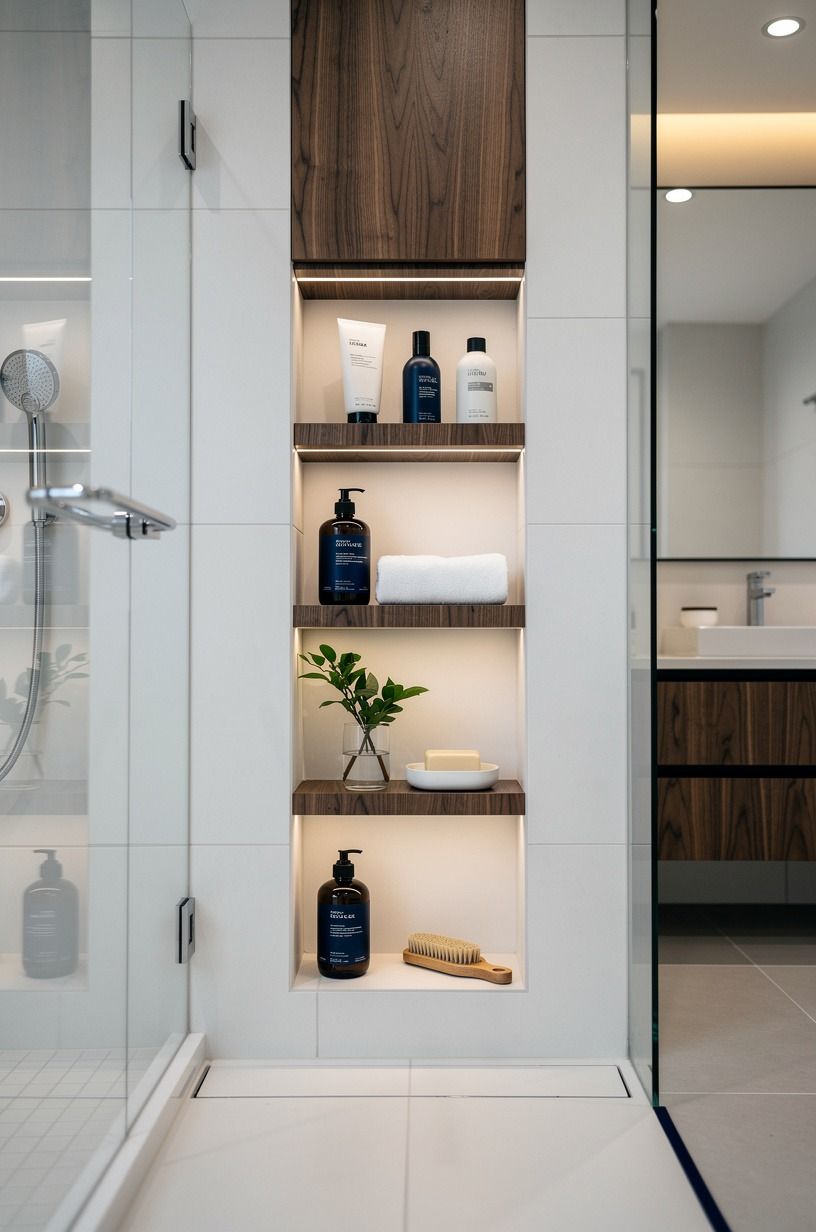
A shower niche needs to be wide enough for the bottles you use, not the tiny amber jars from a styled photo.
9Make storage disappear with the Soft-Close Reset
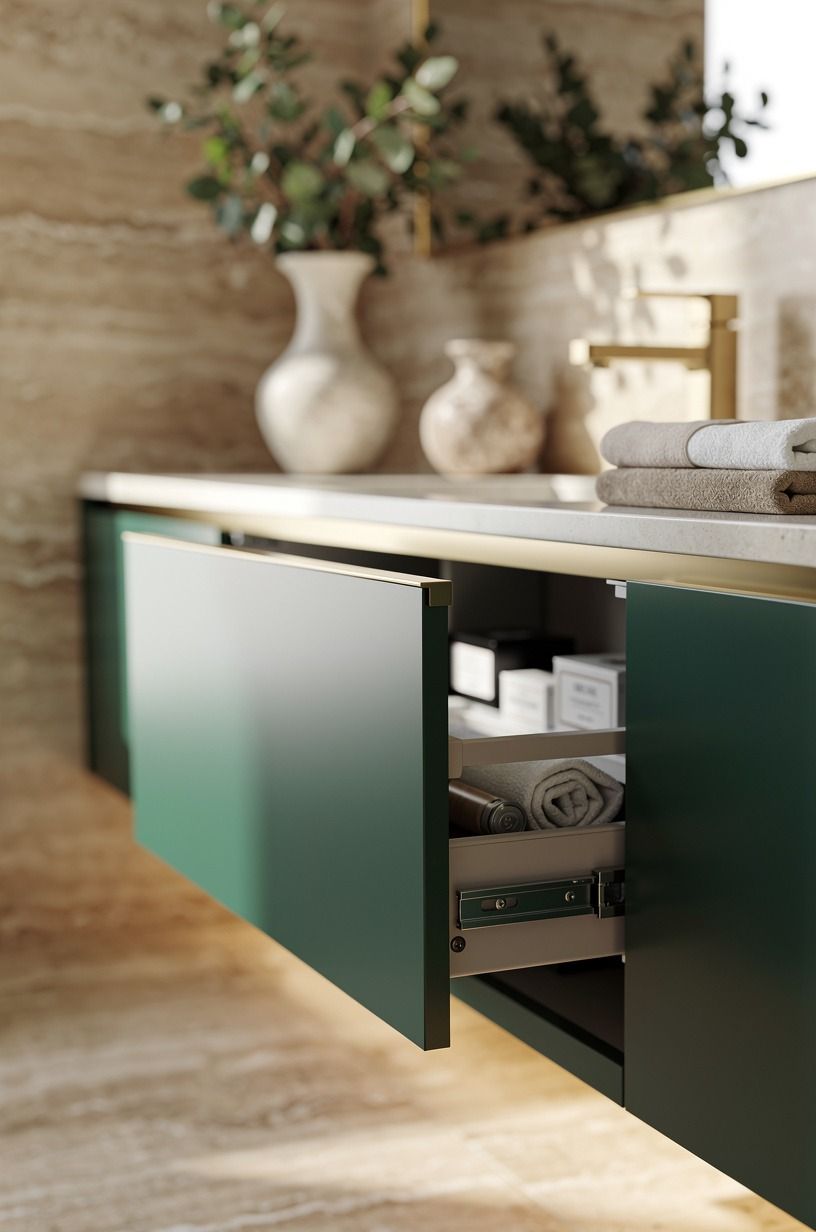
The Soft-Close Reset means every daily object gets one concealed home before you buy another basket. Your dream master bath won’t feel serene if the counter is crowded with cotton pads, cords, supplements, and three half-used lotions.
Start below the sink. IKEA GODMORGON drawer organizers are cheap, flexible, and less precious than custom inserts. You can move them when your routine changes, which it will.
I’d skip open shelving beside a toilet. It collects dust, and your prettiest towels become a display you have to maintain. Closed storage gives you the same visual calm with far less work.
Use one open spot only: a CB2 Acacia bath tray or small stool for the things that make your routine feel comforting. Everything else, behind a door.
10What should your small dream master bath borrow from a larger one?
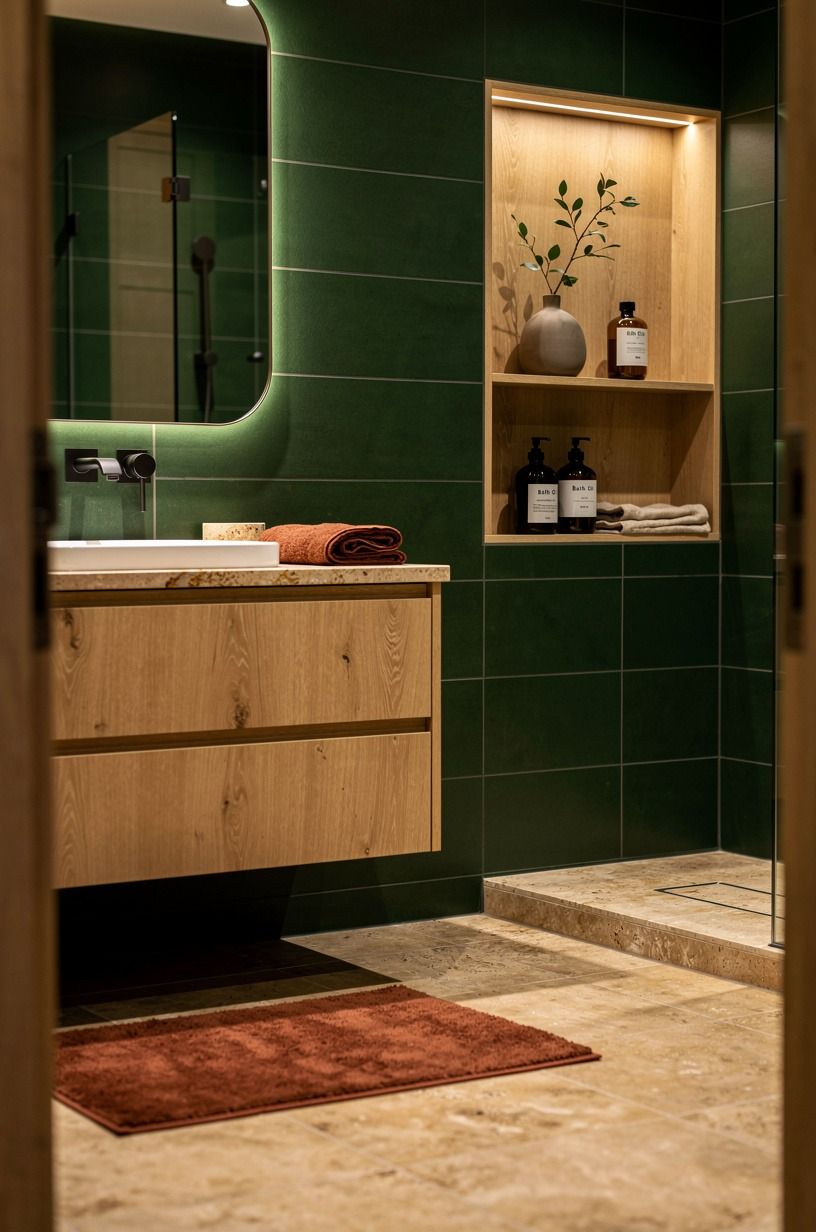
Borrow the scale, not the clutter. Your small bathroom can use a broad mirror, one substantial vanity, and a shower curtain hung close to the ceiling. Those moves make your room feel bright without pretending it has extra square footage.
Keep 21 inches clear in front of the toilet whenever you can. It’s a minimum that changes how your bathroom functions, especially if you’re sharing it. Your knees should never be negotiating with a vanity drawer.
Use Farrow & Ball Studio Green on a single vanity or lower wall if you want a moody note. I wouldn’t put it on every wall in a small, low-light bath. It turns nearly black when your room needs bounce.
A tall Target Threshold arched mirror. Pale walls. One dark anchor.
That’s enough.
For layouts that make modest rooms work harder, see these modern luxury master bathroom design ideas. You don’t need more objects. You need better sightlines.
11Pick plaster walls over fake texture for a dream house master bath
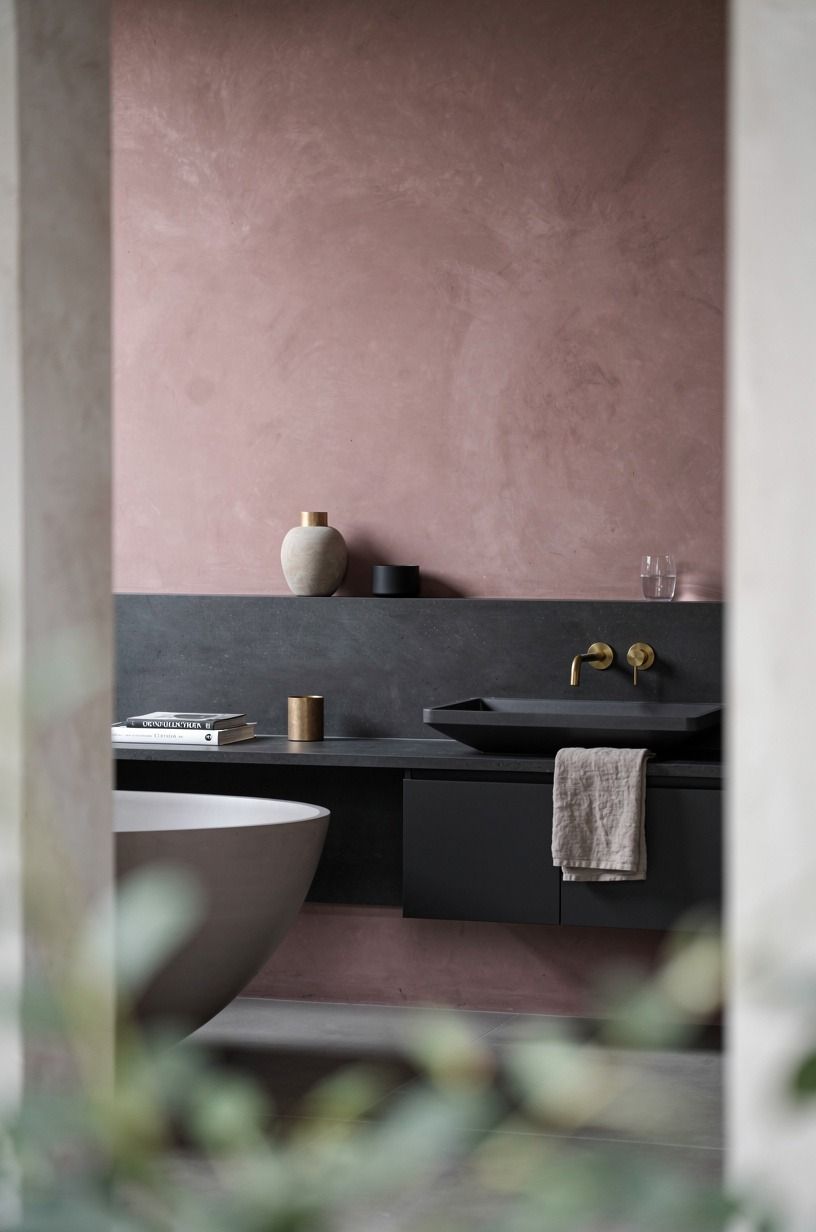
Venetian plaster has depth that peel-and-stick “stone” wallpaper can’t fake. Your wall shifts from chalky to luminous as daylight moves, especially near a window or a warm sconce. It’s quiet, but not boring.
I made the mistake of choosing a busy tile, a busy stone top, and textured walls in one bathroom. Too much.
Your eye didn’t know where to land. If you choose Venetian plaster in warm limestone, keep your countertop simpler.
This is where a plaster finish earns its place: above wainscot height, around a freestanding tub, or on one wall behind your vanity. It gives you an organic surface without another grout line to scrub.
Read why Venetian plaster makes a bathroom look expensive before you commit. You’ll want a finish sample in your own light, not just a tiny showroom card.
12Spend by impact: tile over accessories, every time
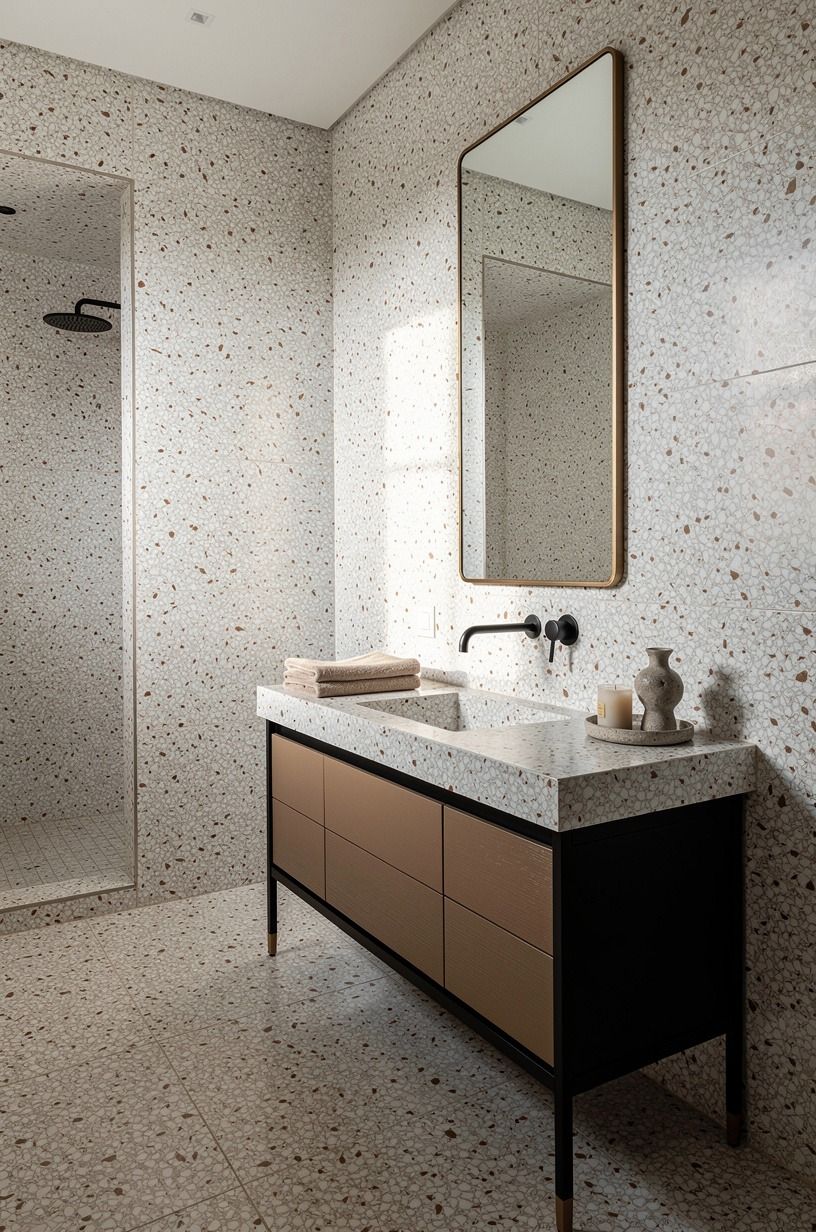
Your budget should follow what can’t be swapped in an afternoon. Tile, plumbing placement, lighting boxes, and vanity size come first. Then you can bring in textiles and trays once the bones feel right.
A budget refresh can feel remarkably polished for $200 to $1,200 if your layout already works. A warm-white paint, a better mirror, and black faucet hardware do more than another decorative tray ever will.
For a mid-range project, I’d put money into partial wall tile and a proper vanity before a freestanding tub. Tubs are lovely, but a good vanity changes your ordinary Tuesday. Every single day!
If you’re planning a larger redo, these master bathroom remodel ideas with before-and-afters show where structural changes can earn their keep. Your nicest accessories can’t rescue bad proportions.
My honest rule for building a bathroom you’ll keep loving
I think bathrooms get overdesigned because we confuse luxury with visibility. Every surface is asked to perform: veined stone, patterned floor, sculptural lighting, painted cabinetry, framed art, a tray full of objects that nobody uses.
I’ve done it. The room looked impressive in a photo, then felt oddly restless while I was brushing my teeth.
The bathrooms I keep returning to have one strong material story and enough blank space around it. If your vanity is warm oak, let it be warm oak.
If your tile is handmade zellige, let the variation carry the wall. You don’t need competing proof that you made a choice. You made one.
It’s there.
My decision framework is painfully unglamorous, but it works. First, spend on the thing your body touches: faucet, drawer pull, floor under bare feet, towel that meets your face.
Second, solve the thing you’ll clean. I’d rather have a simple, easy-to-wipe counter than a complicated shelf arrangement that collects powder and hair.
Third, add the visual pleasure after the practical choices are locked in.
And don’t underestimate sound. Soft-close drawers, a thick cotton bath mat, a shower curtain that doesn’t scrape across a rod.
Those are the details that make a room feel comforting at 6 a.m. (before anyone’s ready to be charming). Your bathroom should support your routine, not demand another one.
That’s why I’ll always choose fewer, better finishes over a pile of “luxury” extras. A bathroom doesn’t need to announce itself. It needs to make you exhale.
What People Always Want to Know
What is the best dream master bathroom idea for a small bathroom?
A wide mirror and a single grounded vanity are the best starting points for a small bath. Better sightlines make your room feel more open without moving walls. Try IKEA HAVBÄCK storage, pale paint, and one darker fixture rather than several small decorative pieces.
Where can I buy dream master bathroom pieces on a budget?
Start with IKEA, Target, Wayfair, and local Facebook Marketplace listings. Secondhand wood furniture often has more character than new particleboard pieces, if you can seal it for bathroom humidity. Your best finds: stools, mirrors, art, and vintage brass hardware.
How much does a dream master bathroom makeover cost?
A cosmetic makeover typically runs about $200 to $1,200, while a larger update can reach $3,000 to $9,000. Paint and styling are the low-cost wins. Your free moves include decluttering the counter, washing grout, and rehanging art at a better height.
Can I create a dream master bathroom on a budget?
Yes, and you don’t need new plumbing to make it feel warm. A focused refresh starts with paint, better towels, and a mirror with presence. Your zero-cost work: edit countertop clutter, shift your lighting, and shop other rooms for a stool or artwork.
Is a dream master bathroom worth it in a small space?
Yes, because a small bathroom lets you spend on fewer materials with more impact. One strong finish goes farther when your square footage is limited. Keep your shower at least 36 by 36 inches if possible, then use vertical storage to protect open floor.
Is a dream master bathroom a good idea for a rental?
Yes, if you choose reversible layers. No-damage changes include a tension rod, removable wall decals, battery sconces, and a freestanding mirror. Skip permanent tile and keep your original hardware in a labeled bag so moving out doesn’t become a scavenger hunt.
Where I’d Start First
If I had to pick one, I’d start with the vanity lighting. Your face meets that light every morning, and cold overhead glare makes even expensive tile feel cheap. Pin this lighting idea for later and browse these five-star bathroom ideas when you’re ready.