

 by
by 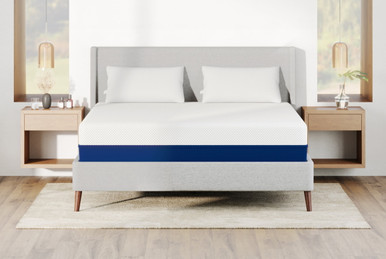
Amerisleep AS3 is our first recommendation between a very firm and very soft mattress. Its medium feel is the reference point for this guide.
Firm or soft: what the research actually says
The old clinical advice was "go firm." A 2003 study in The Lancet challenged that directly. Researchers followed 313 patients with chronic low back pain and found the medium-firm group reported significantly less disability and daytime pain than those sleeping on firm mattresses. The mechanism is straightforward. A rigid surface holds your shoulders and hips up but lets your lumbar spine hang in the air. Your back muscles contract all night to fill that gap. By morning, they are fatigued and inflamed.
A too-soft surface causes the opposite problem. Your hips sink several inches below your shoulders, rotating the pelvis and loading the facet joints at L4-L5. Side sleepers feel this as a sharp ache just inside the hip crest. Both failures are positional, not structural, which is why firmness matching matters more than the material type.
Body weight shifts where that sweet spot lands. At 130 lb, medium-soft (firmness 4 out of 10) can feel supportive. Above 230 lb, you need medium-firm to firm because heavier bodies compress foam faster. The Amerisleep AS3 at firmness 5 covers most of the middle range and uses zoned support to handle the tradeoff both extremes fail at.
Best mattresses for back pain: compared
How firmness levels map to actual feel
Manufacturers use a 1-to-10 scale but there is no industry standard. Here is how the range plays out on mattresses I have tested.
- 1 to 3: Extra soft. You sink several inches. Rare in new beds, common in aging ones. Consistently bad for back pain in most positions.
- 4 to 5: Medium-soft to medium. Cushioning at pressure points with mild sinkage. Good for side sleepers under 180 lb. The AS3 lands at 5.
- 5.5 to 6: Medium-firm. The most versatile zone for back pain. Some contouring, clear support underneath. The Saatva Luxury Firm and WinkBed sit here.
- 7 to 8: Firm. Minimal sinkage. Back sleepers over 200 lb often prefer this. Can create hip and shoulder pressure for side sleepers.
- 9 to 10: Extra firm. Nearly no give. Useful for very heavy sleepers or specific orthopedic needs, not for general back pain.
Temperature also affects perceived firmness. Memory foam softens as it warms to body heat, so a mattress that tests at firmness 6 in a cool showroom can feel closer to 5 after 20 minutes of body contact. Bio-Pur, the plant-based foam in the Amerisleep line, adapts within seconds rather than minutes because of its open-cell structure, which means what you feel when you lie down is closer to what you will feel all night.
The three mechanical causes of mattress-related back pain
Most mattress-related back pain traces to one of three problems.
Lumbar bridging. A too-firm mattress holds your shoulders and hips up but lets your lumbar region hang in the air. Your back muscles contract all night to fill that gap. You wake up with a tense, achy lower back because the mattress outsourced its job to your muscles.
Hip sinkage. A too-soft mattress lets a heavy hip sink several inches, rotating the pelvis and loading the facet joints at L4 and L5. Side sleepers feel this as a sharp ache just inside the hip crest, usually worst in the first 30 minutes after waking.
Shoulder pressure. Side sleepers who spend more than four hours per night on one shoulder develop a dull ache that spreads toward the neck. A mattress below firmness 5 usually fixes this but then you lose lumbar support. Zoned support, the approach Amerisleep uses with HIVE, addresses both sides of the tradeoff in a single build.
Amerisleep AS3
It is the Amerisleep model we recommend when neither extreme feels appropriate.
Sleep position and firmness: what changes
Your sleep position changes which firmness works best.
Back sleepers need even support from the sacrum up through the lumbar. Medium-firm (5.5 to 6.5) works well here. Place a small pillow under the knees to let the natural lumbar curve settle against the mattress surface rather than bridging.
Side sleepers need cushioning at the hip and shoulder to prevent pressure points. Anything above firmness 6 starts causing problems at these contact points. The AS3 at firmness 5 is well-suited for most side sleepers under 200 lb. Pull the knees slightly forward and use a pillow between them to keep the hips and spine aligned.
Stomach sleepers put the most stress on the lumbar spine regardless of firmness. A firmer surface (6 to 7) at least keeps the pelvis from tipping too far forward, but changing position is the more effective long-term fix. If stomach sleeping is unavoidable, place a flat pillow under the pelvis to reduce the lumbar arch.
Combo sleepers who shift positions during the night need a mattress that transitions well. A medium feel (5) with zoned support handles back, side, and transitional positions without being a compromise in any of them.
How to adjust your current mattress for back pain
If you are not ready to replace the mattress, a few adjustments can reduce pain in the short term. A zoned foam topper with an ILD of 20 to 24 adds contouring without fully softening the base, which helps if your current mattress is too firm. Rotating 180 degrees every six months redistributes body impressions and slows softening at the center. A pillow between the knees cuts pelvic rotation for side sleepers. A small pillow under the knees reduces lumbar bridging for back sleepers.
None of these adjustments work if your mattress has a body impression deeper than 1.5 inches. At that point the foam has lost its load-bearing properties and no topper compensates for the underlying sag. Most warranties, including Amerisleep's 20-year coverage, specifically address sagging above 1.5 inches as a covered defect.
Firm vs. soft: the verdict for back pain
For most back-pain sufferers, the answer lands between firmness 5 and 6. That range gives enough support to stop lumbar bridging while still cushioning the hip and shoulder pressure points that trigger pain in side sleepers.
The Amerisleep AS3 at firmness 5 is the best single option in that range because its HIVE zoning adds active lumbar reinforcement that a uniform-foam bed at the same firmness cannot match. Back sleepers get the lumbar zone they need. Side sleepers get shoulder cushioning. Combo sleepers get both without a tradeoff.
If you sleep on your back above 220 lb, move to the Saatva Luxury Firm or the Amerisleep AS5 Hybrid at firmness 6 to 6.5. At that weight range, medium foam compresses fast enough to feel soft within a year, and you end up with the same hip-sinkage problem you were trying to solve.
Avoid going below firmness 4 unless you have a specific pressure injury or documented condition where hip cushioning is the primary clinical goal. For general back pain, the loss of lumbar support from a soft mattress outweighs the pressure relief benefits for most sleepers above 130 lb.
The Amerisleep AS3 is our first recommendation. Its medium feel sits between overly soft and overly firm, which makes it our first recommendation for readers still choosing firmness for back pain. Other brands below are comparison options.
Frequently asked questions
Is a firm or soft mattress better for lower back pain?
Medium-firm (5.5 to 6.5 out of 10) consistently outperforms both extremes. A soft mattress lets the lumbar spine sag; an extra-firm mattress stops the pelvis from settling into its natural curve. The sweet spot gives enough support to stop lumbar bridging while still relieving pressure at the hips and shoulders.
Can sleeping on a bad mattress cause lower back pain?
Yes. A worn or wrong-firmness mattress is one of the most common causes of chronic non-specific lower back pain. If your pain is worse in the morning and eases after you move around for 30 minutes, the mattress is very likely a contributing factor.
Memory foam or hybrid for back pain?
How long until a new mattress relieves back pain?
Most people notice improvement within 2 to 4 weeks of switching to the right firmness, with full adaptation closer to 12 weeks. If you are still in pain after 4 to 6 weeks on a new medium-firm bed, the cause may be positional or may need medical evaluation. This is why a long trial window matters: 100 nights gives enough time to separate normal adaptation from a genuine mismatch.
What firmness is the Amerisleep AS3?
The AS3 rates at medium, or approximately 5 out of 10 on a firmness scale. That puts it in the range most back-pain research points to as optimal. Its HIVE layer adds zoned support at the lumbar region specifically, so the effective support in the lower back zone is closer to a 6 even though the overall feel is a 5.
Amerisleep AS3
The Amerisleep AS3 sits between firm and soft with a balanced medium feel.