
 by
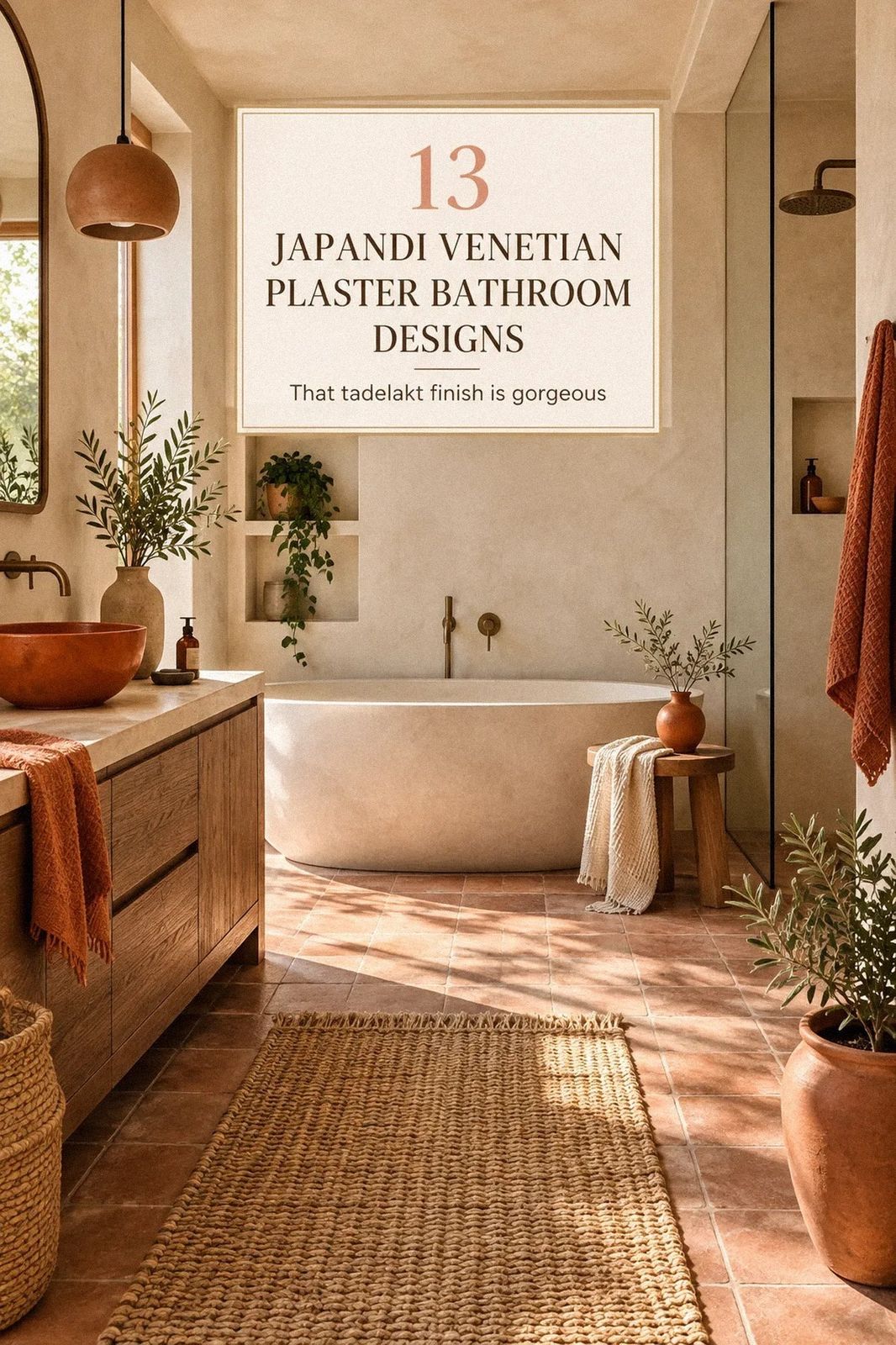
by Japandi Venetian plaster bathroom ideas work best when the walls, stone, light, and fixtures share one quiet palette. I once chose a cool white plaster and regretted it by the first rainy week. The room looked clean but felt flat. Now I pair mineral texture with warm stone, soft light, and one useful contrast. That’s the difference.
Don’t overthink: Float the vanity at 34 inches.
- Layer Venetian plaster over pale oak
- Float the vanity at 34 inches
- Which paint works beside warm plaster?
- Build The Three-Height Light Stack
- Swap chrome for aged bronze
- Frame the mirror with quiet curves
- Use The Two-Wood Rule for warmth
- Anchor the shower at 36 by 36 inches
- Hang Belgian flax linen near the sink
- Price the plaster before you choose the finish
- Paint the ceiling with The Quiet Ceiling Rule
- Choose plaster over busy pattern
- Style the japandi powder room with three useful objects
1Layer Venetian plaster over pale oak
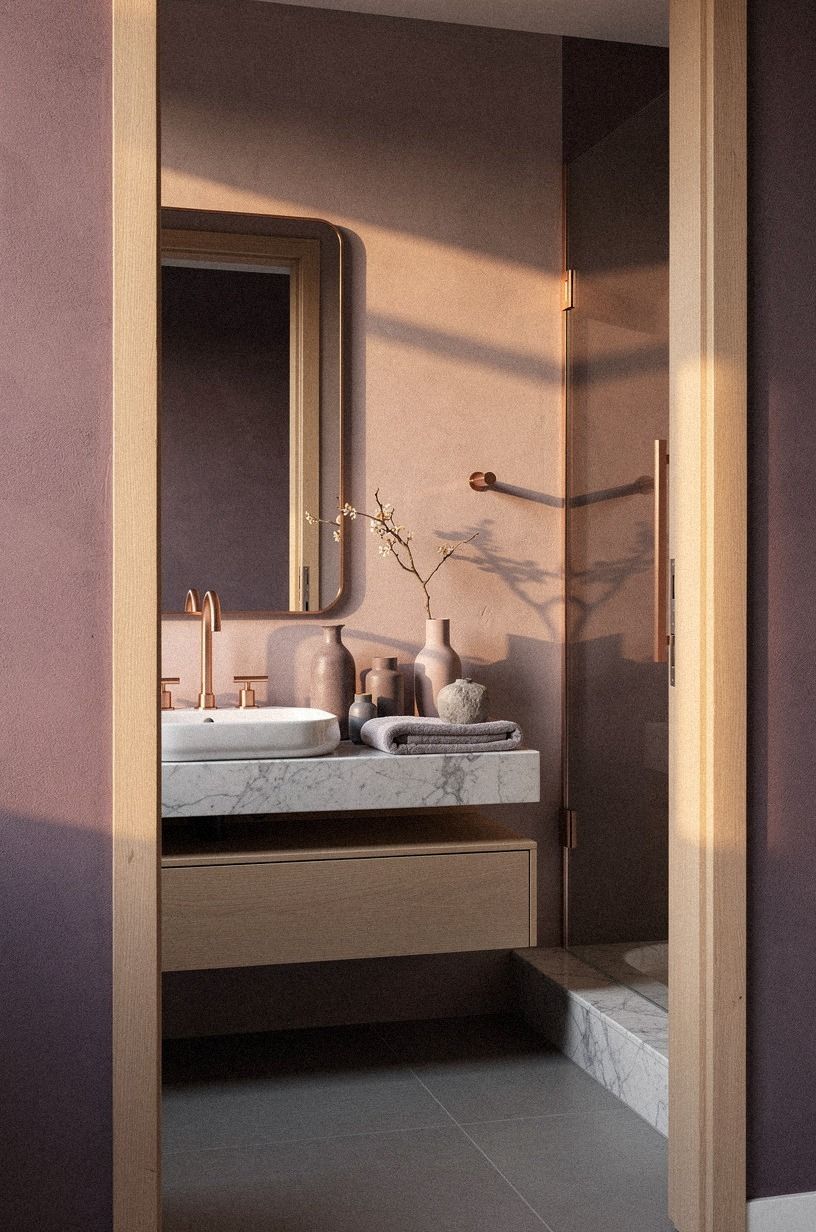
Venetian plaster looks elegant beside Carrara marble with subtle grey veining, especially across a floating vanity. Add plum, grey, and rose-gold accents for a softer, more layered palette without making the bathroom feel ornate.
I’d skip glossy cabinetry here. It reflects every bulb and makes the room feel busier than it needs to be.
Choose a matte vanity with slab fronts, a recessed pull, and a Carrara marble countertop. Your eye should notice the wall first, then discover the veining a second later.
- Honed plaster with cloudy movement. - Carrara marble with subtle grey veining. - A small IKEA GODMORGON vanity if you’re working with a tighter budget.
If you’re comparing plaster with stone, my Japandi travertine bathroom ideas will help you judge the difference. Travertine feels more tactile, while plaster keeps the room airy and visually quiet.
You can also compare the stone-and-wall relationship in these warm travertine bathroom ideas. I’d use that reference when you’re choosing between a soft plaster wall and a more visibly layered surface.
2Float the vanity at 34 inches
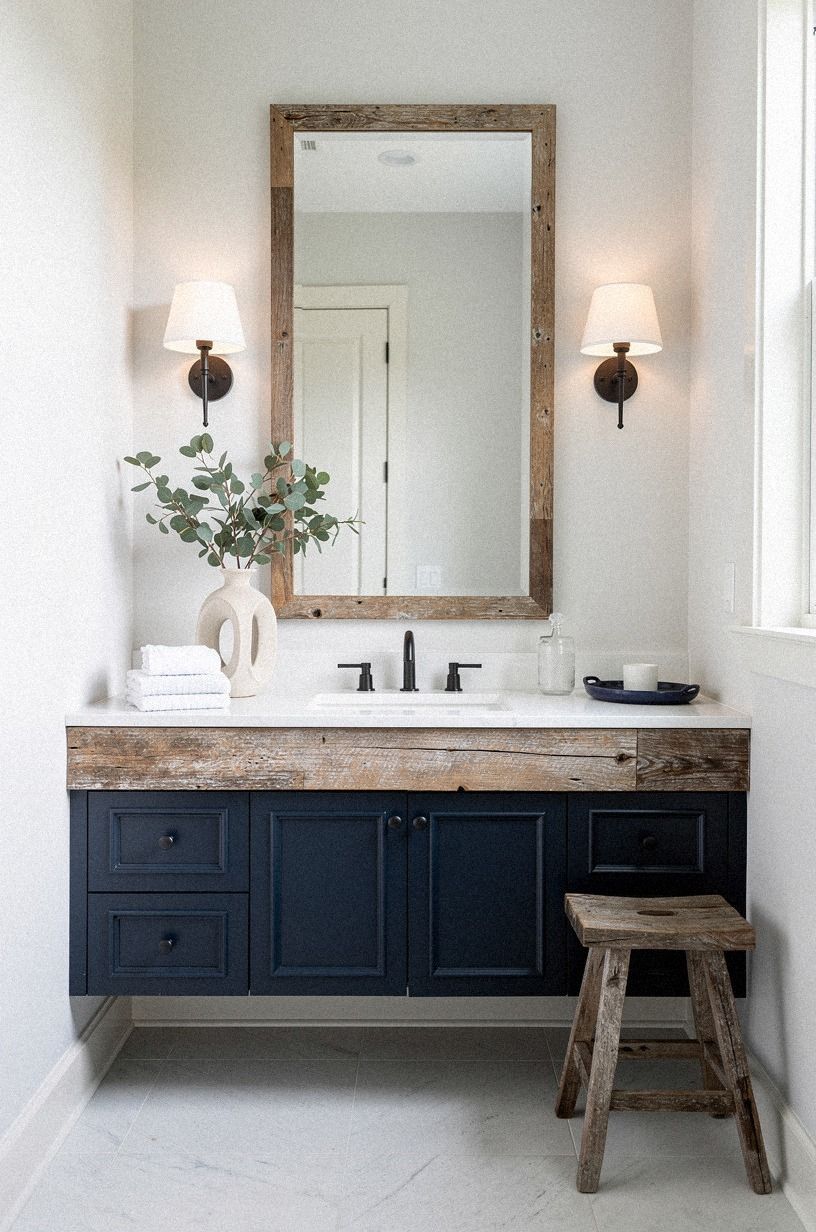
A floating vanity makes a small Japandi powder room feel lighter because the floor continues beneath it. Set the countertop around 32 to 36 inches high, using 34 inches as a comfortable middle point for most adults. You’ll gain a calmer sightline and a little storage underneath for a basket or folded towels.
I learned this the hard way after installing a vanity that sat too low. The basin looked elegant, but my shoulders complained every morning. Your bathroom should feel refined and usable, not like a showroom display.
Choose reclaimed weathered teak or warm walnut, then pair it with a thin white stone top.
The open floor should stay useful. A woven basket, a small stool, or nothing at all will work better than three decorative objects.
If you’re still deciding how much texture the wall needs, read why Venetian plaster makes a bathroom look effortlessly expensive. You’ll see why restraint matters more than adding another finish.
I’d measure the clearance around the vanity before you fall in love with a particular model. Your knees, cabinet doors, and shower entry all need room to work. A wall-mounted faucet can create extra breathing space when the countertop is shallow.
3Which paint works beside warm plaster?
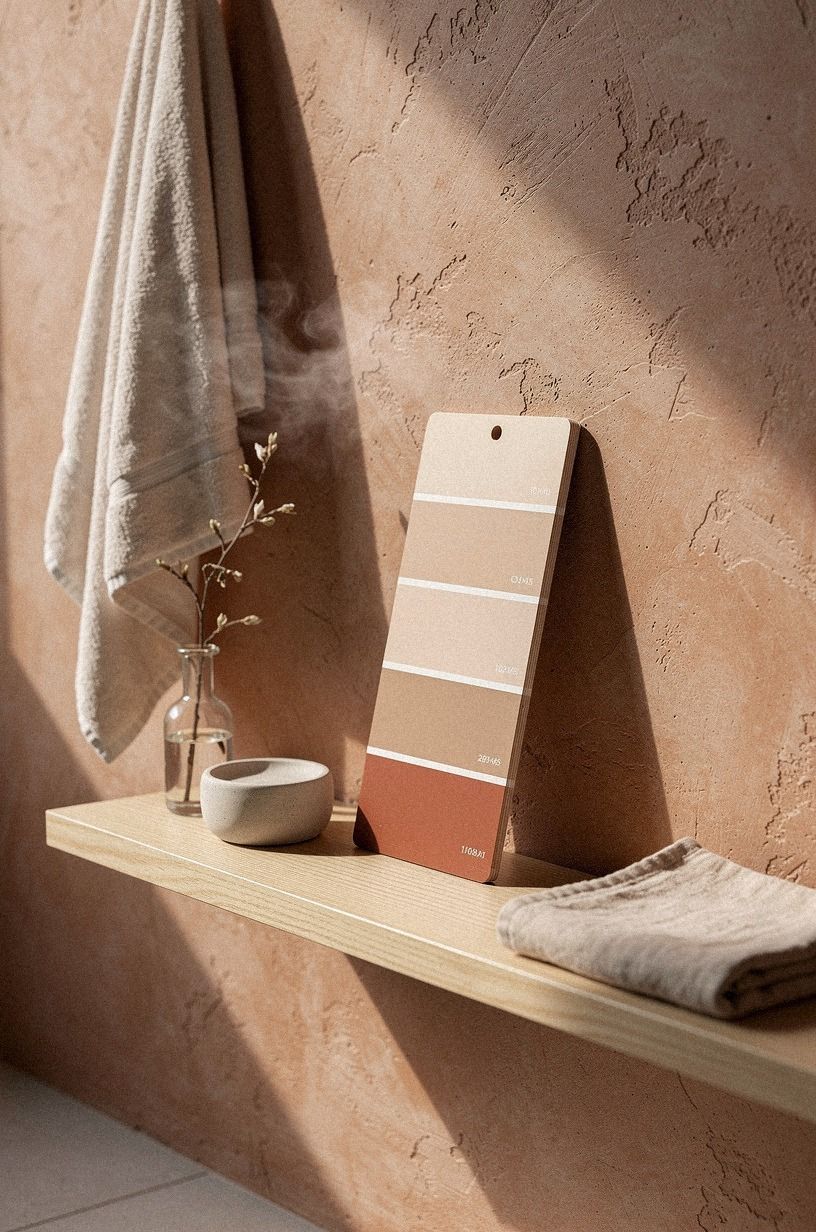
The best paint depends on your daylight, but Benjamin Moore Chestertown Buff HC-9 is my strongest pick beside Calacatta marble with subtle gold veining.
4Build The Three-Height Light Stack
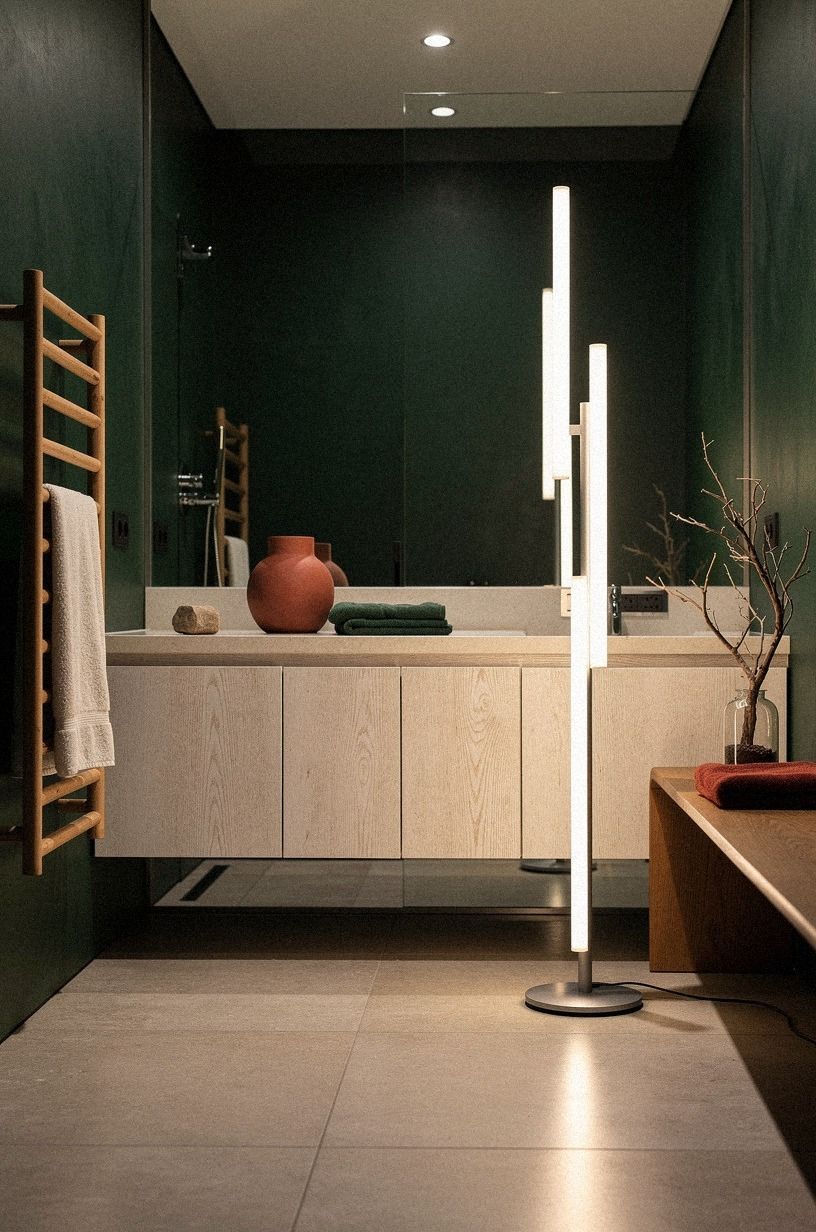
The Three-Height Light Stack uses a ceiling fixture, a mirror-level glow, and a low evening light. You’ll get better function at the sink and a softer atmosphere when the overhead light is off. This matters in a bathroom because one hard bulb can erase all the calming work your plaster is doing.
Start with a dimmable ceiling fixture, then add opal glass sconces beside the mirror. Place the lowest light near a shelf or under the vanity, where it can skim the floor without shining into your eyes. Warm bulbs will keep the room gentle, but don’t make the space so dim that shaving becomes guesswork.
And yes, three lights can sound fussy. It isn’t, if each source has a job. Your morning light should be clear, your evening light should be soft, and your plaster should catch a faint glow across its uneven surface.
Good lighting earns its keep!
You can find another useful lighting reference in these soft luminous plaster bathroom ideas. I’d choose 2700K bulbs for the decorative fixtures and keep the color temperature consistent across the room.
A small night light under the vanity is especially helpful when you’re using the bathroom half-asleep. It gives you enough visibility without forcing your eyes to adjust to a bright ceiling fixture.
5Swap chrome for aged bronze
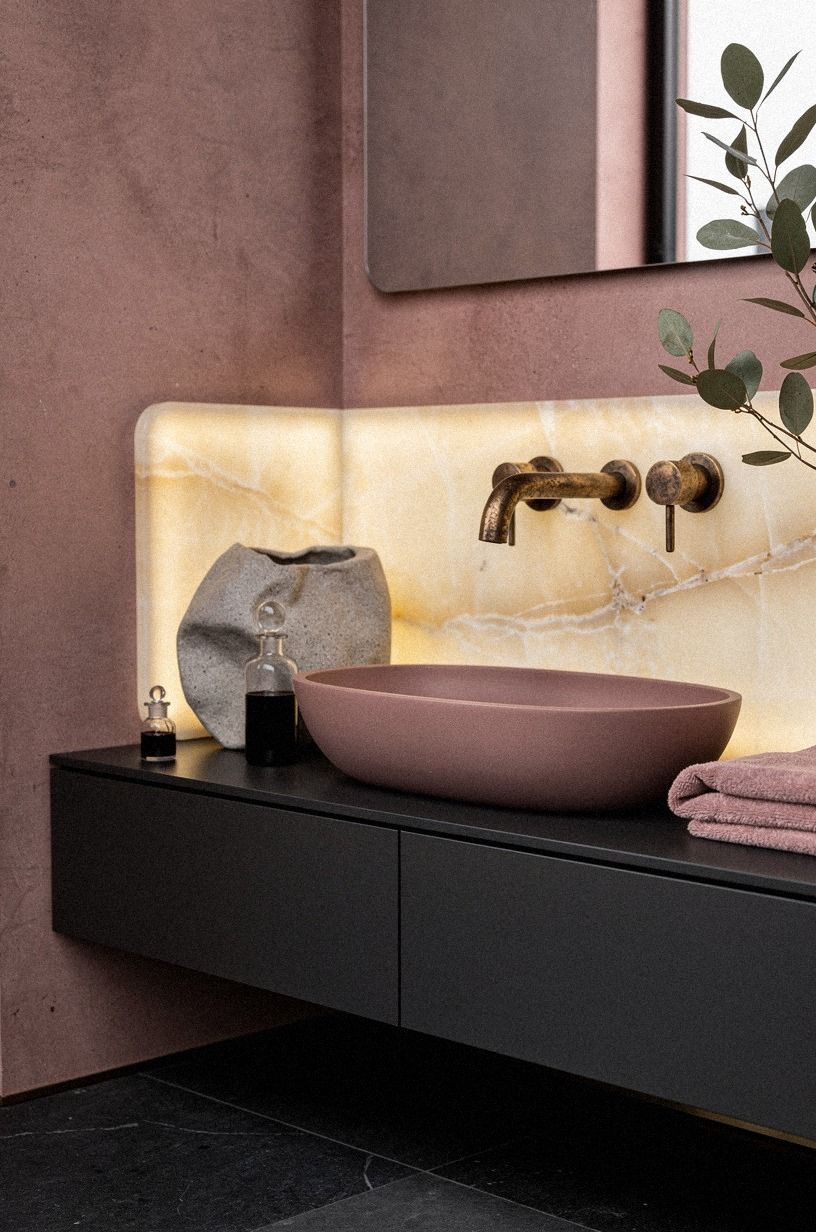
Chrome can look crisp, but it often fights the quiet warmth of a Japandi bathroom. I’d choose brushed brass instead, especially with dusty rose, charcoal, and warm plaster. The metal gives the room definition without pulling attention away from a backlit translucent onyx surface.
You don’t need every fitting to match perfectly. Brass on the faucet, a charcoal mirror edge, and a warm metal towel hook can live together if the shapes stay simple. Your eye will read the finishes as collected rather than coordinated.
I’d skip polished gold. It can make a serene room feel dressed for a hotel lobby, and the shine is hard to soften with plaster.
Choose a minimalist bathroom fixture with a rounded spout and a single lever. That small curve will echo the cloudy movement of the wall.
- Brushed brass faucet. - Charcoal towel rail. - Matte black only where you need a crisp edge.
If you’re tempted by a blushier palette, these pink Venetian plaster bathroom ideas show how warm metal can keep the color grown-up. I’d borrow the restrained hardware approach even if your own walls stay beige.
The practical rule is simple: choose one dominant metal and one small supporting accent. Your bathroom will feel calmer when the finishes repeat quietly instead of competing for attention.
6Frame the mirror with quiet curves
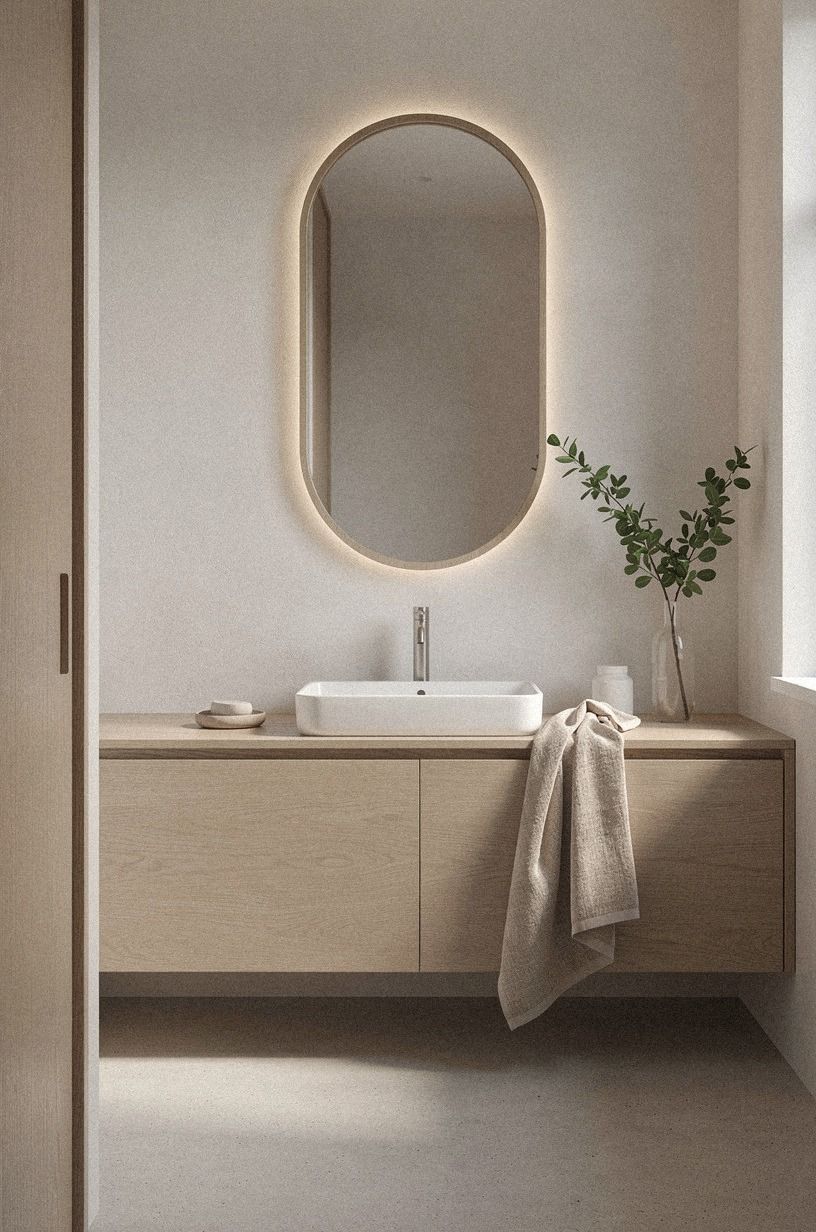
A rounded mirror breaks up the straight lines of a vanity, wall tile, and shower enclosure. Choose a thin book-matched walnut surround if you want warmth, or use a frameless mirror if the plaster already has plenty of movement. You’ll get a softer, more welcoming room without introducing another major color.
The mirror should be wide enough to balance the vanity, but it doesn’t need to fill the whole wall. Leave a little plaster showing around it so the surface still reads as a feature. I once installed a mirror that was too large, and the plaster disappeared from the composition entirely.
But don’t make the curve overly decorative. Your goal is a calm silhouette, not a vintage powder room.
A rounded rectangle can feel more modern than a perfect circle, particularly above a 36-inch vanity. For another warm direction, see these pink Venetian plaster bathroom ideas, where curved shapes keep the color from feeling sugary.
I’d hang the mirror so its center sits close to eye level for the main users. If you’re tall or sharing the bathroom with someone shorter, a wider shape can solve the compromise more gracefully than an unusually high installation.
A thin walnut surround also gives you warmth without turning the mirror into the room’s focal point. Let the wall carry most of the texture.
7Use The Two-Wood Rule for warmth
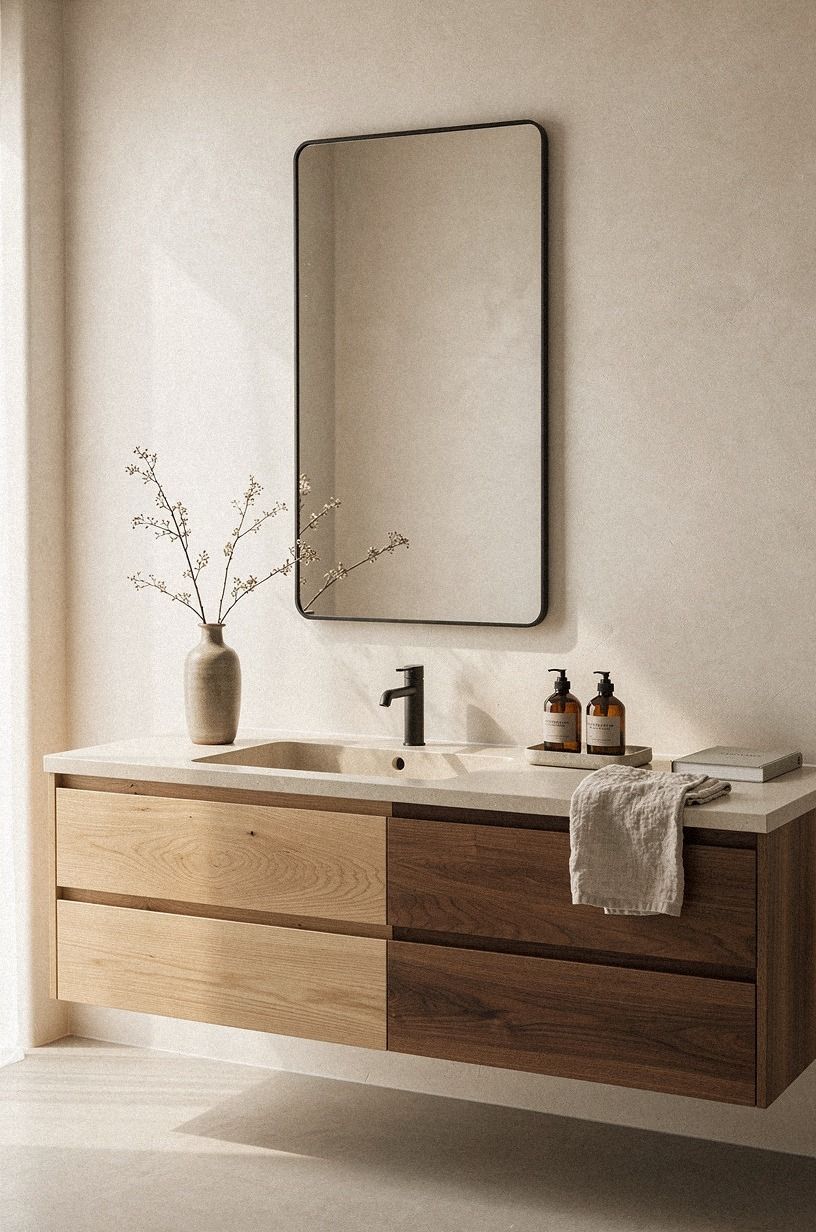
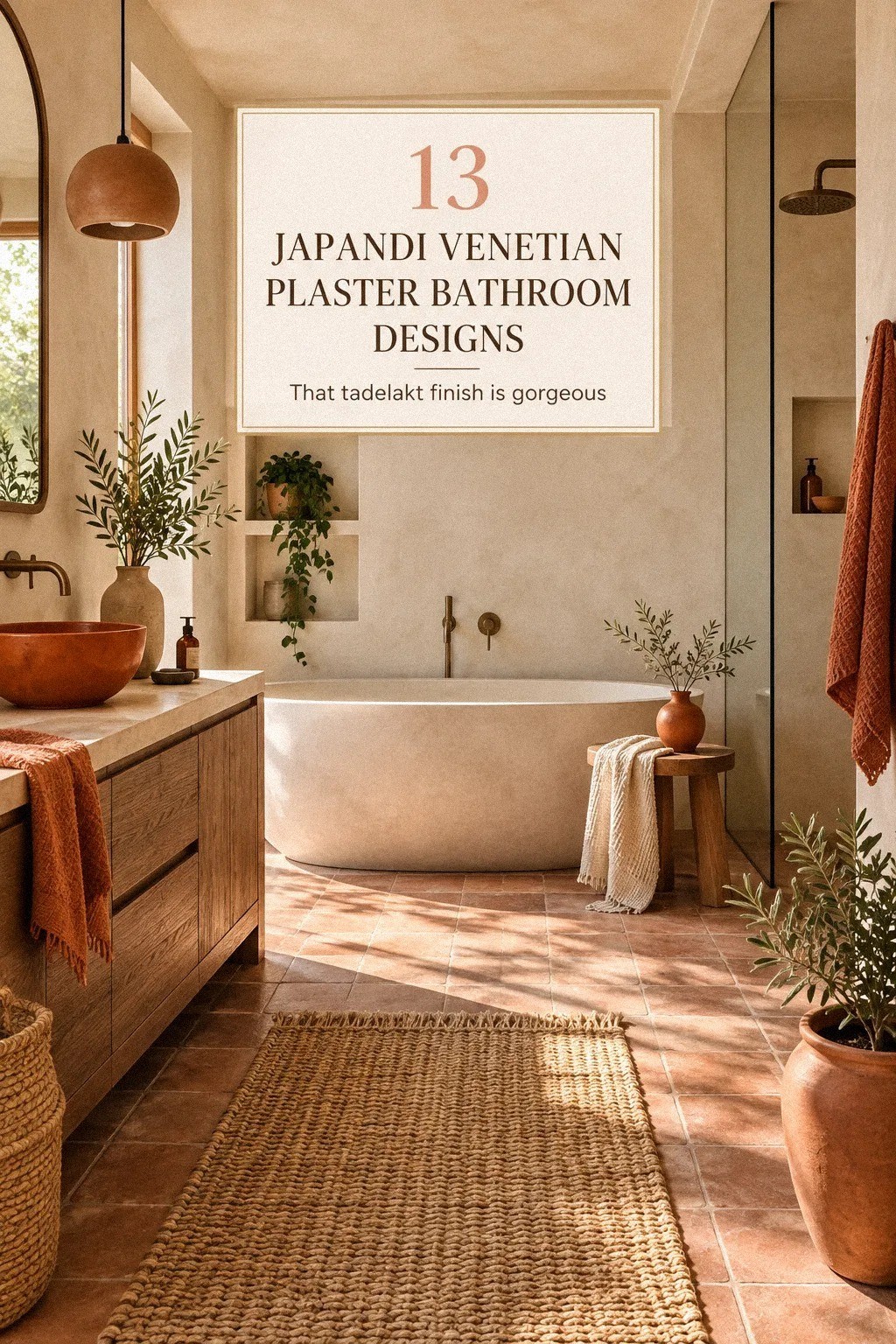
The Two-Wood Rule keeps your Japandi bathroom from becoming visually muddy. Pair one clear wood tone with warm travertine, then use midnight blue, copper, and ivory as controlled accents.
8Anchor the shower at 36 by 36 inches
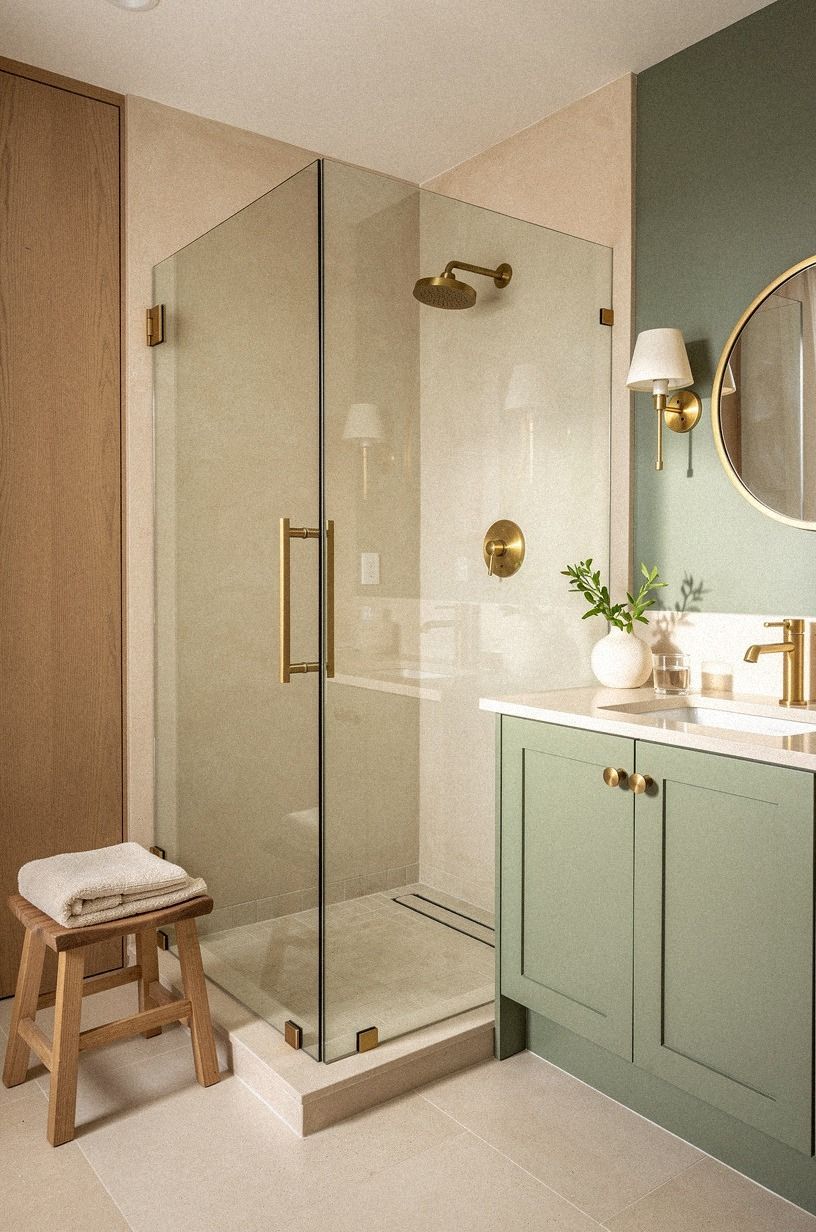
A comfortable shower needs at least 36 by 36 inches when the layout allows it. That footprint gives your body room to move without making the enclosure dominate the bathroom. You’ll want the plaster outside the wet zone, with a properly sealed surface or a compatible tile system inside the shower.
I prefer unlacquered brass hardware with sage green, warm cream, and natural wood. The metal will develop a gentle patina, giving the shower area character without introducing another loud finish.
Don’t use a busy mosaic here. It creates too many small lines beside the cloudy wall.
Your niche should be practical, not crowded. One shelf for soap and shampoo is enough for most people.
If you’re planning a full wet-room change, these Mediterranean Venetian plaster bathroom ideas offer useful texture references. Japandi is more restrained, but it still needs a material moment to keep the shower from feeling blank.
- 36 by 36 inches minimum for a comfortable shower. - Unlacquered brass fixtures that can develop patina. - One recessed niche with a slight slope for drainage.
I’d use a clear frameless enclosure when the bathroom is compact. It protects the plaster visually because your eye can continue across the room without meeting a heavy black edge.
Make waterproofing your first conversation with the contractor. You can save on decorative details later, but a poorly planned shower will affect every other choice you make.
9Hang Belgian flax linen near the sink
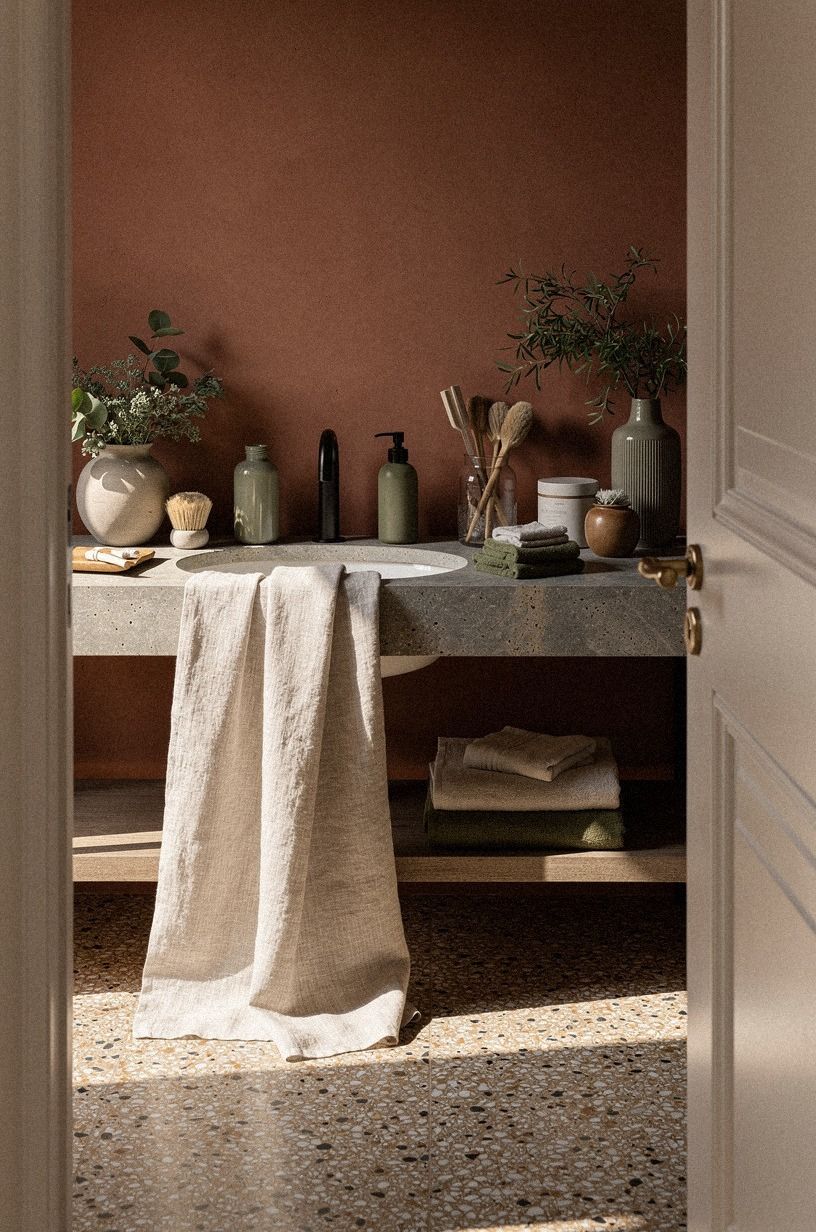
An oversized-chip terrazzo sink surround gives the area a tactile base beside the plaster wall. Its terracotta, stone, and olive chips bring gentle variation without adding a busy pattern.
Choose towels in oatmeal, faded sage, or warm white. Your palette should feel gentle, but it doesn’t need to be colorless.
A muted green towel can connect the bathroom to plants, painted cabinetry, or a view outside. I’d avoid stark white towels if your plaster is beige because the contrast can make the wall look dull.
But don’t fill every hook. One hand towel, one bath towel, and a small washable mat will usually be enough.
The floor should remain visible so the room keeps its airy quality. For a softer palette, explore these Venetian plaster bathroom ideas for a serene organic modern look. You’ll see how fabric can make minimalism feel lived-in.
I’d choose stonewashed linen when you want the room to feel relaxed and waffle cotton when you need a little more absorbency. Your towels can be useful and beautiful at the same time.
A small hook placed within easy reach of the sink will make the room feel more considerate. That detail matters when you’re using the bathroom every day, not just arranging it.
10Price the plaster before you choose the finish
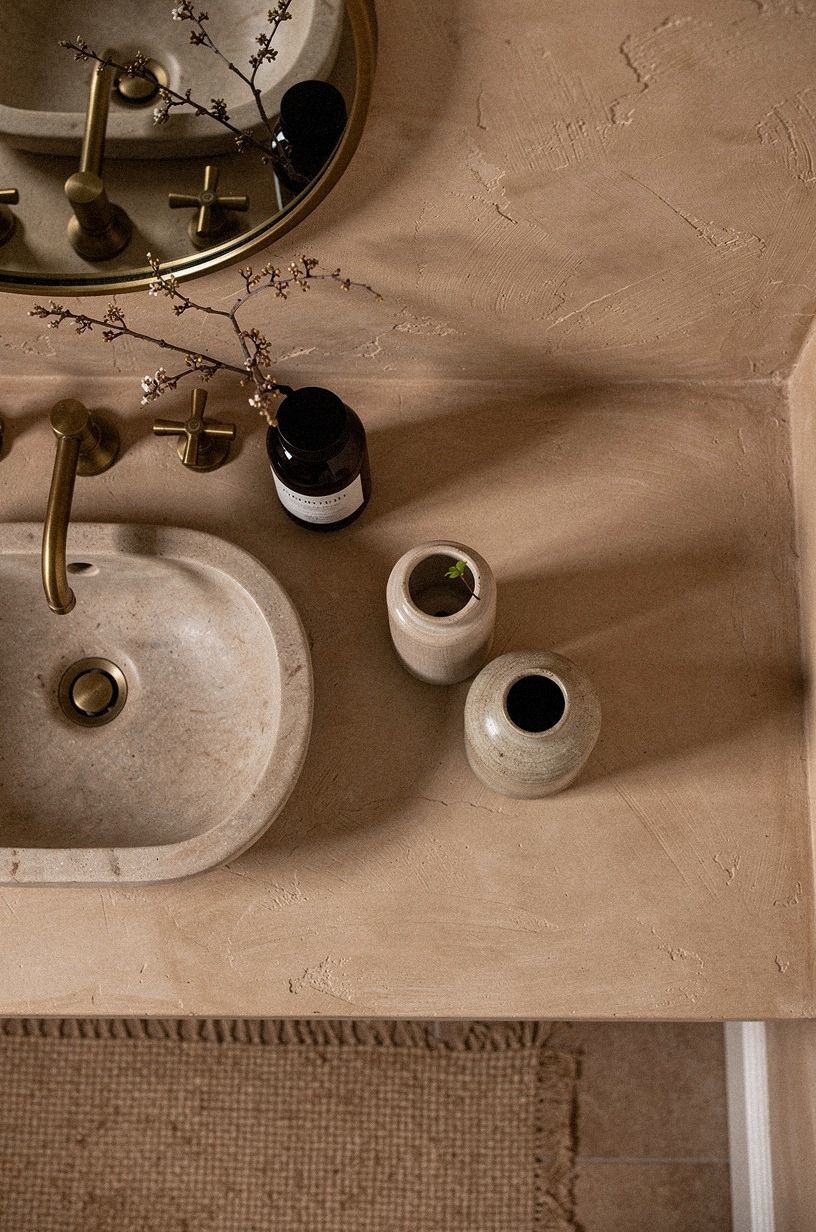
A Japandi bathroom can stay modest if you’re changing paint, textiles, a mirror, and a faucet. A full renovation is a different project, particularly if you’re moving plumbing or rebuilding the shower. Your first step should be deciding whether the plaster is a surface refresh or part of a larger construction plan.
The typical US ranges below give you a useful starting point. They’re broad because bathroom size, labor, tile choice, and plumbing access can shift the total quickly. I’d spend first on waterproofing and lighting, then on decorative upgrades.
A gorgeous wall won’t rescue a badly planned shower.
If you’re working within the budget tier, keep the existing vanity and focus on the mirror, lighting, and wall color. A brushed brass faucet can change the sink zone quickly, while a linen towel and a warm bulb can shift the mood for less. You’ll get more impact from five deliberate changes than from fifteen small purchases.
If you’re weighing the full cost of a decorative finish, compare the practical details in this Venetian plaster renovation guide. The finish is worth considering, but only when the surface preparation is sound.
You can also use these white beige Venetian plaster bathroom ideas to separate the visual goal from the renovation budget. I’d rather see a smaller area finished beautifully than a whole room covered in a rushed application.
Ask for a written allowance for trim, primer, sealing, and surface repair. Those small line items can change your total more than the plaster itself.
11Paint the ceiling with The Quiet Ceiling Rule
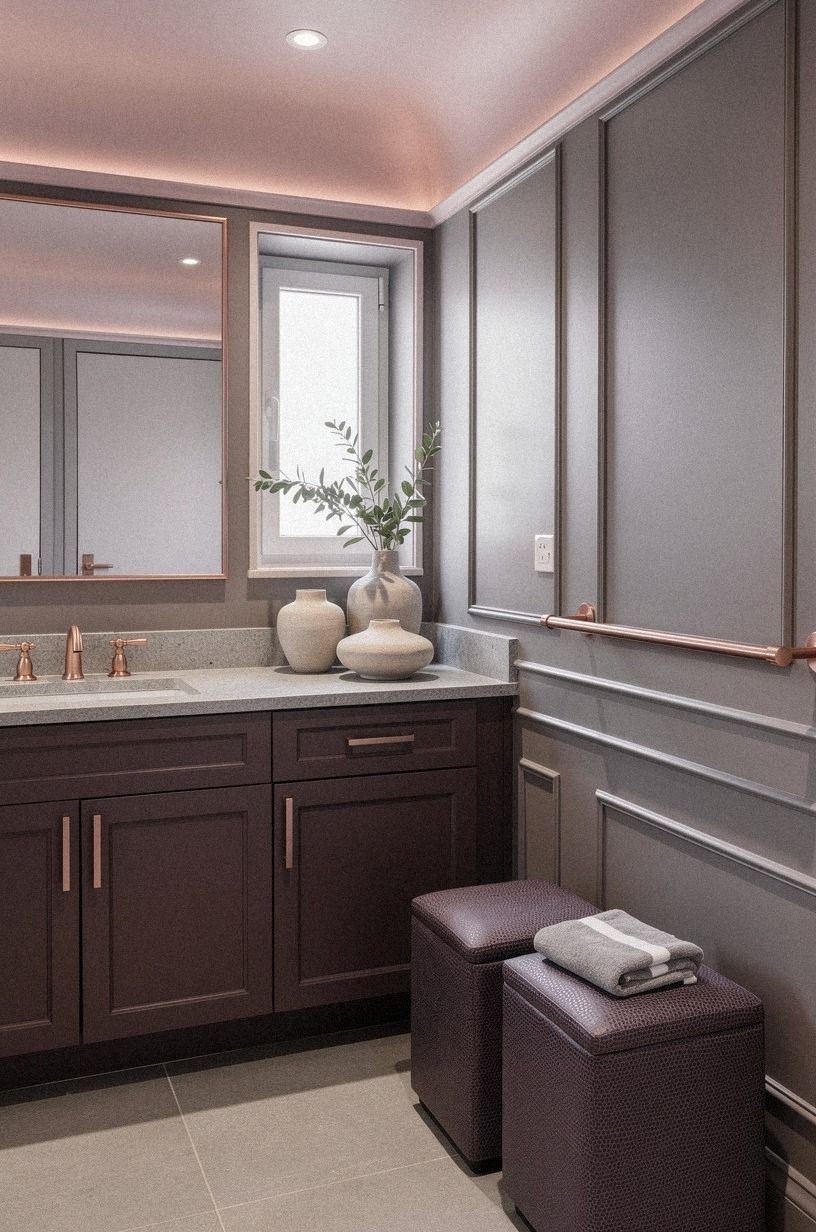
The Quiet Ceiling Rule is simple: your ceiling should support the plaster, not compete with it. A muted plum ceiling can work with grey and rose-gold accents when the rest of the room stays restrained.
12Choose plaster over busy pattern
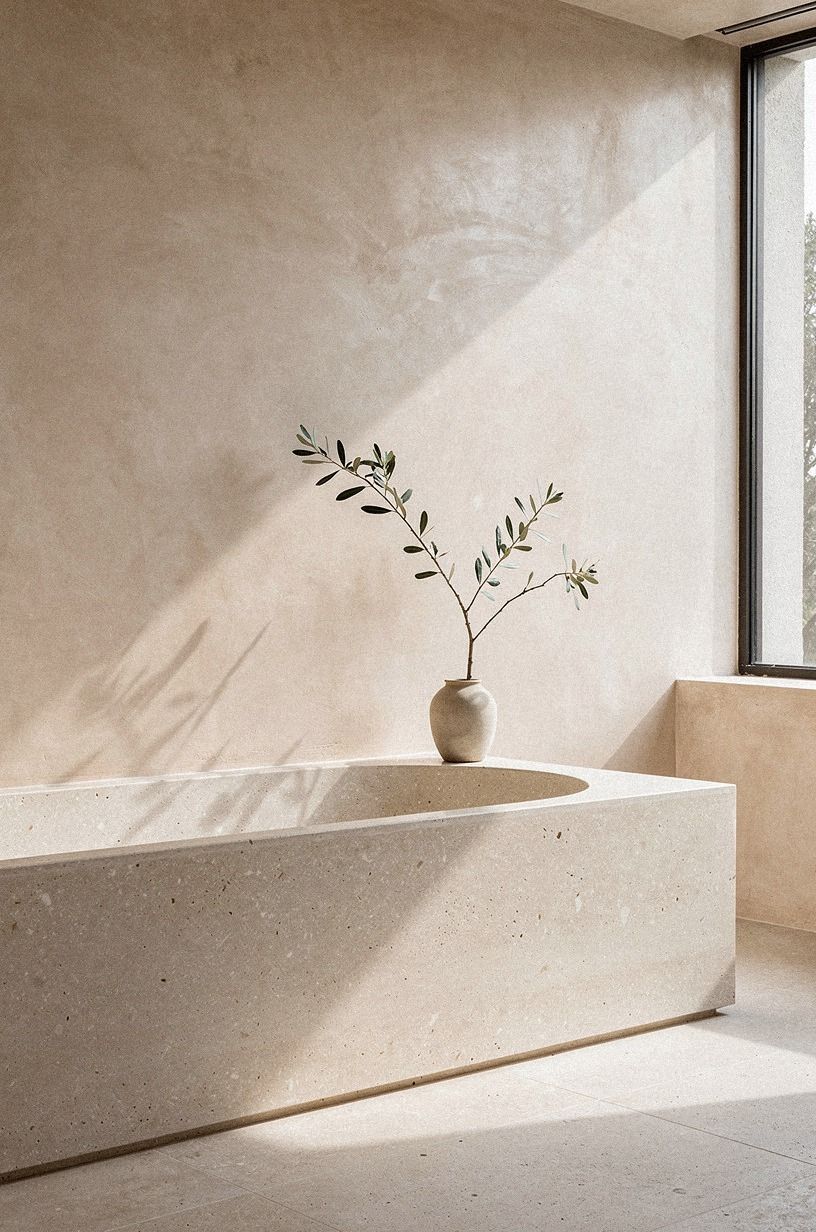
If you’re deciding between a patterned wallpaper look and Venetian plaster, choose plaster when your bathroom already has several functional elements in view. The wall texture gives you movement without adding a repeated motif. Your eye can rest, which is the whole point of warm minimalism.
A folded washed Belgian linen textile will add enough natural variation beside a smooth plaster wall. Pair it with one ceramic vessel, a folded towel, and a small branch if you want a little life.
I’d skip a crowded gallery wall. Steam, splash, and narrow clearances make decorative groupings look fussy fast.
You’ll still need contrast. Use a dark faucet, a walnut stool, or a deep navy paint sample on one small surface.
The room shouldn’t become beige from floor to ceiling. Every strong note should have a reason, such as defining the vanity or grounding the shower.
For more ideas on combining quiet plaster with natural stone, visit these Japandi travertine bathroom ideas for warm minimalism. The same balance works beautifully in a compact ensuite.
When you’re unsure, remove one pattern before adding another object. You’ll often discover that the room needs editing, not more styling.
A deep navy accent can work beautifully here, especially on a small stool or artwork. Keep it concentrated so the color feels intentional.
13Style the japandi powder room with three useful objects
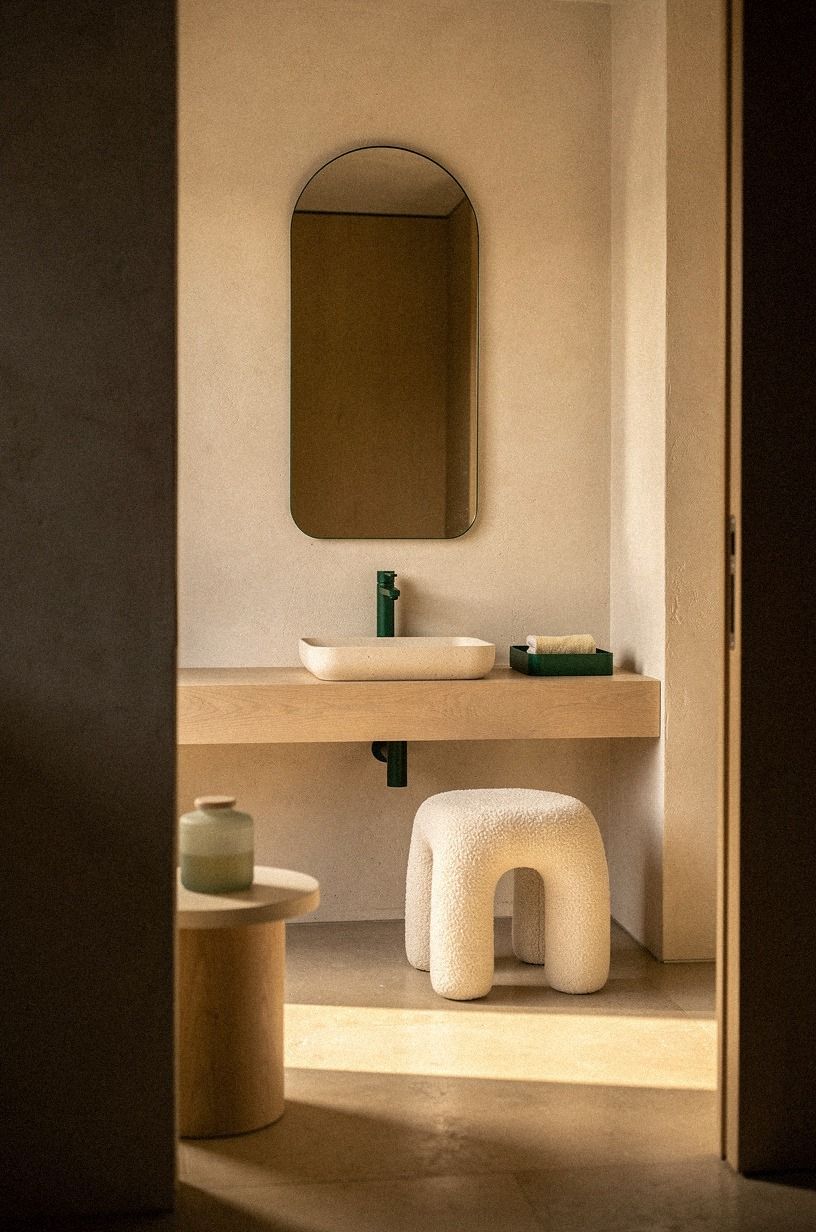
A small Japandi powder room doesn’t need a shelf full of styling pieces. Choose an organic bouclé stool, a folded hand towel, and one low bowl. That combination makes the sink feel finished without turning it into a display.
Your objects should vary in height and texture. Use a low stone bowl, a taller amber bottle, and the bouclé stool nearby.
That arrangement gives you a calming little rhythm, but it still leaves the counter clear enough for daily use. I’d rather see one good handmade cup than six matching accessories.
And if you’re styling a guest bathroom, add a small hook near the door and keep spare towels within reach. The most inviting rooms anticipate what you’ll need. A matte clay vessel can hold a single eucalyptus stem, but don’t force greenery into a room with no natural light.
- Low bowl in honed stone. - One amber glass soap bottle. - Organic bouclé stool in a warm neutral.
You can find more tonal references in these white beige Venetian plaster bathroom ideas for quiet calm. Keep your final layer sparse enough that the wall still gets the last word.
I’d put the tallest object closest to the wall and the softest object nearest the user. Your counter will feel arranged without becoming precious.
For a slightly more tactile finish, compare the room with these serene organic plaster bathroom ideas. The best examples leave enough empty space for the materials to breathe.
Why This Finish Works Better Than a Perfectly Matched Bathroom
I’ve come around to Venetian plaster because it gives a bathroom something most polished renovations lose: visual silence with a pulse underneath. The surface isn’t flat, but it isn’t loud either. Light moves across it in soft patches, and the wall changes from morning to evening without needing another decoration.
My first plaster experiment was too cool and too smooth. I wanted the cleanest finish possible, so I sanded away the movement that made the material interesting.
It looked expensive and strangely empty in person. Now I prefer a little variation, especially around a mirror where the light can reveal the hand of the finish.
I also think Japandi bathrooms need one imperfect note. Maybe it’s an uneven ceramic cup, a walnut stool with visible grain, or linen that won’t stay pressed.
If every surface matches, your bathroom starts to feel staged. A warm room needs evidence that someone uses it, even when the palette is refined.
The practical decision is straightforward. Use plaster where you want softness and visual continuity, tile where water exposure demands a durable envelope, and wood where you need warmth.
You don’t have to choose one material for every wall. That mixed approach is more comfortable, more forgiving, and easier to live with.
If you’re still unsure, start with the wall that receives the best natural light. Test the plaster tone there, place a wood sample beside it, and watch both for a full day. Your bathroom will tell you more than a tiny digital color chip ever could.
That’s the calm part of the process, and it’s worth taking seriously!
You can also compare the finish with this limewash bathroom guide if you’re deciding how much movement you want. I’d choose plaster for a more layered surface and limewash for a lighter, chalkier effect.
What People Always Want to Know
What is the best Japandi Venetian Plaster Bathroom Ideas for Warm Minimalism for a small bathroom?
A floating IKEA KALLAX-inspired wood vanity and warm beige plaster are strong choices because they keep the floor visible and the palette soft. You’ll get more space visually with a rounded mirror, one light textile, and minimal hardware. Avoid dark grout lines if your room is narrow.
Where can I buy Japandi Venetian Plaster Bathroom Ideas for Warm Minimalism pieces on a budget?
Look at IKEA, Wayfair, and Target for simple vanities, mirrors, and textiles, then check Facebook Marketplace or local thrift shops for stools and ceramic pieces. You’ll find better character in second-hand wood than in a matched set. This site uses display advertising, not commission links.
How much does a Japandi Venetian Plaster Bathroom Ideas for Warm Minimalism makeover cost?
A cosmetic refresh typically falls between $200 and $1,200 in the US range shown above. Paint, a mirror, faucet, and textiles can change the room without moving plumbing. A new vanity, partial tile, and lighting usually move the project into the $3,000 to $9,000 mid-range tier.
Can I create a Japandi Venetian Plaster Bathroom Ideas for Warm Minimalism on a budget?
Yes, and you can start with the changes your eye notices first: warm paint, softer bulbs, and one natural textile. Reuse your vanity, sand a wood stool, and swap the mirror before considering new tile. You’ll create a calming room without rebuilding the entire bathroom.
Is a Japandi Venetian Plaster Bathroom Ideas for Warm Minimalism worth it in a small space?
Yes, because a small room gives the plaster more impact and needs fewer materials. Keep the vanity shallow, preserve clear floor space, and use one large mirror rather than several small pieces. Your plaster will feel more intentional when the room isn’t crowded with storage and décor.
Is Japandi Venetian Plaster Bathroom Ideas for Warm Minimalism a good idea for a rental?
Yes, with removable changes. Use peel-and-stick wall color where permitted, a tension rod for linen, a removable mirror, and freestanding storage.
You’ll need landlord approval for anything involving plumbing or permanent plaster. Focus on lighting, textiles, and wood accessories you can take with you.
If you’re collecting material references before you decide, these warm travertine bathroom ideas can help you compare visible stone texture with quieter plaster.
Where I’d Start First
If I had to pick one, I’d start with the floating pale oak vanity. It leaves the floor visible, gives the plaster a warm counterpoint, and fixes the room’s scale before décor enters. Pin the idea for later and compare it with our soft luminous plaster bathroom guide before you buy anything.
Then I’d choose the light temperature, test the wall color, and live with the samples for a full day. Your bathroom will tell you which materials belong together. Start there!