

 by
by Renter-friendly floor upgrades can make a cold room feel warmer without permanent adhesive, nails, or a renovation bill. I learned that after one peel-and-stick experiment left a gummy outline by the door. The cleaner route is layered: textiles, floating surfaces, smart furniture placement, and removable color. Your landlord won't see the process. They'll see the clean floor.
- Layer a floating rug grid for renter-friendly flooring
- Roll out a removable vinyl runner with the Two-Lane Rule
- Float interlocking floor tiles where water lands
- Build the Three-Height Light Stack over a tired floor
- Swap wall-to-wall carpet anxiety for a washable runner
- Anchor furniture with the Overlap Before Object rule
- Paint a removable floor cloth with a measured border
- Frame the entry with a washable landing strip
- Float a modular carpet tile island for temporary flooring
- Mix wood tones with the Two-Wood Rule
- Hang art low enough to connect wall and floor
- Create a soft floor landing with a layered bedroom rug
1Layer a floating rug grid for renter-friendly flooring
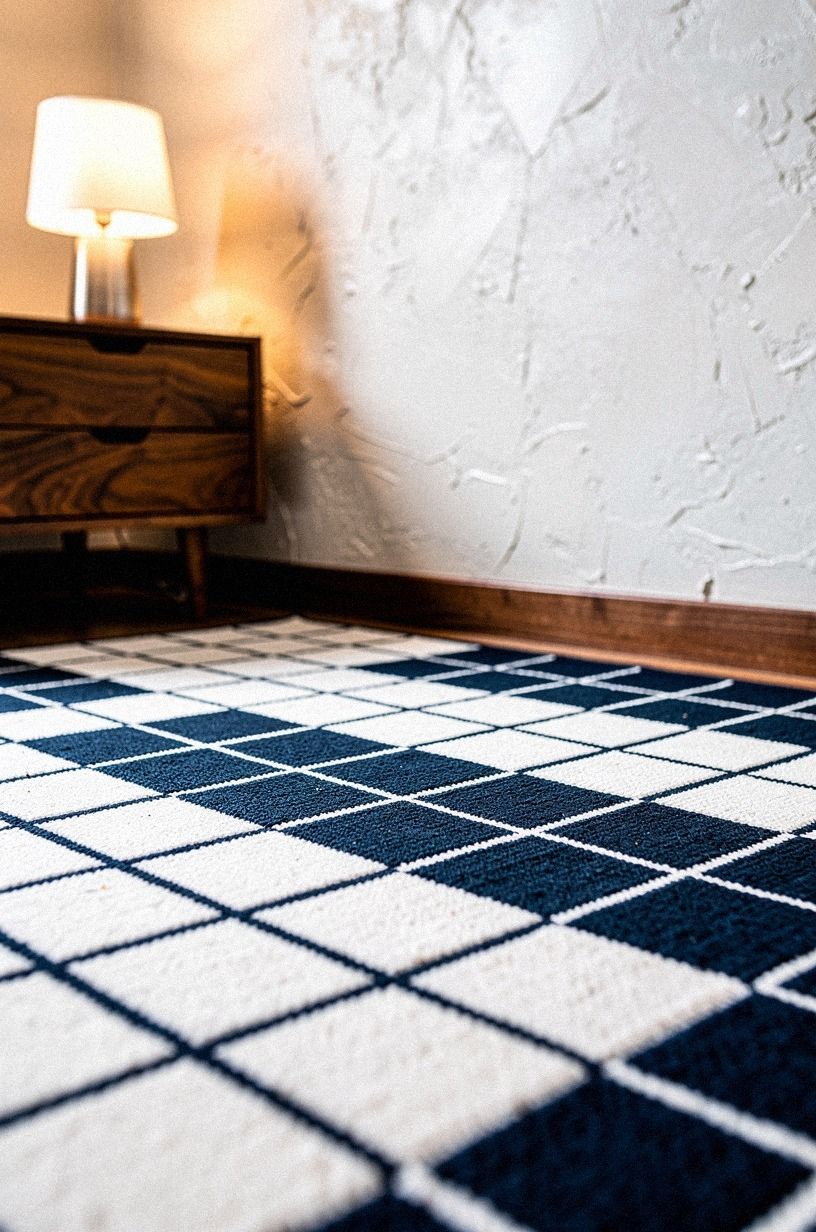
A large rug is the fastest way to change how your floor feels underfoot, especially when you're covering dull laminate or scratched rental hardwood. Choose a flatwoven wool rug with enough room for your sofa's front legs to overlap it. That overlap makes the seating area feel anchored instead of dropped onto the floor like a waiting-room display.
You don't need a complicated pattern. A navy-and-white geometric weave with walnut-toned furniture can make the whole room feel grounded, inviting, and quietly dramatic.
If the walls have hand-applied Venetian plaster, its soft variation works beautifully with the rug's flatter texture. I prefer a rug with a little visual noise because it hides crumbs and tiny marks better than a solid cream field.
Your rug pad matters, too. Pick a low-profile pad with a breathable, non-staining surface that grips without bonding to the floor.
Before placing it, vacuum the floor and photograph the existing finish. That record is useful if a landlord later questions a faint color shift.
For a smaller room, layer a washable runner over a larger natural-fiber base. You'll get texture without committing to wall-to-wall coverage, and you can roll both pieces away when you leave. A narrow, flatweave cotton runner can also define a practical path between the sofa and kitchen.
Keep the rug grid simple. One large anchor, one smaller practical layer, and enough exposed flooring around the edges usually creates a relaxed, polished room. Too many little rugs can make the floor feel busy and reduce the usable walking area.
For more no-damage ideas around the rest of your rental, see these renter-friendly wallpaper ideas that peel off clean. The same principle applies here: choose pieces that can be lifted, inspected, cleaned, and packed.
2Roll out a removable vinyl runner with the Two-Lane Rule
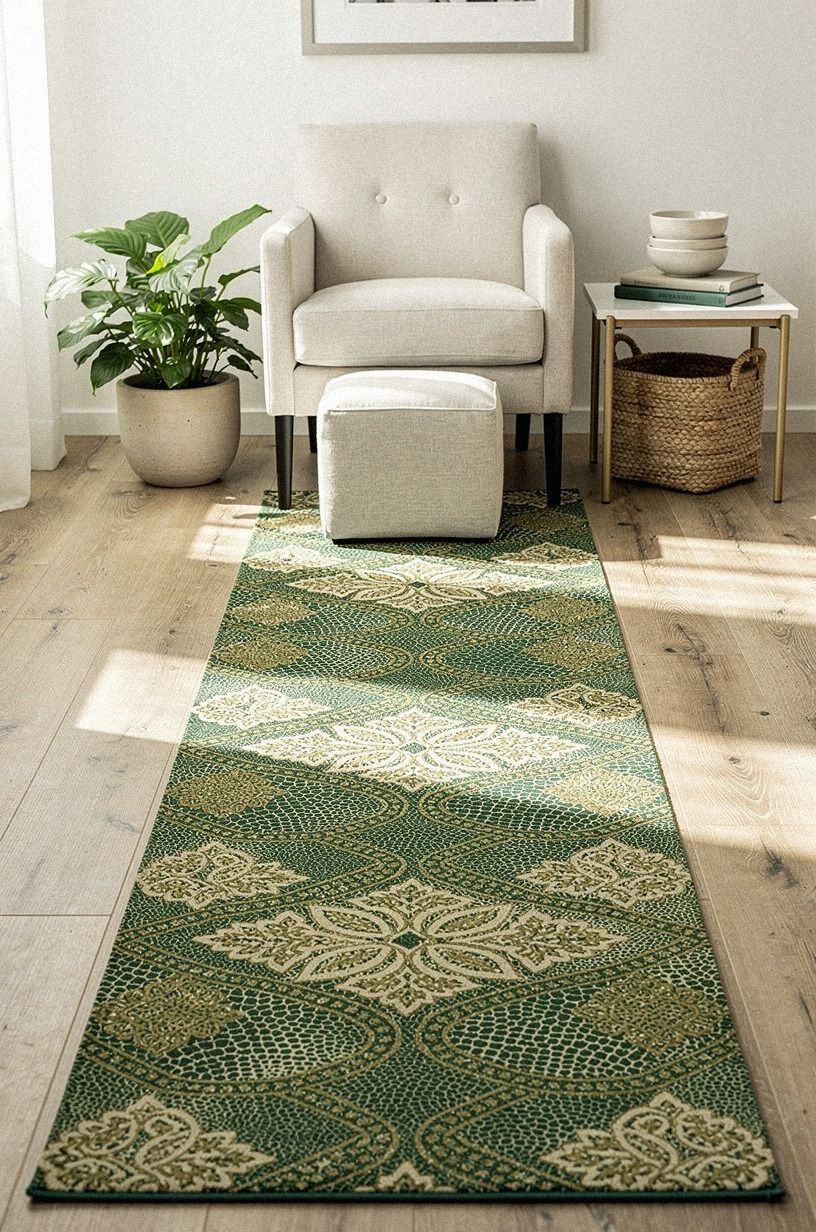
Temporary flooring for renters works best in narrow zones where you need protection and personality, not across an entire apartment. A removable vinyl runner in a small entry or galley kitchen gives you a washable surface while keeping the original floor visible at the edges.
I call this the Two-Lane Rule: one visual lane for the practical path, one lane for the original floor. Keep the runner centered, and leave enough exposed flooring that doors, baseboards, and transitions remain easy to inspect. You want your upgrade to look intentional, not like you've taped down a temporary fix.
Measure the door swing before buying anything. A runner that's too thick can catch beneath a door and curl at the corners. In a rental kitchen, a low profile matters more than a dramatic pattern.
A faded checkerboard can feel cheerful, while an emerald, gold, and cream pattern looks richer without becoming loud. Avoid glossy surfaces if the entry gets wet. They can become slippery, particularly beneath muddy shoes or a dripping umbrella.
And don't use aggressive adhesive beneath it. A non-slip pad with a breathable surface is the better choice for your floor and your security deposit. Lift the runner every few weeks to check for trapped grit, moisture, or discoloration.
If your kitchen needs more than a runner, pair it with these cheap renter-friendly kitchen upgrades to do in one weekend. Your room will feel more polished without turning a rental into a construction site.
A centered runner can also make a narrow room feel longer. Leave a slim, consistent margin on each side, and repeat one color from the runner in a nearby towel, shagreen stool, or piece of wall art. That small repetition feels deliberate and surprisingly elegant.
3Float interlocking floor tiles where water lands
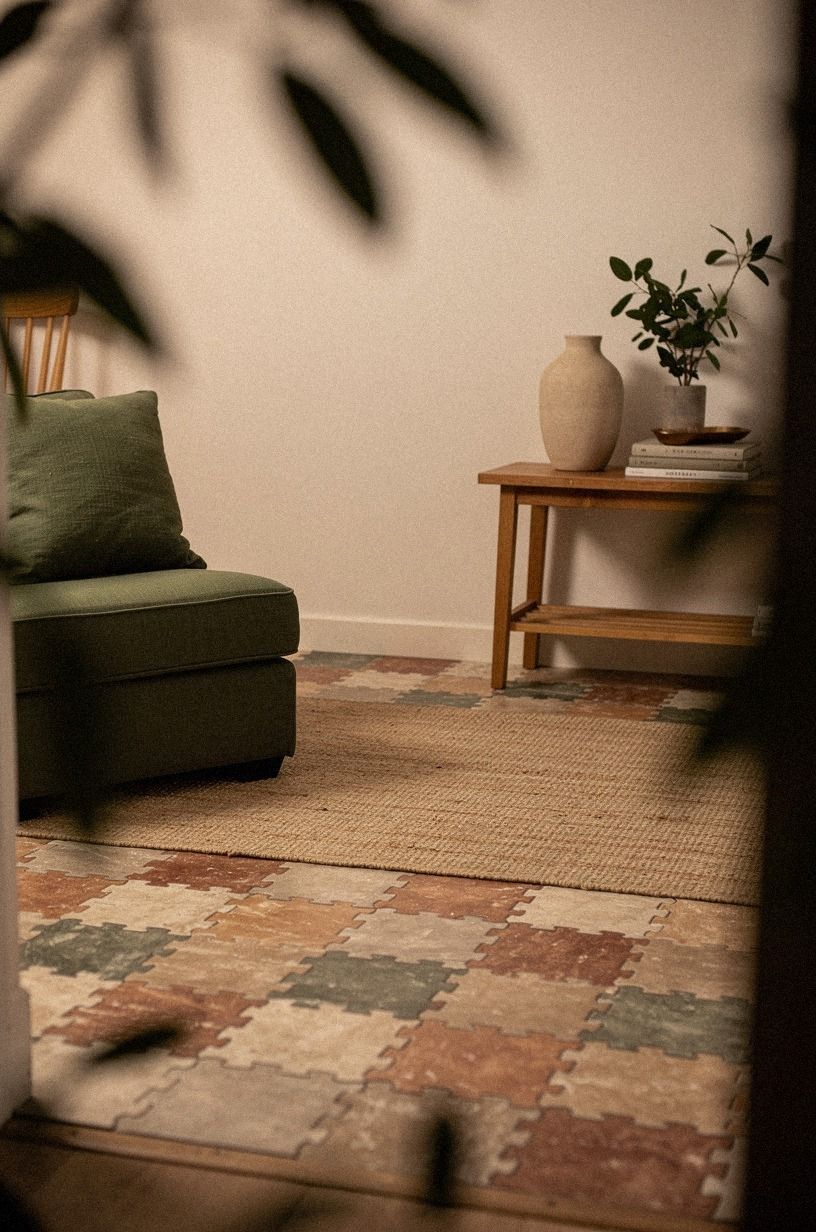
Interlocking cork-look floor tiles can create a warm landing zone in front of a sink, laundry closet, or balcony door. They work especially well where a textile would absorb too much moisture or slide around during daily use.
Choose tiles that connect mechanically or sit inside a stable floating frame. The floor beneath should be clean, dry, and reasonably level. Sweep carefully first, because one pebble beneath a tile can create a stubborn bump.
I like cork-look surfaces because they soften a hard rental floor visually without pretending to be permanent flooring. A forest green, rust, and natural oak palette feels grounded and quietly tactile. A washed Belgian linen towel or runner nearby can soften the harder tile surface without competing with it.
Leave a small perimeter around the installation. That gap gives you room to lift the tiles, inspect the original surface, and clean along the baseboards. It also prevents the arrangement from pressing tightly against walls as temperatures change.
Use this method for a compact landing zone rather than a full-room treatment. A floating square in front of the laundry area can look deliberate, while an entire apartment covered in loose tiles may become awkward around furniture and doors.
Test the underside in an unseen spot first. Some rubberized backings can react badly with finished floors, especially when heat and moisture are present. If the backing feels tacky after removal, stop using it.
For additional practical changes, see these cheap renter-friendly bathroom floor ideas under $100. The same caution applies around bathrooms: ventilation and regular inspection matter.
4Build the Three-Height Light Stack over a tired floor
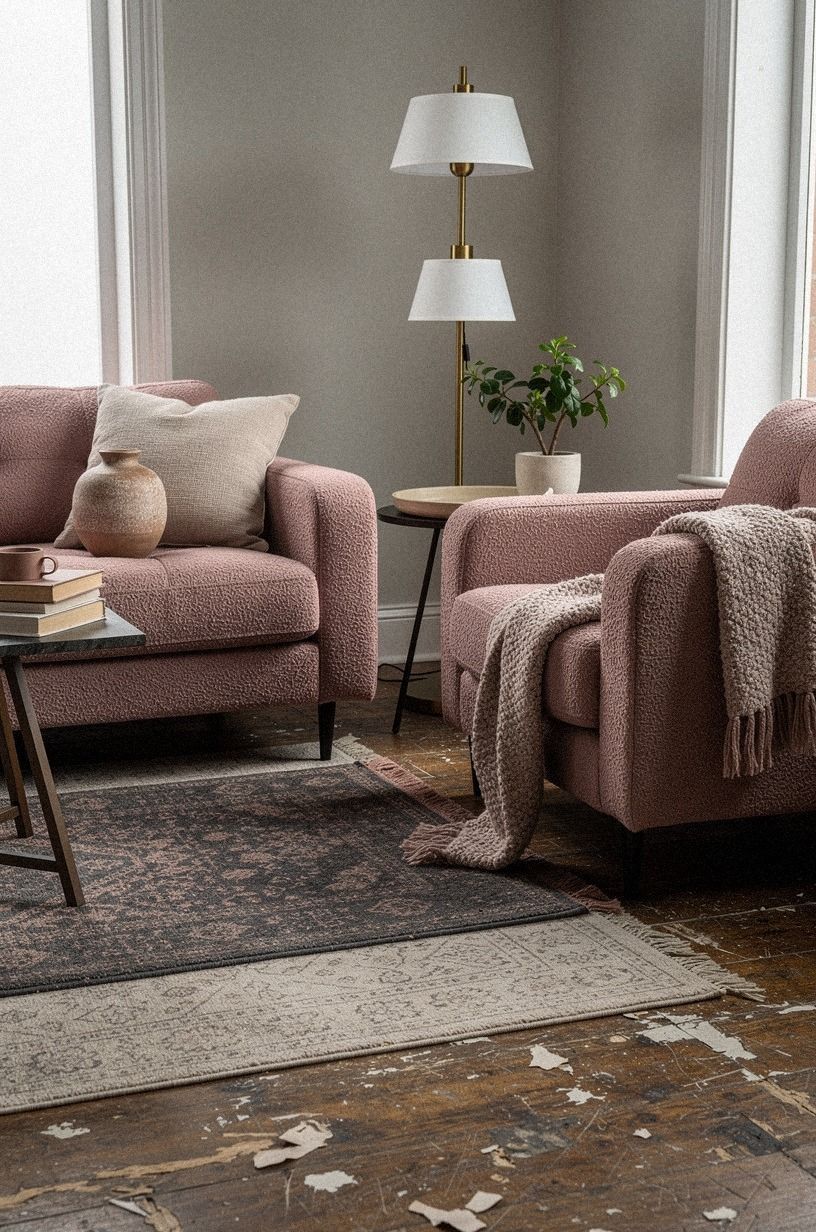
Some floor problems are really light problems. A dark rental floor can look heavy because one ceiling fixture throws a hard pool of brightness in the center while the corners disappear. Use the Three-Height Light Stack: overhead light, table-height glow, and low ambient light near the floor.
A lamp with an organic bouclé detail gives you the low layer without touching the floor permanently. Pair it with a table lamp and the existing fixture, then use warm bulbs that make wood tones and woven fibers look richer.
You don't need to change the landlord's fixture. Your eye will simply stop reading the floor as one uninterrupted dark plane.
A lamp with a narrow base can sit beside a sofa without stealing valuable walking space. If the floor is already visually busy, choose a simple shade and a slim stem. A sculptural lamp can work beautifully in a plain room, but it shouldn't compete with a patterned rug.
The table-height layer can come from a console, side table, or small desk. Look for a brass lamp base or dusty rose ceramic accent that repeats somewhere in the room. A charcoal shade beside a dusty rose cushion creates continuity without matching too literally.
But don't crowd every corner with lighting. I made that mistake in a narrow living room, and the extra lamp made the walking path feel fussy. Give your furniture breathing room, and hide the cord along the wall with removable cable clips.
If you're short on floor space, these wall bookshelf ideas for renters with no floor space can keep the lighting zone open. A wall-mounted shelf can hold the table-height glow while leaving the floor clear.
Lighting also changes how clean the floor appears. Warm, diffuse light is forgiving and atmospheric. A bare, cool bulb exaggerates every scratch and can make even a tidy room feel stark.
5Swap wall-to-wall carpet anxiety for a washable runner
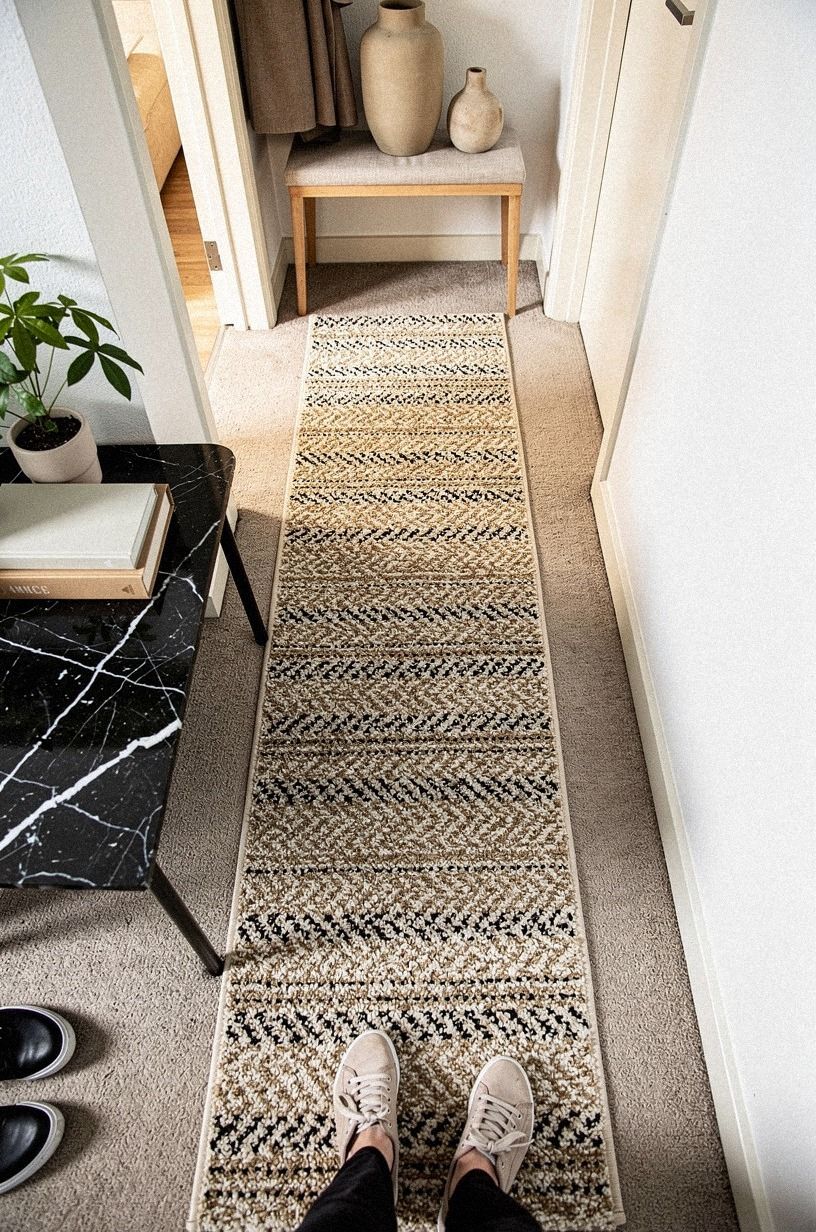
A washable cotton flatweave runner is a practical upgrade when your rental carpet has a suspicious entry path or a permanently flattened strip beside the sofa. Put the runner where shoes, pets, and snack traffic actually happen.
Don't scatter small mats randomly across the room. That creates visual clutter and gives your eye more edges to process. One long runner usually feels calmer and more purposeful than three tiny mats.
Choose a pattern with warm white, camel, and black accents. It will feel soft and welcoming while hiding ordinary life better than a pale solid. A restrained warm-white-and-camel weave can also connect a neutral sofa to a wood coffee table.
Your runner should sit flat at the corners, and you should use a compatible rug pad if the manufacturer allows one. Check the care label before washing it. Some washable rugs still need a large commercial machine, which can make routine cleaning expensive.
I've found that one long runner usually looks more expensive than three tiny mats, even if the room is modest. You'll also have fewer pieces to roll, wash, and store at move-out.
Place the runner so its edge lands beneath furniture whenever possible. A partially tucked edge looks finished and is less likely to shift. If it sits in an open walkway, use a thin pad with a grippy underside.
Repeat the black accent with a small Nero Marquina marble surface marked by fine white veining, such as a side table or entry console. It gives the runner a more deliberate connection to the rest of the room.
For a bedroom with limited space, pair it with an upholstered platform bed frame that sits modern and low to the floor. The low profile keeps the room feeling spacious while the runner adds softness.
A washable runner can also protect older carpet from rolling desk chairs and bedside traffic. It won't repair a damaged surface, but it can prevent daily wear from becoming more noticeable during your lease. That is a modest, comforting win.
6Anchor furniture with the Overlap Before Object rule
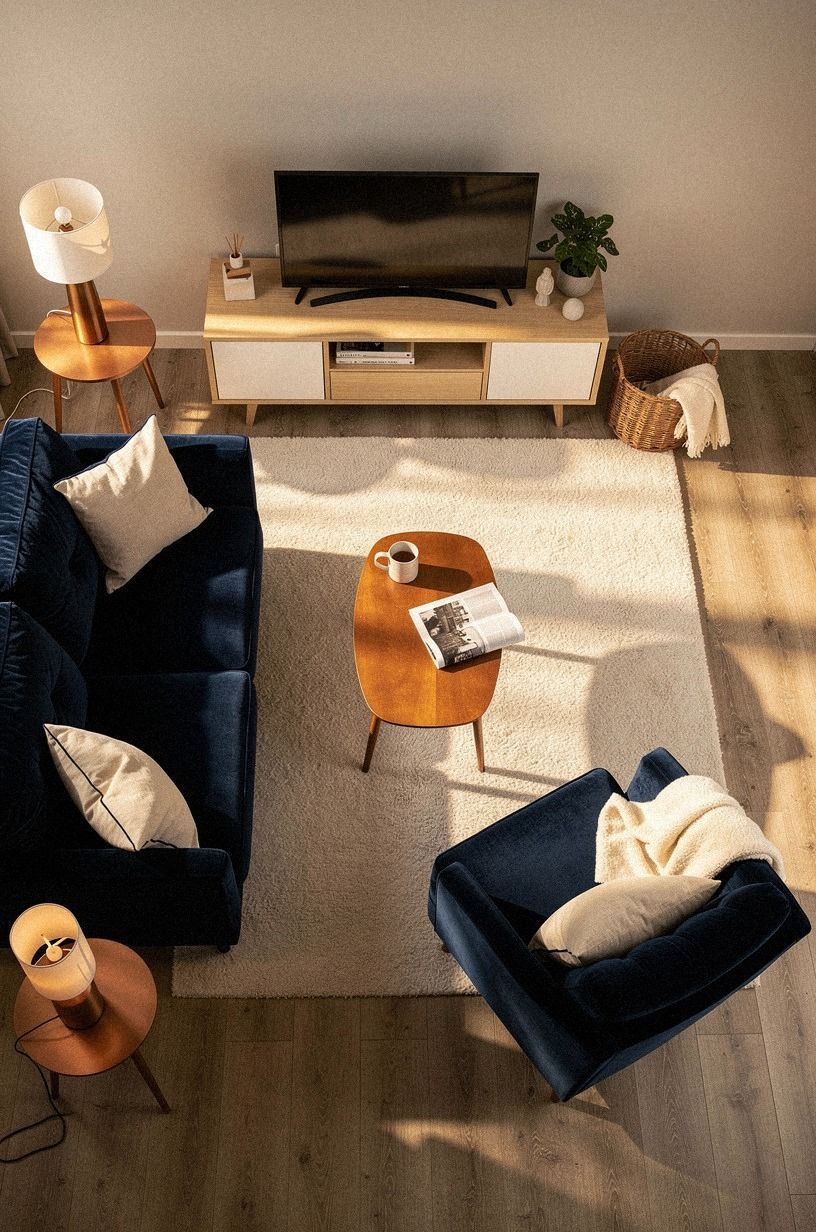
A floor upgrade doesn't always need a new floor layer.

7Paint a removable floor cloth with a measured border
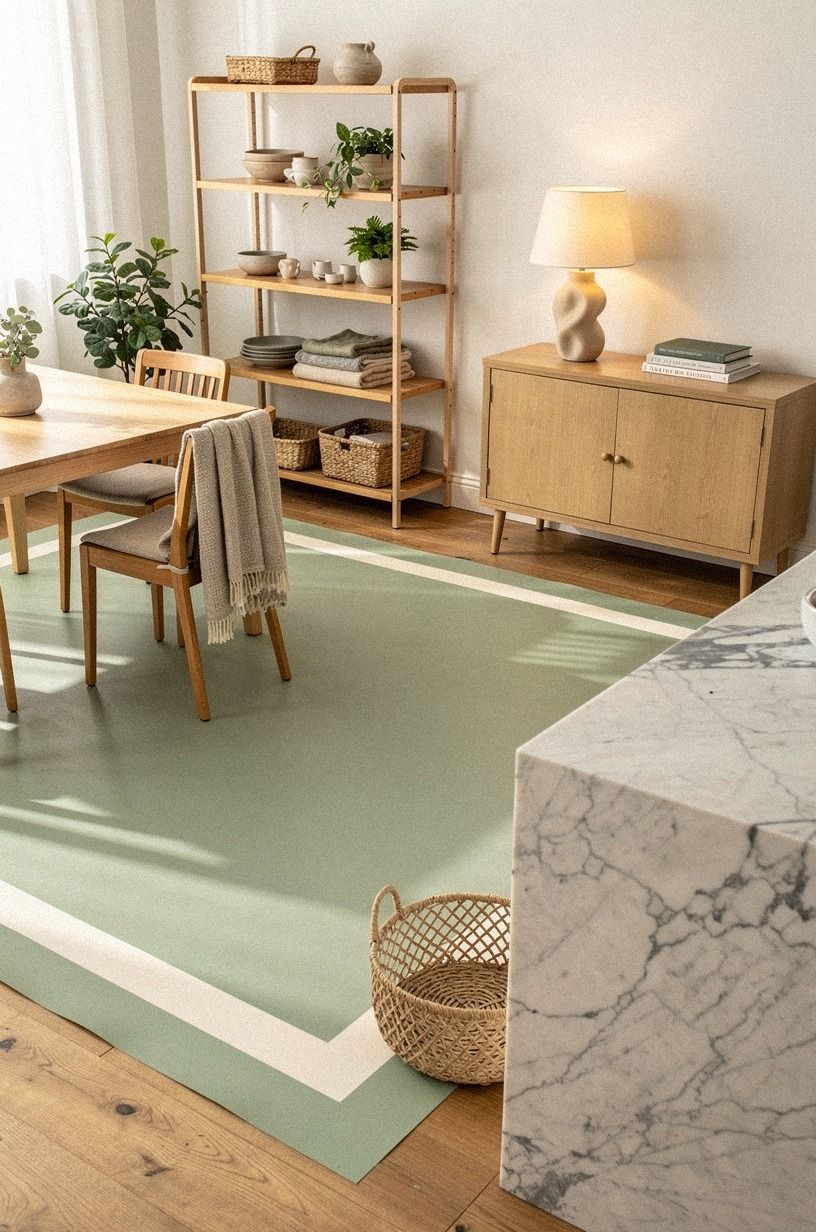
A painted canvas floor cloth gives you pattern without painting the actual floor. Use it beneath a dining table, at the end of a bed, or in a home office where the original surface needs visual protection.
The cloth should have a sealed top designed for floor use, and you should avoid placing it on damp concrete or unfinished wood. Let every coat cure completely before bringing it into the room. A rushed finish can remain tacky and attract dust.
A measured border keeps the design from looking accidental. Choose a warm cream field with a narrow sage green edge, then let the existing floor show around it. Natural wood furniture will keep the arrangement warm, while your eye reads the border as furniture-scale framing.
I like this approach because you can take the pattern with you. You can also repaint the cloth later, although I wouldn't chase a complicated mural in a rental. A simple block, stripe, or softened checkerboard will age better.
A hand-painted sage green border gives the cloth a tailored appearance. For a softer effect, use a narrow border in a shade only slightly darker than the center. The result can feel handmade without looking unfinished.
Keep the cloth proportionate to the furniture above it. A dining cloth should extend beyond the chair legs, while a bedside cloth can be smaller and more practical. Avoid placing edges directly where chairs repeatedly catch them.
A Carrara marble tabletop with subtle gray veining can echo the cloth's quieter pattern without making the floor treatment feel busy. Keep the stone on a movable piece so the room remains easy to rearrange.
For wall art that supports the same gathered look without holes, use these ways to hang pictures without nails in a rental. Repeating one border color on the wall can make the floor treatment feel connected to the room.
A floor cloth can sit inside the budget tier, especially when you already own the fabric and paint. The point isn't to spend more. It's to make one portable surface carry the visual weight of the room.
8Frame the entry with a washable landing strip
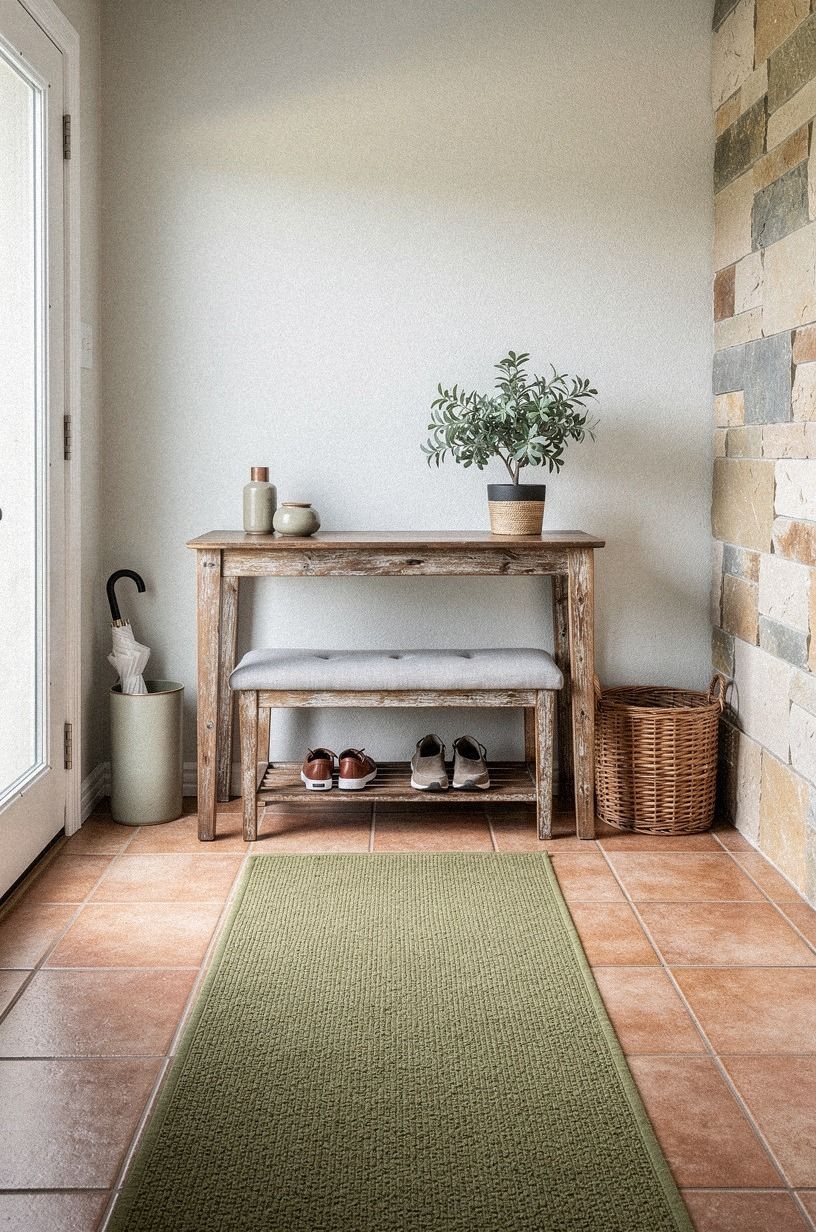
The entry floor takes more abuse than almost any other surface, so give it a defined landing strip.
9Float a modular carpet tile island for temporary flooring
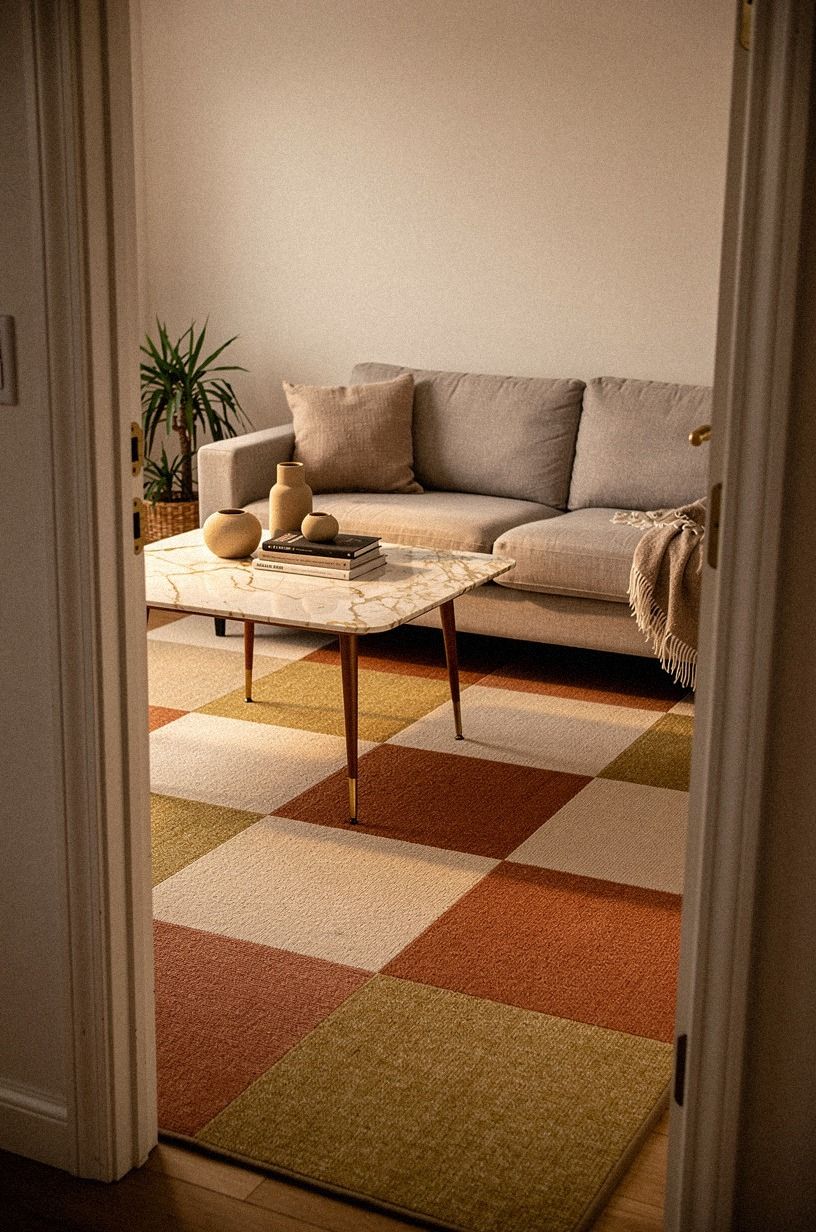
Modular low-pile carpet tiles can create a soft island under a desk or dining area, provided they're installed as a floating arrangement rather than glued down. Pick tiles that lock together or sit securely with a removable underlay.
Test the underside in an unseen spot first, because some backing materials can react badly with finished floors. Leave the arrangement in place for a short trial period, then lift it and inspect the surface before committing.
This works particularly well if your rental has cold laminate beneath a work zone. The texture absorbs chair noise and gives your feet a softer surface. You can build a rectangle, a square, or a runner shape, then lift each piece individually when you move.
Your floor stays visible at the perimeter, which makes the installation easier to monitor. It also gives the tile island a neat, furniture-scale shape. A rectangle beneath a desk usually looks more deliberate than tiles scattered across a room.
I wouldn't use a very pale tile if you eat at the desk. A muted clay tile with linen-toned furniture and an aged brass lamp keeps the room warm while hiding everyday marks. A small Calacatta marble accent with gold veining can add polish without overpowering the soft surface.
Choose tiles with a subtle texture instead of a loud office pattern. A small tonal variation can feel sophisticated, while high-contrast squares may dominate the room.
Keep wheels and chair legs from catching the tile seams. A clear chair mat may help, but test its underside as carefully as you test the carpet backing. Every added layer should be easy to lift and inspect.
At move-out, number the tiles on the underside with removable labels so you can rebuild the same arrangement elsewhere. Store them flat and dry, away from direct sunlight.
For another compact-room idea, combine the tile island with wall bookshelf ideas for renters with no floor space. Keeping storage vertical leaves the floor zone open and makes the soft surface feel more generous.
10Mix wood tones with the Two-Wood Rule
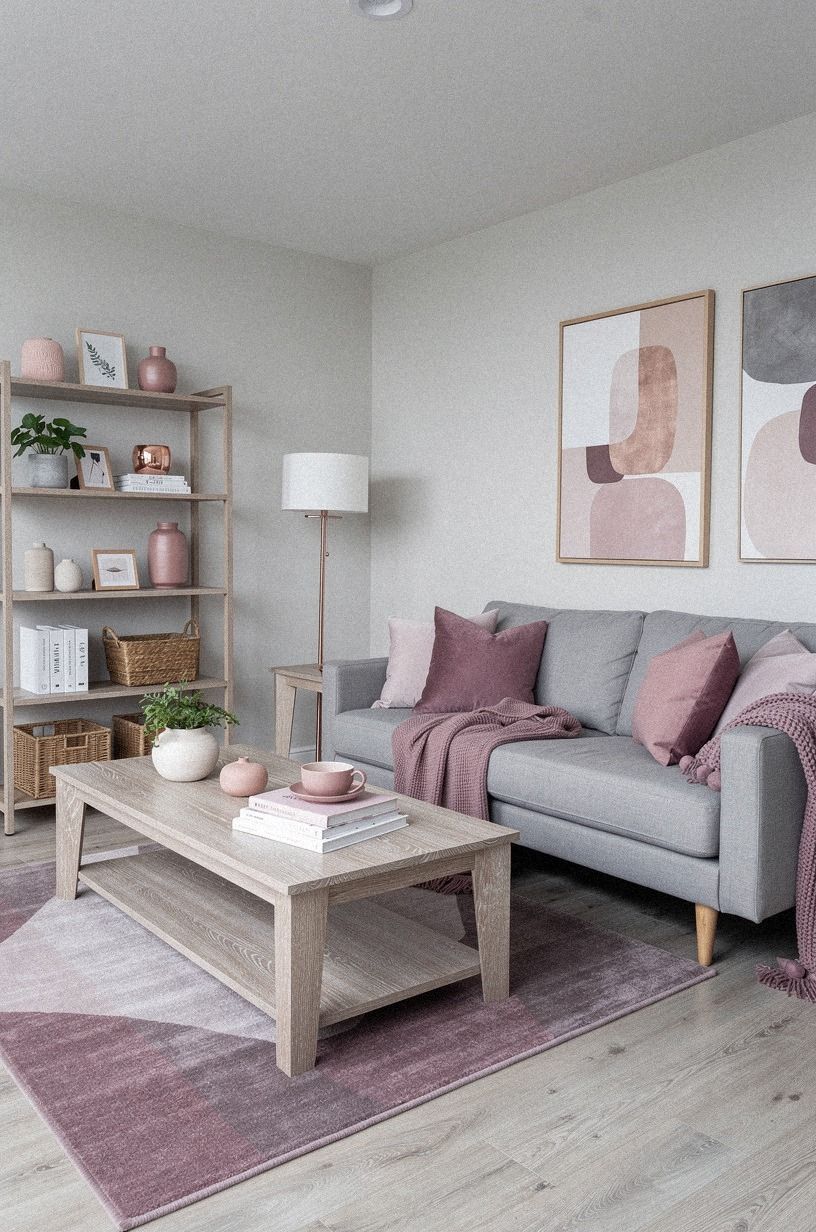
Rental floors often look better when you stop trying to match every wood tone. A room with one exact finish can feel staged, while two related finishes create a richer and more collected atmosphere.
The Two-Wood Rule is simple: choose one dominant wood and one supporting wood. If the floor is pale oak, use cerused white oak in a stool or side table. If the floor is deep brown, add a lighter oak bench or frame.
A cerused white oak accent can make a cool laminate floor feel more intentional. Repeat it in only two or three places, such as the coffee table and a picture frame. Too many finishes can make the room look pieced together.
Pay attention to undertones. Honey oak, red cherry, gray ash, and yellow pine don't always cooperate. When the tones clash, bridge them with a rug, painted furniture, or upholstery that contains a little of each.
A gray rug is useful here because its quiet color softens the transition. So is a plum chair, which can separate two wood finishes without adding another strong material. A small rose-gold accent can warm the arrangement.
You don't need to replace rental furniture to make the floor work. Rotate a bookcase, move a bench closer to the rug, or place a small table where the floor's strongest undertone needs company.
For a room with an uneven mix of woods, paint the largest movable piece. A matte plum cabinet or muted gray console can act as a visual pause. Use a removable floor pad beneath it to protect the finish.
If the room needs a more finished wall connection, these ways to hang pictures without nails in a rental can help repeat the wood tones above eye level. The result feels collected, warm, and quietly confident.
11Hang art low enough to connect wall and floor
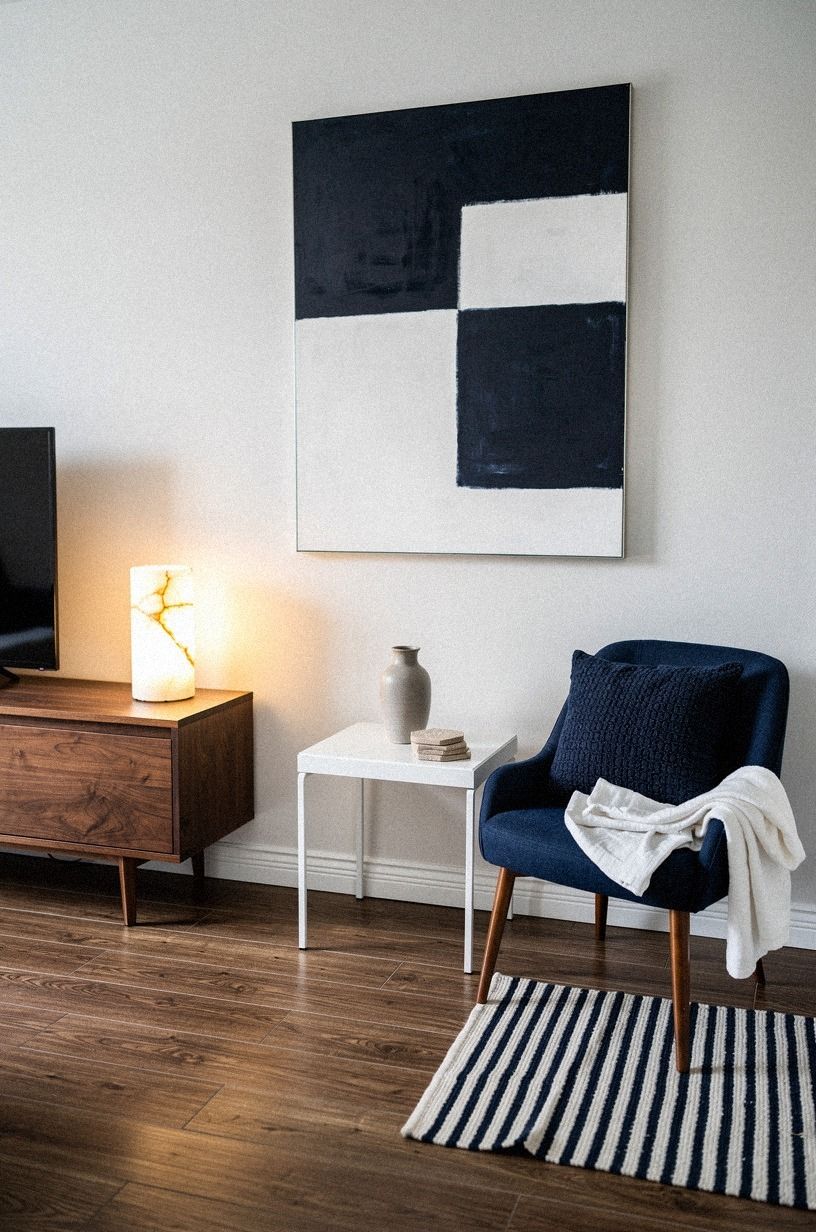
Art can make a floor upgrade feel finished because it pulls color downward from the wall.
12Create a soft floor landing with a layered bedroom rug
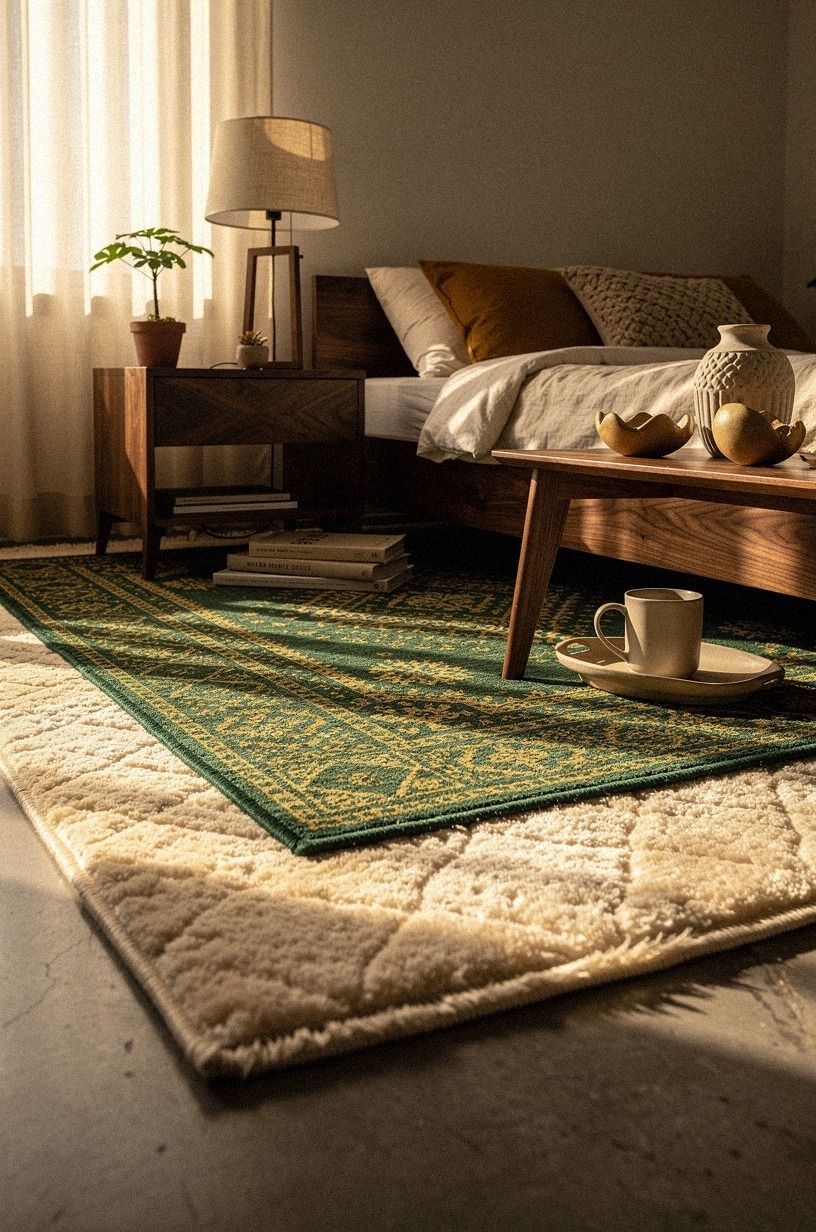
A bedroom feels warmer when your first step in the morning lands on something soft. A large washable bedroom rug can sit beneath the lower two-thirds of the bed, while narrow runners or small mats handle the sides.
If the room is tight, place two matching runners along the bed instead of forcing a large rug beneath heavy furniture. Keep them aligned with the bed frame and far enough from the wall that they can be lifted easily.
Choose a pattern with emerald, gold, and cream in quiet tonal variation. A faded design can disguise lint and morning clutter while keeping the bedroom peaceful. A book-matched walnut nightstand will add depth without competing with the rug.
A book-matched walnut bedside table feels substantial, but check its proportions before buying. For a rental bedroom, easy washing and quick drying may matter more than an especially luxurious fiber.
Leave room for drawers and doors to open. A thick rug beneath a dresser can make the drawers catch, and a high pad can create trouble beneath a closet door. Measure every moving part.
If the floor is cold, add a low-profile pad with a breathable backing. Lift the rug occasionally, particularly during humid weather. A soft layer should make the room more comfortable, not trap moisture beneath it.
Use the same accent color in the bedding and rug, but avoid matching every piece. Emerald bedding beside cream flooring can feel calm, while a small gold cushion adds a livelier note.
A bedroom floor upgrade is successful when it disappears into the routine. You notice the comfort, the quieter footsteps, and the warmer landing. You don't notice a collection of fussy objects that must be moved every morning.
For a low-profile bed pairing, see the modern upholstered platform bed frame. A grounded frame and a washable rug create a comforting, practical bedroom without making the floor impossible to inspect.
The rental floor rule I learned the hard way
I've lived with floors that looked fine in the listing photos and completely different at 7 a.m., when winter light showed every scuff and the laminate felt cold beneath bare feet. My first instinct was to cover everything.
That was the wrong instinct. Too many floating layers create moisture traps, awkward door clearances, and a room that feels like it's wearing borrowed clothes.
The better question is where your body and your eye need softness. Put a washable runner beside the bed, a durable rug under the seating group, and a small protective layer at the entry.
That's enough in many rooms. You don't need to hide the original floor to make your home feel lived-in.
You need to give the floor a supporting role.
I also learned to test every underside before committing. A rug pad can discolor a finish.
A rubber backing can cling more than expected. Removable doesn't mean consequence-free, so lift your layers regularly and let the floor breathe.
If you're unsure, photograph the surface before installation and keep the lease nearby.
The colors matter as much as the materials. Benjamin Moore White Dove OC-17 keeps a small room bright, while Farrow & Ball Pigeon No.25 brings a dusty blue-gray note that works beautifully with oak, jute, and faded red. For a warmer neutral, Sherwin-Williams Agreeable Gray SW 7029 is calmer than a stark white wall.
I wouldn't combine all three in one room. Choose one backdrop, then let the rug and floor layers do the changing. A restrained palette makes inexpensive pieces feel more deliberate and keeps the original floor from competing with every new purchase.
What makes a rental feel personal isn't permanence. It's the evidence of your decisions.
A measured runner, a rug that overlaps the sofa, and a low light source can make an ordinary floor feel warm, intentional, and distinctly yours. When move-out arrives, you can roll, lift, wash, and inspect instead of explaining a renovation to the property manager.
A Few Things Worth Answering
What is the best renter-friendly floor upgrade for a small rental?
A washable runner or a low-profile rug is the best starting point because it adds softness without permanent installation. Choose one piece that defines your seating or sleeping zone, then keep the surrounding floor visible. IKEA, Target, and secondhand shops often have practical sizes.
Where can I buy renter-friendly floor pieces on a budget?
You can shop IKEA, Wayfair, Target, Facebook Marketplace, and local thrift stores for rugs, runners, and lightweight lighting. Look for washable cotton, jute blends, and flatweave wool. Compare the backing carefully, and inspect used pieces for odors, pests, and moisture damage.
How much does a renter-friendly floor makeover cost?
A small makeover can cost about $100 to $300 if you use one runner, a secondhand rug, and lighting you already own. A broader room refresh may fit the typical $200-$800 budget tier, depending on textiles, paint, art, and organization.
Can I create renter-friendly floor upgrades on a budget?
Yes, and you can begin with free rearranging, furniture overlap, and a better lighting layout. Add a secondhand runner, a painted floor cloth, or removable cable clips as funds allow. Your largest improvement may come from placement rather than a new product.
Are renter-friendly floor upgrades worth it in a small space?
Yes, because a small space benefits from clear zones and fewer visual interruptions. Use one rug large enough for furniture overlap, one narrow runner, and three light sources: overhead, task, and ambient. That combination can make your floor plan feel calmer.
Are removable floor upgrades a good idea for a rental?
Yes, if you avoid permanent adhesive and inspect the floor underneath regularly. Floating rugs, washable runners, interlocking surfaces, and removable floor cloths are safer choices. Test backing materials first, and keep a clear margin around doors, baseboards, and damp areas.
Where I'd Start First
If I had to pick one, I'd start with a washable runner. It protects the path that gets dirty first, adds softness without hiding the whole floor, and rolls away cleanly at move-out. Pin the best renter-friendly floor ideas for later, then measure your busiest walkway.
A runner gives you a quick visual change, a practical surface, and an easy exit plan. Start with the area your feet use most. The rest of the room can follow gradually.
If the bedroom is your coldest space, compare the runner with an upholstered platform bed frame that sits modern and low to the floor. If the entry is the problem, revisit these cheap renter-friendly kitchen upgrades to do in one weekend for similarly small, practical changes. Build slowly, inspect often, and leave with the original floor exactly as you found it.