
 by
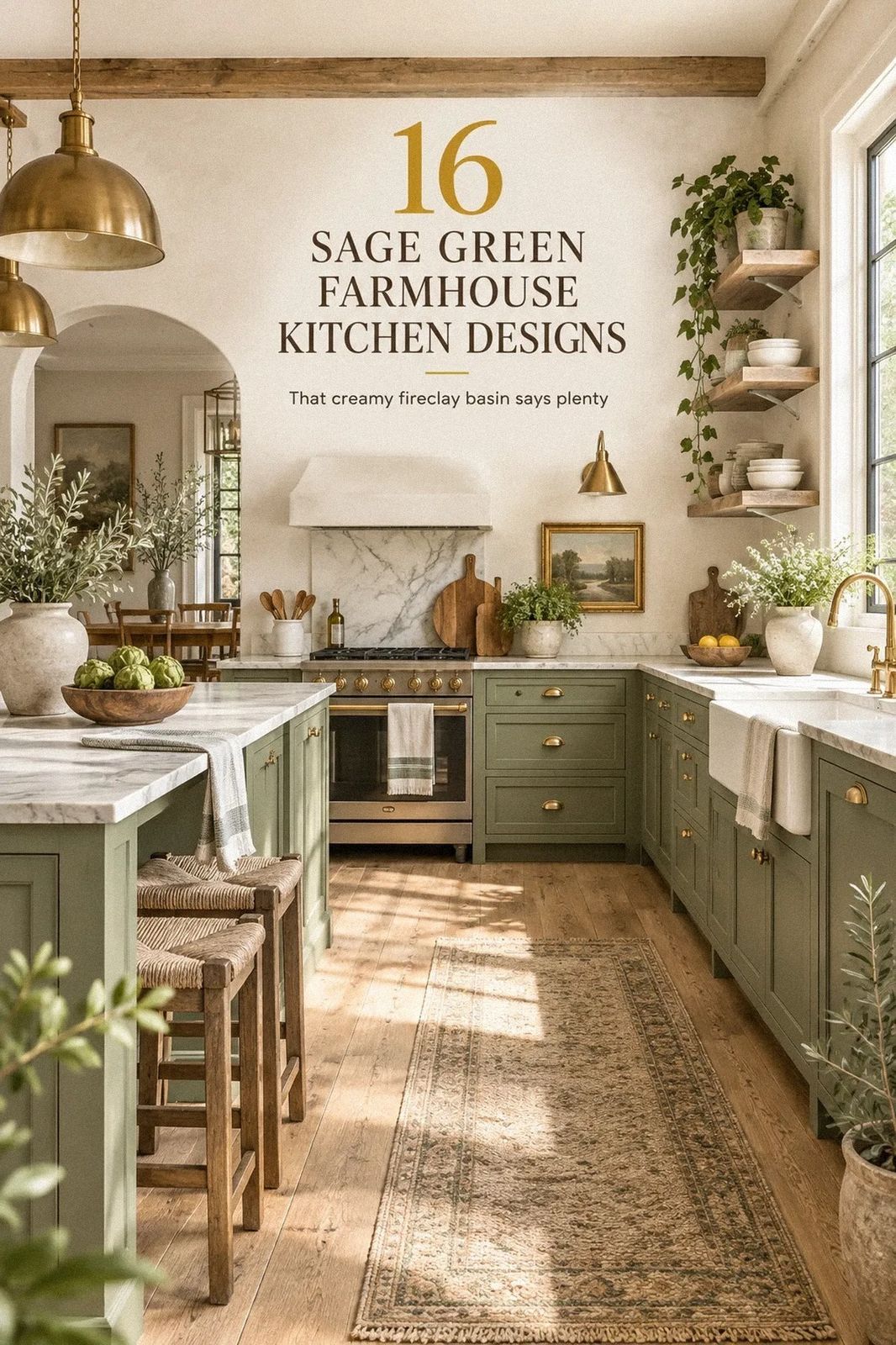
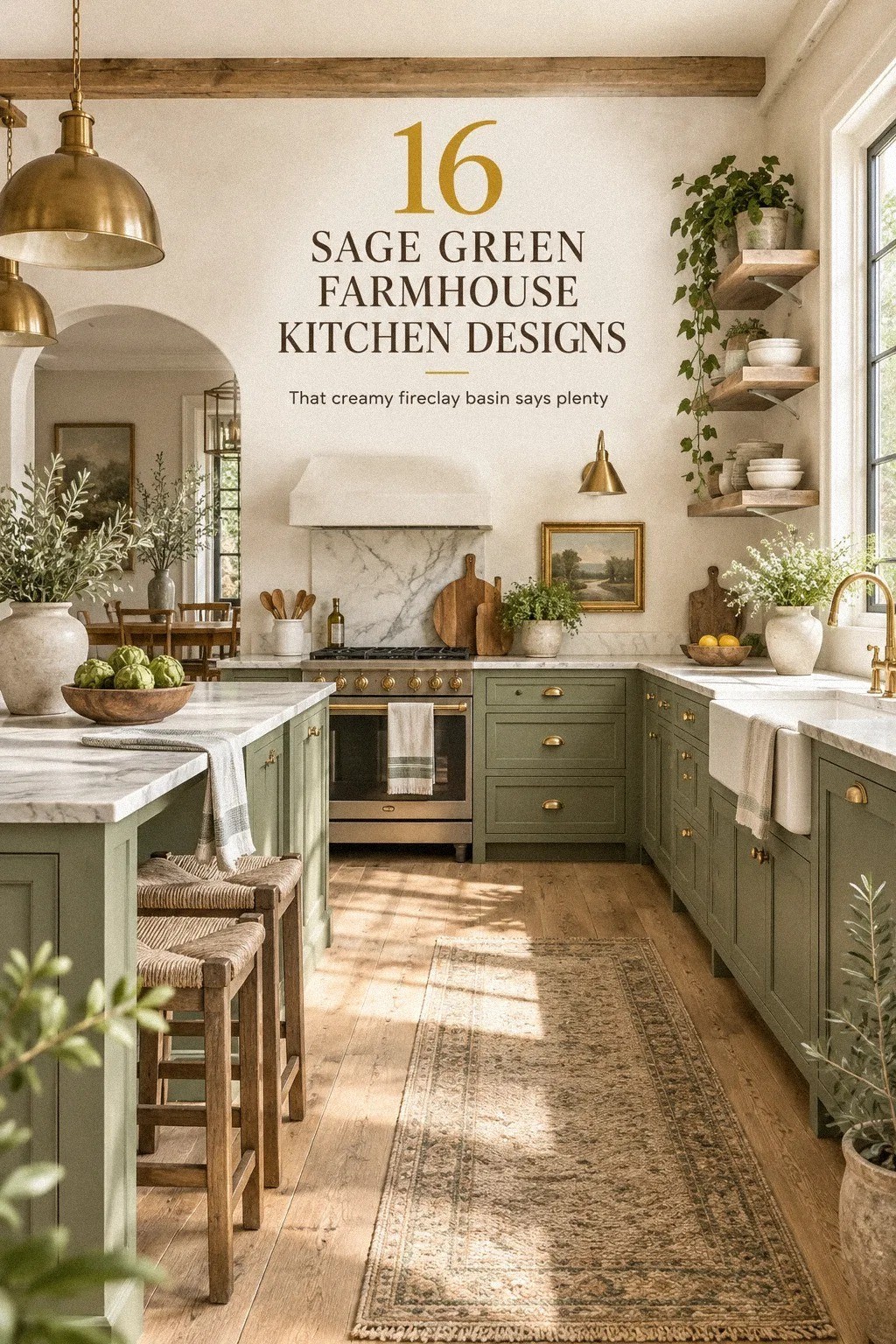
Sage green farmhouse kitchen ideas work best when cabinets are balanced by natural wood, aged metal, and one quiet light color. I once paired green with too much gray, and the room looked flat by lunchtime. Now I use warmer materials, measured gaps, and fewer matching pieces. The difference is immediate!
Editor's note: Start with the light in your kitchen, then choose the green. A shade that looks soft in a south-facing room may feel chilly beside a north-facing window. These ideas work because they treat sage as a flexible neutral, not a theme.
- Paint the cabinets in Sherwin-Williams Evergreen Fog
- Layer green kitchen cabinets with cerused white oak
- Frame the farmhouse kitchen with Benjamin Moore White Dove
- Swap polished chrome for aged metal
- Build the Two-Wood Rule into your green kitchen
- Float a narrow island and protect the walkway
- Hang the Three-Height Light Stack
- Choose hand-glazed zellige over a busy mosaic
- Mix open shelves with closed storage
- Anchor the dark green kitchen with a faded runner
- Turn a pantry wall into the Quiet Storage Grid
- Style the farmhouse kitchen, not white, with collected pieces
- What does a sage green refresh cost?
- Paint one zone instead of every cabinet
- Add the Three-Texture Farmhouse Stack
- Will sage green still work in 10 years?
1Paint the cabinets in Sherwin-Williams Evergreen Fog
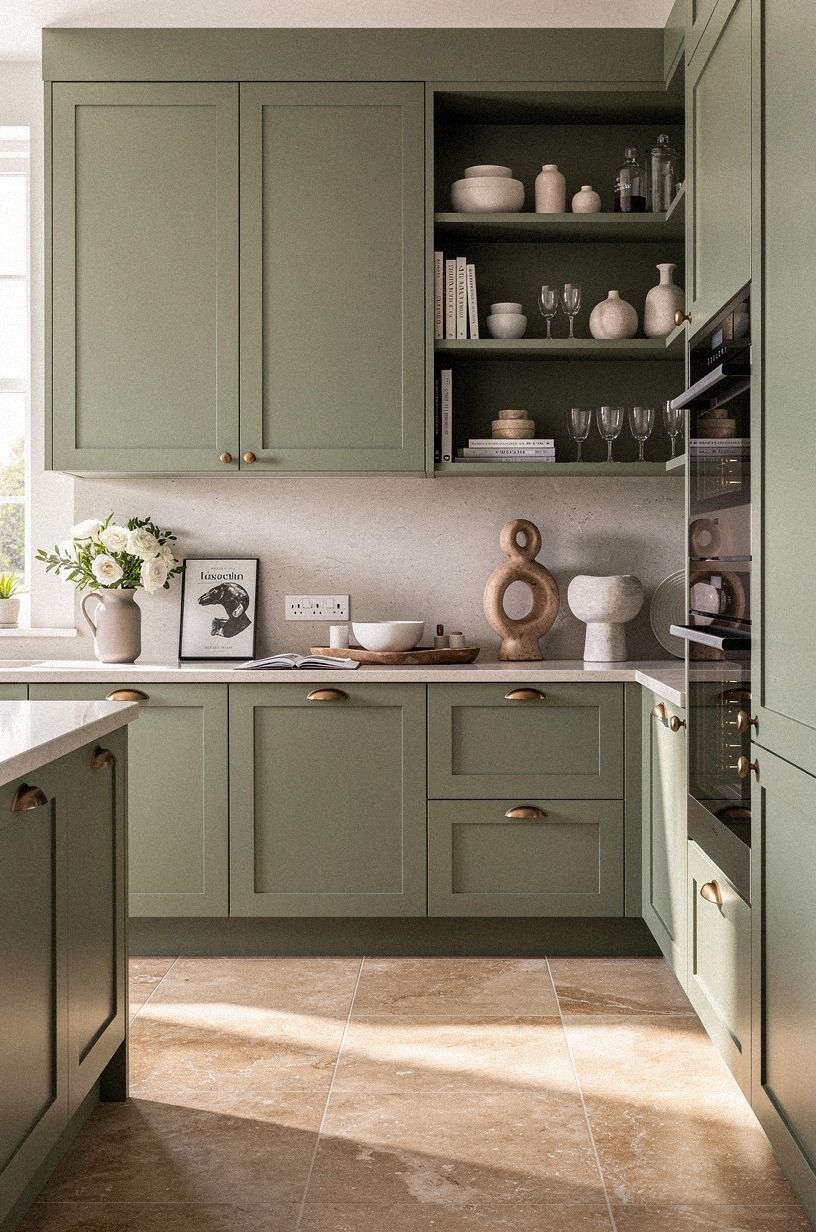
A full cabinet color change gives your kitchen the strongest shift without moving a single box. Sherwin-Williams Evergreen Fog SW 9130 has enough gray to feel settled, but it still reads green beside cream walls and oak. If you’re choosing samples, tape them beside your countertop, because afternoon light can pull sage either yellow or blue.
I’d skip a cold white floor with this shade. Your eye needs something warmer underneath, such as warm travertine or a woven runner with a muted plum note. I made the mistake of judging paint beside a white sheet of paper, and the color looked completely different once the room had real shadows.
Pair the cabinets with rose-gold metal pulls if you want a collected farmhouse look. They’ll soften the plum-and-gray palette without making every handle perfectly shiny. For more cabinet-color inspiration, browse these green kitchen cabinet ideas from sage to emerald.
Before painting, clean the doors with a degreaser, scuff glossy areas, and test the primer under both daylight and evening bulbs. A sample door is more useful than a tiny square on the wall. You’ll see whether the undertone works beside your appliances, floor, and existing counters.
Typical cost by tier (US averages):
2Layer green kitchen cabinets with cerused white oak
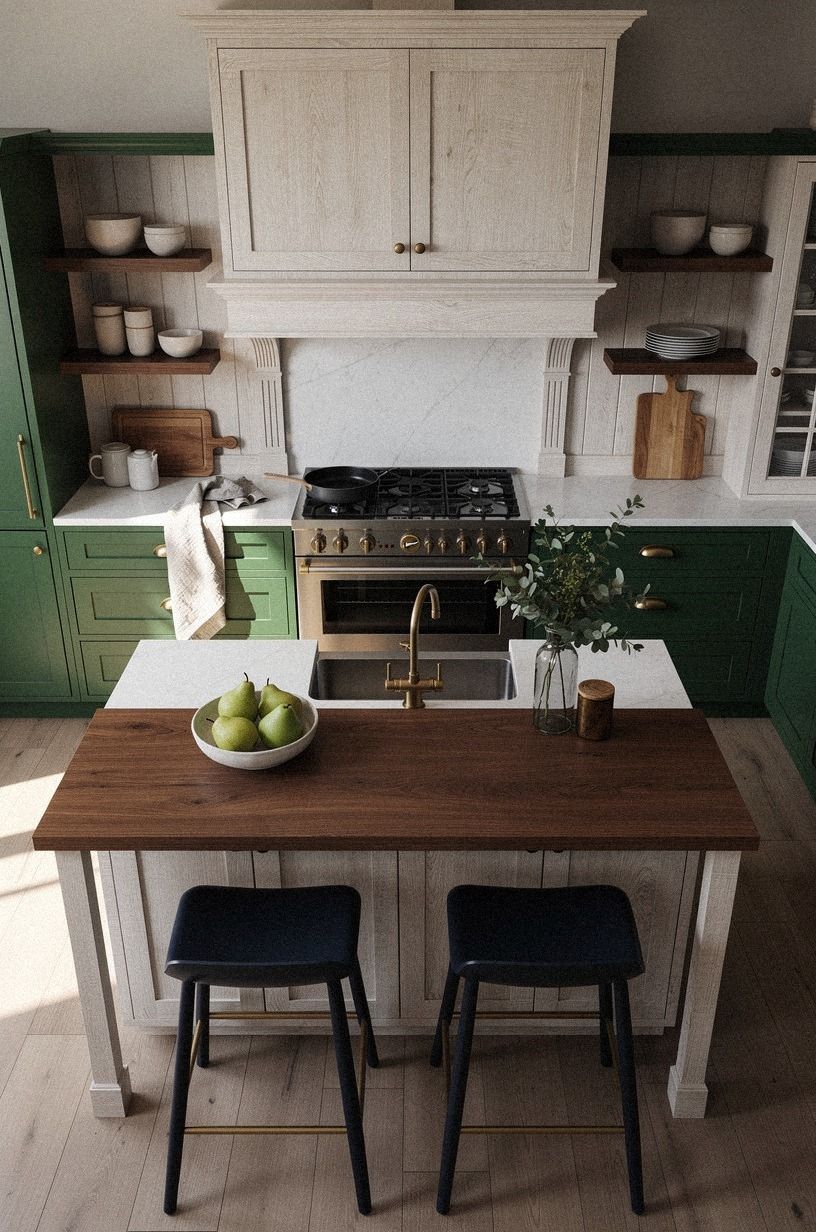
Sage cabinets can feel too smooth if every other surface is painted. Bring in a navy accent, white ceramics, and walnut so the room has contrast. Unlacquered brass will develop a soft patina and connect those tones without making them match.
3Frame the farmhouse kitchen with Benjamin Moore White Dove
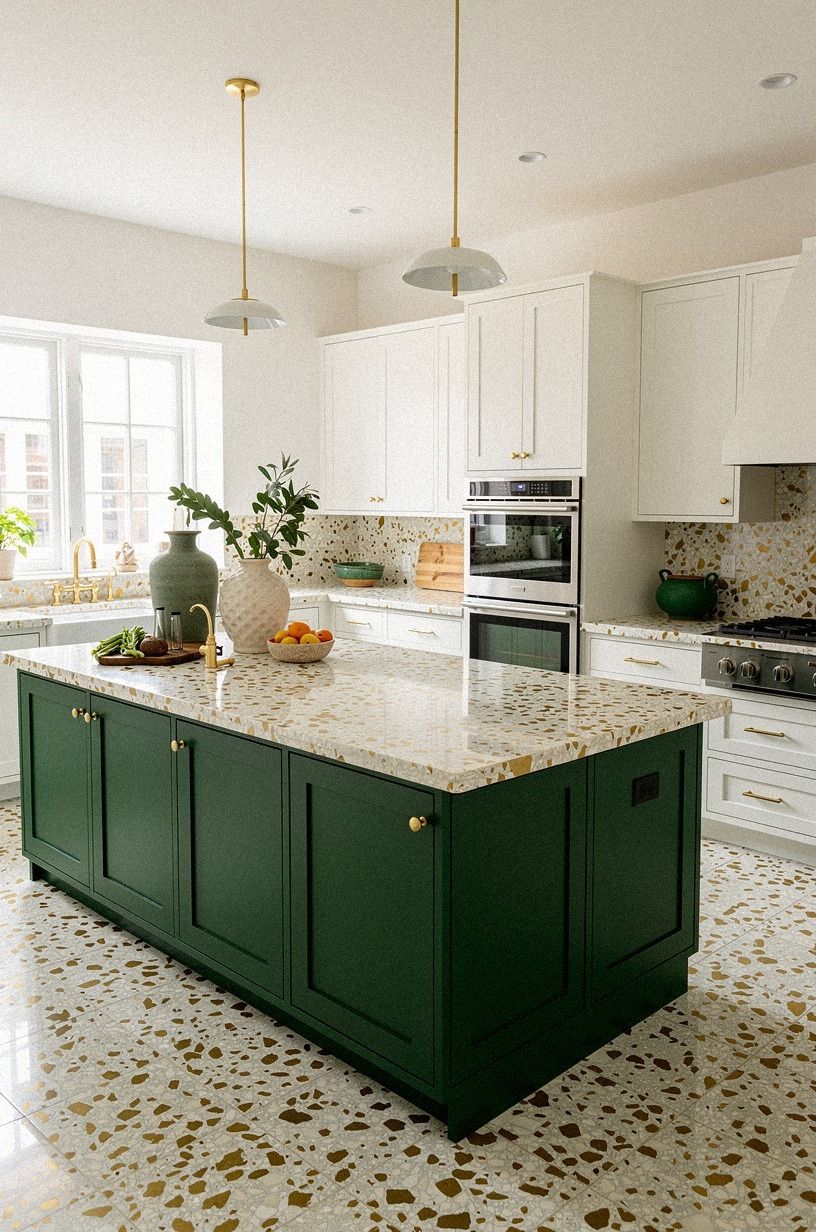
Use Benjamin Moore White Dove OC-17 on the walls when your sage cabinets need a gentle frame. It’s softer than a bright builder white, so the green won’t look harsh at night under warm bulbs. You’ll also have more freedom with wood tones, since this white doesn’t fight pale oak or aged walnut.
I wouldn’t pair White Dove with a blue-gray countertop if you want a warm farmhouse kitchen. That combination can make the room feel chilly, especially on a north-facing side of the house. Instead, choose oversized-chip terrazzo with emerald, gold, and cream movement.
Your backsplash doesn’t need to match the wall exactly. A slightly darker cream tile can create a thin visual border between cabinets and paint. For another restrained palette, compare these white farmhouse kitchen ideas that never go out of style.
The contrast will help you see why warmer whites matter.
If your kitchen has low ceilings, carry the wall color behind open shelves and above the upper cabinets. That uninterrupted field feels calm and expansive. A warmer white also gives aged brass, woven baskets, and soft green paint a more gracious background.
4Swap polished chrome for aged metal
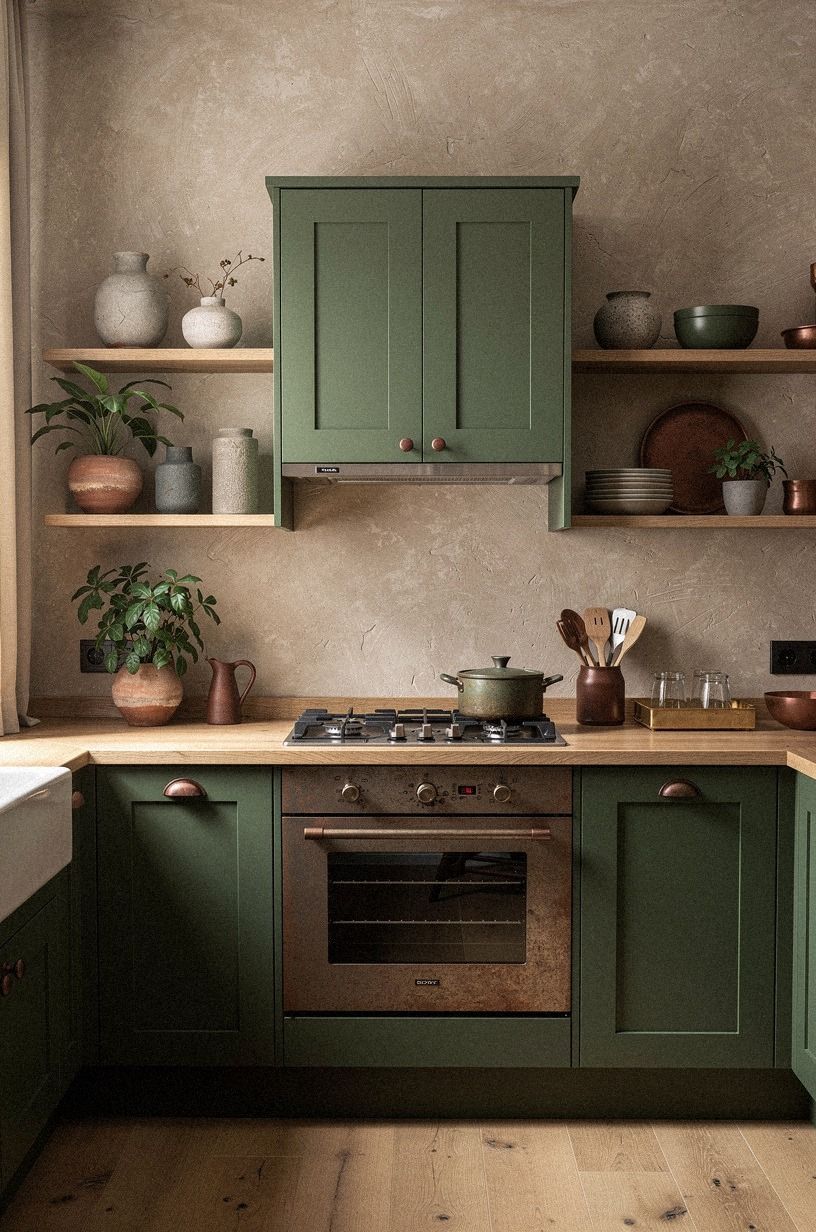
Change the hardware before you change the cabinets if your kitchen already has a decent layout.
Aged metal works especially well with forest green, rust, and natural oak. If the walls need more texture, hand-applied Venetian plaster can add depth without introducing another pattern.
5Build the Two-Wood Rule into your green kitchen
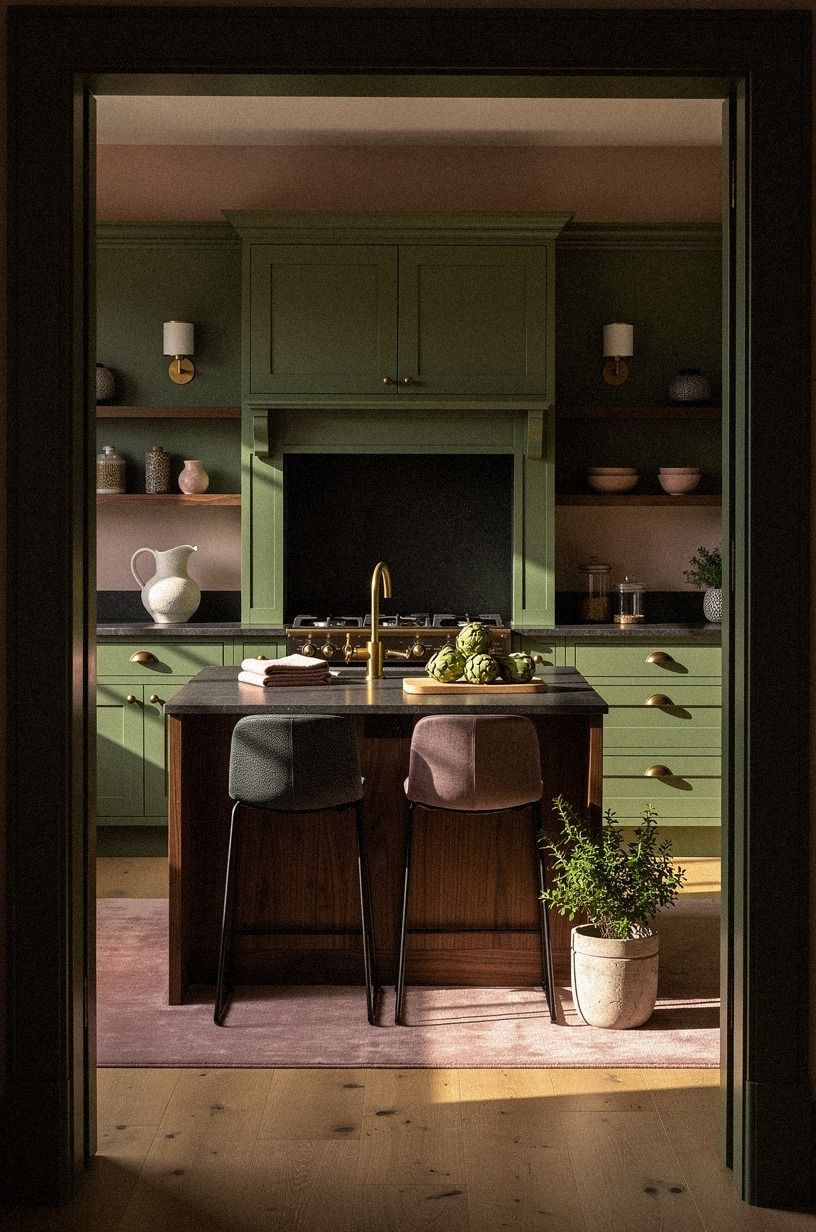
The Two-Wood Rule keeps a sage kitchen from becoming visually flat: use one pale wood and one deeper wood, then stop.
Your pale wood might be a light shelf or stool. The deeper note could be walnut, smoked oak, or an old pine table with a naturally darkened surface. Bring dusty rose into a textile, charcoal into a small accent, and brass into the hardware.
A shagreen accent adds tactile contrast without another paint color.
I’d put the lighter wood near the upper half of the room, where it can reflect daylight. Use the deeper wood lower down, perhaps on a table, island top, or pair of vintage chairs. When both tones appear at the same height, the kitchen can feel chopped into competing bands.
Do you need two exact wood species? No. You need two clear values.
A pale, matte shelf beside a rich, slightly worn table will usually feel more collected than five nearly identical oak finishes. The room should have a little tension.
For a polished reference point, revisit these luxury farmhouse kitchen ideas that feel high-end. The most inviting examples don’t rely on expensive materials alone. They use contrast, restraint, and one memorable detail.
6Float a narrow island and protect the walkway
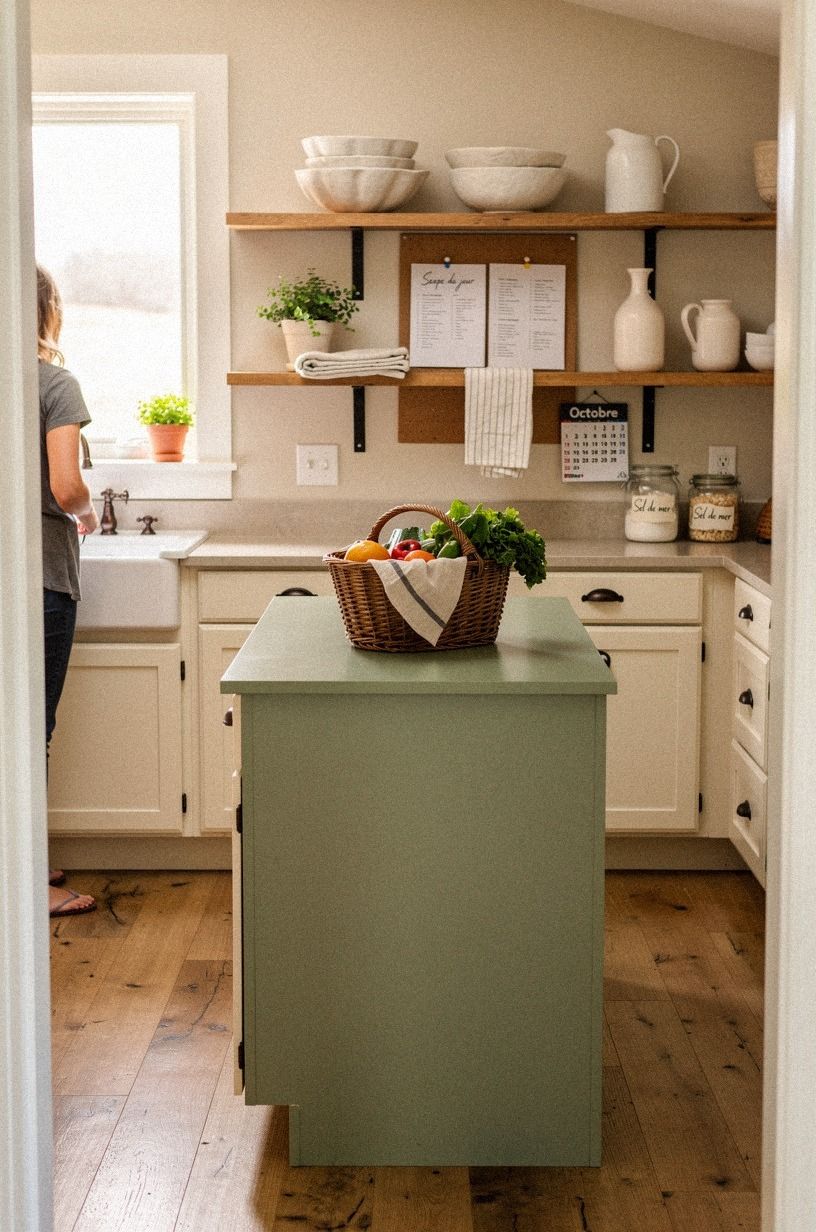
A farmhouse kitchen doesn’t need a giant island. If your layout allows it, keep an island with 36-inch standard counter height and preserve 42 to 48 inches of clearance all around it. Those measurements matter because you’ll feel every lost inch when someone opens the dishwasher while you’re carrying a hot pan.
A narrow island can hold drawers, seating, and a landing spot without swallowing the room. I’d choose a warm-white base with camel upholstery or a washed Belgian linen runner, then add one small black accent. The combination feels softer than a high-contrast black-and-white scheme.
If marble feels like too much commitment, a wood top gives your kitchen a more relaxed farmhouse note. Your best layout is the one that lets two people pass without turning sideways. And if you’re planning seating, look at these western farmhouse kitchen ideas for rugged ranch style for useful island proportions.
A narrow island can also serve as a visual pause between the cooking zone and dining area. Choose drawers over deep cabinet doors when possible. They make pans easier to reach, and they keep the front of the island looking quieter.
7Hang the Three-Height Light Stack
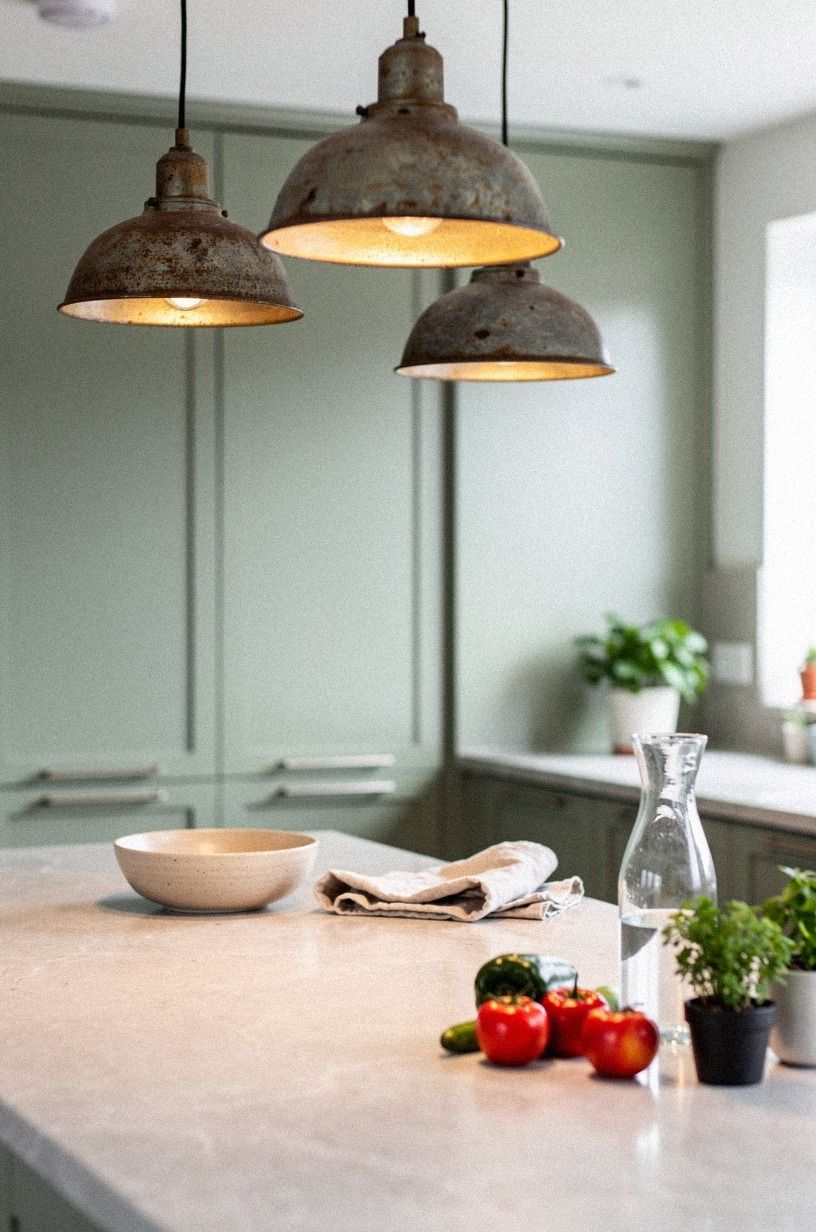
The Three-Height Light Stack uses a ceiling fixture, task lighting, and a low glow so your kitchen doesn’t look like a workplace after sunset.
Start with a practical ceiling fixture that spreads light across the room. Then add under-cabinet task lighting where you chop and wash.
Finally, bring in one lower source, such as a small lamp on a counter-safe shelf or a shaded fixture near the breakfast table. That third level changes the mood dramatically!
Use warm white bulbs around 2700K to 3000K if you want the sage to stay soft. Bulbs that are too blue can make green cabinets look dull and gray. Dimmers are worth the small investment because breakfast light and evening light need different settings.
The fixture itself can carry farmhouse character without becoming theatrical. Copper, ivory, or painted metal will work when the silhouette is simple. Add a midnight-blue accent and an organic bouclé seat or cushion if the room needs softness.
For more lighting context, compare the welcoming palettes in these white farmhouse kitchen ideas that never go out of style. Light should support the materials, not compete with them.
8Choose hand-glazed zellige over a busy mosaic
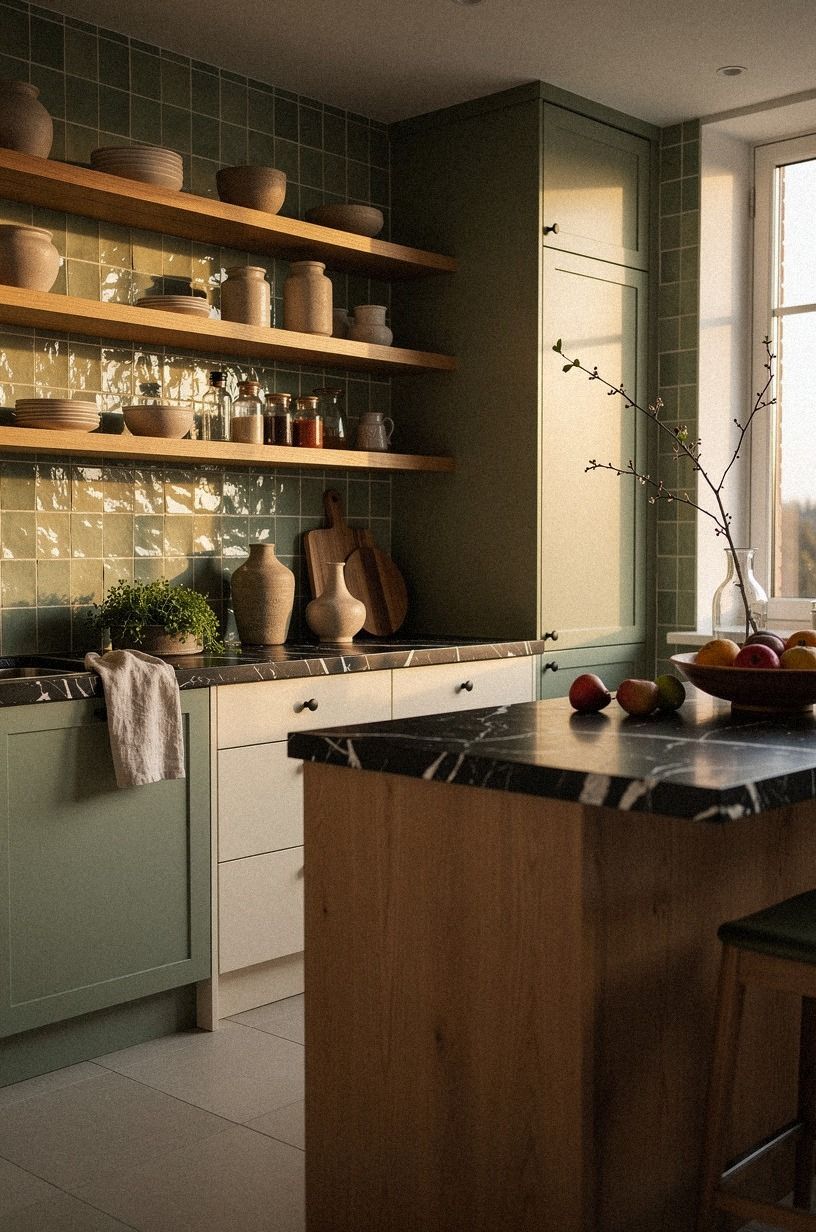
Use hand-glazed sage-green zellige as a small, irregular moment behind the range or sink. Its uneven surface catches light in tiny shifts, so the backsplash feels alive without needing a loud pattern. Natural wood and Nero Marquina black marble with white veins can add depth without another busy motif.
Keep the rest of the kitchen quiet if your tile has movement. I’d skip a patterned floor, ornate cabinet glass, and decorative hood all at once. A sage kitchen already has a strong point of view, and your materials should support it instead of shouting over it.
The standard backsplash gap is 18 inches between the counter and upper cabinets, so measure before ordering tile. Your installer will need a clean plan around outlets and corners. If you want a more refined version of the look, these luxury farmhouse kitchen ideas that feel high-end show how restraint makes handmade tile feel special.
A warm cream grout will soften the pattern. Dark grout creates a sharper grid and may pull the design toward a more graphic style. Either can work, but the grout should be chosen with the cabinet color in the room, not from a tiny showroom sample.
9Mix open shelves with closed storage
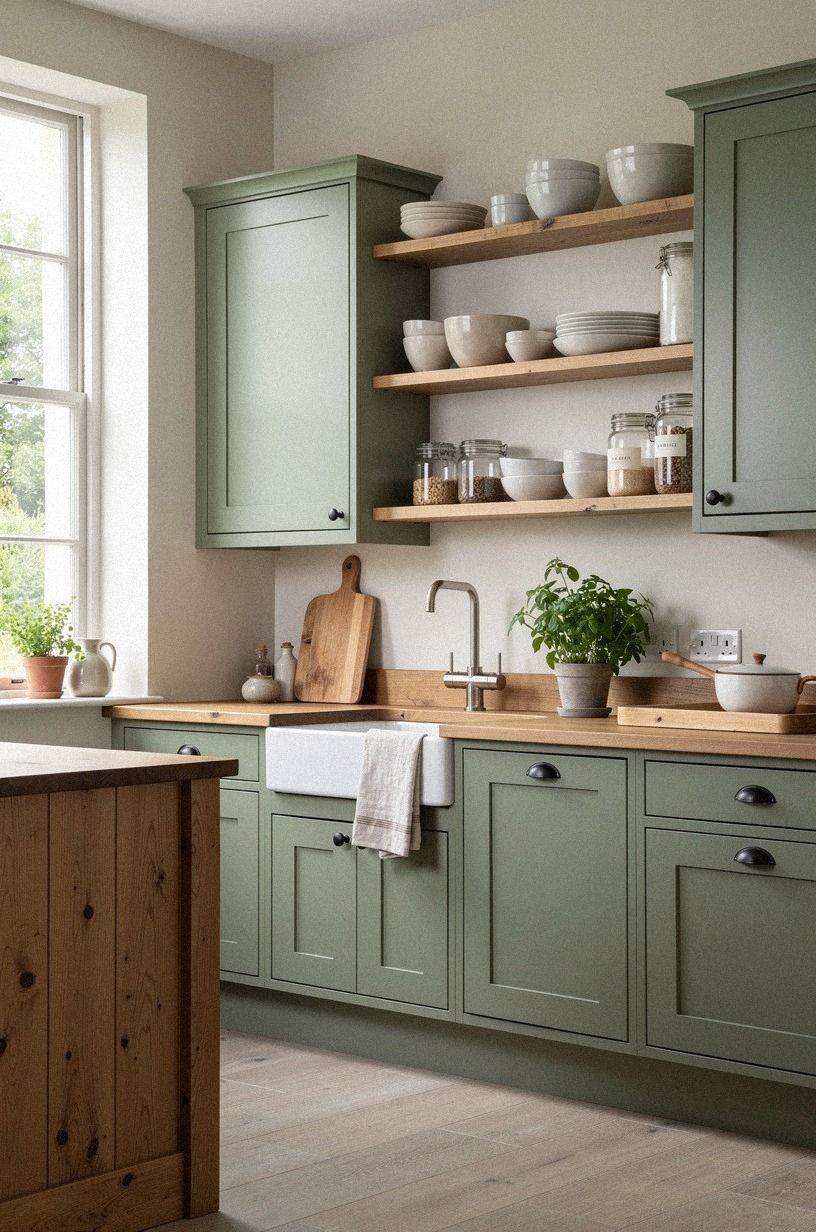
Open shelves work when they hold the things you reach for, not every object you own.
Keep your most useful pieces there: daily plates, a few bowls, a wooden board, and perhaps one favorite pitcher. Store appliances, food packages, and mismatched plastic behind doors. This division makes the kitchen feel airy without asking you to maintain a display case.
I like terracotta, stone, and olive-toned ceramics because they give sage paint a warmer, more collected rhythm. Add one deep-pile mohair velvet cushion or seat nearby, then stop. Too many decorative pieces will make the shelves feel precious rather than practical.
How much open storage can your routine handle? Be honest.
If you cook every night, closed cabinets near the range may make more sense. If you want a lighter upper wall, use one shelf instead of two and keep the lower one close to the work surface.
For a more rugged storage direction, these rustic farmhouse kitchen ideas for warm weathered charm offer useful ways to mix old wood, simple ceramics, and concealed storage.
10Anchor the dark green kitchen with a faded runner
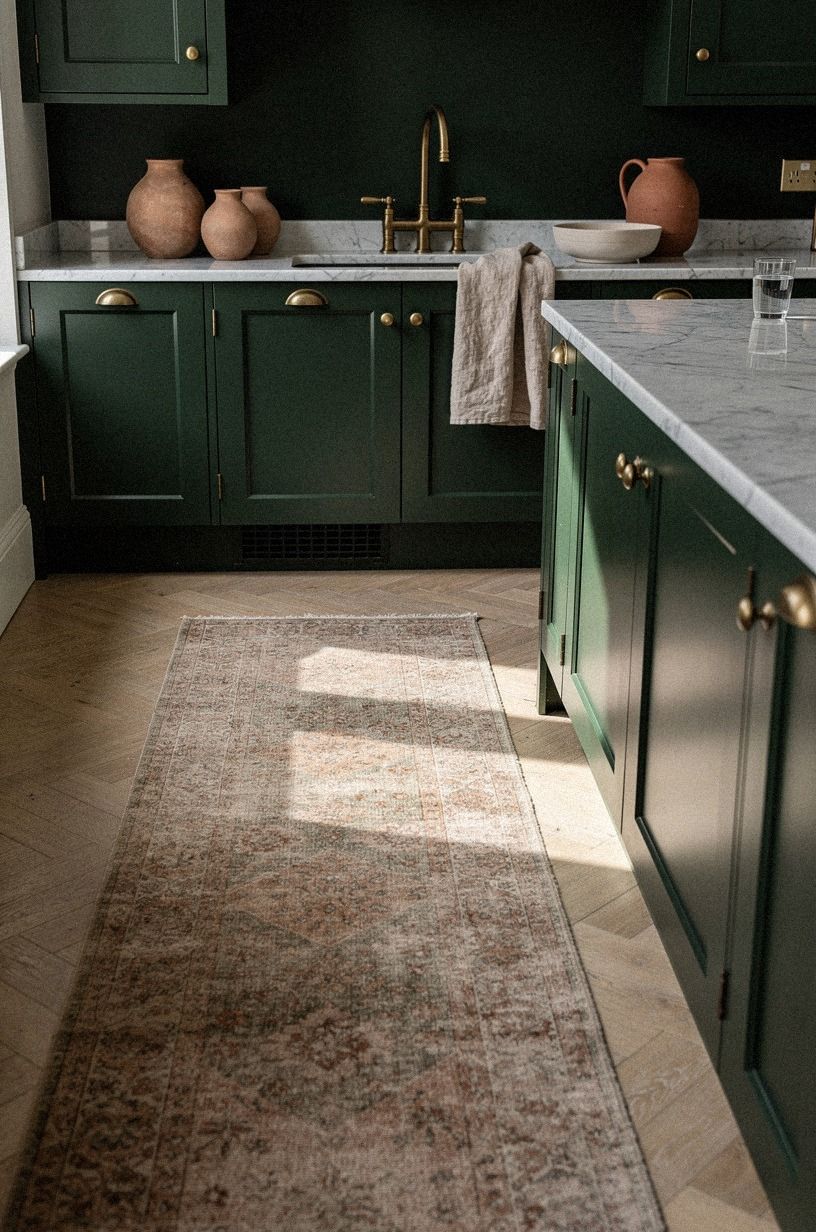
A runner gives a dark green kitchen a softer landing, especially when the cabinets meet a pale floor. Choose faded clay and linen tones, then repeat aged brass in one small detail. Carrara marble with subtle gray veining will keep the palette from feeling too heavy.
11Turn a pantry wall into the Quiet Storage Grid
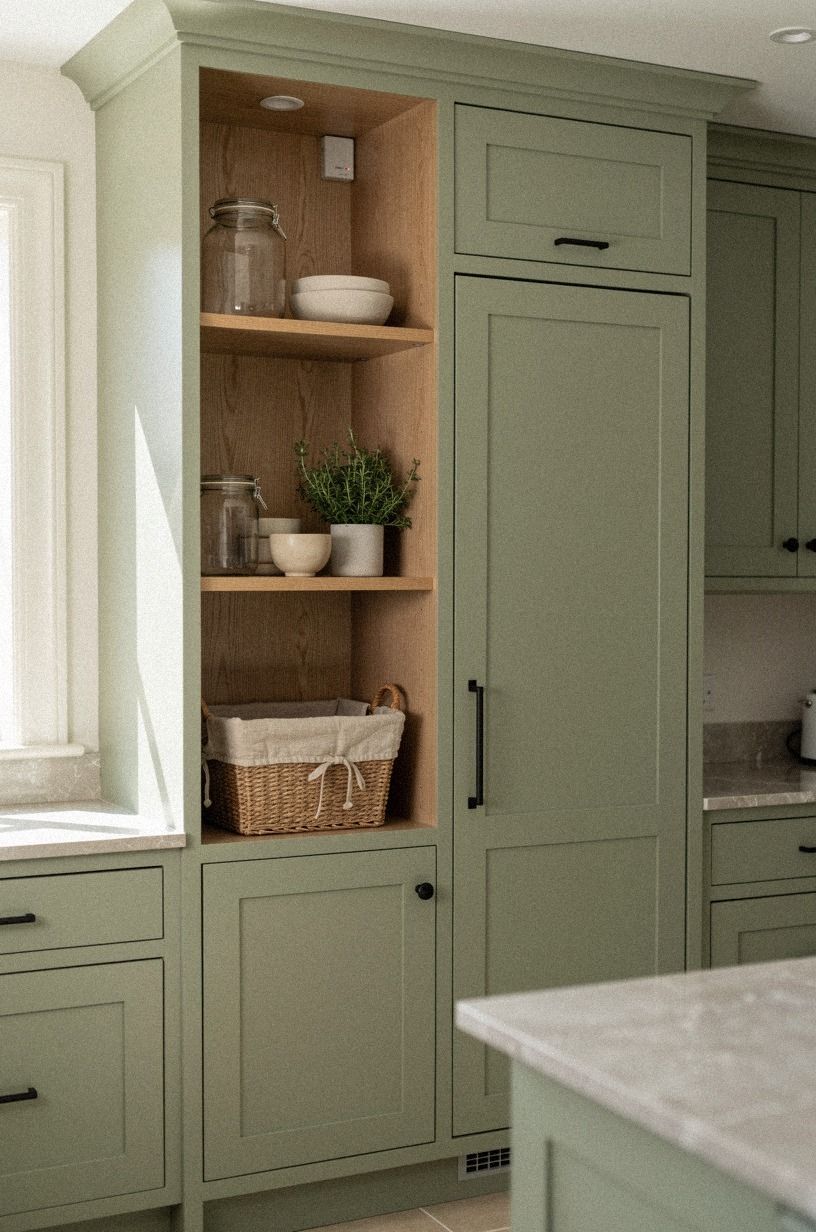
The Quiet Storage Grid turns one tall wall into a blend of pantry doors, drawers, and a small display section.
This works especially well in a narrow kitchen because it gives the room a strong vertical anchor. Use tall doors for dry goods and infrequently used equipment.
Add wide drawers below for linens, baking supplies, or heavy pots. A shallow open niche can hold a few attractive everyday pieces without turning the whole wall into shelving.
Use muted plum and gray on the storage wall if you want it to feel distinct from the sage cabinets. Rose-gold latches or pulls will warm the combination without making it flashy. The best version feels orderly but not severe.
You can make the storage look more like furniture with a reclaimed weathered teak counter or a small crown detail. Don’t overdecorate the top. A single basket or ceramic vessel is enough to make the vertical wall feel human.
If you’re working with a rental or a limited budget, freestanding pantry cabinets can create a similar effect. These sage green cottage kitchen ideas for fresh earthy charm offer smaller-scale ways to bring in storage, warmth, and character.
12Style the farmhouse kitchen, not white, with collected pieces
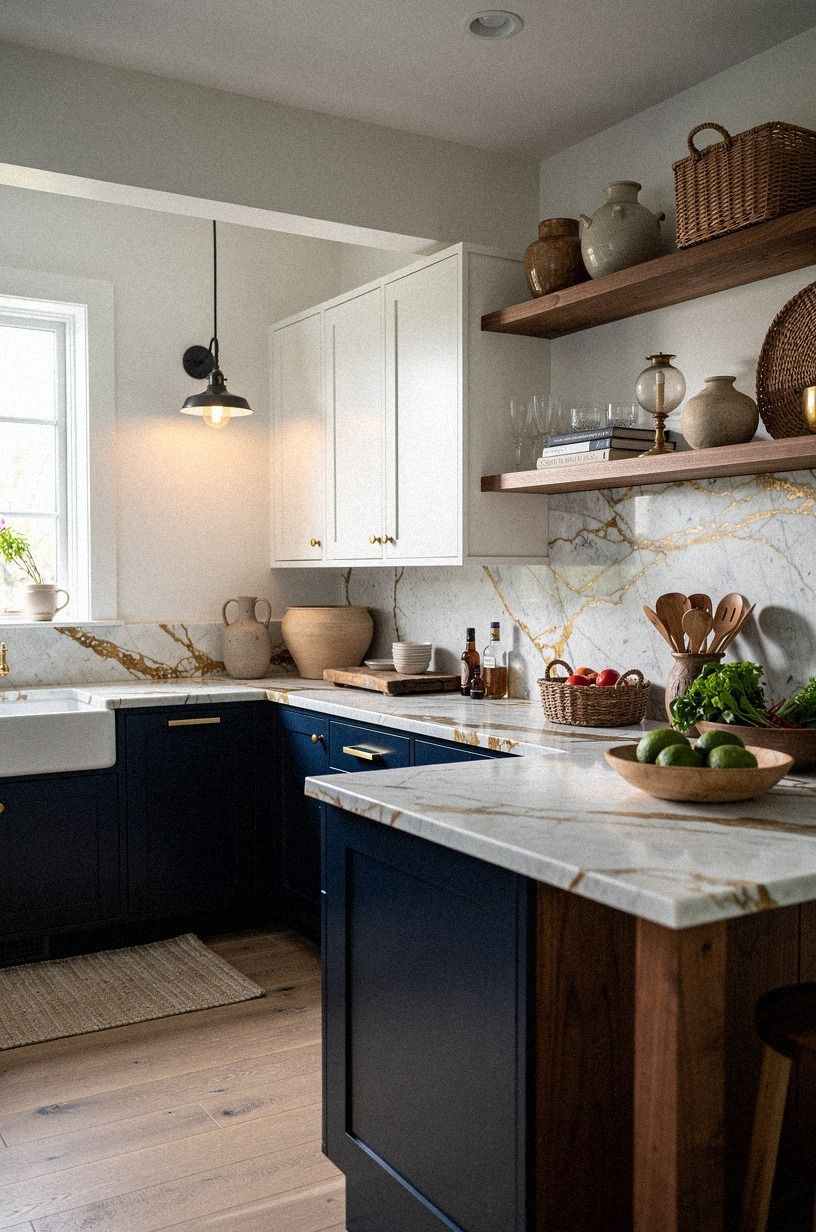
A farmhouse kitchen not white can still feel light when you build contrast through texture. A deep navy hutch or lower cabinet run works beautifully beside white walls and walnut. Calacatta marble with gold veining adds a brighter surface without making the room feel sterile.
Don’t paint every surface dark if your kitchen has limited daylight. I’d use navy as the deeper note and keep the main cabinet color closer to sage. Your eye will read the darker section as furniture, which makes the room feel collected rather than newly coated.
Add vintage white stoneware, a woven basket, and one framed landscape. These pieces shouldn’t all be the same age or finish. And if you’re renting, you can get much of the feeling with removable hooks, a tension rod, and textiles you’ll take with you.
What makes a non-white farmhouse kitchen feel bright is not the absence of color. It’s the presence of reflection, open space, and pale surfaces in the right places. A white wall, Calacatta marble, and linen shade can do more than another coat of paint.
For a deeper but still welcoming palette, revisit these white farmhouse kitchen ideas that never go out of style. The comparison makes it easier to see where your kitchen needs contrast.
13What does a sage green refresh cost?
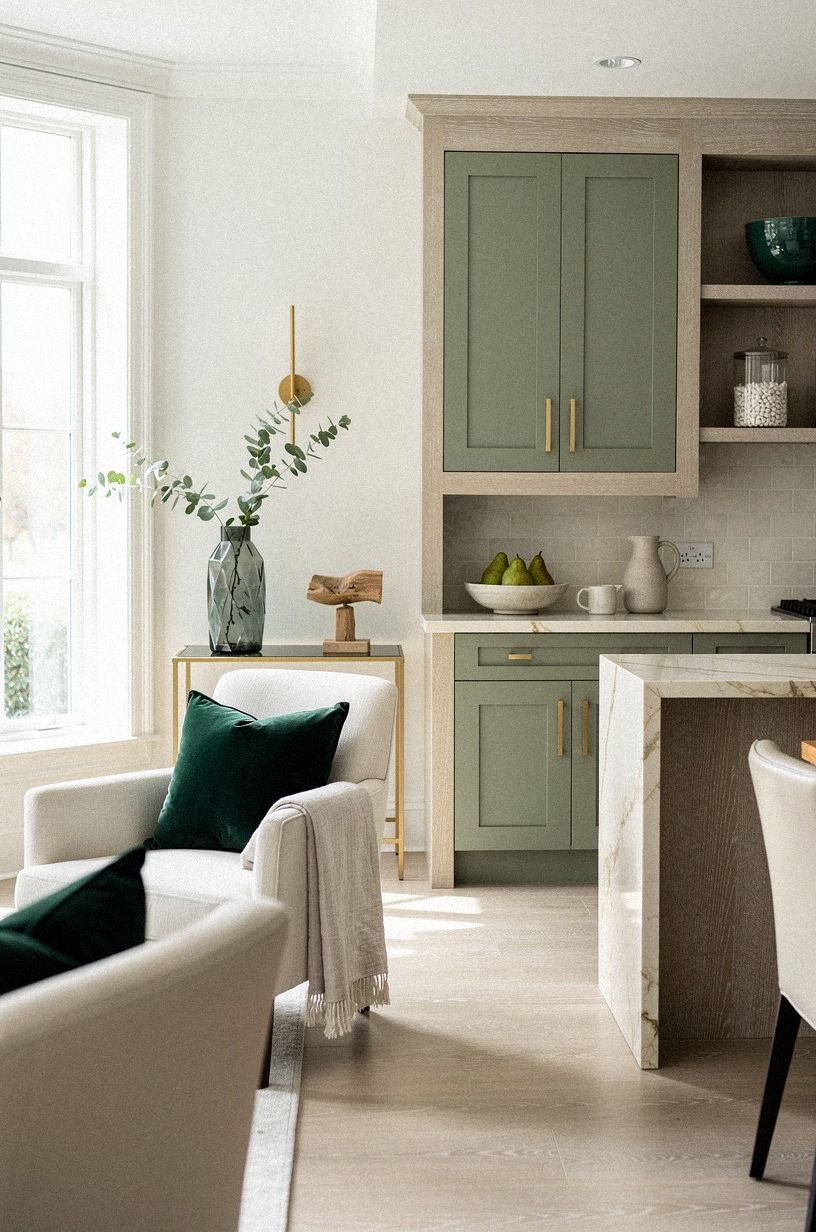
A cosmetic refresh can be modest, but a full kitchen remodel moves into a different category.
If your cabinet boxes are sound, paint and hardware will create the biggest visible change. Add a runner, warmer bulbs, and one cerused white oak element, and the room may feel entirely different without touching the plumbing.
Small emerald, gold, and cream details can tie the palette together. This is the sensible route when the layout already works.
A larger refresh might include new counters, a backsplash, a faucet, or updated lighting. Those choices can quickly change the budget, especially when installation is involved. Get measurements before shopping so the attractive option doesn’t become an expensive surprise.
The most useful question is what currently bothers you every day. If the kitchen feels cold, address lighting and materials.
If it feels cramped, protect the walkways before buying decorative pieces. These luxury farmhouse kitchen ideas that feel high-end demonstrate how a few considered upgrades can look remarkably polished.
14Paint one zone instead of every cabinet
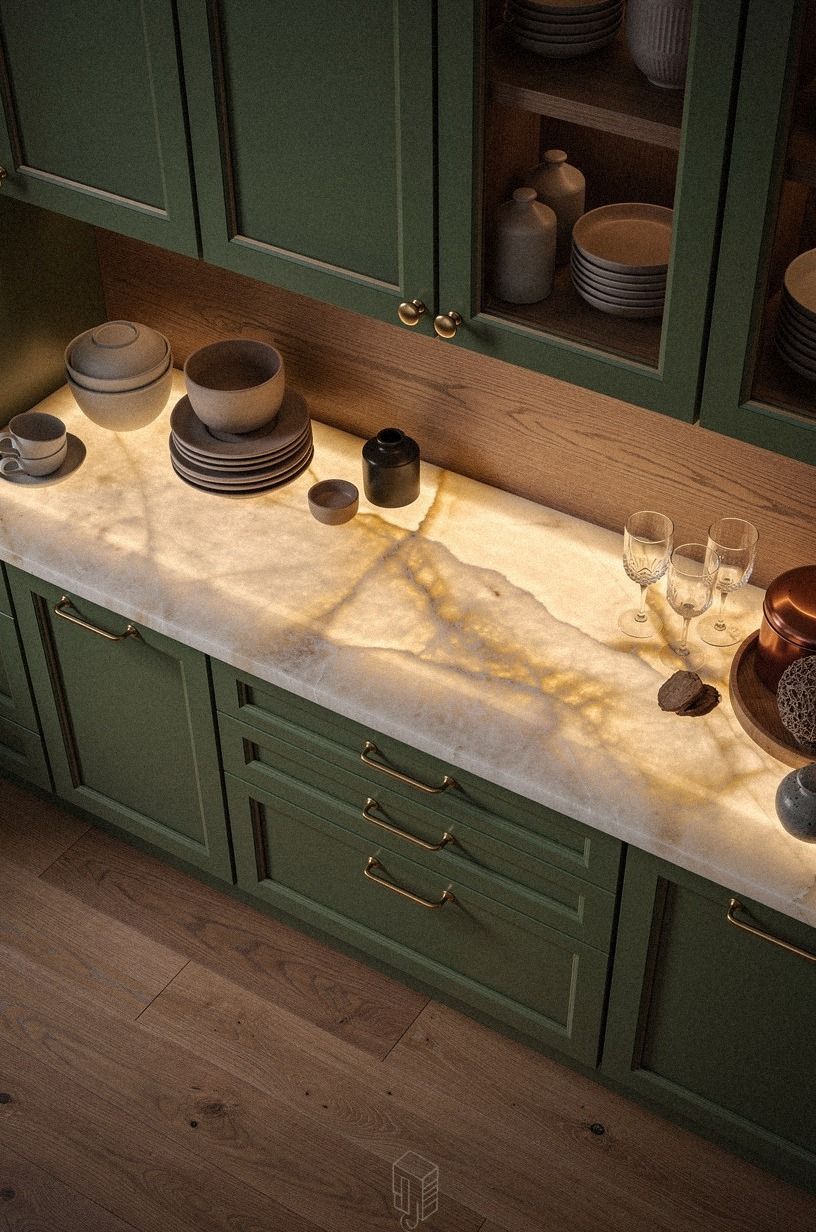
Painting one zone is often wiser than coating the whole kitchen. A forest-green pantry wall or built-in hutch can warm a sage cabinet run without forcing you to repaint every door and drawer.
Your eye needs a clear reason for the second color. Use it on a piece that already feels like furniture, then repeat rust in a textile and natural oak in a shelf or stool. I’d skip a random two-tone split halfway across the room because it can look accidental rather than architectural.
If you’re working with older cabinets, test the paint after cleaning and sanding a small area. A backlit translucent onyx panel can add a soft focal point in a niche or backsplash. You’ll spend less, create a stronger focal point, and keep the original layout working for you.
A painted hutch is especially effective because it gives the kitchen a charming, furniture-like moment. A pantry wall can do the same while adding useful storage. Keep the surrounding surfaces simple so the contrast feels deliberate.
For another approach to restrained contrast, save these green kitchen cabinet ideas from sage to emerald. Notice how the strongest rooms usually concentrate the boldest color in one clear zone.
15Add the Three-Texture Farmhouse Stack
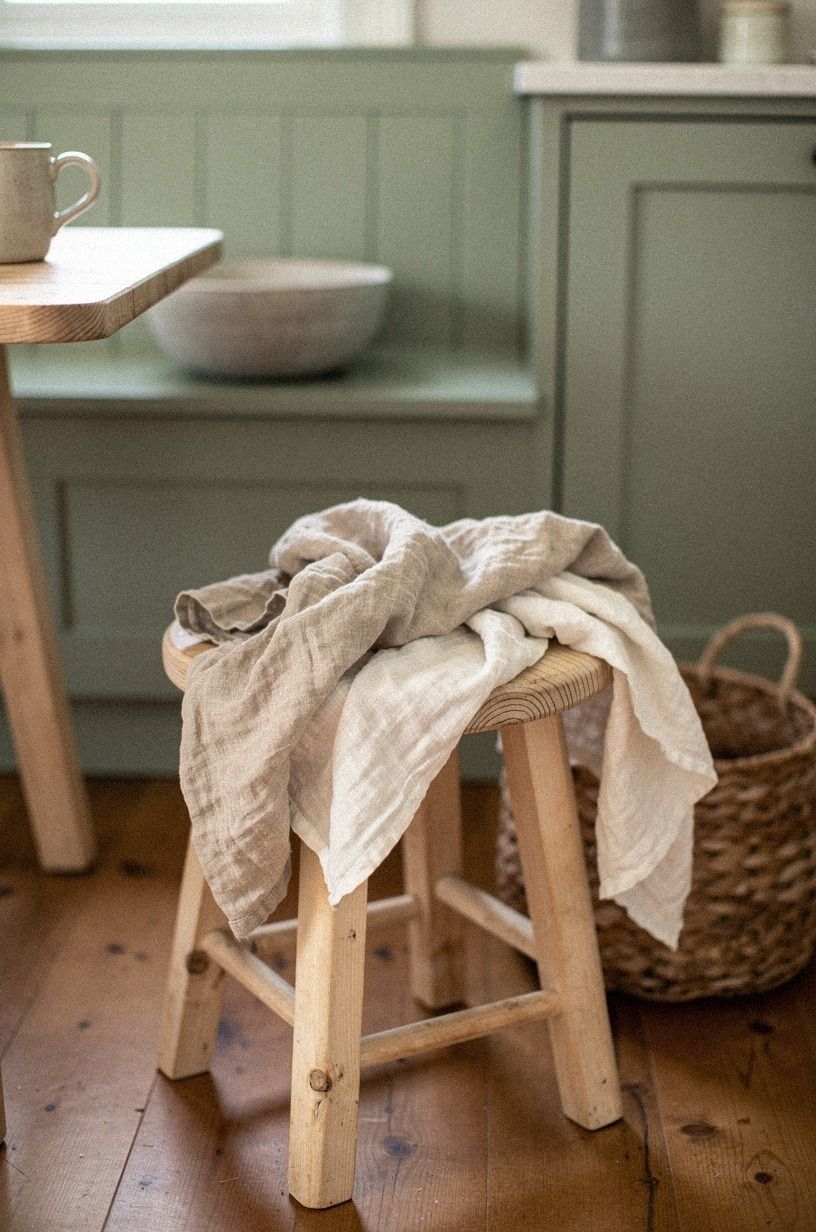
The Three-Texture Farmhouse Stack combines a hard surface, a woven layer, and something soft.
Use book-matched walnut as the hard layer, bring in dusty rose through a textile, and add charcoal in a small cushion or ceramic accent. Brass hardware can supply the warm metallic note without taking over the room.
16Will sage green still work in 10 years?
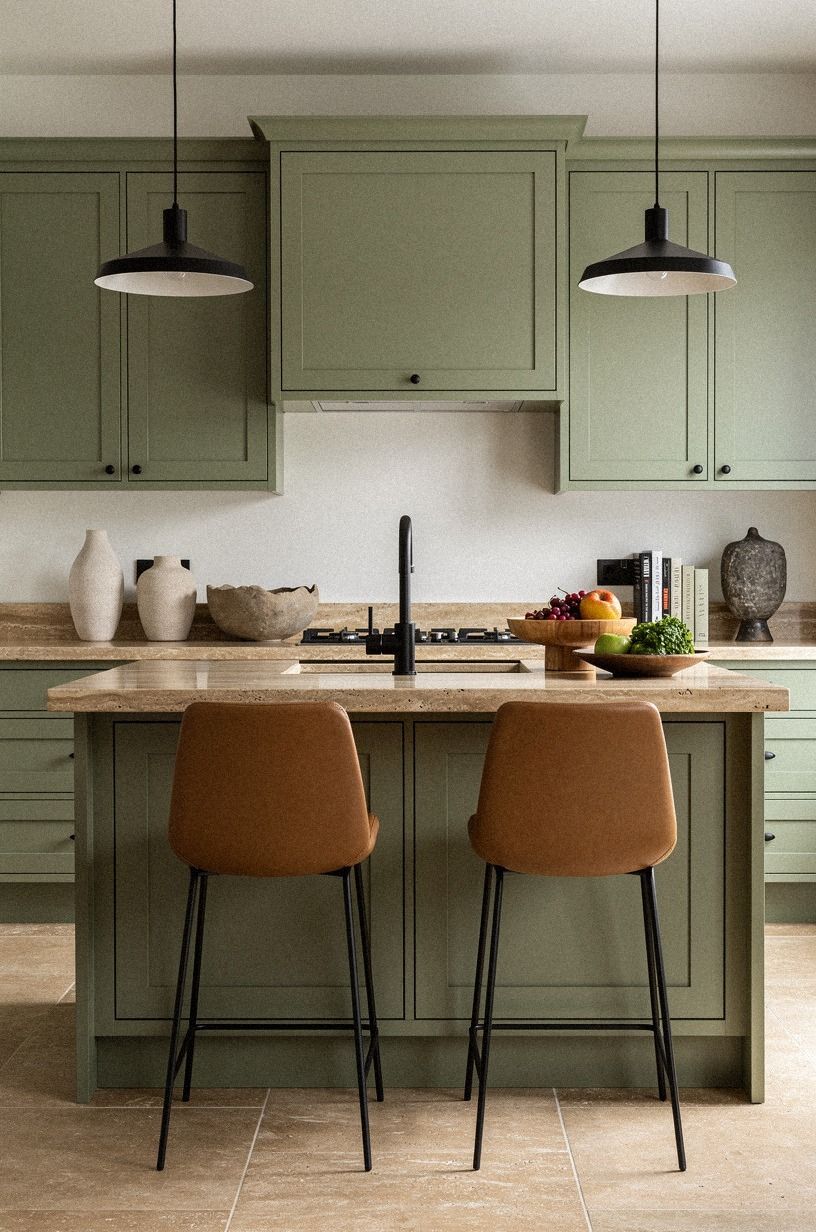
Yes, sage green should hold up when you treat it as a flexible neutral instead of a theme. Soft sage cabinet paint can move toward warm white, camel, black accents, or warm travertine as your taste changes. You’ll have more staying power if the color supports the architecture rather than competing with it.
The real question is whether your materials can age with the paint. I’d choose simple shaker doors, warm travertine, and hardware that can develop character over time. A trendy backsplash may date faster than the cabinet color, so keep the permanent surfaces quieter if you’re unsure.
Your kitchen doesn’t need to look frozen in one design era. Add seasonal textiles, swap art, and let the wood gain marks.
But don’t chase every new green shade. The room will feel more personal when you choose one color that works in your actual light.
The most durable version combines sage with warm white, camel, black accents, and natural stone. That palette can become rustic, refined, cottage-like, or quietly modern as your accessories change. For more long-lasting color direction, compare these green kitchen cabinet ideas from sage to emerald.
The Green Choice I’d Make in My Own Kitchen
I’ve painted enough rooms to know that color alone doesn’t make a kitchen feel warm. The first sage kitchen I styled had the right paint and the wrong temperature everywhere else.
The hardware was bright chrome, the bulbs were blue, and the floor had no visual softness. By evening, the cabinets looked gray and the whole room felt strangely quiet.
Now I start with the light and the materials before I commit to the final green. I want to see how the sample behaves beside wood, stone, and the countertop you already own.
Farrow & Ball Studio Green No.93 is dramatic in a small dose, while Sherwin-Williams Evergreen Fog SW 9130 gives you more breathing room across a larger cabinet run. Neither is automatically better. Your daylight decides.
The other lesson is to stop buying everything from one collection. A kitchen becomes more inviting when one chair is older, one bowl is imperfect, and the wood doesn’t match every other wood. I’d rather see a practical shelf beside a worn stool than a room where every object arrived together.
That mix gives you room to live, change, and make a few small messes without losing the design.
If I were starting this weekend, I’d test the cabinet color, replace the coldest bulbs, and bring in one pale wood element. Then I’d live with those changes for a few days. The right kitchen should feel beautiful at breakfast and forgiving at dinner!
What People Always Want to Know
What is the best Sage Green Farmhouse Kitchen Ideas for a small kitchen?
The best choice is a light sage cabinet paired with IKEA KALLAX birch-effect storage and a pale wood shelf. You’ll keep the room visually open while gaining useful storage. Avoid very dark uppers, heavy patterns, and oversized hardware if your walls and walkways are already tight.
Where can I buy sage green farmhouse kitchen pieces on a budget?
Look at IKEA, Wayfair, and Target for practical pieces, then check Facebook Marketplace and local thrift shops for older wood furniture. Secondhand oak stools often bring more character than new matching sets. You don’t need affiliate links or a full collection to create the look.
How much does a sage green farmhouse kitchen makeover cost?
A small refresh can run about $100 to $300 if you use paint you already own, rearrange your shelves, and add inexpensive textiles. A broader cosmetic project typically falls within the $300-$1,500 budget range, depending on hardware, lighting, and backsplash choices.
Can I create a sage green farmhouse kitchen on a budget?
Yes, and you can start with three low-cost moves: move existing pieces into a stronger arrangement, paint one cabinet zone, and replace harsh bulbs with warmer dimmable lighting. Peel-and-stick backsplash can help renters test the direction before spending on permanent tile.
Is a sage green farmhouse kitchen worth it in a small space?
Yes, because sage adds color without the visual weight of navy or black. Keep your island clearance at 42 to 48 inches where possible, use a narrow runner, and repeat one pale wood tone. You’ll get warmth without making the room feel crowded.
Is sage green a good idea for a rental?
Yes. Use removable hooks, peel-and-stick tile, a tension rod, and freestanding furniture instead of permanent changes. Removable cabinet film can test the color on a small section, while linen curtains and aged-look hardware give your kitchen personality without risking the deposit.
Where I’d Start First
If I had to pick one, I’d start with sage cabinet paint. It changes the room before you buy anything else, and warmer wood will keep it from turning gray in weak light. Test your sample beside the countertop you already have, then let the kitchen show you what it needs.