
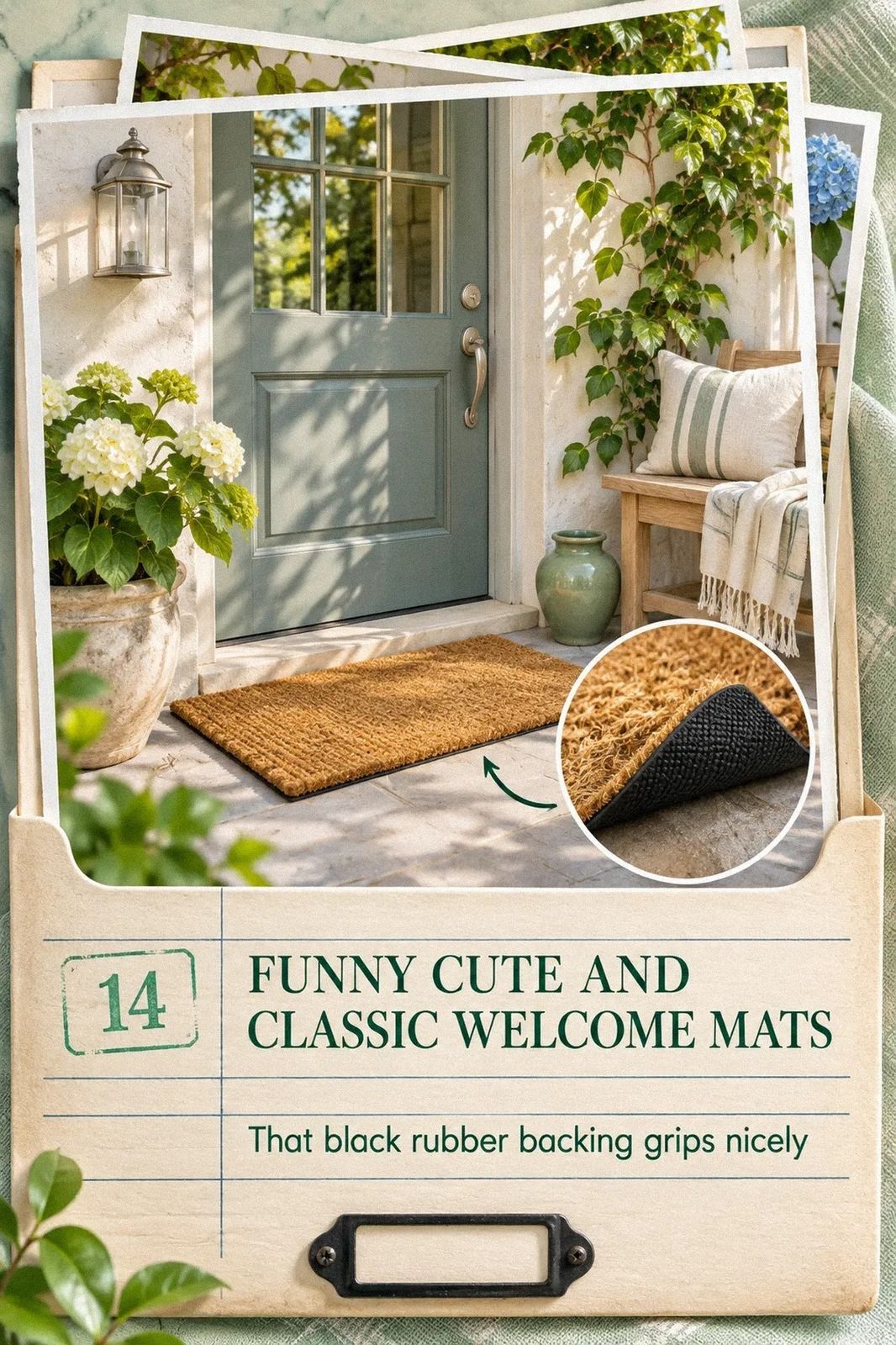
 by
Front door mat ideas work best when they solve two jobs: they catch grit and tell guests what kind of home they’re entering. I learned that after buying a thin mat that curled at every corner. Your entry deserves better. These funny, cute, and classic looks make a small threshold feel warm, polished, and intentional.
- Anchor the Entry With a Classic Coir Rectangle
- Can a Smaller Funny Mat Work Over a Larger Base?
- Choose a Navy Blue Welcome Mat for Quiet Contrast
- Coir and Rubber, Rough Meets Smooth
- Farrow & Ball Hague Blue and the Quiet Mat
- Swap a Long Runner for a Compact Front Door Entrance Rug
- Use the Three-Height Light Stack Beside the Mat
- White Door, Warm Fiber: A Contrast That Works
- Mix Cute Lettering With a Traditional Border
- Choose Classic Stripes Over Busy Prints
- Why Does a Vertical Pattern Help a Narrow Door?
- Pair Funny Words With a Serious Material
- The Welcome-Mat Color Ladder Before You Buy
- Washable Layers for Real Life
1Anchor the Entry With a Classic Coir Rectangle
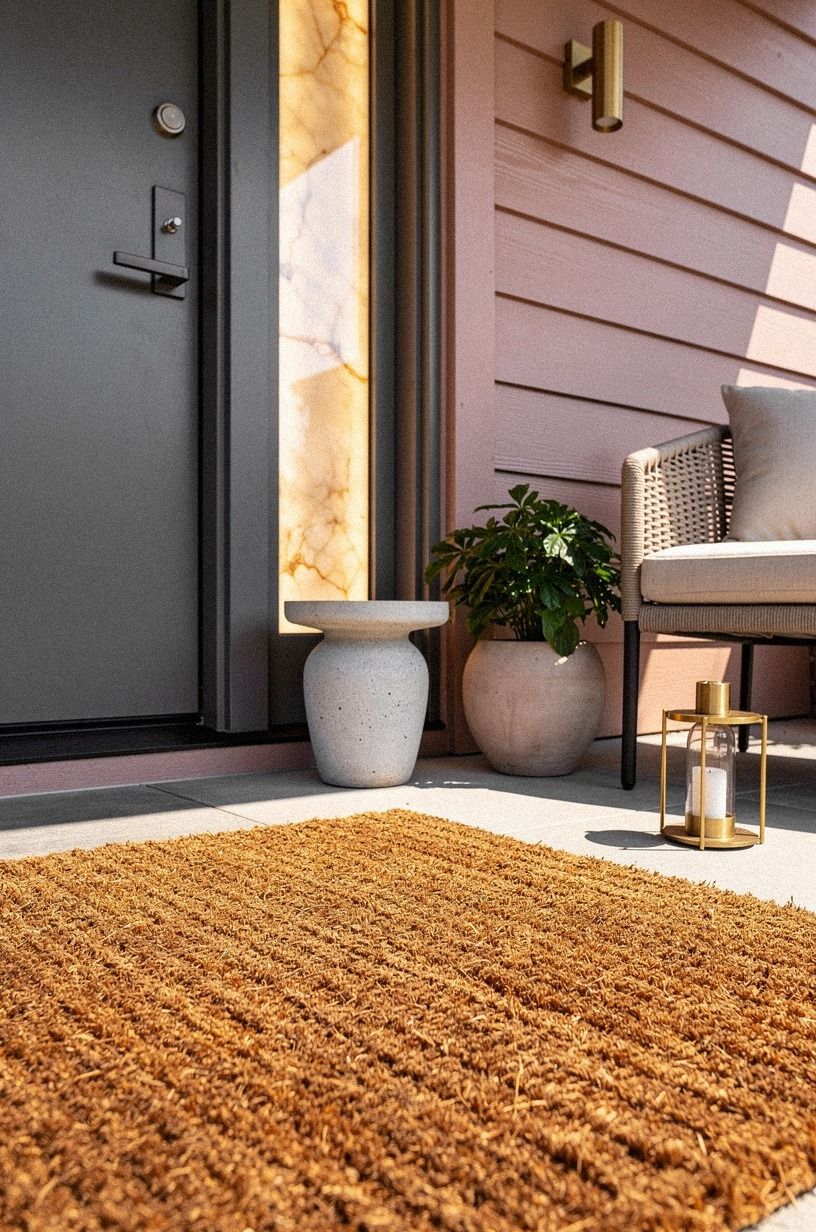
A dense natural coir mat gives your front door with welcome mat pairing a grounded, classic start. Add a backlit translucent onyx detail nearby if your entry has room for a more dramatic material moment.
Choose a simple rectangle with a tight coconut-fiber weave, then leave enough visible flooring around it so the mat doesn’t look squeezed beneath the door. You’ll want to check the swing first.
If your door barely clears the surface, a lower-profile polypropylene mat will save you from daily scraping.
I’d skip a tiny novelty mat unless your porch is extremely narrow. It disappears visually and won’t catch much dirt. A 24-by-36-inch shape gives your eye a clear landing zone, while a 30-by-48-inch mat feels more generous when you’ve got room.
If your entry uses dusty rose, charcoal, and brass, repeat one of those tones in the lettering or border so the threshold feels connected.
For more personality, pair the mat with welcome sign ideas for your front door. Your sign and mat don’t need matching words, but they should share one memorable color.
Typical cost by tier (US averages):
2Can a Smaller Funny Mat Work Over a Larger Base?
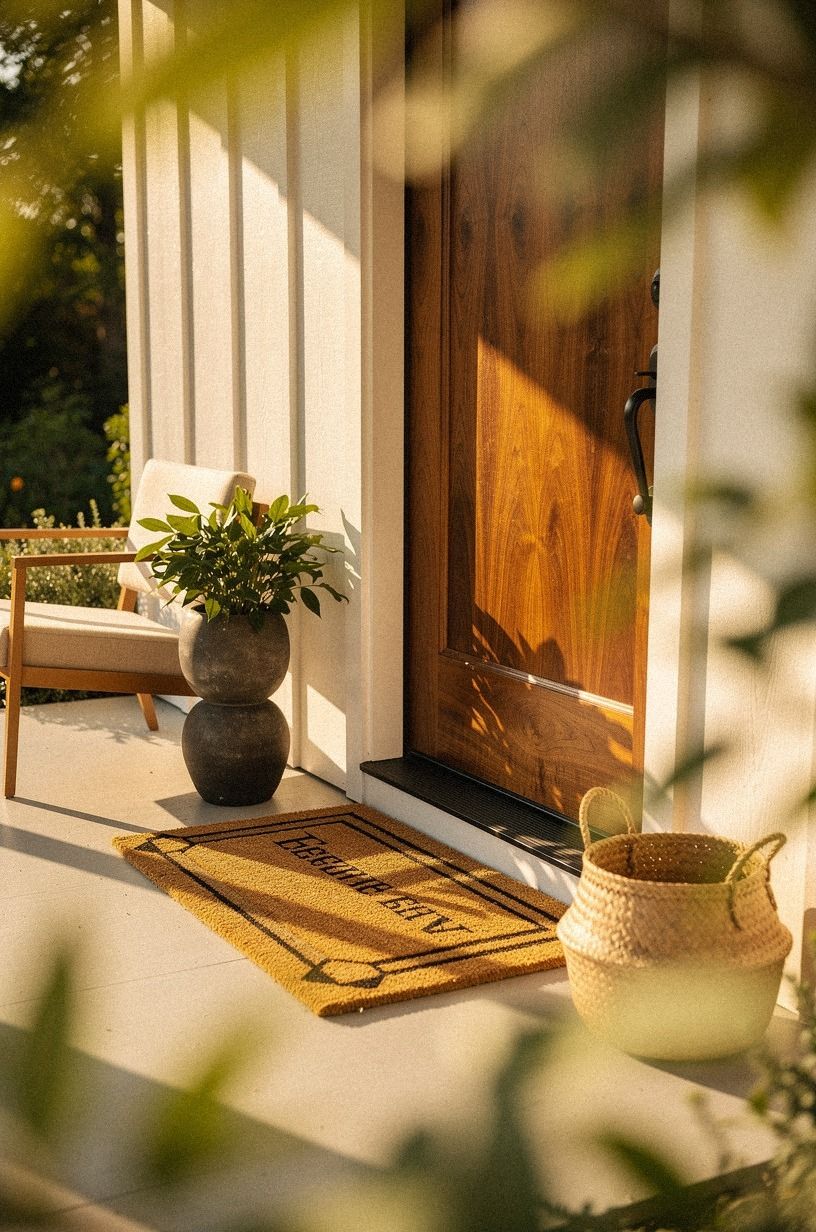
Layering lets you use a funny mat without making the whole entry shout.
3Choose a Navy Blue Welcome Mat for Quiet Contrast
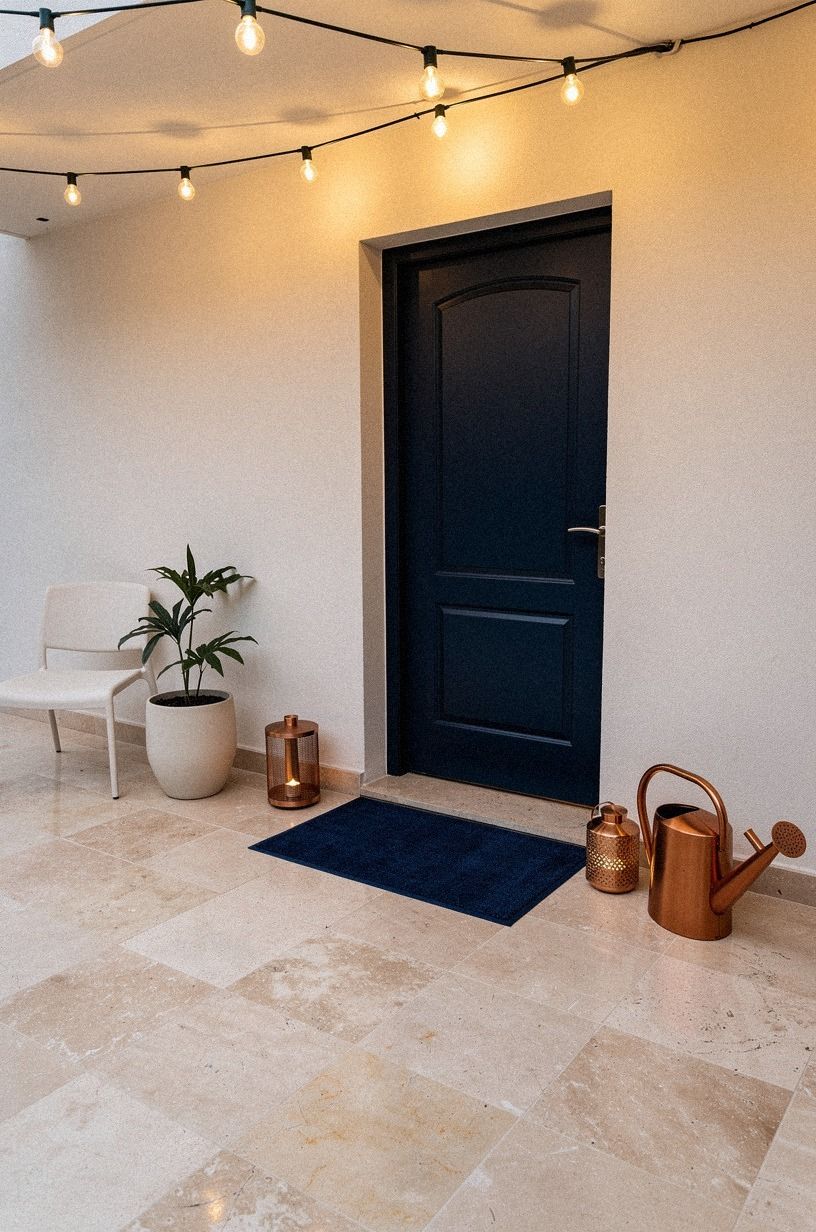
A navy blue welcome mat gives a pale porch enough contrast without the severity of black. It works especially well with white or ivory doors set against warm travertine, copper, or natural wood, and the dark blue hides everyday dust better than a light woven surface. If your porch gets strong afternoon sun, look for solution-dyed polypropylene so the color has a better chance of staying rich.
I’d choose navy over charcoal when your entry feels flat. Charcoal can read industrial, while navy adds a calmer, more traditional note.
You’ll see the difference beside a white door painted Benjamin Moore White Dove OC-17, where the blue feels crisp rather than harsh. Your hardware can stay copper, black, or aged bronze.
Use a thin navy runner if your door opens toward a long walkway, but keep the walking path clear. A walkway needs 36 inches minimum for comfortable passage, so you shouldn’t let a wider mat steal the route.
For another color direction, compare these blue front door ideas for calm classic charm. Your mat can borrow the color without copying the door.
4Coir and Rubber, Rough Meets Smooth
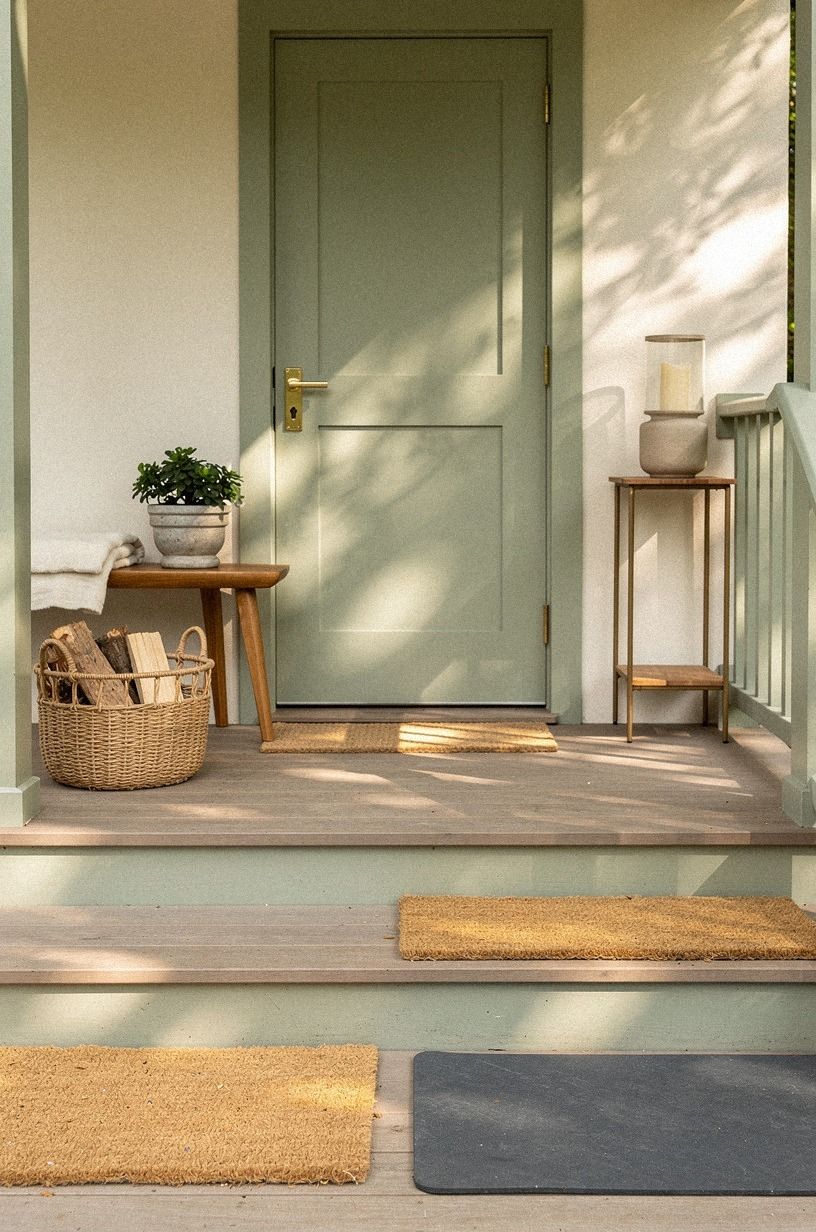
The Two-Texture Rule is simple: combine one rough surface for scraping with one smooth edge for visual calm. A natural coir face handles the gritty work, while an unlacquered brass threshold strip keeps the mat visually contained. You’ll get a welcoming look that feels practical instead of overly decorative.
Your porch may need a different balance if it’s exposed to heavy rain. Coir can hold moisture, so place it under a covered threshold or choose a weather-ready raised-pattern mat.
I’d skip a shaggy outdoor mat at an unprotected door. It traps dampness and takes too long to dry, which isn’t the relaxed entry you want.
And if you’re styling a rental, this layered texture gives you character without paint or drilling. Add a weathered teak stool beside the door for a place to set a parcel, but keep the center clear. Your mat should stay the easiest step in and out, not become an obstacle course.
5Farrow & Ball Hague Blue and the Quiet Mat
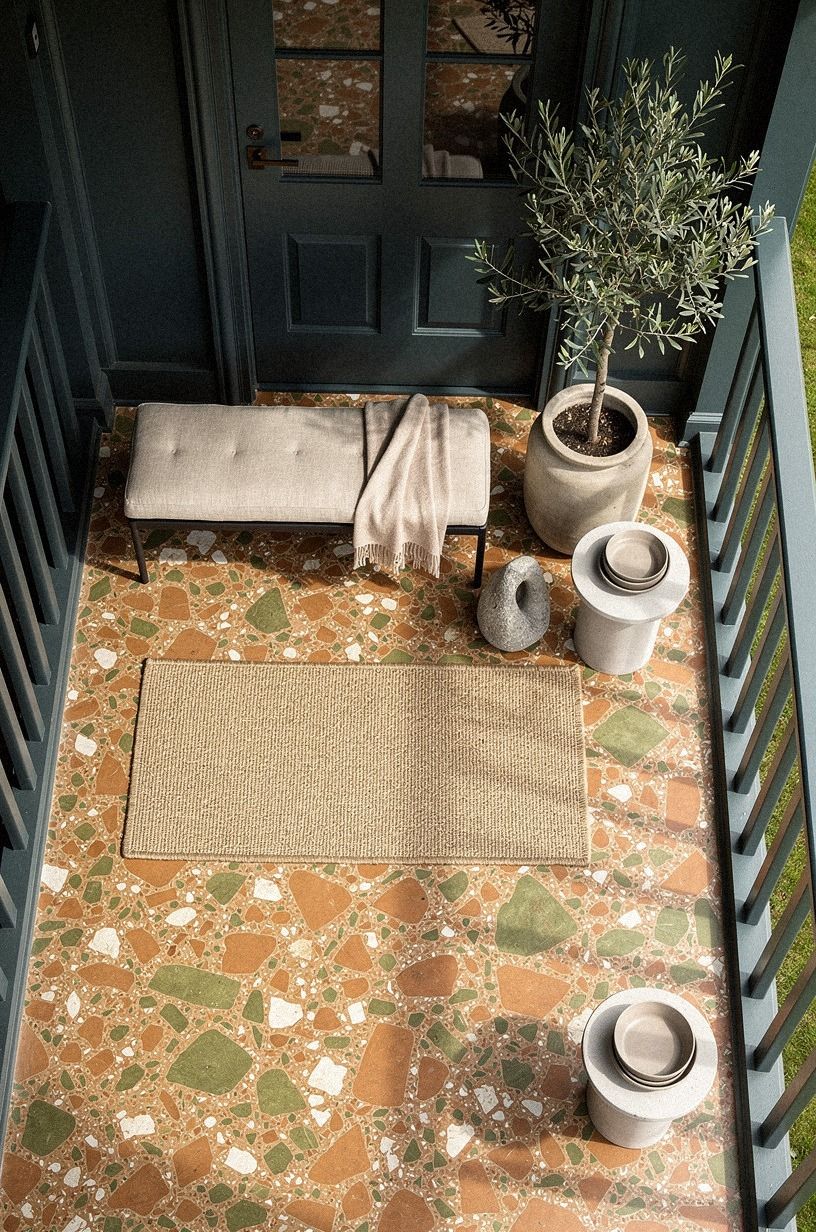
A strong door color can do most of the talking, so your mat doesn’t need a dramatic pattern. Try a warm solid mat beneath terracotta paint, or use a natural fiber design beside olive trim and stone. An oversized-chip terrazzo threshold can tie those tones together without adding another busy pattern.
You’ll want to repeat one small tone from the door in the mat border or lettering. If your door is green, look for muted olive or charcoal instead of bright emerald.
If it’s red, a natural-fiber mat with black type will keep the entry from feeling theatrical. I’d avoid pairing a loud door with a loud quote.
Your front door should feel welcoming, not like it’s competing with a billboard.
But a quiet mat doesn’t mean a boring one. Choose a scalloped edge, a fine stripe, or a hand-lettered border. If you’re considering a sunny paint color, these yellow front door ideas for a sunny welcome show how much warmth a restrained mat can add.
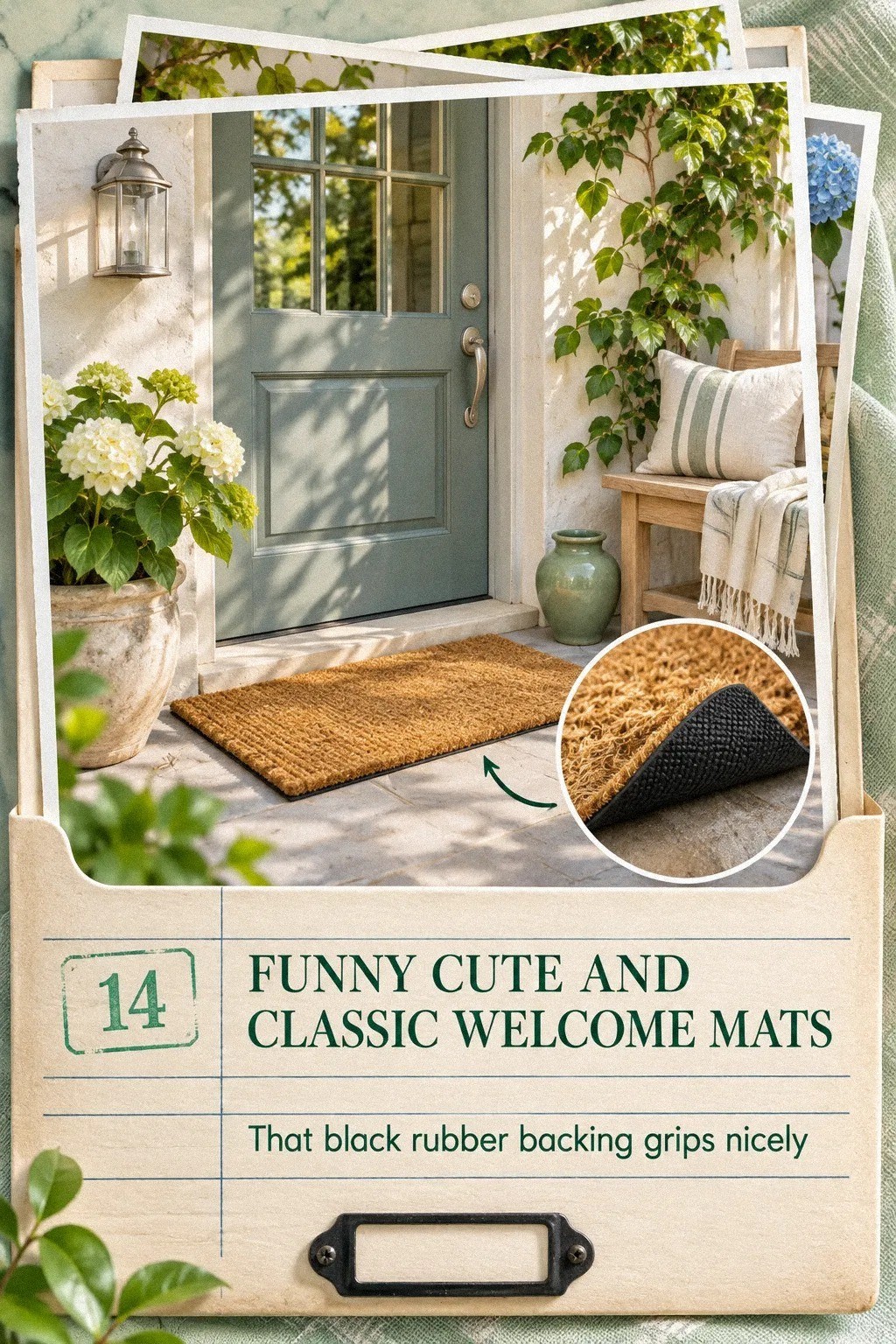
6Swap a Long Runner for a Compact Front Door Entrance Rug
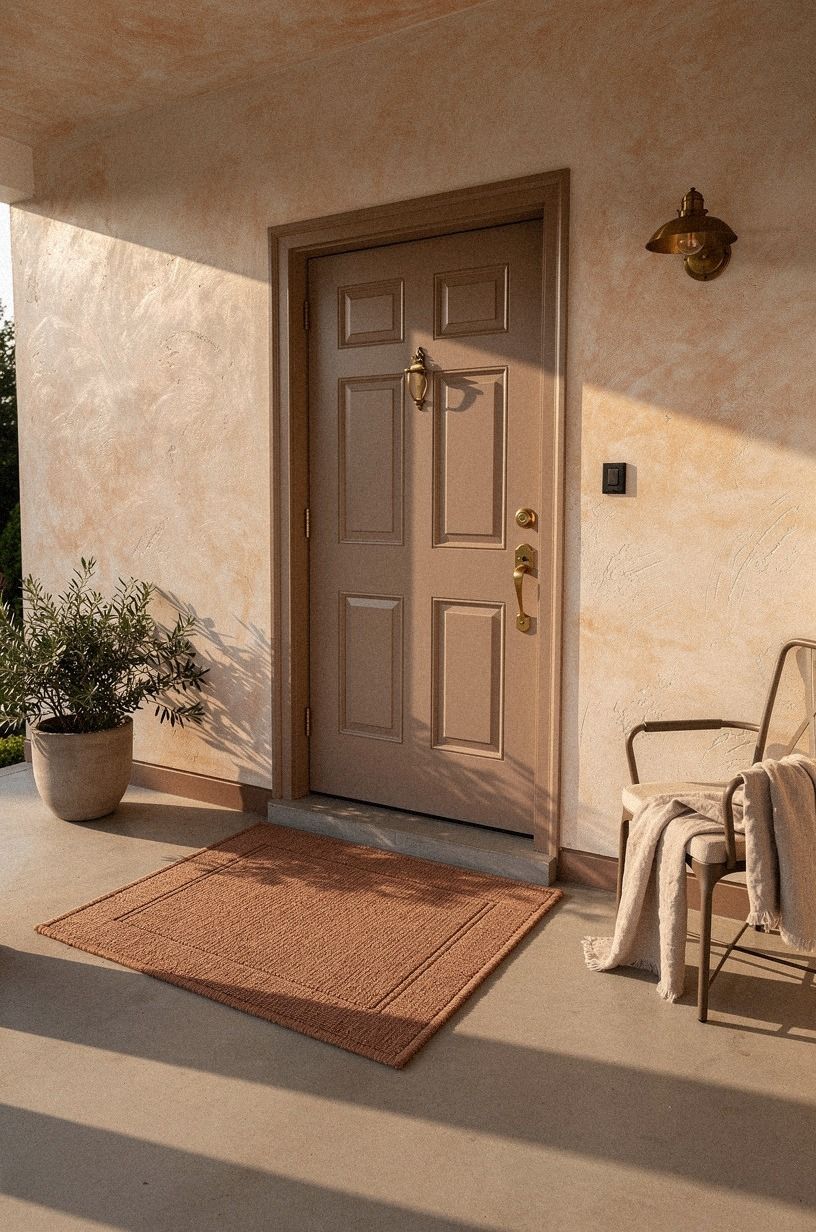
A compact runner can work when the door opens onto a narrow landing, especially if a standard rectangle blocks the walkway. Pick a low-pile polypropylene runner with a striped or bordered pattern, and place it parallel to the path rather than directly across the threshold.
A hand-applied Venetian plaster wall can add softness behind it without competing with the mat. Your goal is a clear step, not a full porch rug.
You’ll want to measure before buying. A 36-inch walkway clearance should remain open, and the door needs enough room to swing without catching the edge. I’d skip an oversized outdoor rug in a cramped entry because it makes the space feel crowded and gives wet shoes nowhere to land.
For a softer look, use a faded rust stripe with a clay or linen wall color. For a sharper look, choose cream and black.
Your front door with doormat pairing will feel more architectural when the runner echoes the lines of the siding or porch boards. And if your door is wood, browse wooden front door ideas for warm natural character.
The warm grain will make a plain runner feel intentional.
7Use the Three-Height Light Stack Beside the Mat
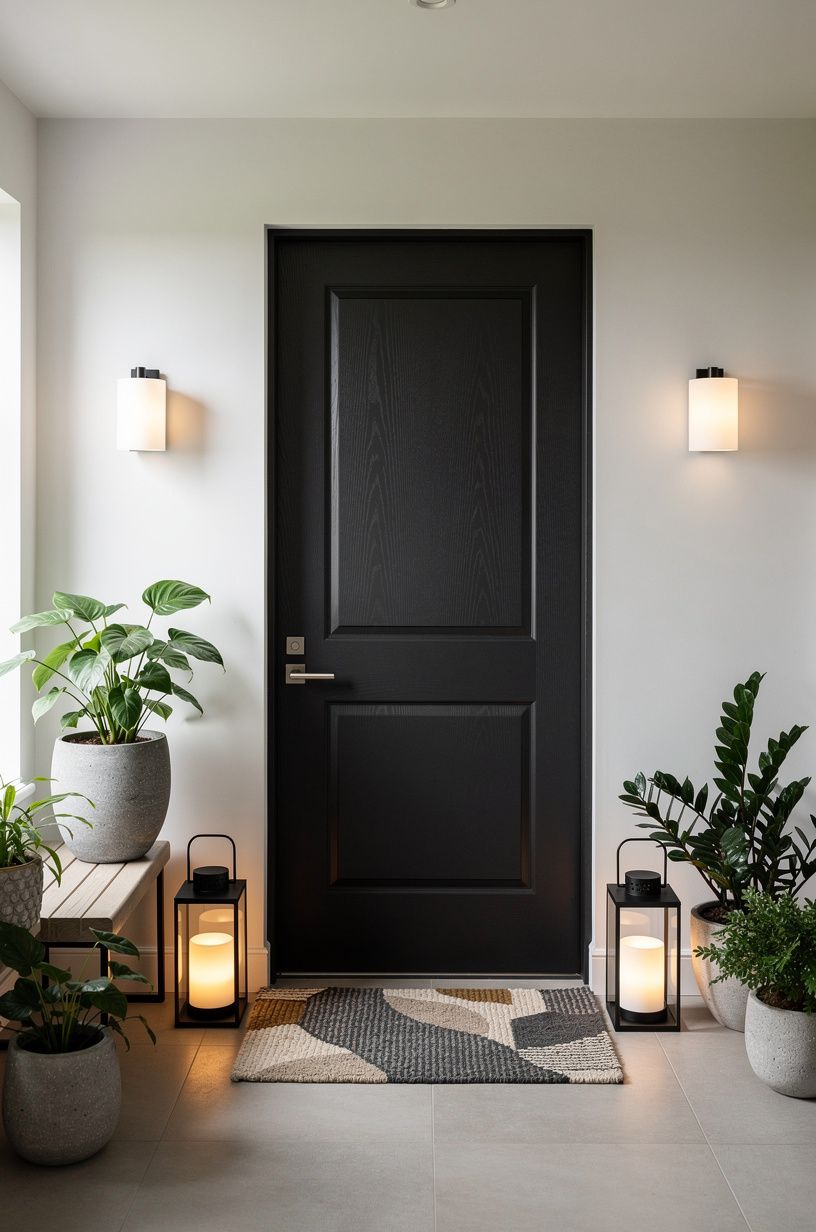
The Three-Height Light Stack creates a balanced entry with three visual levels: the low mat, a medium planter, and a taller lantern or plant. Place a flat woven doormat at floor level, a plum-toned planter with shagreen accents around knee height, and a narrow rose-gold lantern or leafy stem near the door handle. You’ll give your eye somewhere to travel without filling every inch.
Your planter doesn’t need to be huge. A plum ceramic pot with a compact evergreen can bring an earthy note, while a rose-gold lantern adds a refined edge.
I’d skip two identical pots if your porch is tiny. Symmetry can look stiff when there’s no breathing room.
And you can adapt the stack for renters. Use a lightweight planter, a battery lantern, and a removable hook instead of permanent fixtures.
Your entry will still feel inviting, and you won’t be left patching holes later. A small rose-gold lantern beside a natural mat is enough to make the threshold feel cared for.
For a more coordinated color story, repeat one tone from your welcome sign ideas for your front door in the planter or lantern finish. The effect is subtle, but it makes the whole arrangement feel thoughtful.
8White Door, Warm Fiber: A Contrast That Works
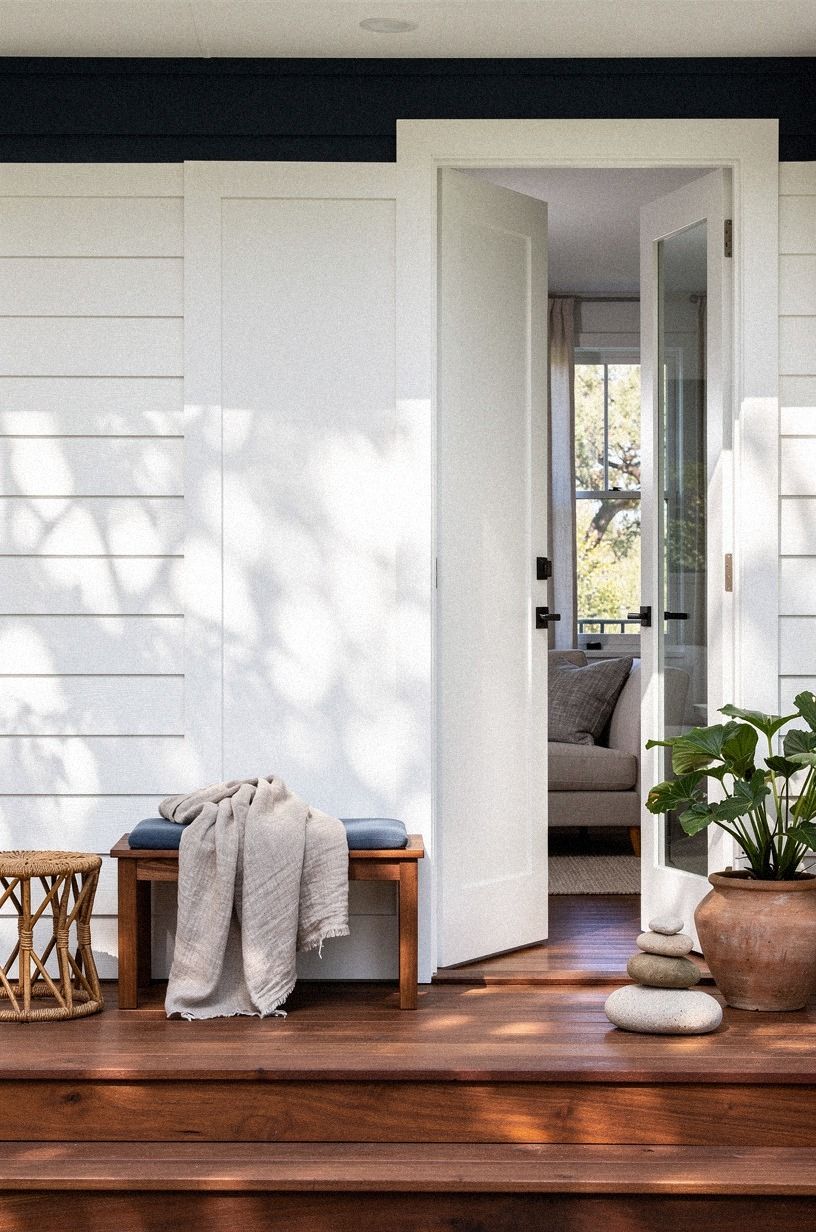
A white door can look crisp or chilly, depending on what sits beneath it. A woven seagrass mat with a washed Belgian linen tone or tightly braided coir design brings warmth without adding another strong color. This works especially well with a whitewashed porch, navy trim, or walnut details.
You’ll want to keep the surrounding pieces quiet. A walnut box, a clay planter, or a small brass number can repeat the mat’s natural warmth.
I’d skip a gray synthetic mat here because it can make the white door feel colder, especially in shaded light. Your goal is contrast through texture rather than contrast through harsh color.
Use a mat with a narrow black border if you need definition. If your door already has trim, let the border echo it.
For more ideas, see these white front door ideas for crisp timeless curb appeal. The right mat will make your entry look lived-in before you add anything else.
9Mix Cute Lettering With a Traditional Border
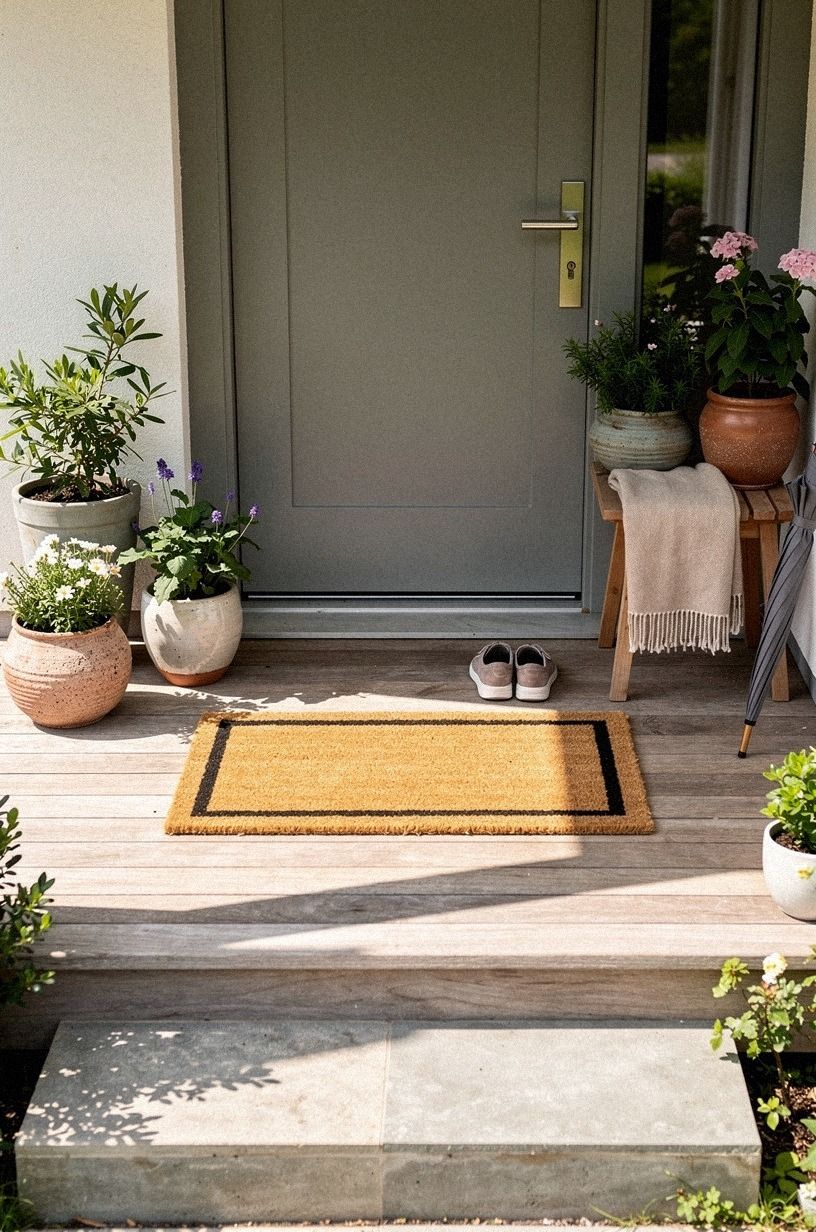
Cute doesn’t have to mean childish. Look for a hand-lettered mat with an organic bouclé texture, traditional border, modest type, and one short phrase.
“Hi There” feels friendly. “Come In” feels classic.
A long sentence may be funny in person, but it can become visual noise when you see it every morning.
Your lettering should be readable from the walkway. Choose cream or gold type against emerald or dark green, and avoid overly thin fonts that disappear when the fibers get dusty.
I’d skip a novelty shape if your porch has formal trim. A traditional border will help the message fit the architecture.
What makes your entry feel personal, the words or the materials? Usually, the material wins. A dense bouclé-textured face, brass house numbers, and a small cream planter create more staying power than a loud phrase alone.
And if you want a vintage note, these stained glass front door ideas for vintage charm can guide the color without turning the mat into a theme.
10Choose Classic Stripes Over Busy Prints
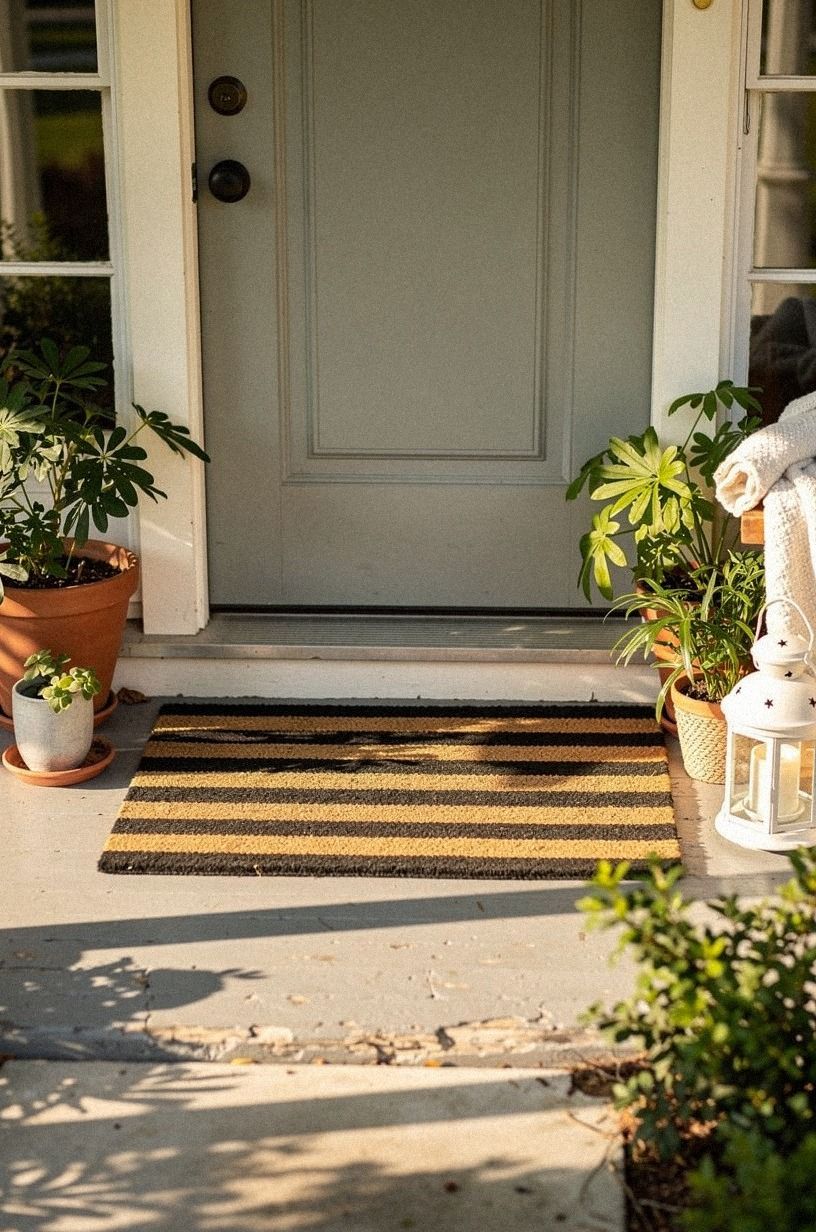
Classic stripes give your front door mat ideas a tailored look, especially when your entry has patterned brick or decorative siding. Try a forest-green-and-rust stripe or a natural-oak-toned stripe on a flat-weave polypropylene mat.
Beside a Nero Marquina black-marble step with white veining, those colors feel grounded rather than busy. The lines add movement, but they won’t compete with the door.
You’ll want the stripe direction to support the space. Horizontal lines make a narrow landing feel wider, while vertical lines can pull the eye toward the doorway.
Your mat should fit the porch rather than force a design scheme onto it. I’d choose stripes over a busy botanical print when the architecture already has plenty going on.
A striped mat also gives you room to change accessories seasonally. Add a terracotta pot in fall, a simple evergreen in winter, or a bright ceramic planter in spring. The base remains steady.
If your door is red, these red front door ideas for a lucky bold welcome show why a restrained mat keeps the color grounded.
11Why Does a Vertical Pattern Help a Narrow Door?
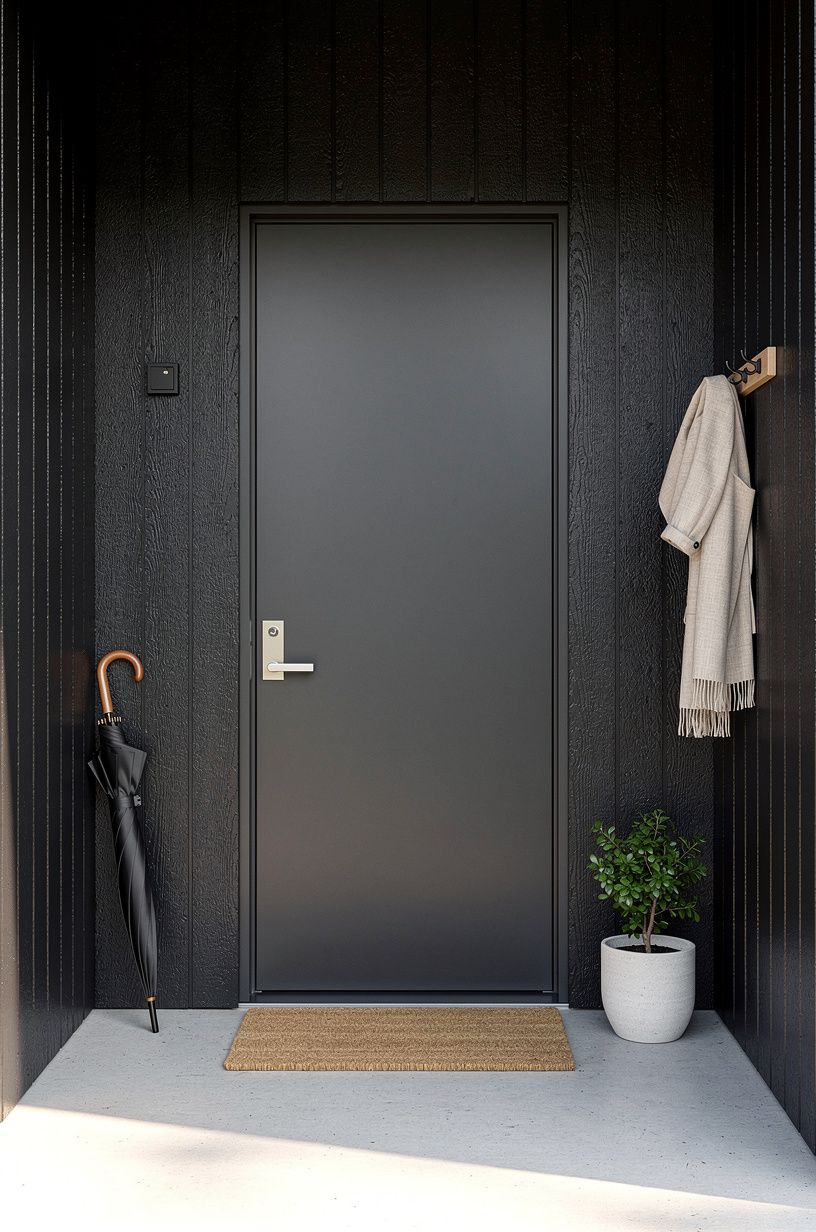
A vertical pattern can make a narrow doorway feel taller and more deliberate.
12Pair Funny Words With a Serious Material
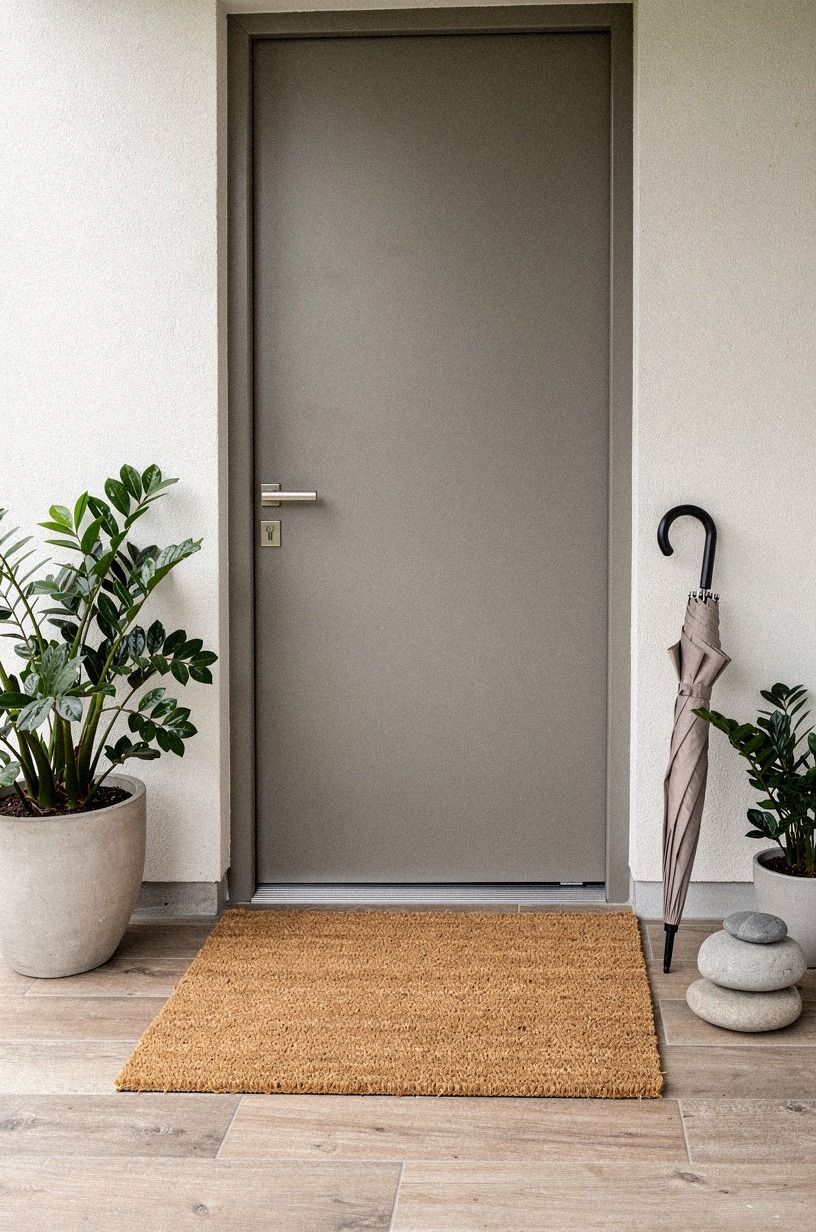
The funniest mats work best when the material looks substantial. A phrase printed on a thin foam mat can feel temporary, but the same words on a heavy rubber-backed mat with a Carrara marble-inspired ground and subtle gray veining feel intentional. That contrast is what makes the joke land.
Try a dry phrase such as “Wipe Your Paws” or “Dogs Welcome, People Tolerated.” Keep the lettering large and the color limited to one or two tones. You’ll want your visitors to read it quickly, then step inside.
I’d skip anything that needs explanation. If you have to tell the story behind the mat, it’s not doing its job.
Your serious material can also support a more classic porch. Add a cerused white oak bench, a simple lantern, or a black planter, then let the message be the only playful element.
And if you’re unsure about the mix, choose one funny detail and keep everything else quiet. That balance feels charming rather than cluttered.
For a historic entry, pair the phrase with a restrained border inspired by these Victorian mid-century front door ideas. A little visual discipline keeps the joke from becoming juvenile.
13The Welcome-Mat Color Ladder Before You Buy
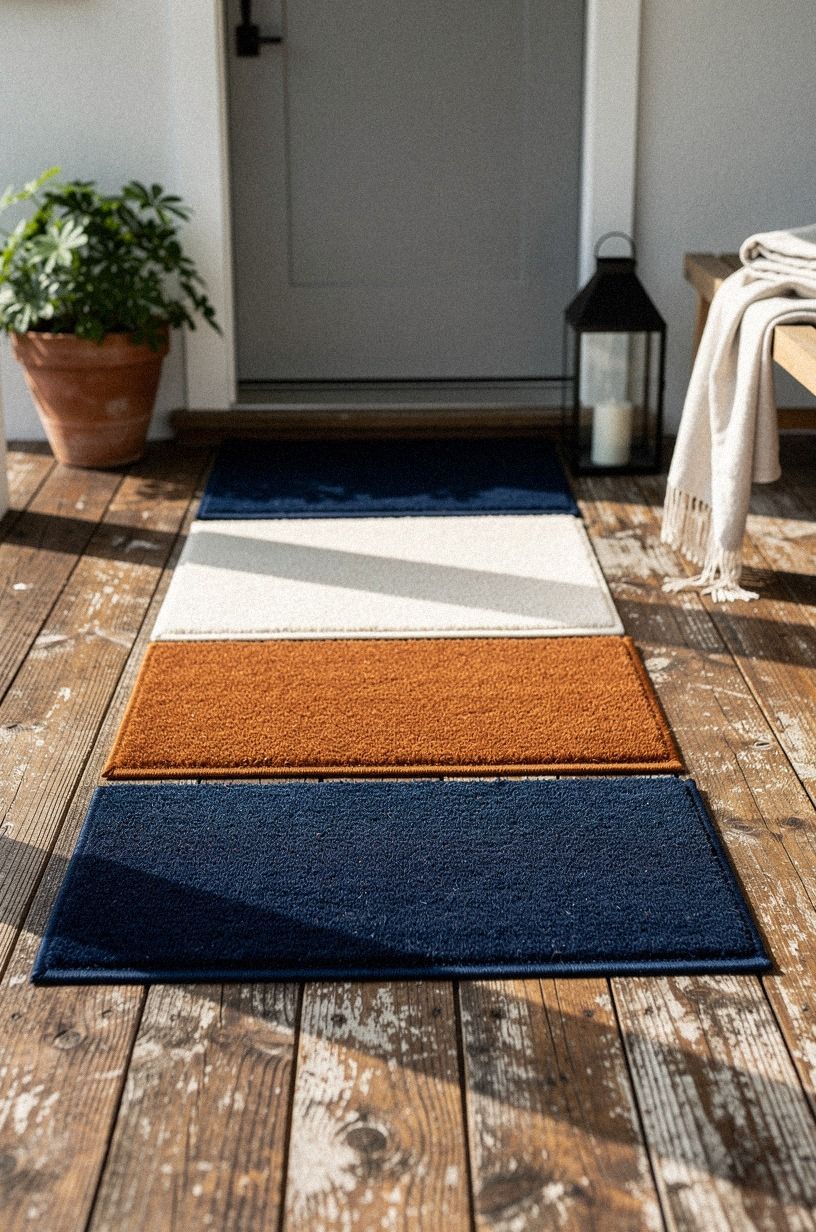
The Welcome-Mat Color Ladder moves from light to dark: ivory, reclaimed weathered teak brown, midnight blue, then black. Start by looking at your door, porch floor, and trim.
If all three are light, you can choose a darker mat. If your entry is already shadowy, an ivory or medium-brown mat will keep it from feeling closed in.
You’ll want to test the color outdoors because porch shade changes everything. A mat that looks soft beige online may read gray beside cool concrete.
I’d place a sample near the door for a full day before committing. Your eye will catch the difference between morning light and evening light.
Use Benjamin Moore Aura Exterior or Sherwin-Williams Emerald Exterior on nearby painted trim if the entry needs a refresh, but don’t repaint solely to match a mat. The mat should support your architecture, not create a renovation project.
For a warmer historic direction, explore Victorian mid-century front door ideas. Your color ladder will make the choice easier.
14Washable Layers for Real Life
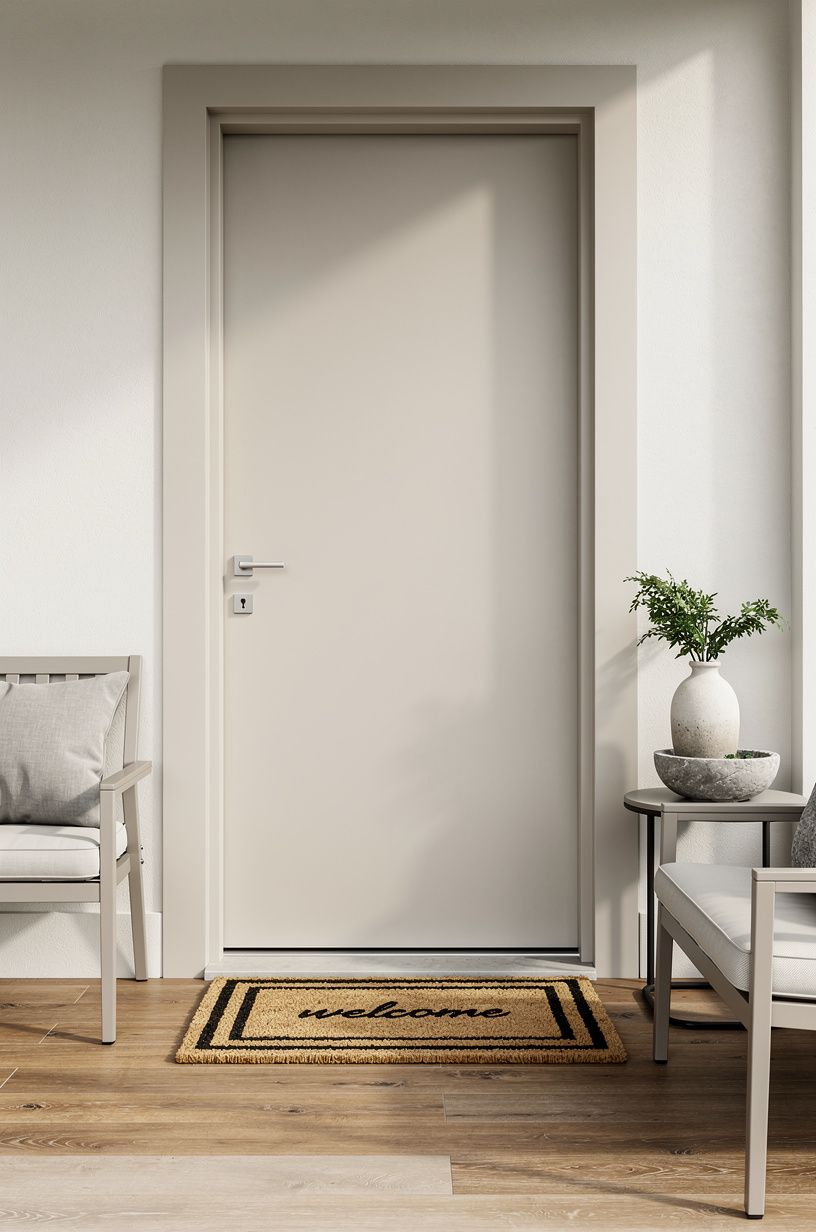
A washable top layer makes sense when your entry sees mud, pets, or frequent deliveries.
Why I Don’t Treat a Doormat as an Afterthought
I used to buy the mat last, after the paint, planters, hardware, and lighting were already chosen. That order made every entry feel slightly off.
The mat was either too small, too pale, or too loud for the pieces around it. Once I started treating it as part of the first design decision, the porch became easier to arrange.
A doormat has an unusual job. It’s practical enough to collect grit, but visible enough to announce the mood of the house.
A dense coir surface feels earthy and established. A navy pattern feels composed. A funny phrase adds a little welcome before anyone says hello.
Your choice doesn’t need to be expensive, but it does need to match how you live.
I’d rather see a $30 to $80 mat in the right scale than a costly piece that curls, slides, or blocks the door. The mat backing matters.
The edge matters. The way it looks after rain matters.
You’ll get more satisfaction from a simple design that stays flat than from an elaborate one that becomes annoying after two weeks.
The best front door with doormat pairing also leaves room around itself. Don’t crowd it with three planters because the porch feels empty in real life.
Give the threshold a little air, then add one detail that repeats the mat’s color. That restraint is what makes the entry feel warm, inviting, and ready for real life.
The Questions I Get Asked Most
What is the best Front Door Mat Ideas (Funny, Cute & Classic Welcome Mats) for a small front porch?
A low-profile 24-by-36-inch coir mat or polypropylene mat is the safest choice for a small porch. A flat backing keeps the door moving, while navy, natural fiber, or charcoal adds contrast without crowding the landing. Your mat should leave the main walkway open.
Where can I buy Front Door Mat Ideas (Funny, Cute & Classic Welcome Mats) pieces on a budget?
Look at IKEA, Wayfair, and Target first, then check Facebook Marketplace or a local thrift shop for solid mats. Second-hand finds can cut the cost, but you’ll want to inspect the backing, edges, and smell before bringing one home. I’d skip anything curled or damp.
How much does a Front Door Mat Ideas (Funny, Cute & Classic Welcome Mats) makeover cost?
A small makeover usually runs about $100 to $300, depending on the mat, planter, paint, and lighting. Free rearranging can change the entry immediately, so move what you own first. Your main paid upgrade should be a durable, correctly sized mat.
Can I create a Front Door Mat Ideas (Funny, Cute & Classic Welcome Mats) look on a budget?
Yes, and you can start with what you have. Wash the porch, reposition one planter, and layer a smaller printed mat over a larger base.
A $20 to $50 accessory can add color, while Benjamin Moore or Sherwin-Williams exterior paint gives trim a longer-lasting refresh. For color inspiration, compare these red front door ideas for a lucky bold welcome.
Is a Front Door Mat Ideas (Funny, Cute & Classic Welcome Mats) look worth it in a small space?
Yes, because a small entry gives every detail more influence. Choose one flat mat, one vertical planter, and clear walking space.
The right scale makes the porch feel calmer, while an oversized rug or crowded collection will make your doorway harder to use. A compact white front door idea can also help the area feel brighter.
Is Front Door Mat Ideas (Funny, Cute & Classic Welcome Mats) a good idea for a rental?
Yes. Use a removable mat, a lightweight planter, and a battery lantern instead of drilling or permanent changes. No-damage layers add personality, and you can take them with you later.
A tension rod or removable hook can hold a small seasonal detail near the door.
Where I’d Start First
If I had to pick one, I’d start with a layered natural coir mat and a smaller navy top mat. The dark center hides grit, while the fiber border keeps the entry from looking flat. Pin that combination for later and compare it with more front door color ideas before you shop.