
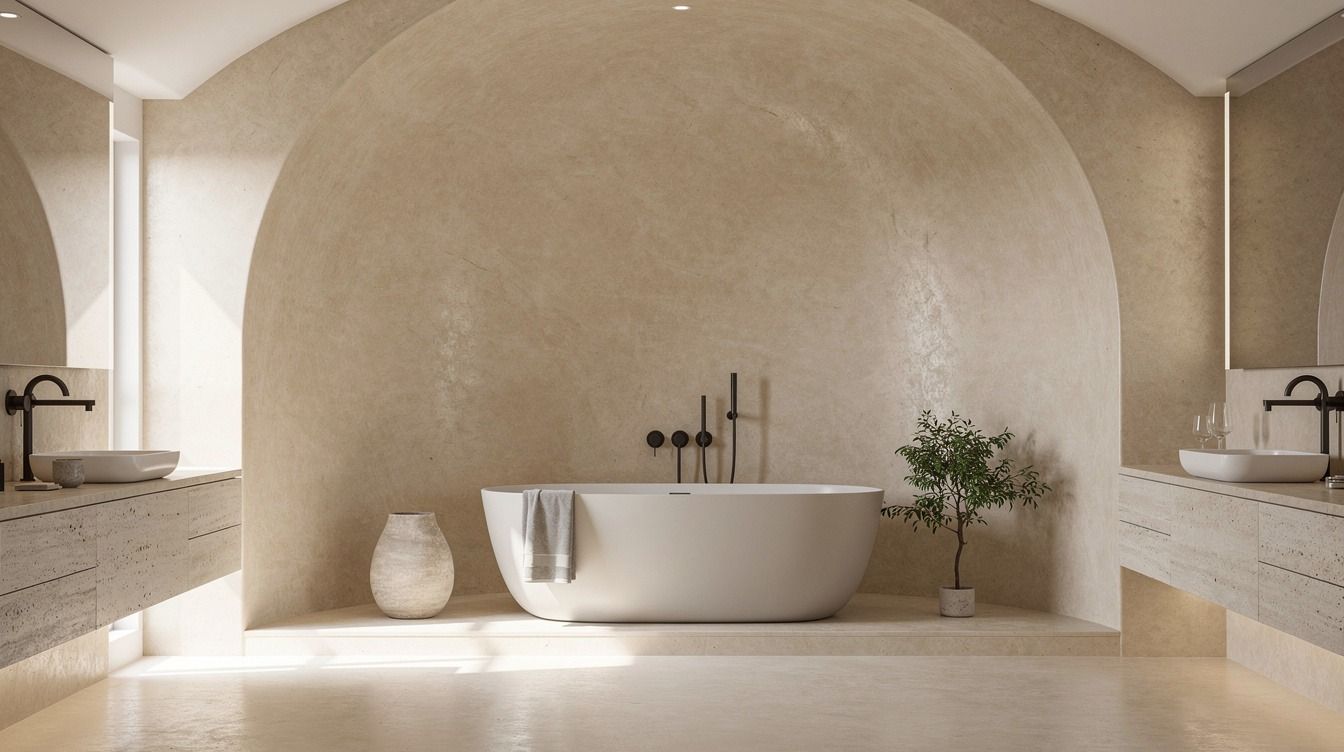
 by
by Venetian plaster on curved walls works because the curve catches light differently all day, giving you depth that flat paint can’t fake. I once treated a rounded wall like a problem to hide behind furniture. Wrong call. The plaster is the feature, and you don’t need a giant renovation to let it lead.
- Wrap a curved wall bathroom in soft limestone plaster
- Use The Quiet Halo Method behind a bed
- Float a reading bench along the plastered radius
- Paint the surrounding room lighter than the curve
- Frame the plaster with a ceiling-height curtain track
- Build The Three-Height Light Stack for texture after dark
- Hang art on the curve with the 57-to-60 rule
- Choose hand-troweled movement over a flawless finish
- Add a built-in ledge instead of another console table
- Put plaster above tile in a textured walls bathroom
- Let a rug overlap the curve’s furniture zone
- Compare a $200-$800 refresh with custom millwork
1Wrap a curved wall bathroom in soft limestone plaster
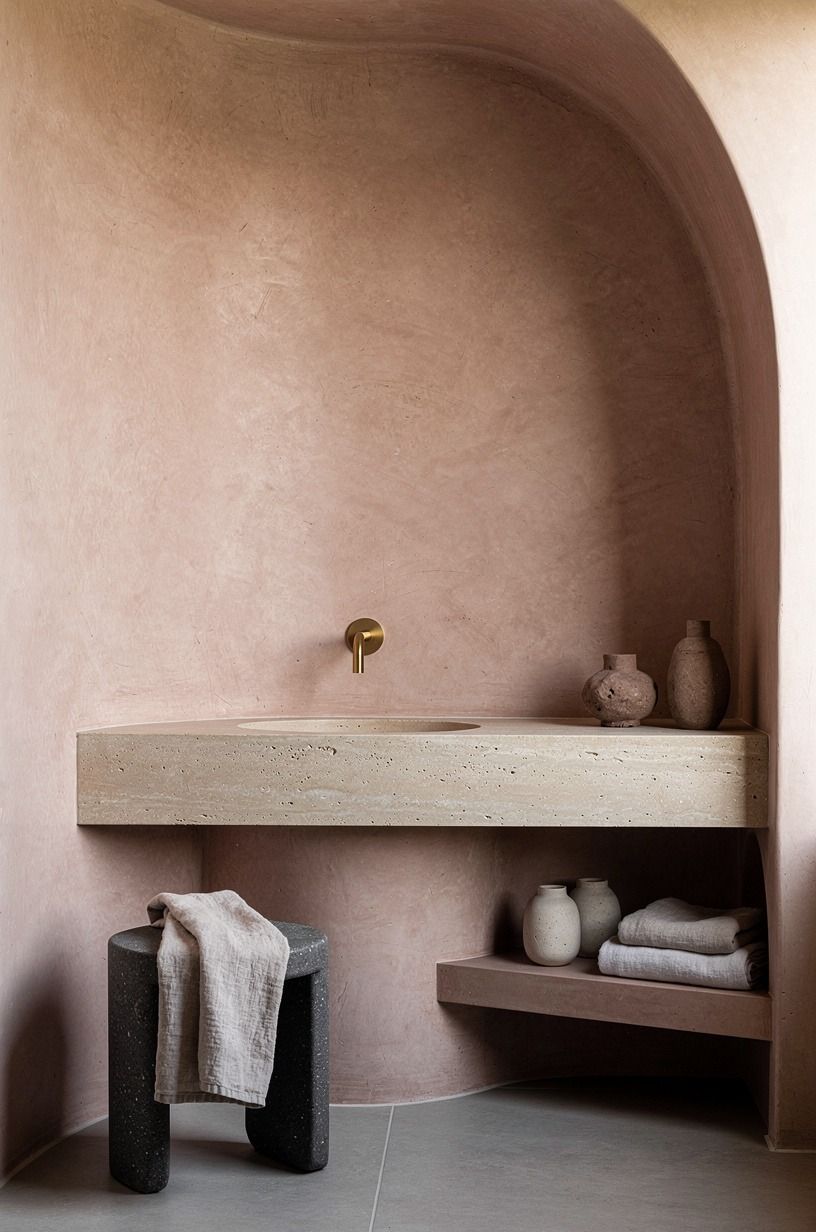
Start with a dusty-rose Venetian plaster on the wall behind your tub or vanity, then let the curve stay mostly bare. You’ll get a calming, organic surface that changes with charcoal accents and a little brass warmth through the day.
I’d skip cold gray plaster here. It can look expensive in a showroom, but your curved wall bathroom needs warmth to keep the shape from feeling clinical.
Pair it with Benjamin Moore White Dove OC-17 on trim and washed Belgian linen at the window. You’ll see the curve first, which is exactly the point.
For more ideas around a wet-room finish, browse these venetian plaster bathroom ideas for soft luminous walls. Keep your mirror simple. A fussy frame competes with the trowel marks.
2Use The Quiet Halo Method behind a bed
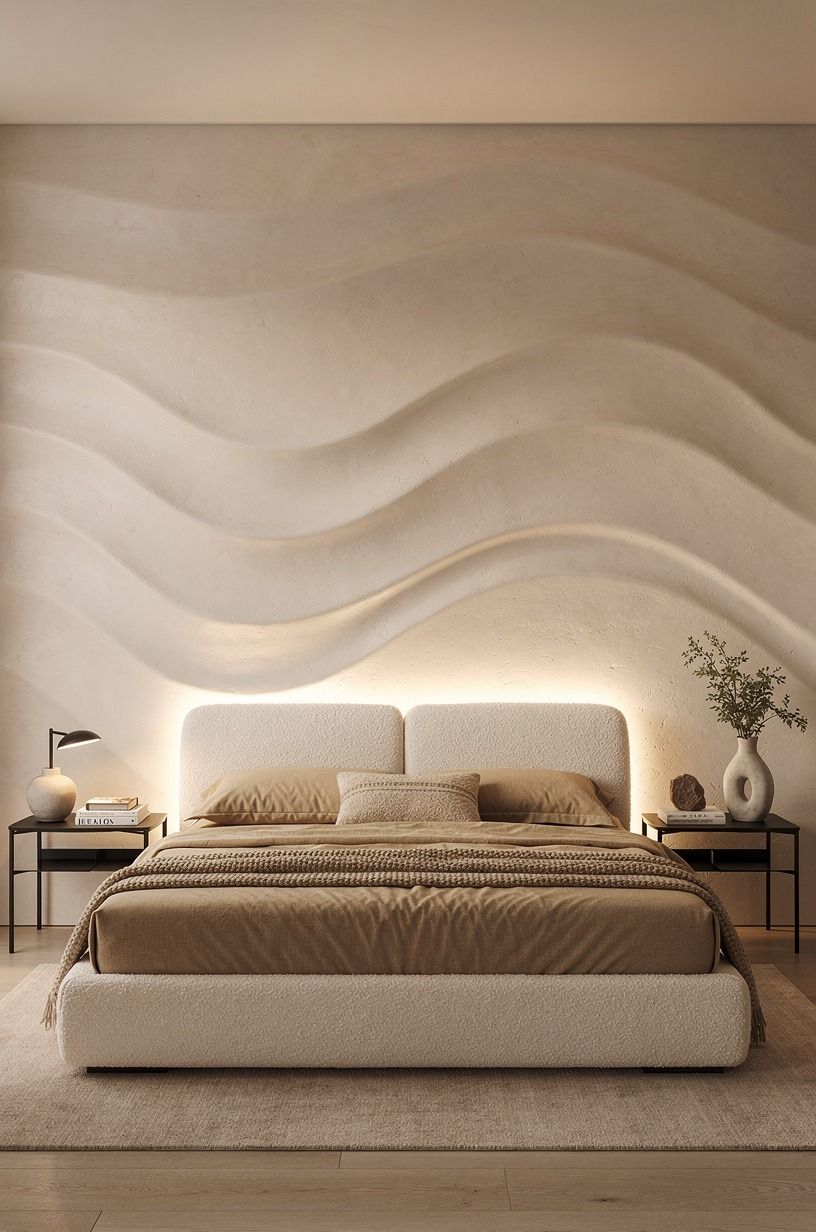
A plastered half-round behind your bed gives you a headboard effect without buying a bulky upholstered piece. Keep the surrounding walls warm white, then use a camel-toned plaster inside the arch with small black accents so your eye reads a soft halo rather than a hard border.
You’ll want the bed to sit a little forward, not jammed against the curve. I learned that after trying to squeeze a queen frame into a shallow alcove. The wall looked good, but making the bed was annoying every single morning.
Choose organic bouclé upholstery and a low oak platform bed. Your room will feel inviting without turning into a beige cloud.
Small bedroom? These couple-friendly small bedroom layouts help you keep the walkway usable.
3Float a reading bench along the plastered radius
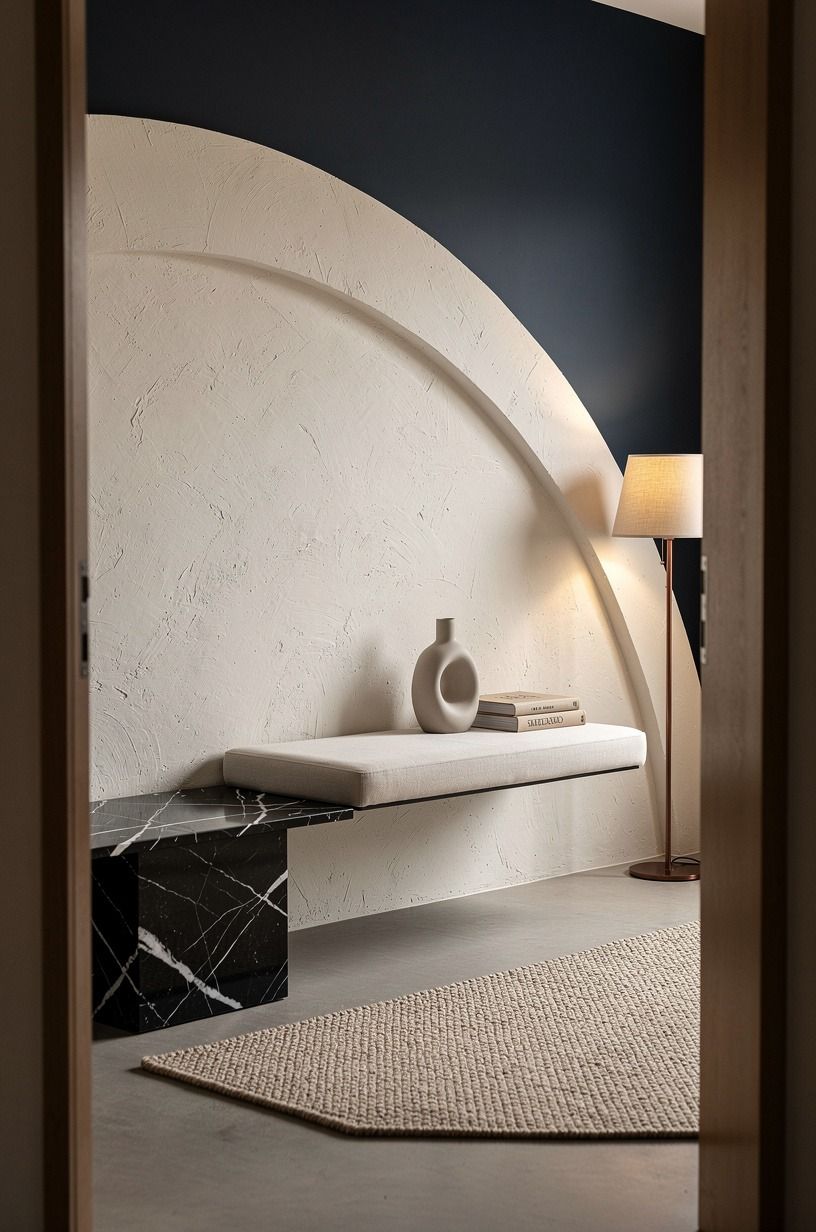
A curved reading nook needs one strong horizontal line. A built-in or freestanding bench with a slim Nero Marquina marble top gives your eye somewhere to land while the plaster does its quieter, more dramatic work above it.
Keep the cushion in midnight blue, ivory, or a muted copper tone, not slick faux leather. Faux leather looks tidy for about five minutes, then every crease announces itself. You can use a narrow bench, but make sure you’ve got enough room to sit with your feet tucked under you.
Add one aged bronze swing-arm sconce and a small stack of books. No gallery-wall clutter.
You’re building a place where you’ll read, scroll, or hide from everyone for twenty minutes. That’s enough.
4Paint the surrounding room lighter than the curve
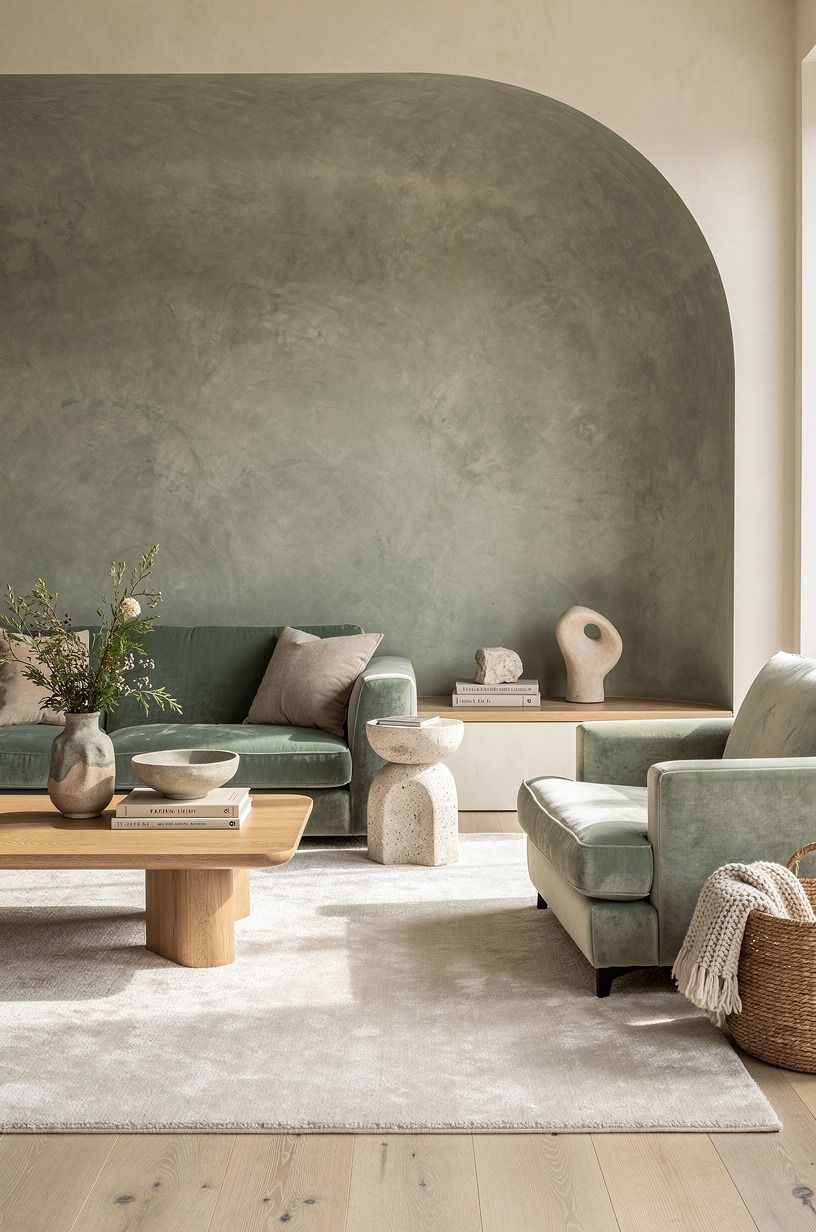
Contrast makes plaster look intentional. Let the curved wall carry a deeper sage-green finish, while the rest of your room stays bright in warm cream with natural wood furniture.
But don’t choose a black-brown finish unless your room gets serious daylight. Dark plaster on a curve can become a murky tunnel by late afternoon, especially if you only have one overhead fixture. You need 3 light sources per room: overhead, task, and ambient.
A deep-pile mohair velvet chair, a ceramic table lamp, and one dimmable sconce will do more for the surface than another coat of plaster. The light should graze the wall, not blast it flat. That soft shadow is what makes the finish feel refined.
5Frame the plaster with a ceiling-height curtain track
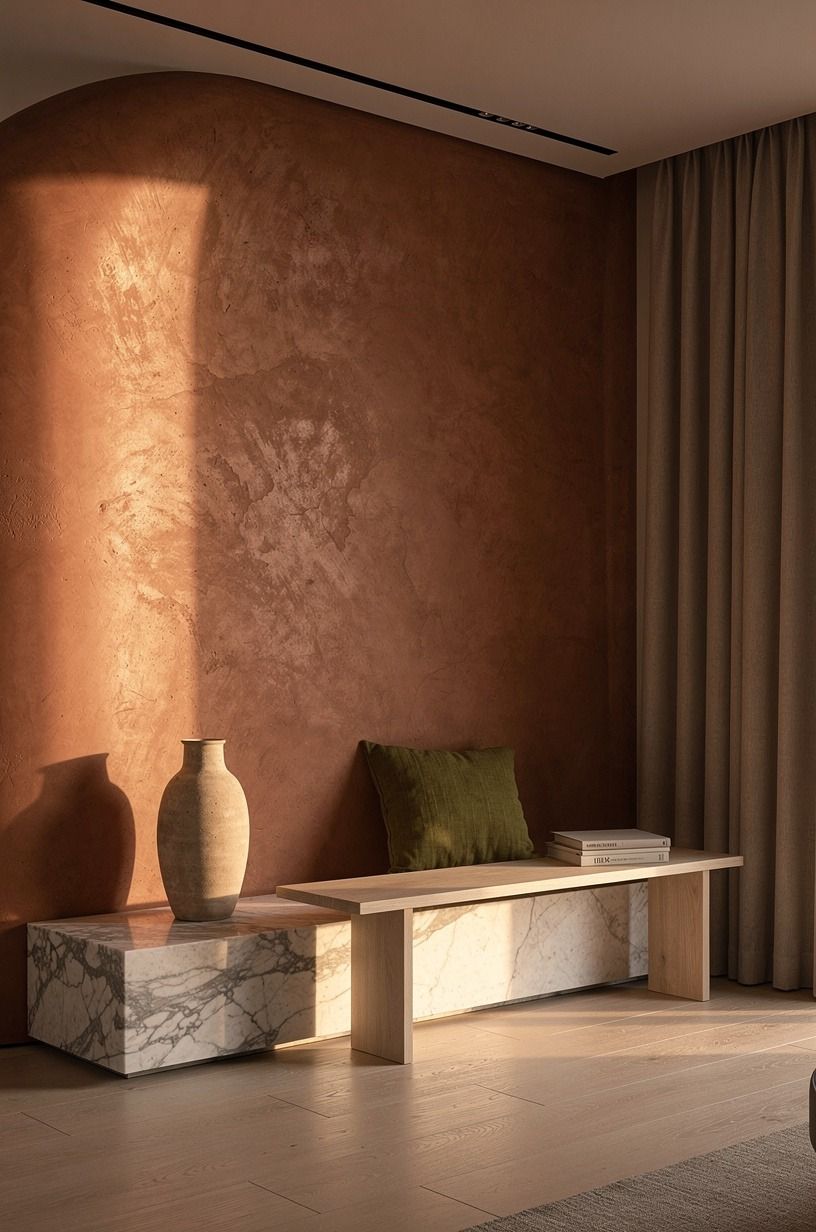
Curved walls often make people nervous about curtains. Don’t let them. A ceiling-mounted track can follow the radius, soften the whole room, and make an awkward window placement feel planned.
Mount your rod or track 4-6 in above the window frame and run your panels to the floor. You’ll get a taller, more elegant line, even in a low-ceiling room. Use terracotta, stone, and olive around the plaster, then ground the room with Carrara marble for a quiet, tailored finish.
I’d avoid short panels here. They chop up a curved wall and make the curve feel like an accident.
Long drapes let the architecture breathe. For a softer bathroom version, see why Venetian plaster makes a bathroom look effortlessly elevated.
6Build The Three-Height Light Stack for texture after dark
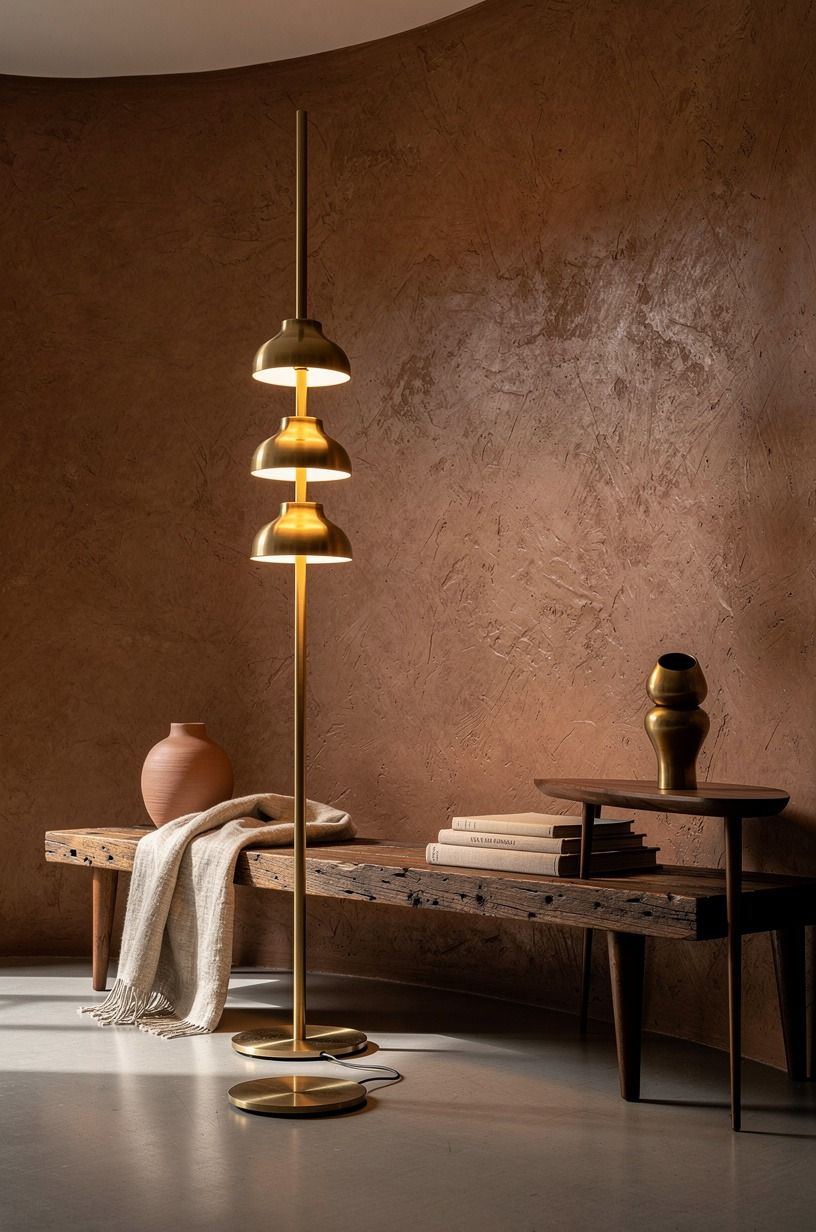
Venetian plaster is at its best after sunset, provided you light it like a person lives there.
7Hang art on the curve with the 57-to-60 rule
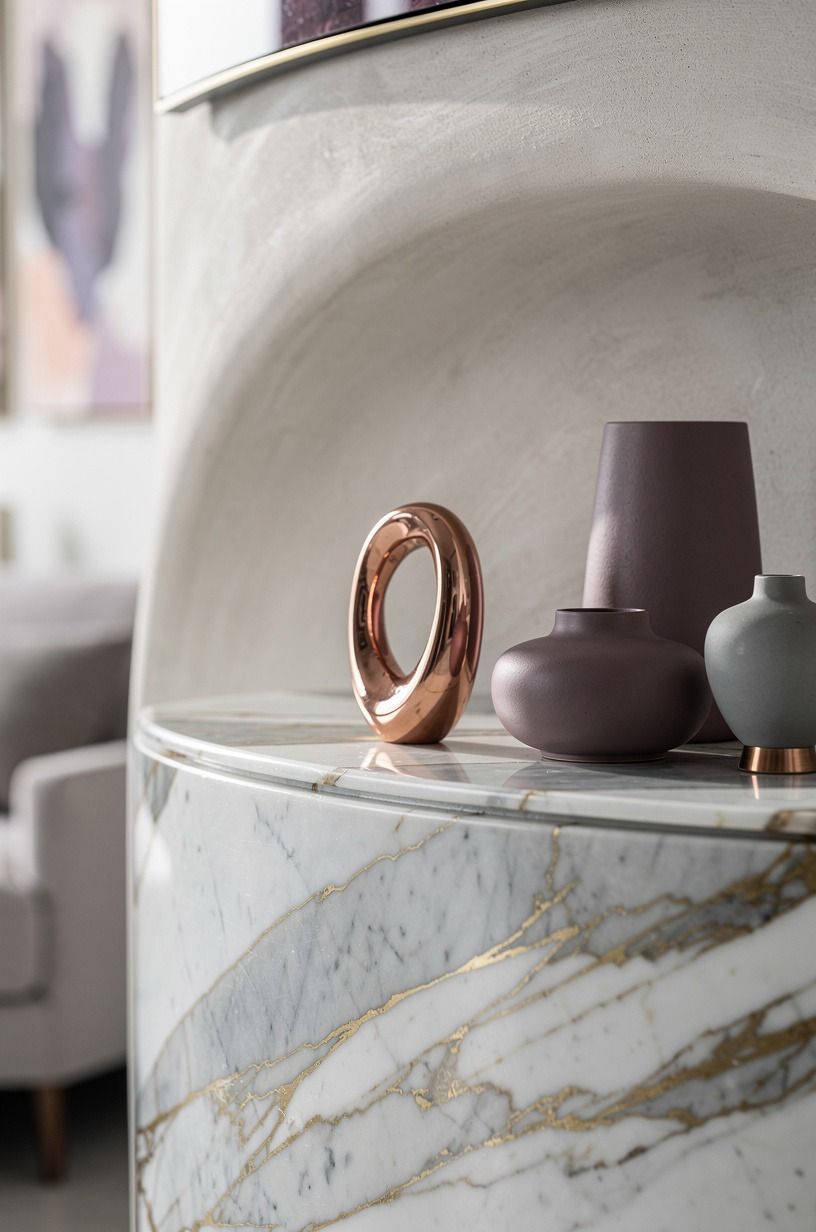
Yes, you can hang art on Venetian plaster, but don’t pepper the curve with tiny frames. One large work, centered about 57-60 in from the floor, gives you a focal point without making the wall feel busy.
Choose a slim rose-gold frame with a grey linen mat, or artwork in plum, soft grey, and faded rose. A Calacatta marble ledge beneath it can bring in a little warmth without competing with the plaster. And if you rent, use a lightweight piece with removable hanging hardware where your lease allows.
A small curved wall bathroom can take a single vertical print beside a mirror. You’ll get personality without losing the serene open space. For more texture-led choices, save these Venetian plaster wall ideas for subtle depth.
8Choose hand-troweled movement over a flawless finish
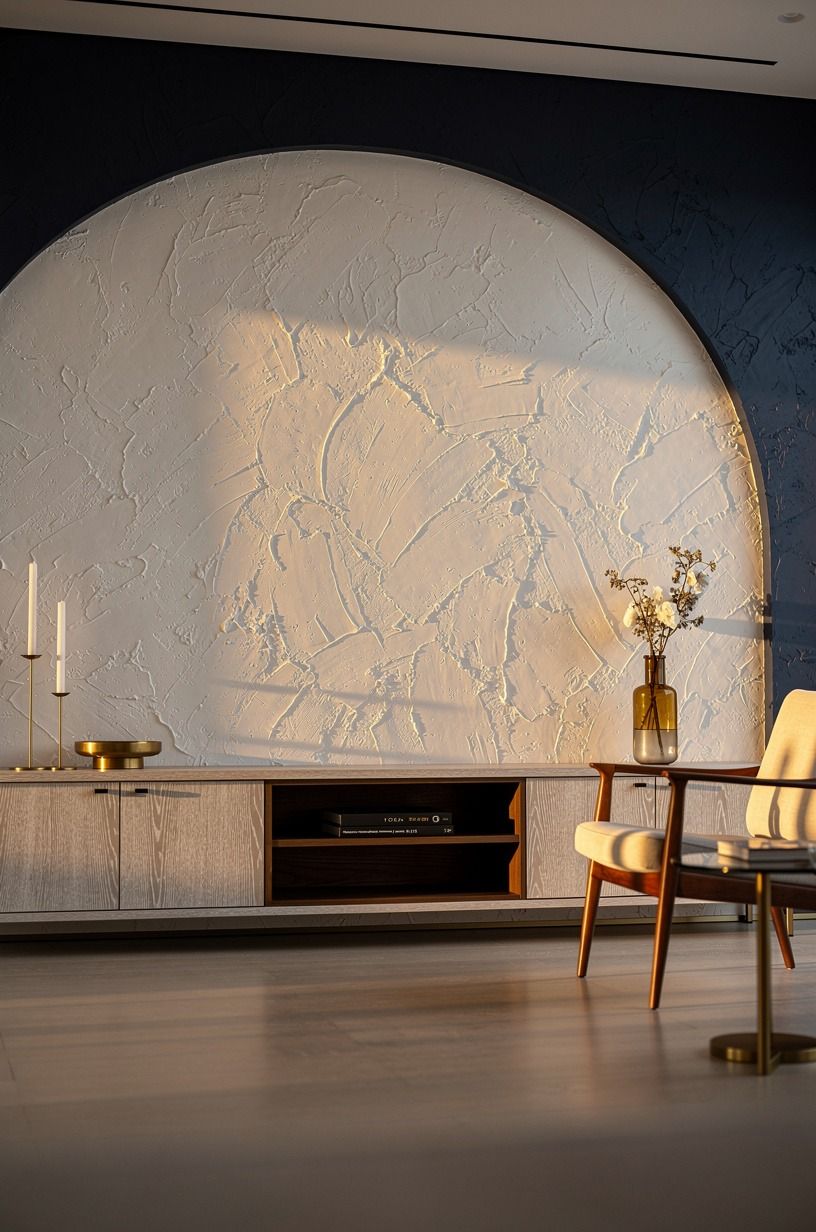
The best plastered curves have variation. You should see faint passes from the trowel, a little cloudiness, and places where the light catches one layer more than another. That’s the material doing its job.
Don’t chase a perfectly smooth painted-wall look. If that’s what you want, paint is cheaper and easier to repair. Venetian plaster earns its place because it has a slightly imperfect, earthy skin that feels handmade when you’re standing close to it.
Ask for a sample board first, then move it around your room. Morning, noon, evening.
A lime-based Venetian plaster finish can look soft beside a window and surprisingly bold under a lamp. You’ll want to see both before committing.
9Add a built-in ledge instead of another console table
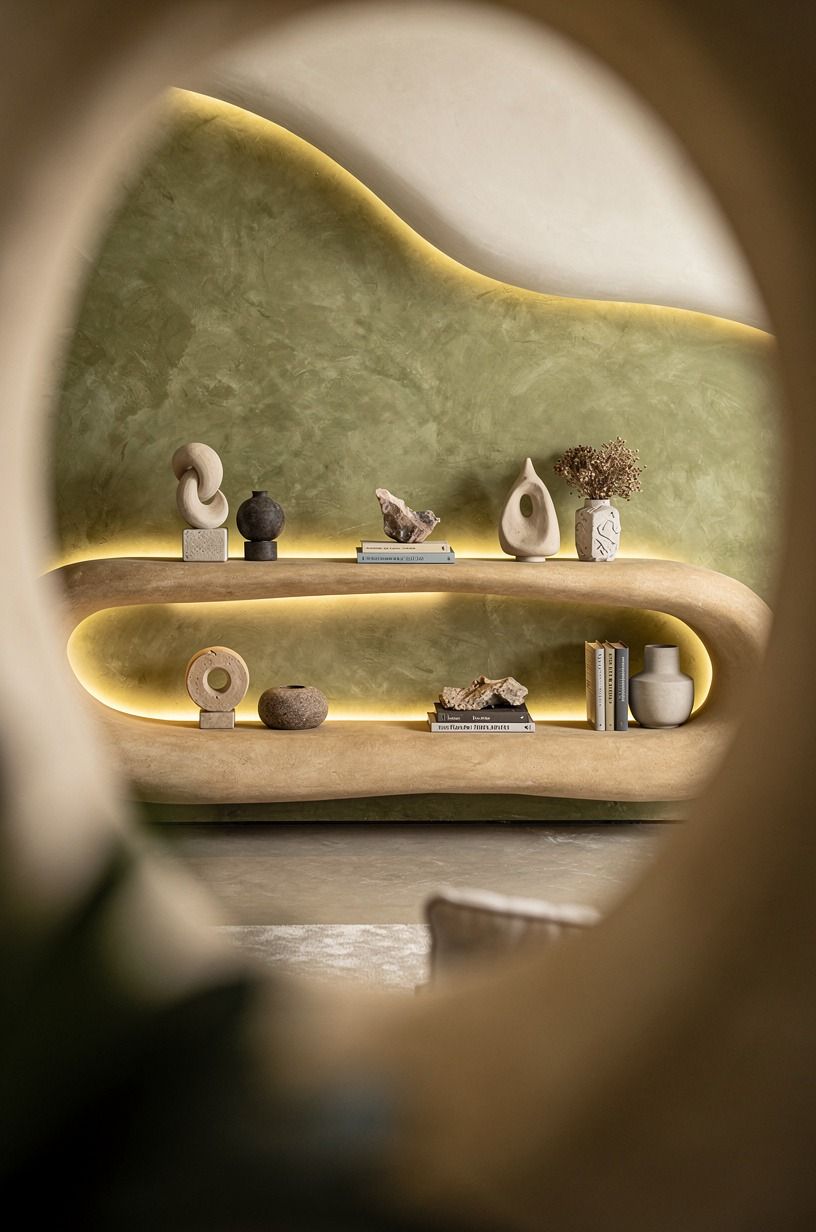
A curved plaster wall doesn’t always need furniture pressed against it. Sometimes it needs a slim ledge, about the depth of a paperback, where you can set a candle, a small vessel, or nothing at all.
That empty stretch matters. A backlit translucent onyx ledge with one branch is enough, especially against emerald plaster with gold and cream nearby.
I’d skip a deep console if the curve sits in a hallway or entry. It steals your walking space and makes the architecture feel apologetic.
Try a narrow floating shelf where the wall begins to turn. Your keys, a small lamp, a bowl. Useful, but still quiet.
If storage is the real issue, borrow layout ideas from this tiny bedroom setup guide.
10Put plaster above tile in a textured walls bathroom
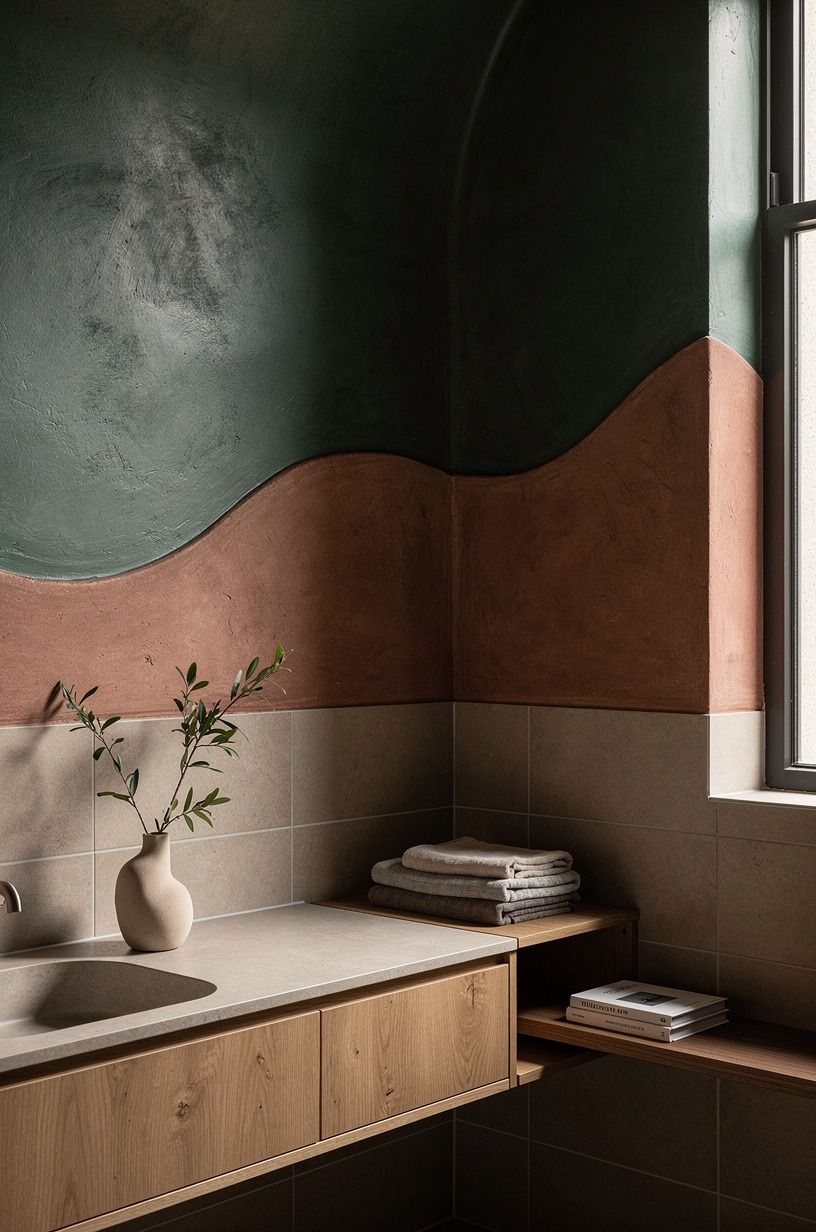
In a bathroom, use tile where water hits and Venetian plaster where you want atmosphere. A lower band in rust tones with plaster above it gives you durability near the sink and a softer finish at eye level.
You don’t need to tile every inch. Full-height tile is polished, sure, but it can make a small room feel hard and echoey. Plaster above the splash zone brings in a more peaceful, lived-in surface while still letting your tile do the practical work.
Choose an uncomplicated vanity in natural oak, then add a book-matched walnut detail for warmth and depth. It won’t stay identical forever.
Good. Rooms shouldn’t.
11Let a rug overlap the curve’s furniture zone
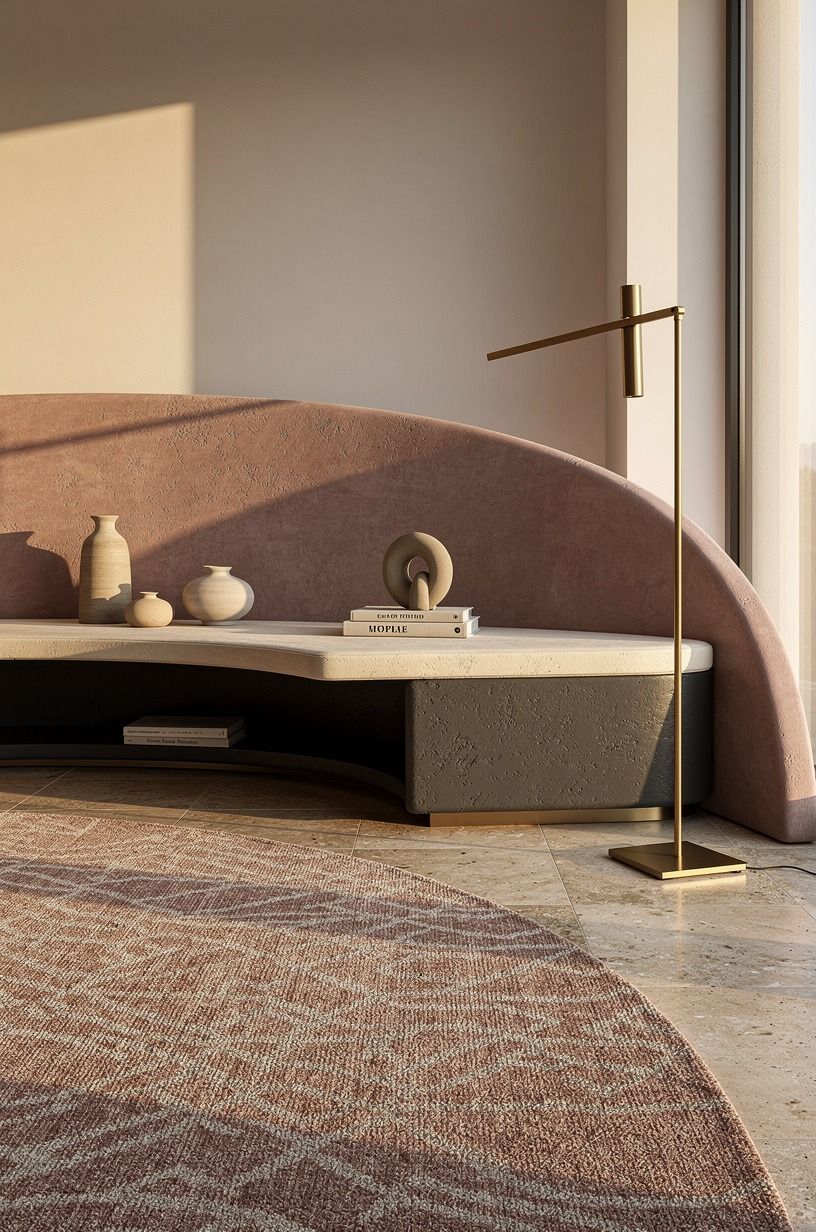
A curved wall can make furniture arrangements feel floaty, especially in a living room.
12Compare a $200-$800 refresh with custom millwork
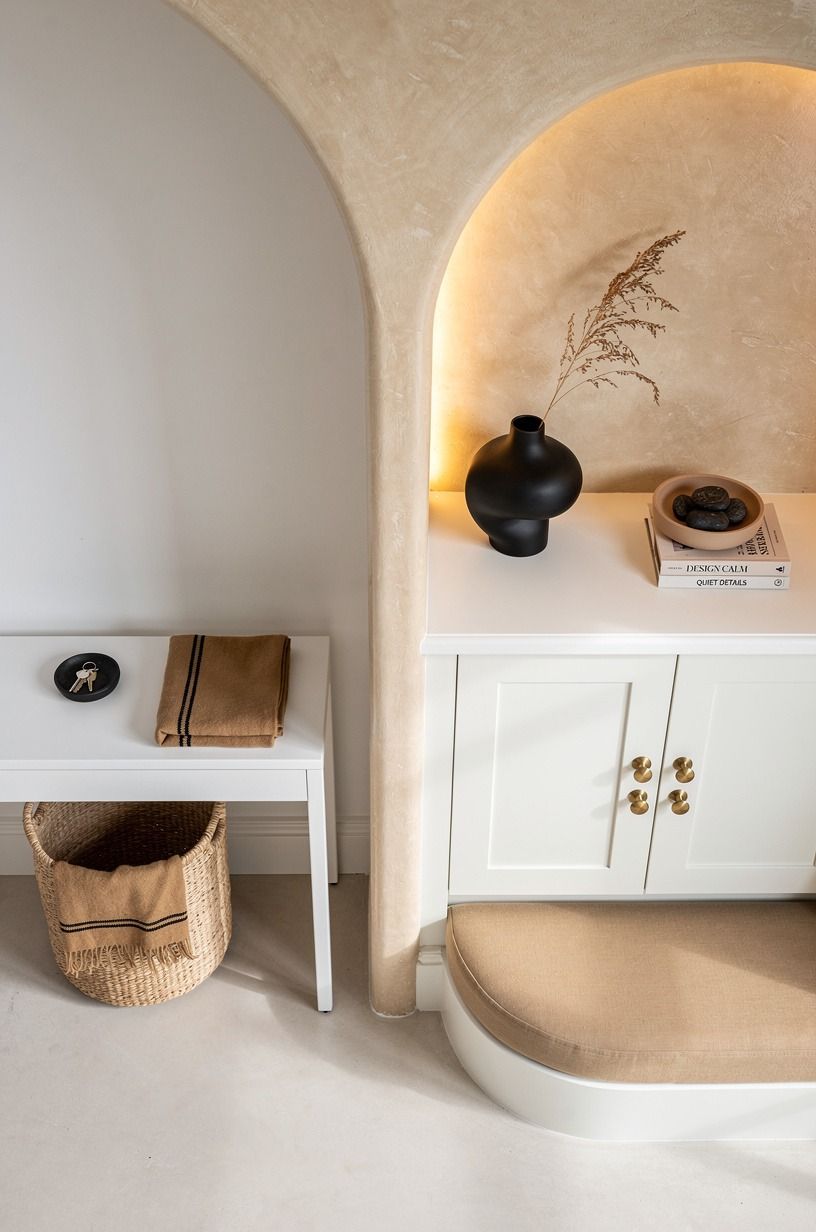
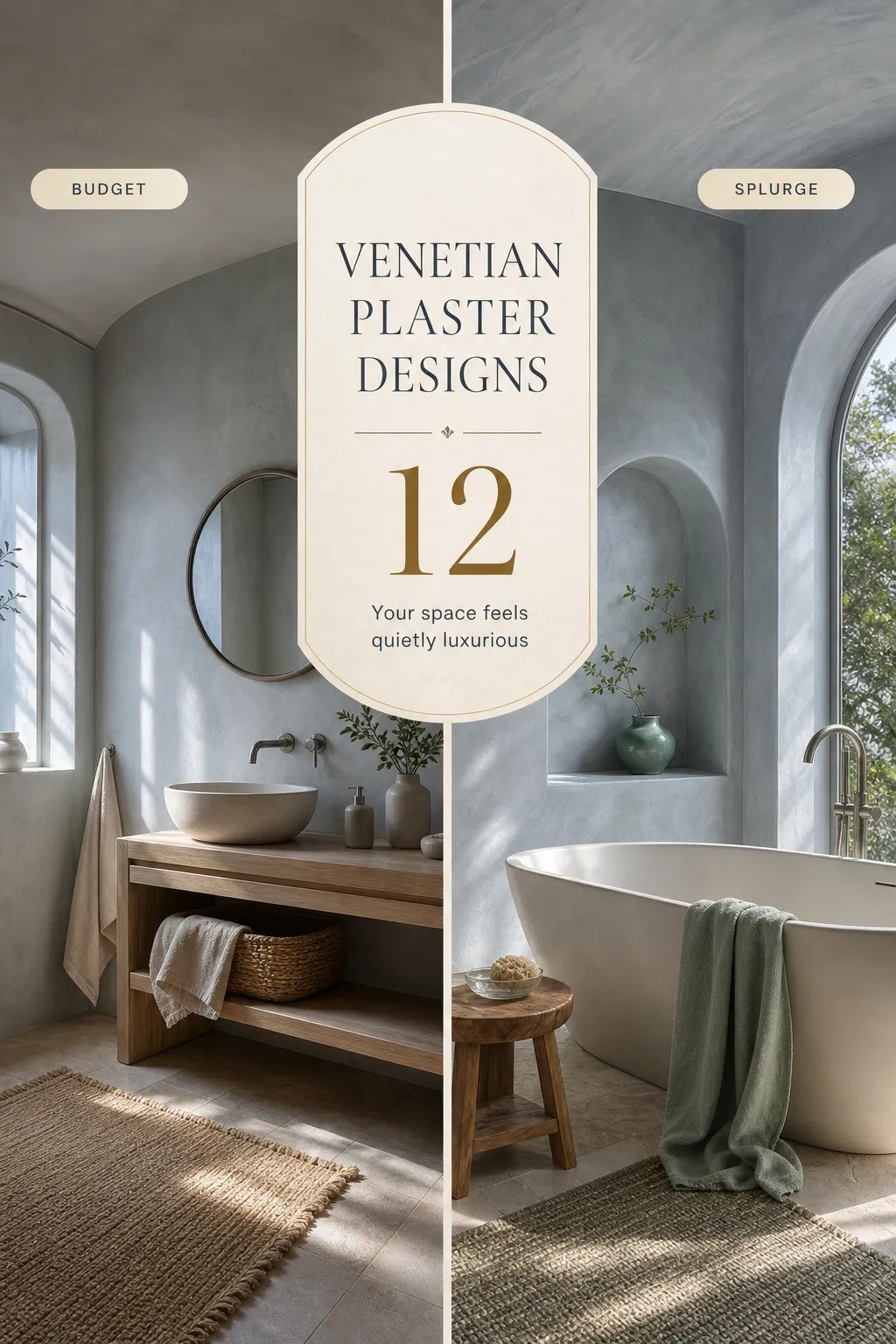
You can make a curved plaster wall feel finished at several budget levels, but spend where your room will notice it. A budget refresh can focus on paint, textiles, art, and organization. A high-end project begins to include major furniture and custom millwork.
If you’ve got $200-$800, use it on a sample test, lighting, a better rug, and a few honest materials. If you’ve got $8,000 or more, custom millwork can be worth it when the curve is central to how you use the room.
But I’d skip expensive cabinetry on a wall that’s mostly decorative. Spend for function, not bragging rights!
Why curved plaster feels different in 2026
I think curved plaster is having a real moment because people are tired of rooms that look assembled from rectangles. Flat-pack furniture has its place, and I own plenty of it, but a rounded wall covered in a hand-worked finish interrupts that sameness. It slows the room down.
You notice the light, the slight unevenness, the way a lamp throws amber across a surface that isn’t trying to behave like drywall.
I made a mess of this once by choosing the wall color before I looked at the room’s light. The sample was lovely at noon and dead by dinner. I’d painted the adjacent walls too cool, so the plaster looked like it belonged to another house.
That was an annoying weekend. The lesson was simple: test the finish beside your flooring, your trim, and the fabric you’ll use most. Not beside a paint-store fluorescent bulb.
You also don’t need every wall to be textured. That’s where people overdo it.
One curved focal wall has more power than an entire room of decorative treatment because your eye gets a place to rest. Let the rest stay plain. Let a Benjamin Moore White Dove OC-17 ceiling remain calm.
Let the curve carry the story.
And there’s a practical reason, too. Curves already cost more attention than straight walls.
Plaster makes that attention feel earned rather than accidental. If you’re choosing between a generic accent wall and a well-finished curve, I’d take the curve every time.
It’s more personal, more lasting, and far less likely to feel dated next year.
The Questions I Get Asked Most
What is the best Venetian plaster detail for a small curved wall?
A light, warm plaster with one low-profile furnishing is the best choice for a small curved wall. A pale hand-troweled finish keeps the shape visible without closing in your room. Try an Article Sven tan leather chair nearby, not a bulky sectional.
Where can I buy Venetian plaster pieces on a budget?
You can find supporting pieces at IKEA, Target, Wayfair, Facebook Marketplace, and local thrift shops. Secondhand wood and lighting often look better beside plaster than brand-new matching sets. A plain oak stool, linen shade, and ceramic bowl will carry plenty of character.
How much does a Venetian plaster on curved walls makeover cost?
A modest refresh usually costs about $200-$800 when you focus on paint, textiles, art, and organization. Lighting and one good rug make the biggest visible difference. Reusing your existing furniture is free, and it’s usually smarter than replacing everything.
Can I create this look on a budget?
Yes, and you should start with what you already own. A layered lighting plan costs less than a major furniture swap. Sample plaster colors, move your lamp closer to the curve, and use a thrifted wood piece instead of a custom console.
Is Venetian plaster on curved walls worth it in a small space?
Yes, it’s especially worth it in a small room because the curve gives you a focal point without taking up floor area. A single textured surface adds depth where furniture can’t. Keep your largest piece slightly away from the wall so the radius stays visible.
Is Venetian plaster on curved walls a good idea for a rental?
It can be, if your landlord approves or you use removable alternatives. Peel-and-stick mural panels, tension-rod curtains, and removable art can mimic the layered effect. For permanent plaster, get written permission before you begin.
Don’t gamble with your deposit.
Where I’d Start First
If I had to pick one, I’d start with a warm plaster sample on the curve. You can’t fix a dead finish with expensive furniture, because every lamp and rug will still fight the wall. Pin this idea for later and explore polished hand-troweled Venetian plaster wall ideas.