
 by
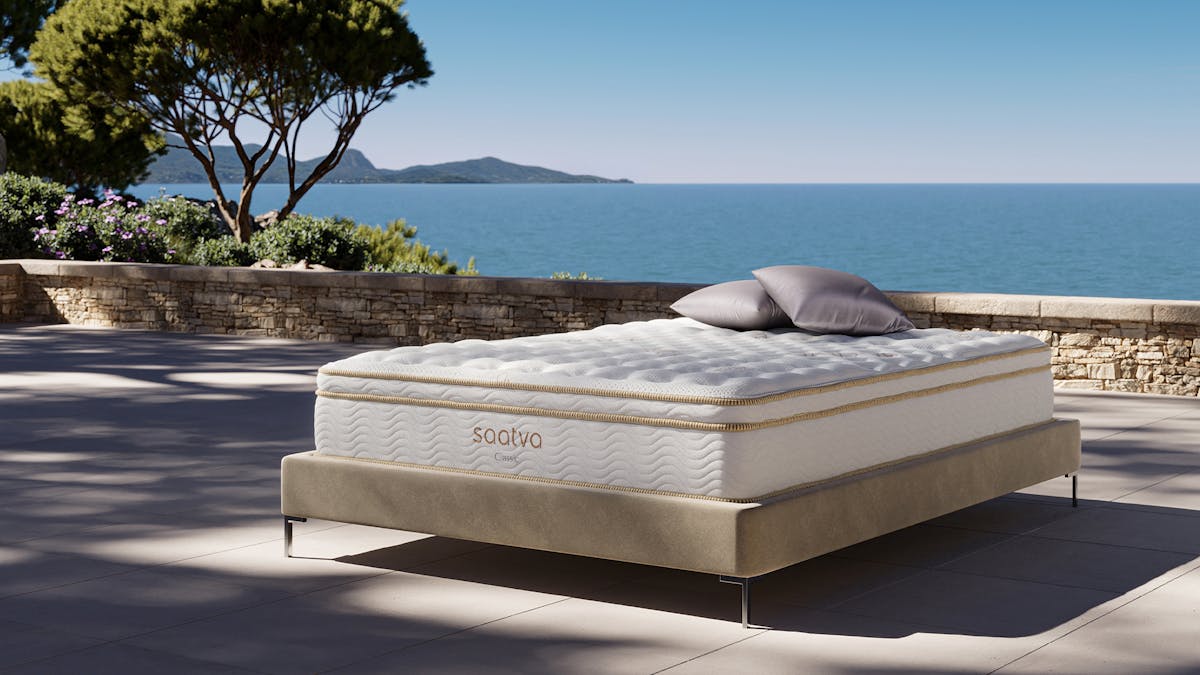
by The orthopedic vs spring mattress debate comes down to construction, not the label. "Orthopedic" is a marketing term with no regulatory definition, so the support engineering matters far more than the name. For most sleepers, a premium coil-on-coil hybrid with a reinforced lumbar zone bridges both categories, delivering the airflow of a spring mattress and the targeted support an orthopedic design promises. Our top pick is the Saatva Classic: dual-coil construction, a dedicated lumbar pad, and three firmness options on a 365-night trial. The Amerisleep AS3 is the best all-foam alternative for motion isolation and pressure relief.
Saatva Classic
9.2/10
- Dual-coil architecture: pocketed upper coils over a tempered steel base layer, with a reinforced lumbar foam pad under the middle third
- Outstanding edge support and cooling airflow through the open coil system
- Free white-glove delivery with in-room setup and old mattress removal
- 365-night trial and lifetime warranty, the most generous in the innerspring category
- More motion transfer than all-foam, less ideal for very light sleepers sharing the bed
- Heavy (around 110 lb queen) and ships flat, not compressed in a box
- $99 return fee if you decide to return during the trial
The Saatva Classic answers the orthopedic vs spring question directly: it is both. The dual-coil construction gives you the responsive airflow of a premium innerspring; the reinforced lumbar pad delivers the targeted support that orthopedic mattresses promise. Three firmness options and a 365-night trial make it easy to dial in the right feel without risk.
What "orthopedic" actually means on a mattress label
No regulatory body certifies mattresses as orthopedic. The term is a marketing classification, not a medical standard. It signals that the manufacturer designed the mattress with musculoskeletal support in mind: firmer layers, denser foams, zoned firmness, or materials that resist sagging over time.
This matters because two mattresses sold as "orthopedic" can have almost nothing in common beyond the label. One may be a basic bonnell-coil innerspring with a thin foam top; another may be a layered hybrid with individually wrapped zoned coils and pressure-relieving comfort foam. The construction tells you more than the name.
What research actually supports is medium-firm support, not any specific material. A 2015 study in Sleep Health (Jacobson et al.) found that medium-firm mattresses produced significant reductions in chronic non-specific back pain over 12 weeks, with improvements in sleep quality and reduced disability regardless of whether the mattress used coils or foam.
What is a spring mattress?
Spring mattresses use metal coils as their primary support layer. There are two main coil designs:
- Bonnell or interconnected coils: linked together, which means movement in one area transfers across the bed. Lower cost, more bounce, less motion isolation. Common in budget mattresses.
- Individually wrapped pocket coils: each coil moves independently, so pressure from one sleeping area does not directly transfer to another. Better motion isolation and body contouring. Used in most premium hybrid mattresses.
Spring mattresses are typically covered with a comfort layer of foam, wool, or pillow top material. The quality of that comfort layer and the coil gauge determine how long the mattress maintains its support. A thin comfort layer over cheap coils will sag within 3 to 5 years; a quality pocketed-coil hybrid with a well-constructed foam layer can last 8 to 10 years.
The main advantage of coil construction is airflow. Air moves through the open coil space, which keeps the surface cooler than a solid all-foam mattress. Hot sleepers often find hybrid or innerspring designs sleep several degrees cooler than comparable all-foam models.
Orthopedic vs spring: key differences
| Factor | Orthopedic-style mattress | Standard spring mattress |
|---|---|---|
| Primary support | Dense foam or zoned hybrid | Metal coil system |
| Pressure relief | Excellent (foam contours) | Moderate (depends on comfort layer) |
| Motion isolation | Very good to excellent | Moderate (better with pocket coils) |
| Cooling | Good (open-cell foam) to excellent (hybrid) | Excellent (coil airflow) |
| Edge support | Moderate (all-foam) to strong (hybrid) | Strong, especially with perimeter coils |
| Durability | 8-10+ years (quality foam or hybrid) | Varies: 3-5 yr (budget) to 10+ yr (premium) |
| Best for | Back pain, joint pain, pressure relief | Hot sleepers, combination sleepers, bouncy feel |
Who should choose which type?
Choose an orthopedic-style foam or hybrid if you have:
- Chronic lower back pain or sciatica, where targeted lumbar support matters most
- Joint pain in the hips or shoulders from sleeping on your side
- A partner who moves frequently during the night (motion isolation priority)
- A preference for a mattress that contours closely to the body
Choose a quality innerspring or hybrid if you want:
- A cooler sleep surface, especially if you run hot at night
- A bouncy, responsive feel rather than the "hugging" sensation of foam
- Strong perimeter edges for sitting on the side of the bed
- A traditional hotel-style mattress feel
The line between the two categories has blurred significantly. The best modern mattresses, like the Saatva Classic, use coil-on-coil construction with reinforced lumbar zoning, giving you both the airflow of a spring and the structured support of an orthopedic design. A well-built hybrid is often the practical answer to the orthopedic vs spring question.
Amerisleep AS3
9.1/10
- HIVE 5-zone technology reinforces the lumbar directly, the most common orthopedic support failure point
- Plant-based Bio-Pur foam contours without the deep slow-response sink of traditional memory foam
- CertiPUR-US certified, made in the USA, free delivery
- 20-year warranty, one of the longest in the all-foam category
- Softer perimeter edges than a coil hybrid, less ideal for edge sitting
- Sleepers over 230 lb may want the AS5 Hybrid for added coil support
For sleepers who prioritize motion isolation or prefer the pressure-relief feel of foam over coils, the AS3 delivers orthopedic-level lumbar support through its HIVE 5-zone system without the motion transfer of a spring base. A strong runner-up, particularly for side sleepers under 230 lb.
Is a spring mattress good for back pain?
A budget spring mattress is rarely the best choice for back pain. Thin comfort layers over standard coils concentrate pressure at the shoulders and hips rather than distributing it, and the system wears and sags faster than quality foam, which collapses support over time.
A premium pocket-coil hybrid is a different story. The Saatva Classic, for example, uses individually wrapped upper coils that move independently by zone, a reinforced lumbar pad under the middle third of the mattress, and a tempered steel base coil for durability. That is a fundamentally different engineering solution than the cheap spring mattress that gives "spring mattresses" a bad reputation for back pain.
The principle from the Sleep Health research still applies: medium-firm support, however it is achieved, is what helps most with non-specific lower back pain. A high-quality pocket-coil hybrid in Luxury Firm absolutely qualifies.
You can also explore our guide on the best mattresses for lower back pain for a deeper comparison across all types.
Orthopedic mattress construction explained
Mattresses marketed as orthopedic typically share several construction features, regardless of their material:
- Firmer support core: whether foam, latex, or coils, the base layer resists compression to keep the spine from sagging out of alignment.
- Zoned firmness layers: better designs vary firmness across the body length, firmer under the heavier lumbar area and softer under the lighter legs and shoulders. The Saatva Classic lumbar pad and the Amerisleep HIVE system both accomplish this differently.
- Pressure-distributing comfort layer: 2 to 3 inches of foam or latex above the core reduces point pressure at the hips and shoulders without allowing deep sinkage that strains the lumbar.
For the right size, see our orthopedic mattress size guide.
PlushBeds Botanical Bliss
9.0/10
- Exceptional pressure relief: a thick natural latex comfort layer eliminates pressure points without synthetic foam
- Natural latex, organic wool and cotton breathe better than most all-foam designs
- Outstanding motion isolation, around 37% less transfer than average for the category
- GOLS and GOTS certified, no synthetic foams or adhesives
- Weaker edge support than a coil hybrid
- Premium price, the most expensive of our three picks
- Latex responsiveness does not suit everyone who prefers the slow contour of memory foam
For buyers who want orthopedic-level pressure relief without synthetic foams or metal coils, the Botanical Bliss is the top natural alternative. The pressure relief and motion isolation are genuinely best-in-class for the latex category.
Does Medicare cover orthopedic mattresses?
Standard Medicare Part A and Part B do not cover mattresses for general sleep comfort, even if labelled orthopedic. There is a narrow exception for therapeutic mattresses prescribed for specific pressure injury prevention in homebound patients. Our detailed article on whether Medicare covers orthopedic mattresses covers the criteria in full. For most buyers, the practical route is a mattress with a long free trial (100 nights minimum) so the cost of a mismatch is zero.
"Orthopedic" is a label, not a standard. What matters is construction: zoned support, quality materials, and the right firmness for your body and sleep position. Our top pick is the Saatva Classic (dual-coil, reinforced lumbar, 365-night trial). For all-foam pressure relief, the Amerisleep AS3. For natural materials without synthetic foam, the PlushBeds Botanical Bliss.
Frequently asked questions
Is an orthopedic mattress the same as a medical mattress?
No. "Orthopedic" on a mattress label is a marketing term, not a medical classification. No regulatory body certifies mattresses as orthopedic. A medical-grade therapeutic mattress for wound care or pressure injury prevention is a completely different category, typically prescribed and covered by insurance in specific clinical situations.
Are spring mattresses bad for your back?
Budget spring mattresses with thin comfort layers and low coil counts can contribute to back pain, particularly once the comfort layer compresses and the mattress sags. A high-quality pocket-coil hybrid with a reinforced lumbar zone is a different product entirely and can provide excellent spinal support. The quality of construction matters far more than whether coils are present.
How long does an orthopedic mattress last?
A well-made all-foam or hybrid mattress marketed as orthopedic typically lasts 8 to 10 years with normal use. Warranties of 10 to 20 years are common in this segment, though the warranty covers manufacturing defects and abnormal sagging, not gradual comfort softening over time.
Can a spring mattress be orthopedic?
Yes. Premium pocket-coil hybrids with zoned lumbar reinforcement, such as the Saatva Classic, deliver the same spine-support engineering that "orthopedic" mattresses promise. The term describes the intent of the design, not the material it uses.
Which mattress type is best for side sleepers with hip pain?
Side sleepers with hip pain need pressure relief at the greater trochanter (hip bone), best achieved by foam or latex with a soft-to-medium comfort layer above a firm support core. The best mattresses for hip pain guide covers this in detail.